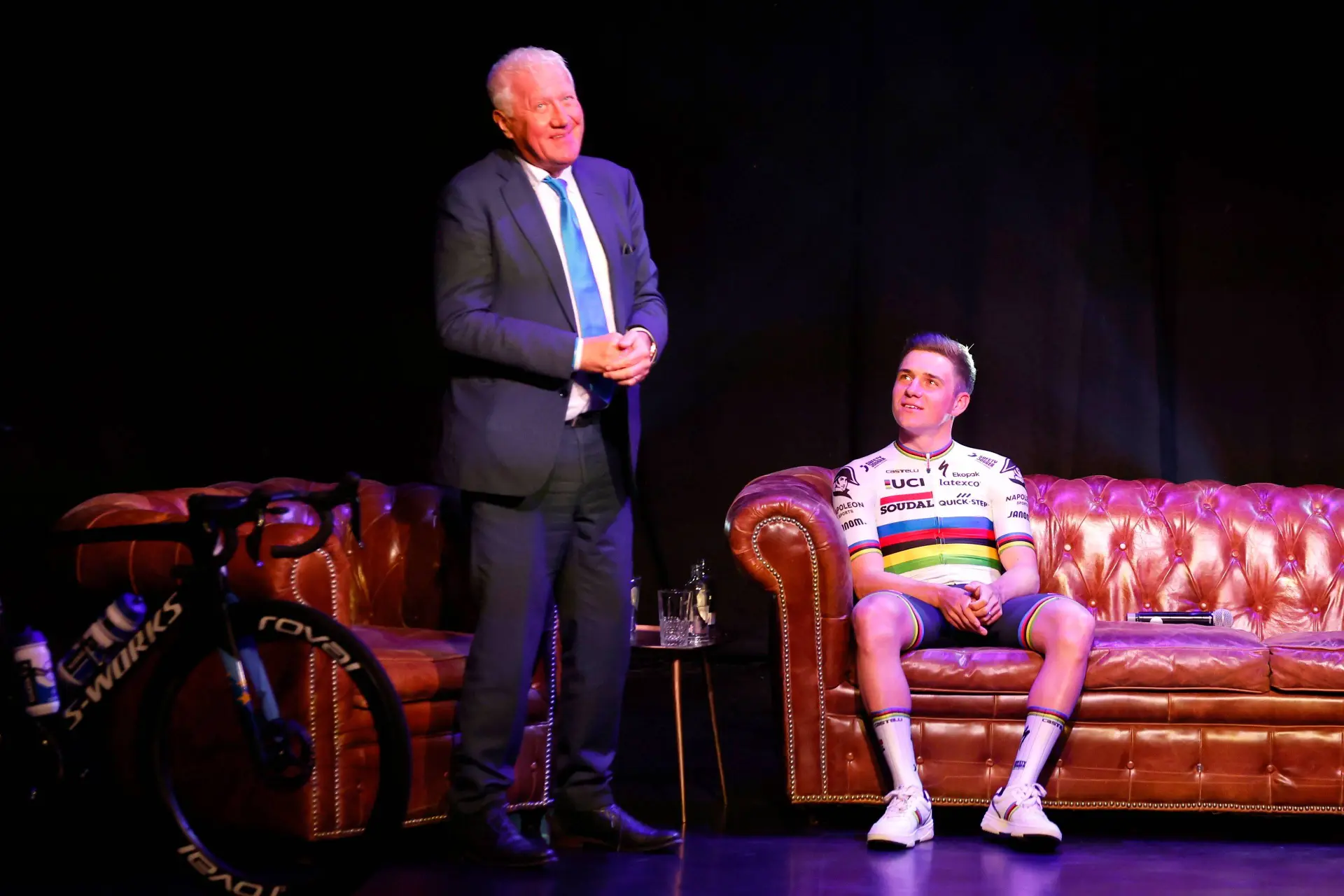
Patrick Lefevere has never been one to mince his words, and
as Remco Evenepoel prepares to leave Soudal – Quick-Step for Red Bull – BORA –
hansgrohe in 2026, the former Quick-Step boss has given his take on how the
move became possible. Lefevere, who led the Belgian squad until the end of 2024
and was the man who first signed Evenepoel in 2019, wrote in Het Nieuwsblad
about the mechanics behind the biggest transfer of the season.
"It's always about Belgians, that's no
coincidence," Lefevere noted, pointing to the unique employment laws that
apply to riders from his country. He framed Evenepoel’s exit within a broader
trend of high-profile transfers. "An important question: what have been
the major 'three-party agreements' in cycling recently? The transfers where
riders switch before their contracts expire? Remco, Maxim Van Gils, and Cian
Uijtdebroeks. Going back further in time, we can add Wout van Aert to the list.
The court had to rule on his transfer to Jumbo-Visma at the time, but in the
end, the rider got his way there too."
For Lefevere, the key lies in Belgian riders’ employment
status. "The consequence of the whole story? Belgian cyclists are covered
by normal 'employment law.' They have standard holiday pay and occupational
accident insurance.
“Good for them, but for the teams, they're not exactly the
cheapest option. The point I'm trying to make here: if teams employ riders as
independent contractors — which is perfectly legal in many countries — you can
stipulate real severance payments in those contracts and 'set' the riders in
stone for years."
That protection, Lefevere argues, makes Belgian riders more
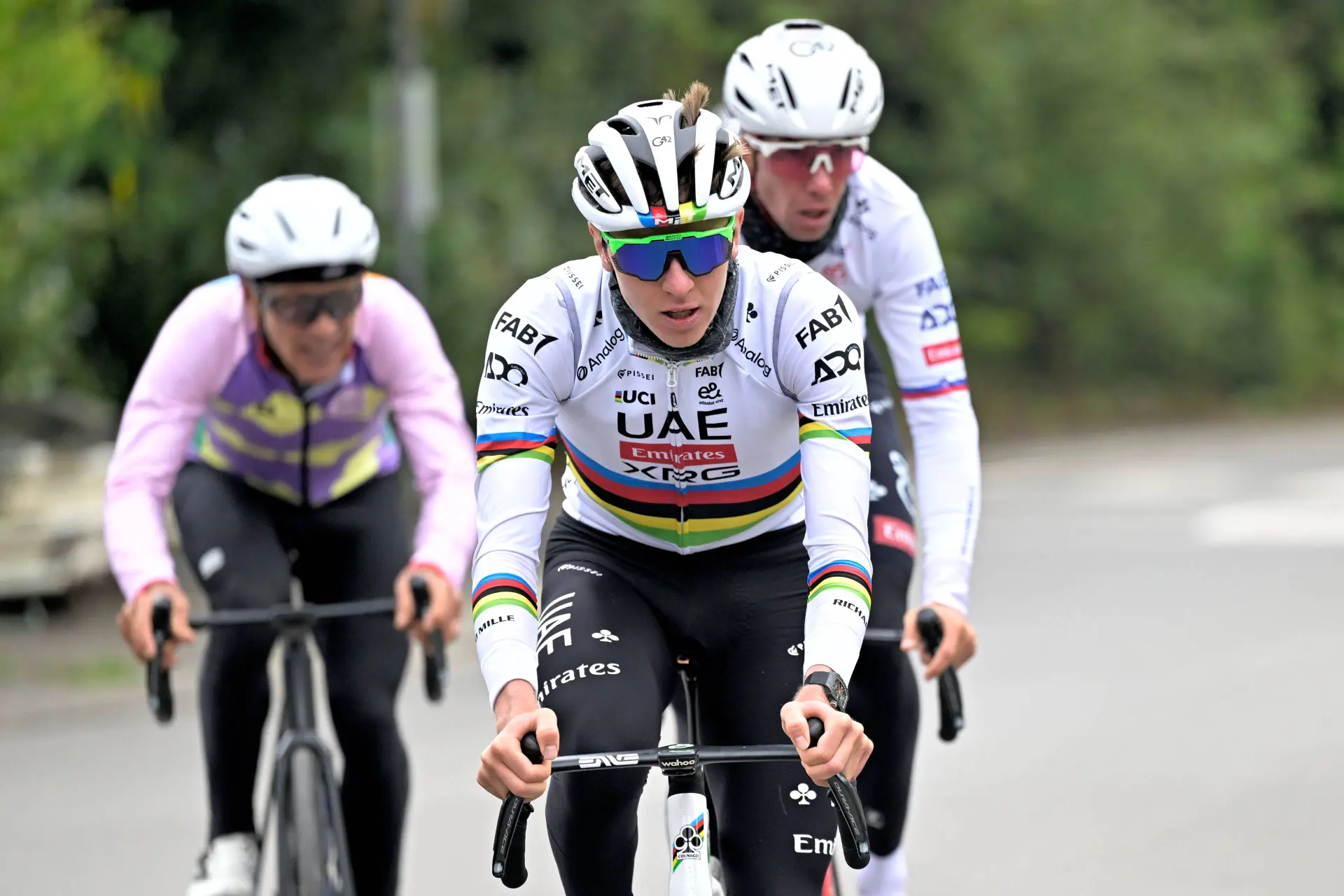
mobile than their international peers. “It is no secret that UAE Emirates XRG
does that,” he continued, referring to how other teams structure contracts. “In
principle this is not possible with Belgian riders, because as employees they
can always appeal to the 'law of '78', which limits compensation to the salary
of the remaining contract period.” In practice, that law makes it far easier
for riders like Evenepoel to negotiate their way out of existing deals.
As Lefevere admitted, the legislation ultimately paved the
way for Evenepoel’s move. “As I said last week: Remco was granted his transfer.
My only comment: I know a little about who made sure everything went smoothly
and they are not necessarily the people on the official photo, but no hard
feelings. Remco himself will know who to thank and that certainly includes the
Belgian legislator.”
The background to Evenepoel’s switch highlights the wider
forces shaping the transfer market. Red Bull – BORA – hansgrohe were able to
swoop in not just because of their financial muscle and ambition, but because
Belgian law ensured there were no immovable barriers. For Evenepoel, the timing
was also crucial: he had long expressed frustration at Quick-Step’s lack of
climbing depth and had been eyeing a team with greater Grand Tour
infrastructure.

Fin MajorCycling Journalist
Fin Major is a UK-based writer at CyclingUpToDate and has been part of the team since 2024. He is the site’s main writer for FAQs and evergreen explainers and has written around 2,000 pieces for the platform. Alongside this work, he focuses on in-depth analysis and covers the biggest races on the calendar, including the Tour de France, the Giro d’Italia, and La Vuelta a España, providing clear context around performance trends, tactics, and key storylines.
In his reporting, Fin uses reputable data sources such as ProCyclingStats for results, statistics, and historical context. He places strong emphasis on careful sourcing, editorial accuracy, and updating articles promptly when new, verified information becomes available. Outside of writing, Fin is an active cyclist, which supports his practical understanding of the sport and its demands.
claps 5visitors 2
Just in
Popular news
Latest comments
- Very distorted headlineKatla26-10-2026
- Agreed, but nobody thinks ahead that much, especially so-called fans, they are the first to demand their rights to joy and entertainment, regardless of the price their hero pays. You only have to look at boxing/rugby research on past athletes’ problems in retirement to see how little their OWN fans really care.Jumpyjohn26-10-2026
- He might very well accept lower salary voluntarily (whilst others might get pressured into that anyway over the coming years) in exchange for non financial benefits such a move would bring. Wouldn’t be the first rider to get positive results from a change of team and wouldn’t be the first star rider to do well in a smaller outfit. MVDP has never suffered from not being in a leading team, MP did extremely well before his team started expanding (maybe too) fast, PS certainly didn’t underdevelop until now. Everyone fits in best in a unique situation that won’t work for anyone else, we should all be striving for finding that.Jumpyjohn26-10-2026
- Always best to focus on “a good beginning is half the work” philosophy Which also makes mathematical sense. If you look at the probabilities of things happening in a chain, each event has less than one. For two to happen you multiply, the result will thus always be even less. The earlier in the chain you affect probability, the more often that is multiplied each time you add a subsequent link in the chain. Or oppositely, it’s extremely inefficient to focus on the last event in the chain because the chances of that happening AFTER all the other events have also happened is far too small to consider. And realistically, it is also obvious that if you allow uncertainty into event 1 or 2, not only do you enormously increase the chances of a last event, you also increase the chances of other non-considered events. In non-mathematical terms, one day a car might drive into a whole peleton. Oups, what did I suggest, oh no, we actually already saw this almost happening on video, it was only the drivers’ unexpected fast reaction to reverse that averted the possible cancellation of cycling for an extended period as the sport would have been forced to question itself way more than it has ever had to.Jumpyjohn26-10-2026
- This is Trump level like distortion of information, shame on you CUTD!!!! I will boycott for a week from tonight on and unlike all the Moulike characters here, I keep my promises.Jumpyjohn26-10-2026
- sounds positive news for Lidl-Trek...still dirty on them for not resigning Lucinda Brand and why they arent all in with sponsorship of the Baloise team in 'cross.
 Davide26-10-2026
 - yeah your point about accidents happening in a chain of events, not a single event, is key. no police or barriers at a crossing. a car gets on the road. a trailing cyclist doesn't have an escort. no radio and GPS is being used to track stragglers. and tragedy. break one thing in the chain and it could be accident avertedmij26-10-2026
- The doctors called the concussion severe, even at the scene of the accident, because that is the term for it. The concussion protocol is the best they can do right now, with further research being done. It makes sense for Tadej's concussion to be severe because the freak circumstances lead to twisting of his head (and body) as he fell at high speed. Look at reports on the Toronto research published in early 2025 for starters, with images of the brain showing the effects that persist after symptoms clear up. Btw if Tadej had ridden the EC and fallen, he could have suffered more serious injury to the spine as the vertebra would not have been fully healed. Also serious consequences if he had hit his head. Don't know why you are so keen to downplay the impacts.Hills3326-10-2026
- Complete bullshit headline. The best thing this website can do is commit suicide.Renz26-10-2026
- If he wants to retire, he can spend a couple of non intensive low key seasons at UNO-X for lower salary as well.abstractengineer26-10-2026
Loading
Write a comment