“It seems incredibly tough to live in his shoes” – Rival reflects on the pressures of Tadej Pogacar’s fame
Cycling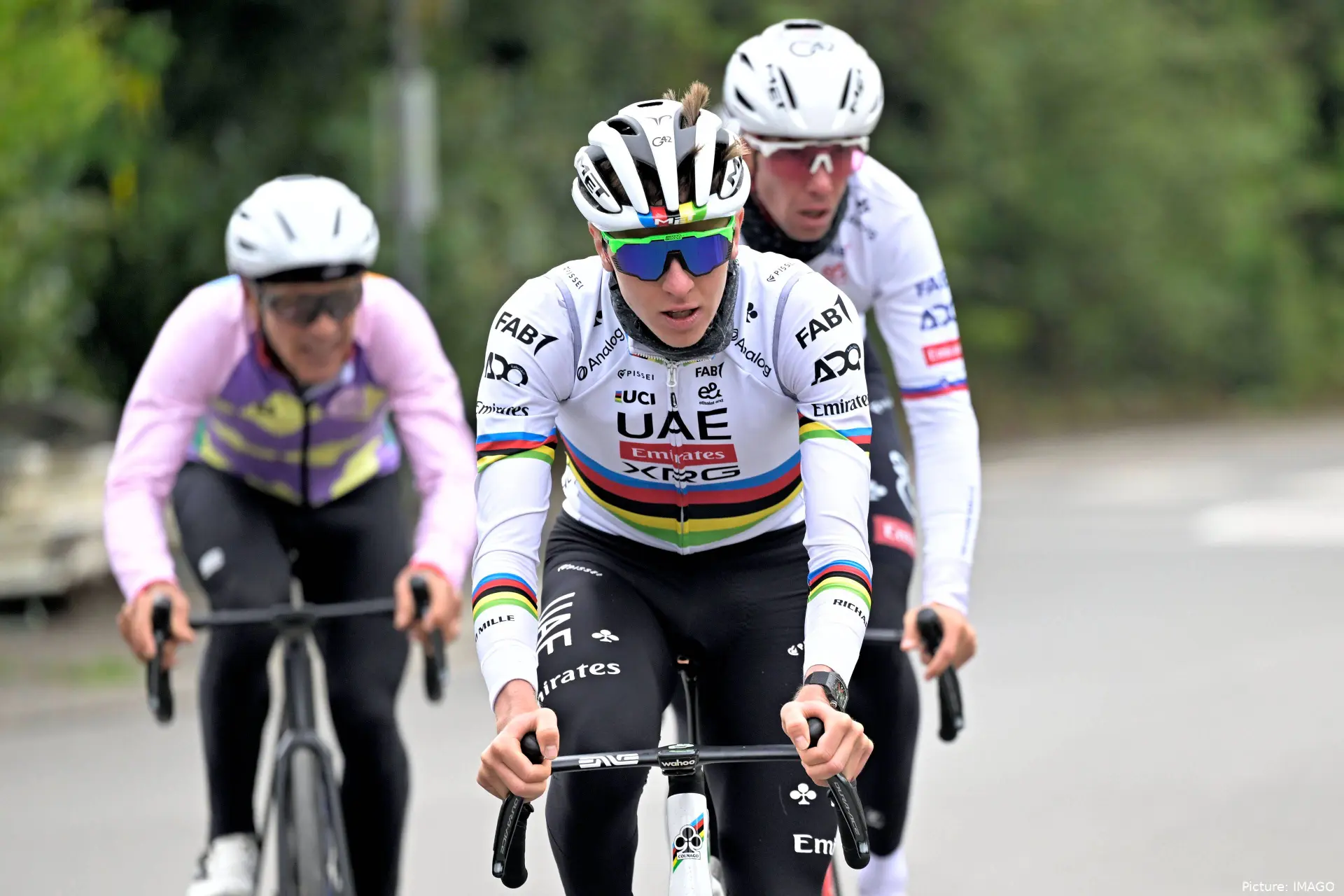
At the very top of modern men’s cycling, dominance no longer brings just sporting control. It brings visibility, expectation, and a level of attention that never truly switches off. That reality was laid bare this week by Oliver Naesen, speaking in an interview with IDL Pro Cycling about what it is like to race in the same era as Tadej Pogacar.
Naesen’s comments came while reflecting on the changing nature of racing at the Tour of Flanders, where the presence of Pogacar and Mathieu van der Poel has fundamentally altered what is tactically possible for the rest of the peloton.
“With those two at the start, there isn’t much dreaming,” Naesen said. “They’ve also got a world-class team that completely sacrifices itself.”
He pointed to how riders who once looked like contenders now struggle even to race for their own results, highlighting how collective strength and star power have reshaped the balance inside the bunch.

“That’s just not fun”
Asked whether such dominance affects a rider’s willingness to attack, Naesen’s answer shifted from tactics to something more human. He suggested that Pogacar’s position at the very top of the sport now comes with a cost that goes far beyond racing.
“We’ll only be able to properly judge what they’re doing in a few years,” he said. “Because he’s not going to keep it up for another ten years. It seems incredibly tough to live in his shoes.”
Naesen then referenced a moment he had recently seen from Pogacar’s training, using it as a snapshot of how little privacy cycling’s biggest star now enjoys. “I recently saw a little clip of a pee break in training, with a fan sprinting up to him. He can barely pull his shorts back up. That’s just not fun.”
The remark was not framed as criticism, but as quiet empathy from a rider who operates a step removed from that level of global attention.
A different world of attention
Naesen contrasted Pogacar’s experience with his own, and with that of Belgium’s biggest names, explaining that even in one of cycling’s most intense fan cultures, there remains a line between recognition and intrusion.
“With me, people look into my trolley in the supermarket and say, ‘Ah, a bag of crisps, what are we doing mate?’” he said. “People over 60 know me, at least on the train. Then they look at me and go, ‘Who are you again?’ In a charming and polite way.”
He noted that riders such as Wout van Aert and Remco Evenepoel already live with a far higher level of attention, even during routine rides. Pogacar’s situation, he implied, has moved beyond that entirely.
“For their coffee ride they practically need a dark corner table,” Naesen added.
Dominance with a price
Naesen’s reflections offer a rare perspective from inside the peloton, not on how Pogacar wins races, but on what it costs to exist permanently at the centre of the sport. While the Slovenian continues to redefine what is possible on the road, Naesen’s comments suggest that the burden of being cycling’s most recognisable figure is now felt just as strongly away from it.
It is a reminder that in an era of overwhelming dominance, even success comes with pressures that are increasingly difficult to escape.

Kieran WoodDeputy Editor-in-Chief
Kieran Wood is a sports journalist based in Wales and has been active in journalism since 2022. He regularly contributes to DartsNews.com and CyclingUpToDate.com, where he covers professional cycling and darts. In cycling, his work includes liveblogs from major races, including the Tour de France, the Giro d’Italia, and La Vuelta a España, alongside race reports and analysis. He has also conducted interviews with professional riders.
His reporting spans the full racing calendar, from one-day classics to stage races, with a focus on accurate, real-time coverage and clear contextual analysis. For statistics, results, and historical context, he regularly uses resources such as ProCyclingStats. To support reporting on rider activity and training context where relevant, he also references Strava.
In his work, Kieran places strong emphasis on careful sourcing, editorial accuracy, and updating articles as new, verified information becomes available.
claps 9visitors 4
Just in
Popular news
Latest comments
- i think he can continue to race for maybe another 2 years till he drops out of podium contention. With his TT and his follow the leader in the Mountains,he should not need too many teammates too.abstractengineer14-10-2026
- Aren't they still shopping around for a main sponsor for next year?wrsty14-10-2026
- How broke is visma now? wtf they cant even fight moviestar and decathlon for riders and lose both their mid targets based on their budget and they cant even get those? Crazy...:/miguel13-10-2026
- TT But he won by a minute so he could have cut down on some of it
 Rafionain-Glas13-10-2026
 - weight is measurable. power is measurable. So why didn't he prepare that way from the TDF if he wanted to beat Pogi and after Pogi wasn't going to be there, to win.abstractengineer13-10-2026
- I hope Thibau and Tibor don't do the sameRafionain-Glas13-10-2026
- Seixas is exactly what I would like Pogi to be mentally and in his statements. Both come across as shy and who don't talk much but with Seixas, you can see that he enjoys success, that it boosts his ego, unlike Pogačar who seems to feel increasingly uncomfortable the more he wins. He's won so many times, people are saying he's boring. The french media hate him for winning so much, the french cycling fans are booing him... etc. etc. But remember one thing, Seixas will never physically reach Pogi's level. He's excellent, but he isn't at that level nor will ever be. His talking to the media, his relationship with people is already at a high level.PogiSloFans13-10-2026
- Paul Seixas is now the second-best rider in the world.megasmacky13-10-2026
- When will they start dropping Pogi? Oh yeah, when Pogi reaches 40+ years, that's when young cyclists will start dropping him. But until then... eat your hearts out and cry. Pogi will remain the G.O.A.T. for years to come. Capish?PogiSloFans13-10-2026
- I figure he would have found out how to outsprint Paul and take the win, maybe. He's 28 now but I would say he's right at the peak of his powers. It was great race though, Paul showed me something different about himself.awp13-10-2026
Loading
Write a comment