"I sometimes think it shows the race off at its worst" - Ned Boulting disappointed with double Alpe d'Huez, lack of time trialing and novelty in 2026 Tour route
Cycling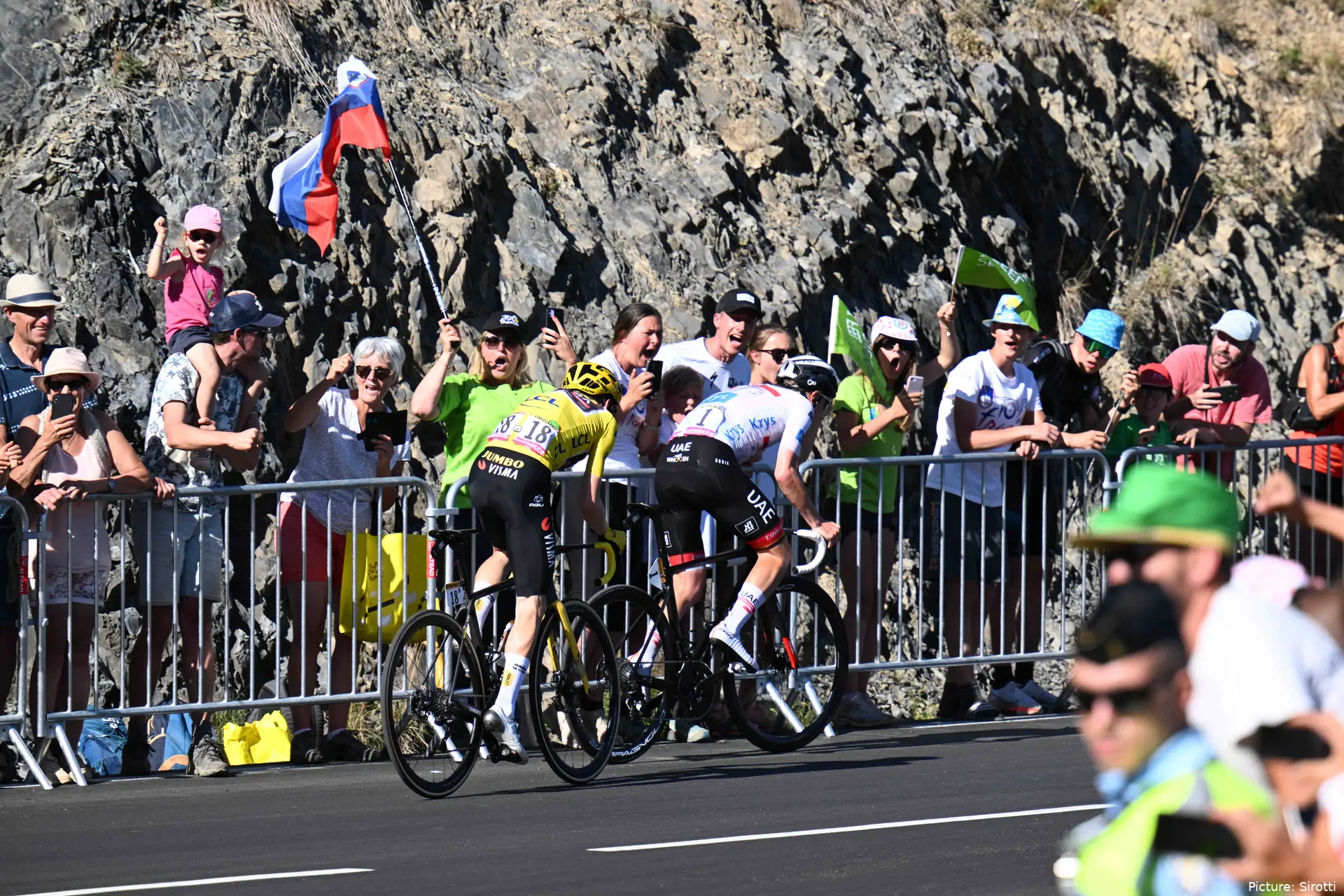
Ned Boulting is one of the most iconic voices of the Tour de France and also one of the most honest, and upon seeing the route reveal, he was not happy with it. According to the British pundit the route lacks the time trialing and the novelty whilst featuring terrain that is already well known and isn't the most spectacle-inducing.
"It sounds really counter-intuitive, after years of railing against exactly this but I now yearn for the time when you had a sort of 50, 60-kilometre flat individual time trial," Boulting said in the Never Strays Far podcast. The race features only 27 kilometers of individual time trialing and it's a very hilly one, which does not make room for the specialists to make difference. That will be a turn off for Remco Evenepoel who will move to Red Bull - BORA - hansgrohe but finds a route that is against what he thrives in.
"And I think Remco Evenepoel will be rightfully pretty disappointed that he hasn't been thrown an incentive to come to the Tour de France and ride for the victory, because the sort of rider who's going to thrive on that individual time trial is called Tadej, and Pogacar". There very much isn't a route where Pogacar won't be the favourite to win, but Boulting believes there's little room to surprise either in 2026.
"I mean, it does look like a course that, even if he turns up half-fit, he can't lose. There's no cobblestones, no obvious crosswind stages, and no gravel. That's three things that we've grown accustomed to over the last 15 years. They have denuded this year, and that feels a little bit disappointing as well," he argues.
Read also
Too much Alpe d'Huez?
"I understand it's central to the way that the Tour de France markets itself to the world, but it doesn't necessarily produce great racing. And I sometimes think it shows the race off at its worst. To do it twice seems a bit much," he said of the Alpe d'Huez, next year's big bet by the race organizers.
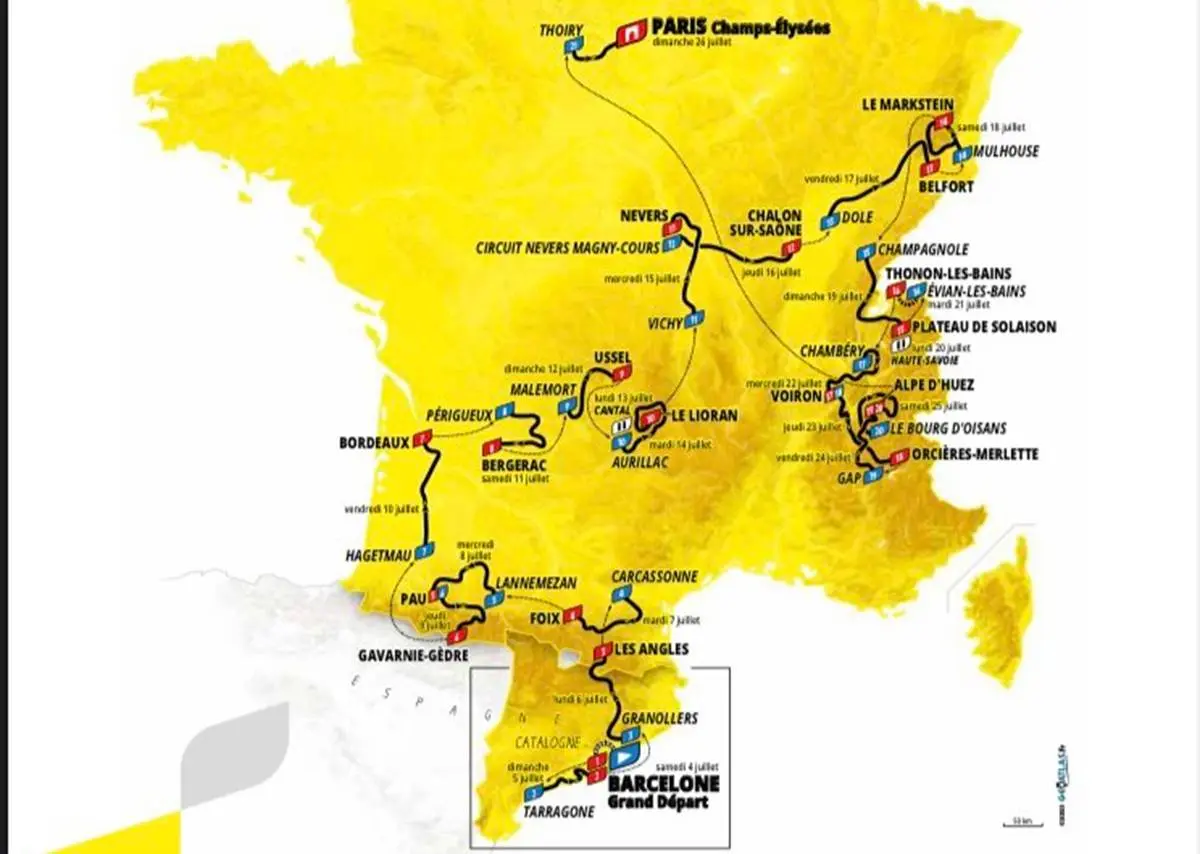
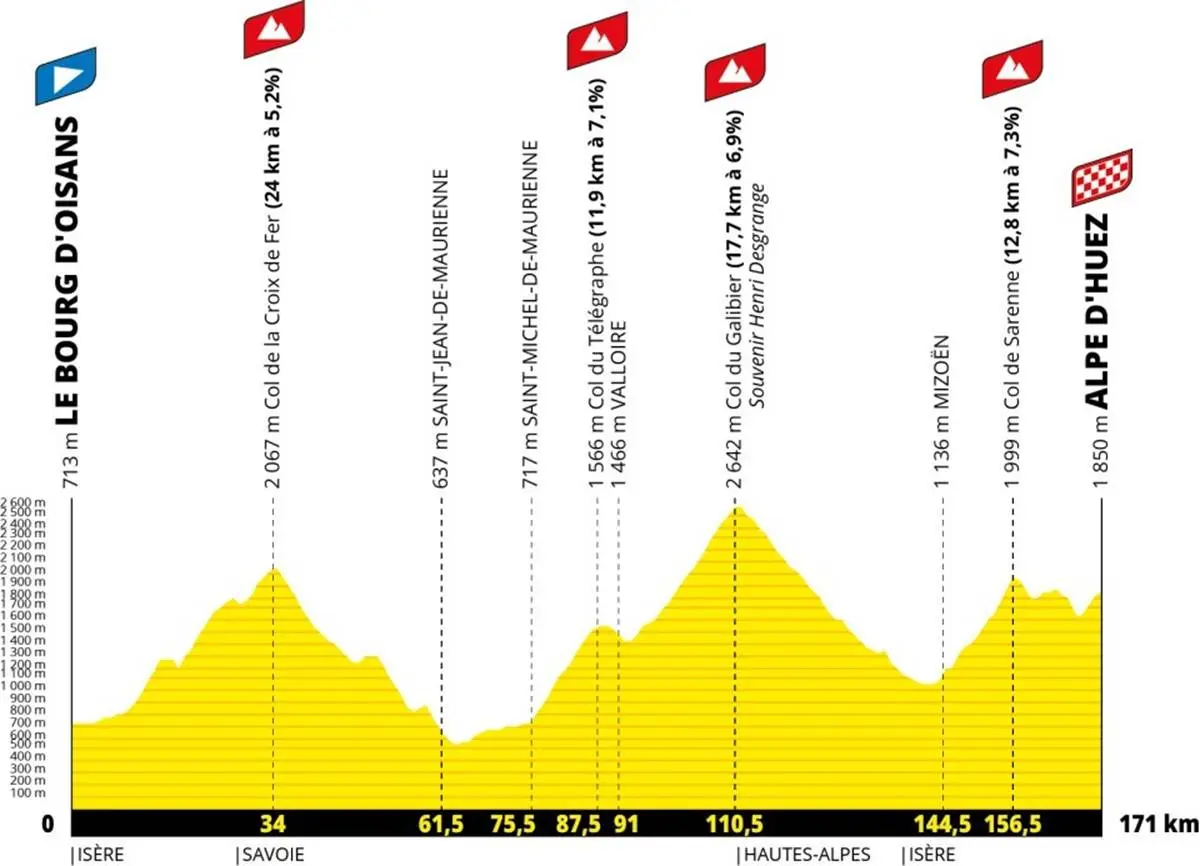
Stage 19 will be short and feature the entire famous ascent whilst stage 20 will only finish up the ski station, at the end of one of the most difficult stages in recent years which will also feature the ascents of the Col de la Croix de Fer, Col du Telegraphe, Col du Galibier and Col de Sarenne.
"It's the fact it's not just this 13-kilometre climb. You've got a little right-hand turn that brings you on to the last few kilometers of the climb. But you've got a descent before that, and a bit of a plateau. And before that the Sarenne climb, which itself isn't hard once you've been over the Galibier," he says of the final mountain stage, which he does not criticize directly.
"So it's just, it's more interesting. And if, if a small group gets over the Galibier together, then we've got a really good battle on our hands, potentially for the stage win."
On the finale in Paris, which will feature one ascent of Montmartre but will be better adapted to the sprinters, he is a fan of: "I'm pleased that they've altered it slightly just to put it slightly back in the balance as to whether or not a sprinter could win it".

Stage 20 of next year's Tour de France is its greatest highlight
Read also
Rúben SilvaEditor-in-Chief
A founding contributor to CyclingUpToDate since its launch in January 2022, Ruben Silva has played a central role in shaping the site’s editorial direction and long-term growth. Before joining the project, he built his experience through independent blogging at Echelons Hub and by producing race previews for Ciclismo Internacional, developing a strong analytical voice rooted in daily engagement with professional cycling.
Beyond editorial work, he has been closely involved in the expansion and coordination of CyclingUpToDate’s wider network, helping establish and support sister platforms across multiple languages. This includes ongoing collaboration with CiclismoAlDia (Spanish), CiclismoAtual (Portuguese), WielrennenUpToDate (Dutch), and RadsportAktuell (German), contributing to a shared editorial vision and consistent international coverage.
He also helps oversee editorial governance across the network, setting standards for accuracy and consistency and coordinating updates or corrections when needed.
Originally from the Porto metropolitan area in Portugal, he holds a bachelor’s degree in Geography. His path into cycling journalism was shaped not through formal media training, but through independent reporting, community engagement, and sustained on-the-ground involvement in the sport.
Over the course of his career, he has conducted approximately 100 interviews across road cycling and cyclocross, ranging from one-to-one conversations and online formats to press conferences and on-site pre- and post-race coverage. His interviews include leading riders, team managers, and prominent figures within cycling media: Tadej Pogacar, Jonas Vingegaard, Mathieu van der Poel, Primoz Roglic, Wout van Aert, Joao Almeida and Tom Pidcock; managers like Patrick Lefevere and Joxean Matxin; and YouTube personality Bryan Kennedy (BKXC)...
Within 18 months of launch, he helped grow CyclingUpToDate’s English-language platform into one of the most-read cycling news websites, built entirely from the ground up. As both a professional journalist and lifelong cycling enthusiast, his focus remains on delivering accurate, timely, and well-contextualized coverage.
claps 14visitors 7
Just in

Popular news
Latest comments
- The article makes it sound like a great thing and something to be applauded. The reality is is gives the Americans another 6 years to fleece European cycling fans or force them to hunt around Europe with VPN’s for free feeds. Not something to be celebrated in my book. Before someone points out that coverage of this depth costs money, yes, I agree but not £30+ per month a fee I will wager will gradually increase now this deal has been cemented.Paul53119-10-2026
- Great. Thrilled. Oh, how I miss the days of GCN. Still wear my GCN hoodie with pride.anonymouscyclist19-10-2026
- You could also look at it another way. How many riders have had better or more consistent results since the Tour?Jumpyjohn19-10-2026
- Whilst I love Tadej (and Remco, who deserves to be mentioned here, too), @JumpyJohn makes a valid point, and he isn’t wrong @MajorPayne. It is a fact that today’s official broadcasters of cycling struggle to keep our attention once the likes of Tadej (or Remco) attacks at ~80km or so. In the 142nd issue of Rouleur, Ned Boulting reflects on the often stressful paradox of commentating on a race that is effectively over before the broadcast window even hits its stride. In this edition, he centres on Remco’s 1hr solo at the Challenge Mallorca this year, and captures the panic and dread shared by the commentators when a dominant rider kills off the racing tension early. I recommend you read it, it’s a fascinating insight into the world of commentary, and the true viewing figures of today’s cycling. I must add here, I love Tadej and Remco, but I would be lying if my heart rate wasn’t higher when watching the World Championships this year. And I’m sure Rob Hatch would say something akin regarding his commentary!anonymouscyclist19-10-2026
- The shattered women’s marathon record was clean and highly surprising and then a few months later the athlete was very positive in another test for something not taken by mistake when recording far less impressive results. Sounds to me like the problem is still the age old one, detection is often way behind. Just like with crime, it’s not because you can’t catch the criminals that you aren’t aware of the crime.Jumpyjohn19-10-2026
- Listen, you have a point but on the other hand in cycling, once some of the riders go solo and build a minute’s gap, there’s hardly any action left to watch. Cycling is definitely not for today’s generations of accelerated viewing. Other people find skydiving or chess exciting but you can’t force everyone to feel the same.Jumpyjohn19-10-2026
- That’s a funny one. Yeah obviously he’s more aero than some but most of the aero effect at elite level is the bike. Now you have me starting to feel sorry for the guy behind him when he pulls a groupetto.Jumpyjohn19-10-2026
- Knew a World Tour promotion was coming for Ben this season. Thrilled for him, and can't wait to see what he can do at this level. Another one to watch at the TTs.anonymouscyclist19-10-2026
- It honestly breaks my heart to see this. I had a feeling this might happen over the last few years, but I kept praying it wouldn't, and that Joey would find his niche, especially back racing alongside his brother. After growing up racing alongside PH-MAS, the Pidcock brothers have always felt like one of our own, as we’ve watched them grow from Club level all the way up to PC and WT. I wish Joey nothing but the best of luck in whatever he does next, but selfishly… I do wish for him to move into the role of Q36.5 team staff.anonymouscyclist19-10-2026
- Predictable, sure! But boring??? OMG! Was Mike Tyson predictable and boring in his prime? Air Jordan? Schumacher or Senna? OMG!!!MajorPayne19-10-2026
Loading
5 Comments