“I love the tactics right now” - Chris Horner praises Jonas Vingegaard race smarts after Visma’s Giro d'Italia approach divides opinion
CyclingSaturday, 09 May 2026 at 15:45
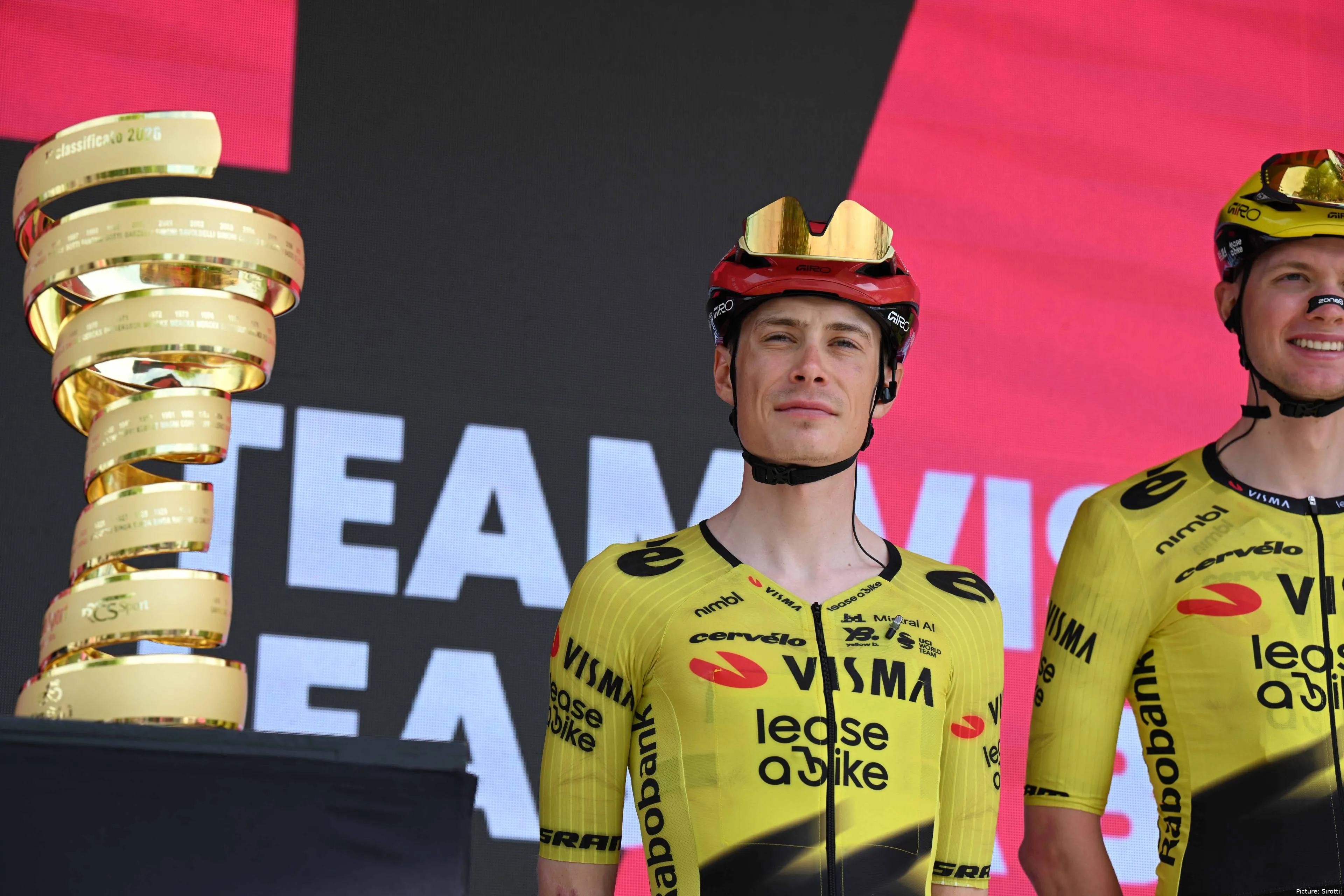
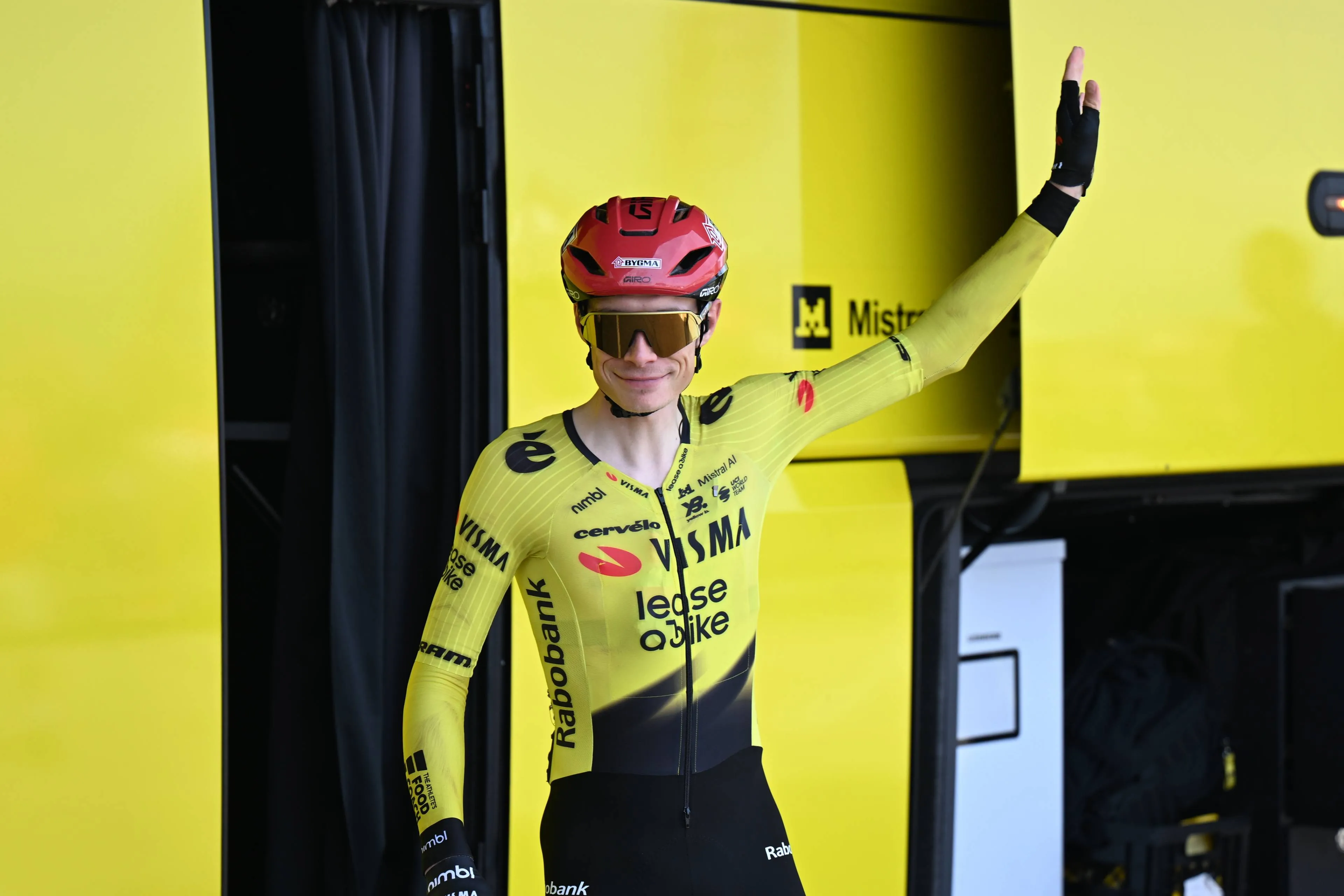
Jonas Vingegaard and Team Visma | Lease a Bike’s unusual positioning during the opening stage of the Giro d’Italia has already divided opinion, but former Vuelta a Espana winner Chris Horner believes the Danish favourite and his team read the race exactly right.
Visma spent much of the run-in to Burgas near the back of the peloton, deliberately avoiding the sprint-team battle at the front on a wide, flat stage where the five-kilometre rule reduced the risk of time loss in the event of late trouble.
The approach drew criticism from Brian Holm, who said it looked “very, very strange” to see the Giro favourite and his team sitting so far back during the finale of a Grand Tour stage. Horner, however, saw the tactic very differently.
Analysing the finale on his YouTube channel, the American argued that Vingegaard and Visma had correctly identified a rare moment when the safest and smartest place for a GC contender was not necessarily near the front.

“There’s no threat right now”
Horner pointed to the conditions of the stage as the key reason Visma’s tactic made sense. With wide roads, little wind and the five-kilometre rule in place, he felt Vingegaard had no reason to spend energy battling with the sprint teams.
“At this moment, this is the time to break the rules,” Horner said as he discussed the final 20 kilometres. “You guys think I call these guys knuckleheads? No. It’s super wide. And they have the five-kilometre rule. So if there are any crashes within the last five kilometres, then everyone gets the same time.”
For Horner, the combination of route, regulation and Vingegaard’s status as the leading overall contender made the tactic logical rather than reckless. “Between the wide roads, between the no crosswinds, between nothing being very dangerous, and between Jonas Vingegaard being the hot-handed favourite to win the general classification here at the Giro d’Italia, I love the tactics right now,” he explained.
Visma were not alone near the back, with several other GC contenders also choosing to stay clear of the high-stress battle for sprint position. Horner viewed that as further proof that the decision made sense. “Visma | Lease a Bike are playing back here with eight riders at the back of the peloton along with other GC riders around them,” he said. “So there’s no threat right now.”
Horner also noted that Vingegaard was surrounded by a broader group of overall contenders who had made the same calculation. “They’ve got a ton of GC guys back there,” he added. “We see Pellizzari back there from Red Bull - BORA - hansgrohe. Ben O’Connor is back there.”
Horner questions Bahrain’s positioning
While Horner praised Visma’s calm approach, he was far less convinced by teams fighting for space near the front without a clear sprint objective. Bahrain - Victorious were one of the squads he singled out as being too involved in the battle for position, despite not having an obvious contender for the stage win.
“When you go back up front and you see Bahrain Victorious on the right side of the peloton with about 18 kilometres to go, basically anywhere from 20 to 18, and they’ll stay up there even longer, you know these guys are knuckleheads because they don’t have anybody to win the sprint,” Horner said. “They’re up there wasting energy while Visma | Lease a Bike are at the back, right back there not worried about losing time on today’s stage because it’s not a risky proposition to stay back there.”
That assessment places Horner firmly on the opposite side of the debate to those who felt Visma looked too passive during the finale. In his view, the real danger was being dragged into the sprint fight unnecessarily. “It is risky if you want to be at the front,” he added, “because that’s where the crashes can happen.”
“Those are the smart guys”
Horner later returned to the same point when describing the increasingly crowded front of the peloton inside the final 10 kilometres.
With the sprint teams spreading across the road and the bunch becoming 15 riders wide and 15 rows deep, Horner argued that the riders staying away from that fight were making the more intelligent decision. “Everyone else outside the top 15 rows back there, those are the smart guys that want to stay out of trouble because they’re all GC guys, with the exception of Bahrain Victorious still battling at the front,” he said.
He even described Victor Campenaerts and Visma as “still coasting back there, chilling like a villain” as the sprint teams battled for control up front. That line captured the wider tactical divide of Stage 1. Some teams treated the final 20 kilometres as a positioning fight that had to be won. Visma treated it as a danger zone that could be avoided without meaningful cost.

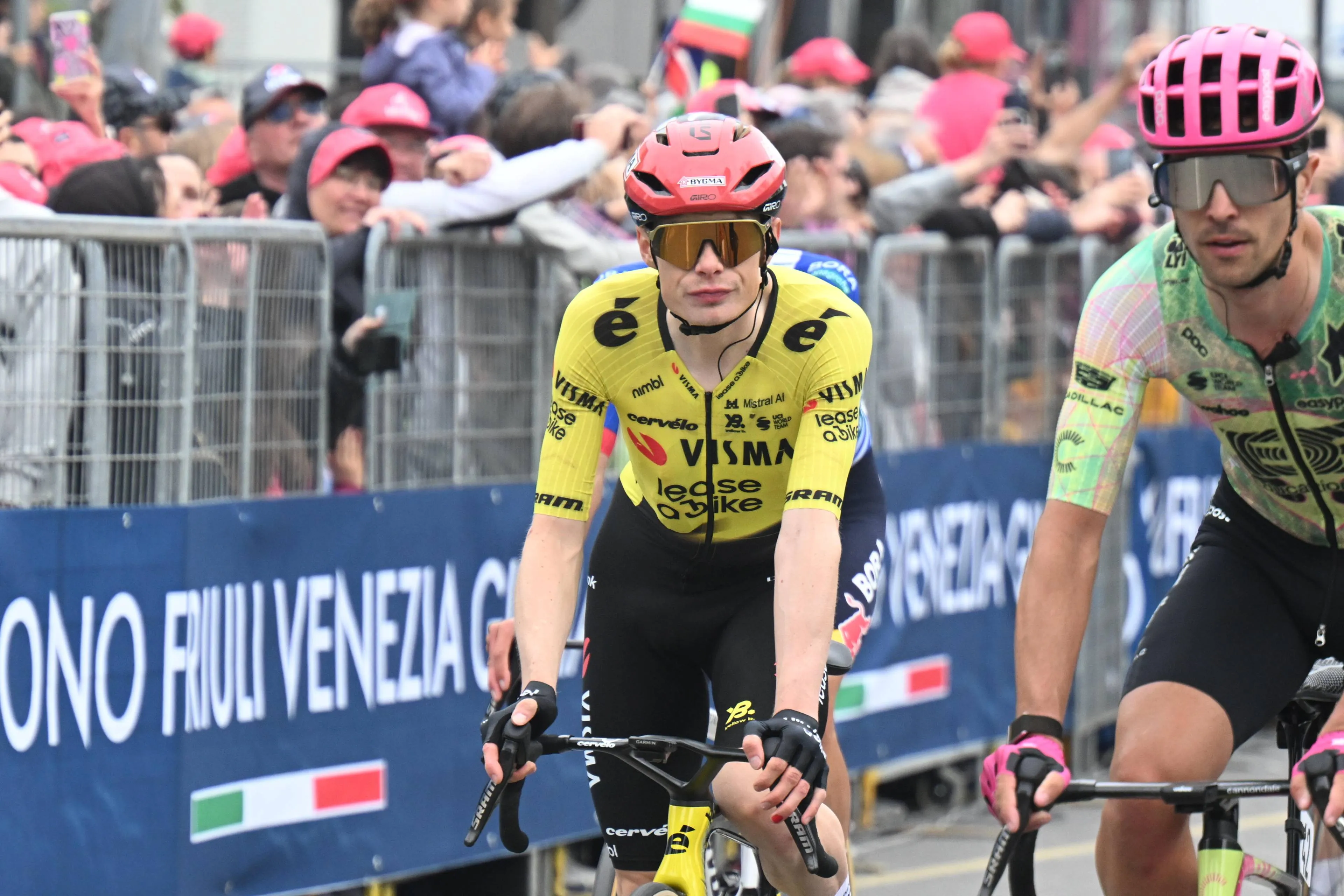
Victor Campenaerts and Jonas Vingegaard at the 2026 Giro d'Italia
A tactic that split opinion
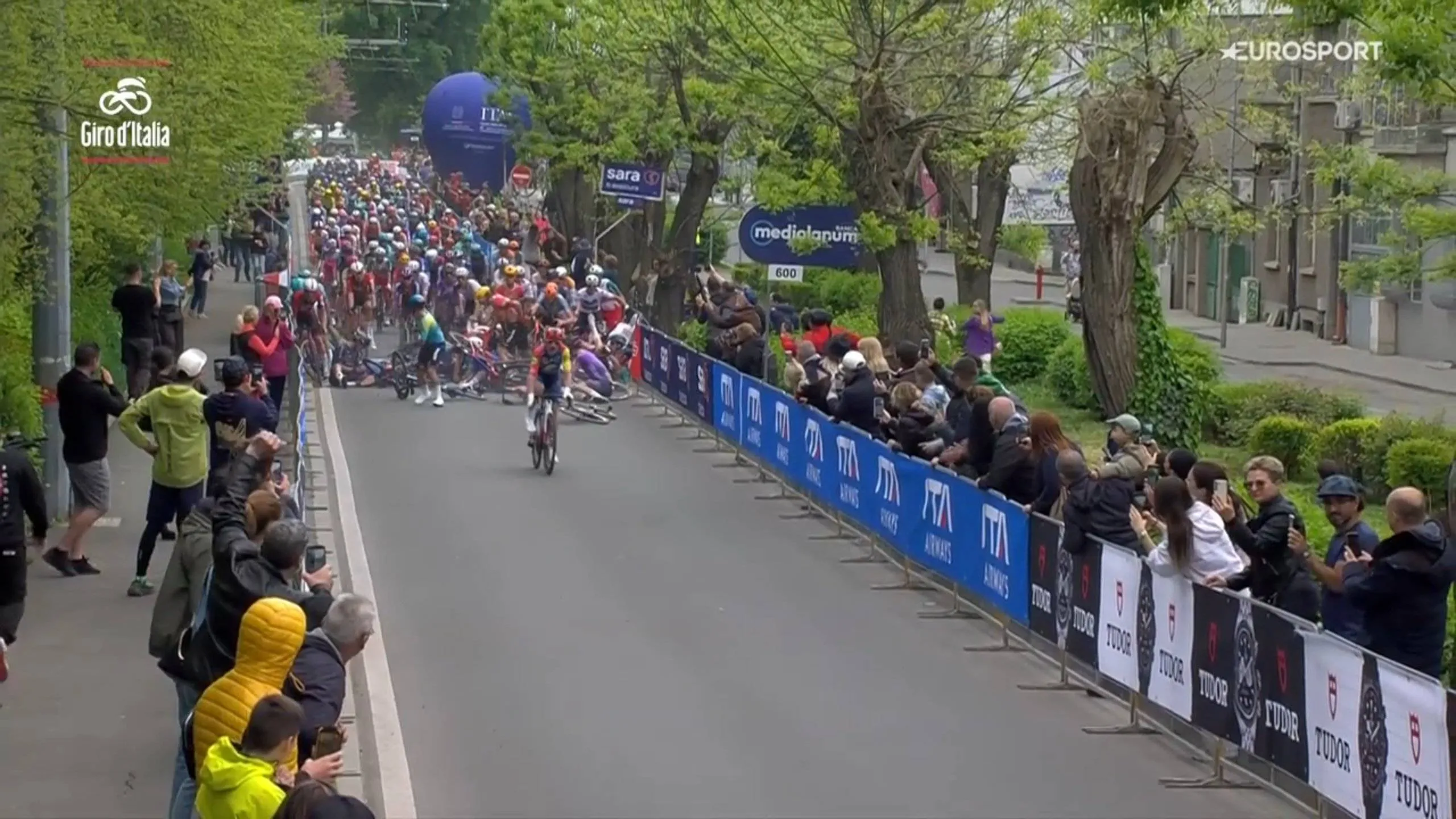
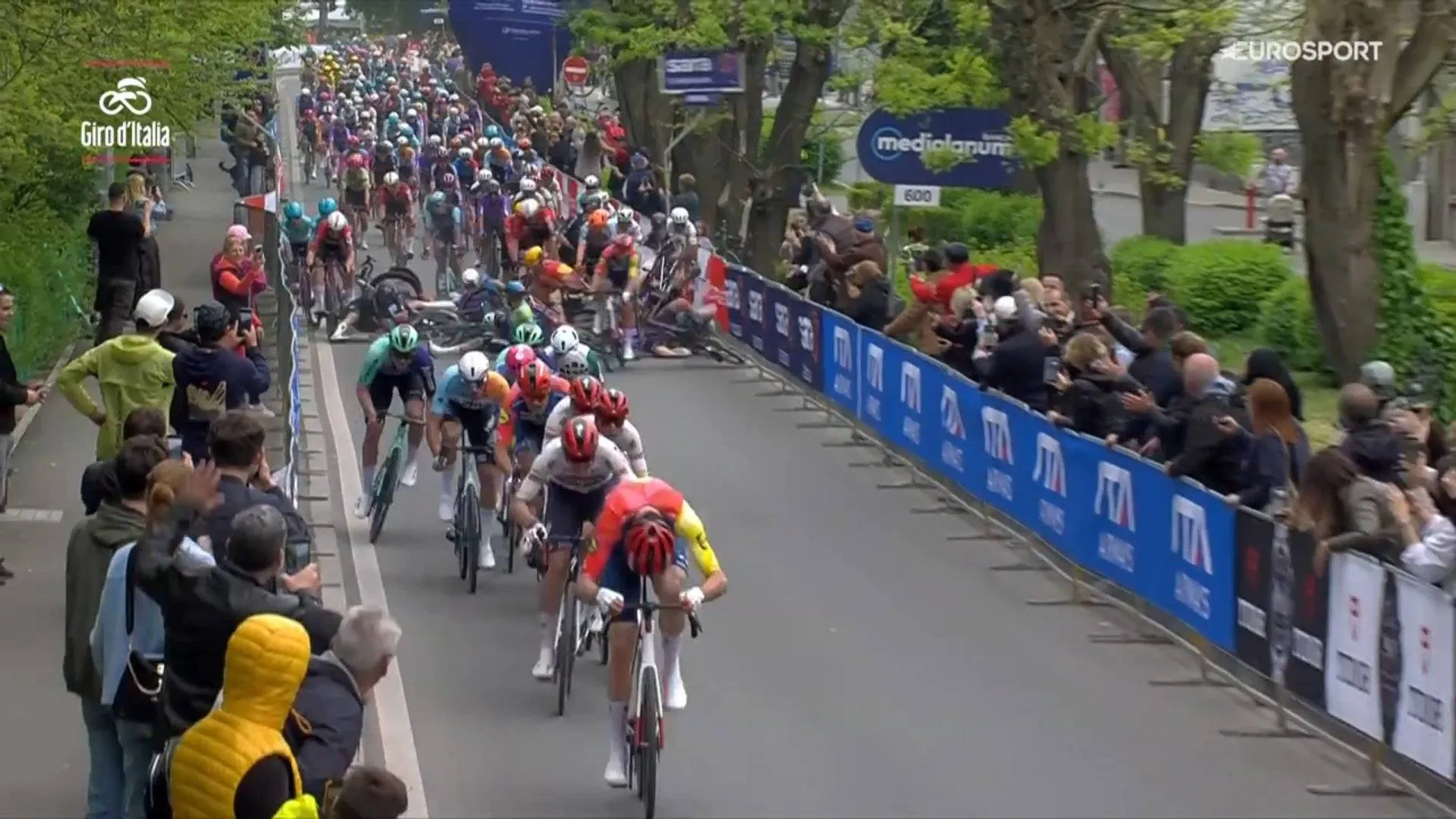
Visma’s approach was ultimately vindicated by the outcome in Burgas. A major crash inside the final kilometre split the field and wiped out much of the sprint pack, while Vingegaard and his team finished safely without losing time.
That does not mean the tactic can be applied every day. The same logic depended heavily on Stage 1’s specific conditions: wide roads, minimal wind, limited technical danger before the protected zone and a finale dominated by sprint teams.
Stage 2 already presented a very different challenge, with climbs, wet roads and a more technical finish forcing Visma to ride closer to the front. But as a one-day decision on the Giro opener, Horner had little doubt.
While Holm questioned whether the sight of the race favourite at the back looked too casual, Horner saw a team saving energy, avoiding stress and trusting the rules of the stage. For Vingegaard, that made the calmest option the smartest one.
claps 1visitors 1
Just in


Popular news
Latest comments
- and i made a fool of myself once again: Jonas Vingegaard blows kisses to the camera as a personal greeting and signal to his family. According to reports from the 2026 Giro d'Italia and previous races, this gesture has become a trademark for him. It serves as a way to say hello to his wife, Trine, and their children while he is away competing, signaling that "all is good" on his end.Ketterechts09-05-2026
- Oof. Pro cycling is too brutal sometimes.
 MarkFour09-05-2026
 - He crashed again and was taken out of the race.
 KerisVroom09-05-2026
 - Wow, Jay Vine had to abandon just now (I'm watching the race live). Bad luck hit Jay again - nothing he could've done there. Most of the UAE team got taken out at the front in wet slippery conditions going round a fast bend in the road. The crash looked horrible with a lot of the riders hitting the metal roadside barrier. Yates' face covered in mud and looking like he rode Paris Roubaix.Pogboom09-05-2026
- That slow-motion replay was awful to see. Hope they’re all okay.antipodeanpedalfan09-05-2026
- Really, the route planning for these Bulgarian stages has been terrible
 Rafionain-Glas09-05-2026
 - 'My man Vic (-tor Campenaerts)"Rafionain-Glas09-05-2026
- That was one nasty crash, and something that you really hate to see happen. Let's hope that everybody is going to be alright.
 santiagobenites09-05-2026
 - Well, wider handlebars will at least keep riders safer from certain barrier feet at sprint finishes ;-)Mistermaumau09-05-2026
- Those barriers aren’t even newsworthy, nothing compared to the ones left over for amateur racing. Any rider going over those feet us way too close already, practically scraping forearms against publicity and definitely during the wobble of a sprint.Mistermaumau09-05-2026
Loading
1 Comments