“It looked very, very strange” - Danish icon questions Jonas Vingegaard's 'nonchalant' Giro d'Italia tactics as Visma quickly defend strategy
Cycling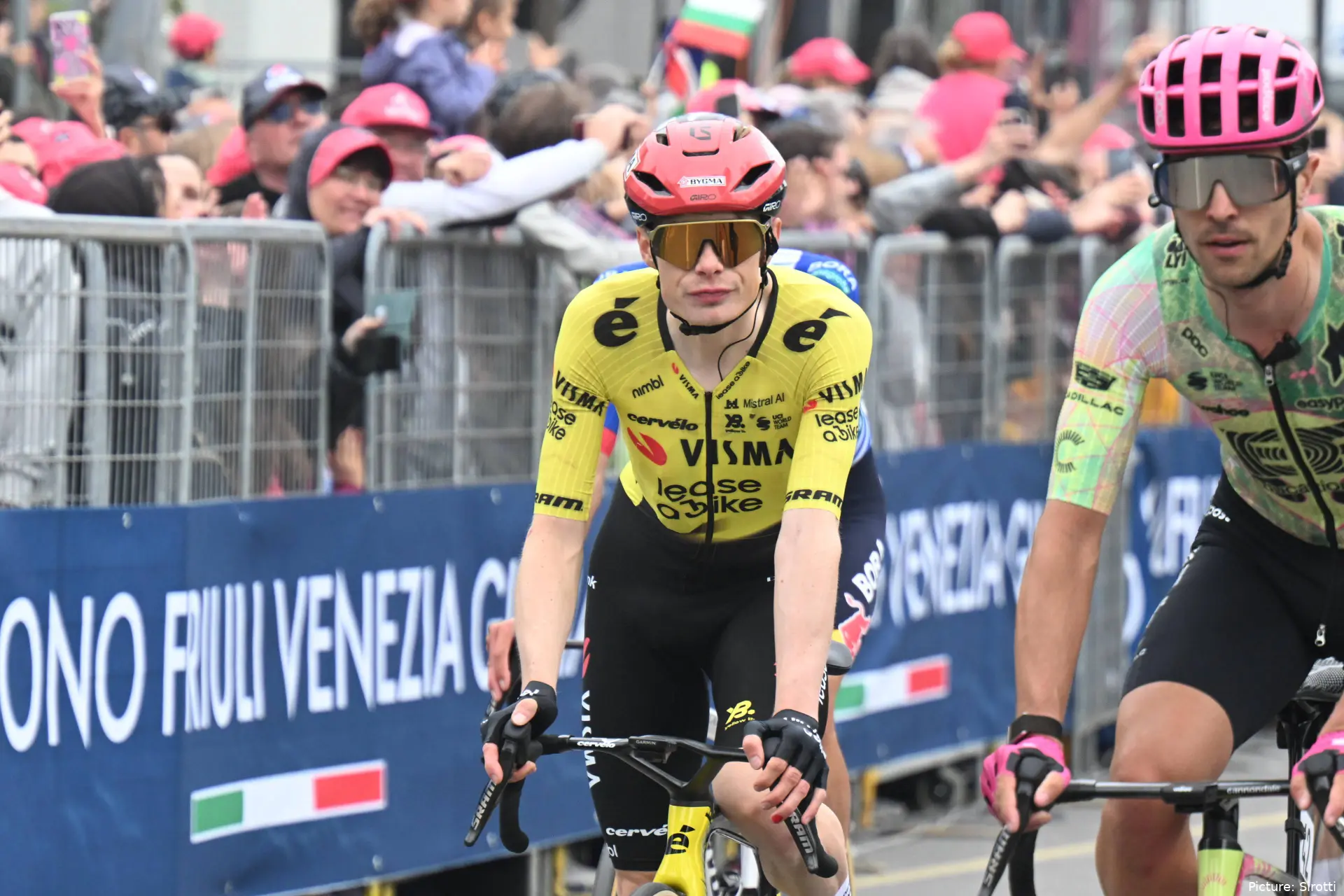
Jonas Vingegaard and Team Visma | Lease a Bike’s unusually relaxed approach during the opening stage of the Giro d’Italia has sparked debate in Denmark after former rider and long-time sports director Brian Holm openly questioned the tactic before quickly receiving an explanation from the team itself.
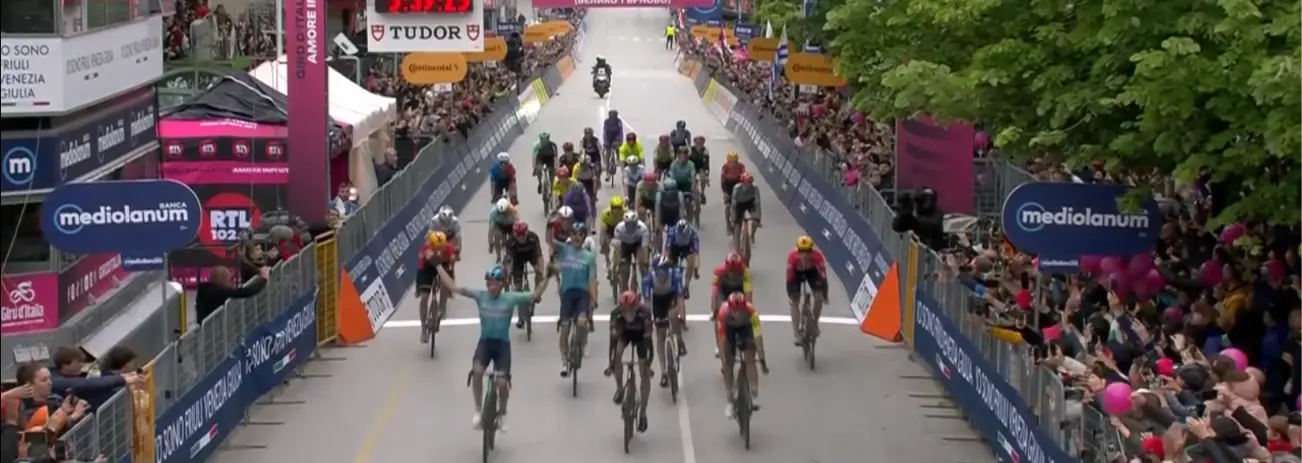
Throughout large parts of Stage 1 into Burgas, Vingegaard and the rest of the Visma squad spent long periods riding near the back of the peloton rather than fighting for position close to the front alongside the sprint teams. The strategy ultimately worked, with Vingegaard safely avoiding the major crash which split the peloton inside the final kilometre, but Holm admitted afterwards that he still found the approach surprising for the overwhelming favourite to win the Giro d’Italia.
“Honestly, when the big favourite and the whole team are sitting right at the very back, I think it looks very, very strange,” Holm said on Eurosport.dk after the stage. “We haven’t really seen that before. Maybe people did it back in the 1980s.”
Holm even described the tactic as slightly “nonchalant”, despite acknowledging the chaotic finale may ultimately have justified Visma’s decision. “Sure, there was a crash at the end, but I still think it looks strange when you’re the overwhelming favourite to win,” Holm explained.
“It was the slowest bike race they had ever ridden”
Holm did, however, admit there may have been a logical explanation behind Visma’s confidence at the back of the peloton during such a nervous sprint stage.
After the finish, the Danish analyst said several riders had described the opening stage as unusually calm and slow for a Grand Tour opener. “We spoke to some of the riders after the stage - Mikkel Bjerg, Oliver Naesen and Rasmus Sojberg,” Holm explained. “They said it was simply the slowest bike race they had ever ridden. They averaged 110 watts. So maybe that explains a little why they were sitting at the back and thinking nothing at all was going to happen. But we can’t avoid the fact that it still looked strange.”

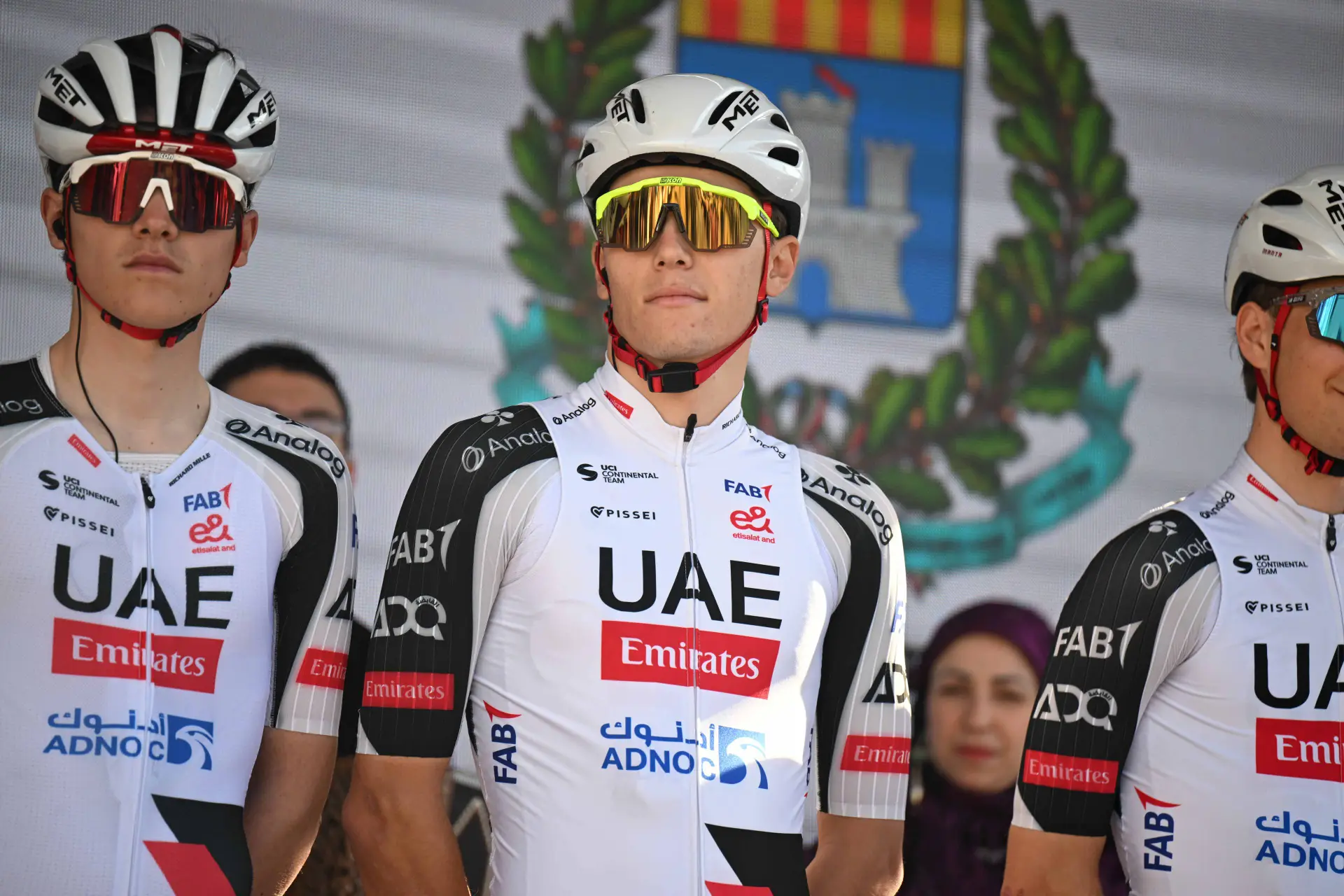
Jonas Vingegaard ahead of stage 1 at the 2026 Giro d'Italia
Visma reveal tactic had already been planned
Before Stage 2, Holm and Eurosport colleague Bastian Emil Goldschmidt then directly put the questions surrounding the tactic to Visma sports director Jesper Morkov, who revealed the team’s approach had actually been discussed internally long before the Giro began.
“We’ve actually used it a couple of times this year already, both in Paris-Nice and the Volta a Catalunya,” Morkov explained. “It’s really something we started talking about after last year, and also something we discussed over the winter.”
According to Morkov, the specific design of the Stage 1 finale made it the ideal scenario to apply the tactic. “Especially yesterday, it was a perfect finish to use this tactic because we had the big wide main road,” he said. “And then there was the five-kilometre rule, and the five-kilometre rule started before we entered the technical section. So if there had been a crash out on the big roads, we could actually quite easily have ridden past that crash.”
“We use it to save stress”
Morkov also stressed that avoiding the stress and energy expenditure of fighting for position is one of the major reasons behind the approach. “It’s actually something we’ve used several times both to save energy, but also to save stress,” Morkov said. “And in our eyes, it’s a little easier to ride around a crash when you’re sitting back there.”
Holm nevertheless continued to argue that the tactic also carries risks if the race becomes more selective without crashes or neutralisations. “If the crash hadn’t happened, he could maybe have risked losing time,” Holm warned. “When you sit at the back all day, I think you lose a bit of concentration. You need to be near the front at the end of a bike race.”
The debate is also unlikely to continue unchanged into Stage 2, with Morkov already admitting Visma planned to completely reverse the approach on the more complicated terrain around Veliko Tarnovo. “We obviously need to be up there,” Morkov concluded. “We need to position Jonas. In relation to what we’ve just been talking about, it will be the opposite tactic from yesterday.”
After spending the Giro opener deliberately avoiding the chaos around the sprint teams, Visma now appear set to place Vingegaard much closer to the front as the race begins to move onto more selective terrain.

Kieran WoodDeputy Editor-in-Chief
Kieran Wood is a sports journalist based in Wales and has been active in journalism since 2022. He regularly contributes to DartsNews.com and CyclingUpToDate.com, where he covers professional cycling and darts. In cycling, his work includes liveblogs from major races, including the Tour de France, the Giro d’Italia, and La Vuelta a España, alongside race reports and analysis. He has also conducted interviews with professional riders.
His reporting spans the full racing calendar, from one-day classics to stage races, with a focus on accurate, real-time coverage and clear contextual analysis. For statistics, results, and historical context, he regularly uses resources such as ProCyclingStats. To support reporting on rider activity and training context where relevant, he also references Strava.
In his work, Kieran places strong emphasis on careful sourcing, editorial accuracy, and updating articles as new, verified information becomes available.
claps 0visitors 0
Just in
Popular news
Latest comments
- Any artificial product should be reported.Any team that doesn't should be stripped of wins and fined.I know that this level of transparency does not and will never exist.All anyone can do is continue to test riders on a regular and surprise basis.If the test comes back clean then all any of us can assume is the rider is clean.
 Brucegel19-10-2026
 - Also, it's supposed to be hard to gain an advantage from drafting off Remco because he is so aero.Hills3319-10-2026
- How would stats back it up? You realise tactics involved could mean Vine saved his legs for a faster finish? Some riders can choose to go all out and fade later in the ride, others can hold steady state the whole way, and others can have a reserved start and power up later in the ride. You can't judge just by the stats unless you have power data to be able to prove Vine is riding faster even though he is putting out the same or less power (suggesting drafting). I'm sure the stats prove that Vine didn't cheat because UCI would monitor the stats to make sure this exact scenario doesn't happen (and disqualify them for drafting if the stats proved it).Pogboom19-10-2026
- Only one person would say such a thing here. Sorry to burst your bubble but I’m afraid that window of opportunity has now closed. You can beat some of the people all of the time and all of the people some of the time but you can’t beat all of the people all of the time.Jumpyjohn19-10-2026
- Both prizes are actually pathetic, almost amateur like, not even covering the cost of participatingJumpyjohn19-10-2026
- It depends on how you define doping and you would do well to give your definition so we can see how against it you are. If you consider the use (as a hypothetical example) of a new beneficial artificial product unknown to anti-doping agencies ok without considering asking them if it would constitute doping if you told them about it then we’re never going to agree on who could be or couldn’t be doping and according to what threshold, moral, statistical, legal, comparative. In football even financial doping is now consideredJumpyjohn19-10-2026
- I can’t wait to follow Pogi's races in 2027. Cycling will be exciting again!!!PogiSloFans19-10-2026
- I saw it for quite a while and the stats back it up
 Rafionain-Glas19-10-2026
 - Hope he can make a redemption by winning all grand tour or all monuments in single seasonZamorano19-10-2026
- great for Brandon to get this monkey off his back - first win in Rainbow has got to feel good.mij19-10-2026
Loading
Write a comment