“He’s so bored that he says: ‘I’ll go and ride Roubaix because I want a challenge’” - Tour de France dominance has become too easy for Tadej Pogacar claims Arnaud Demare
CyclingSaturday, 18 April 2026 at 19:00
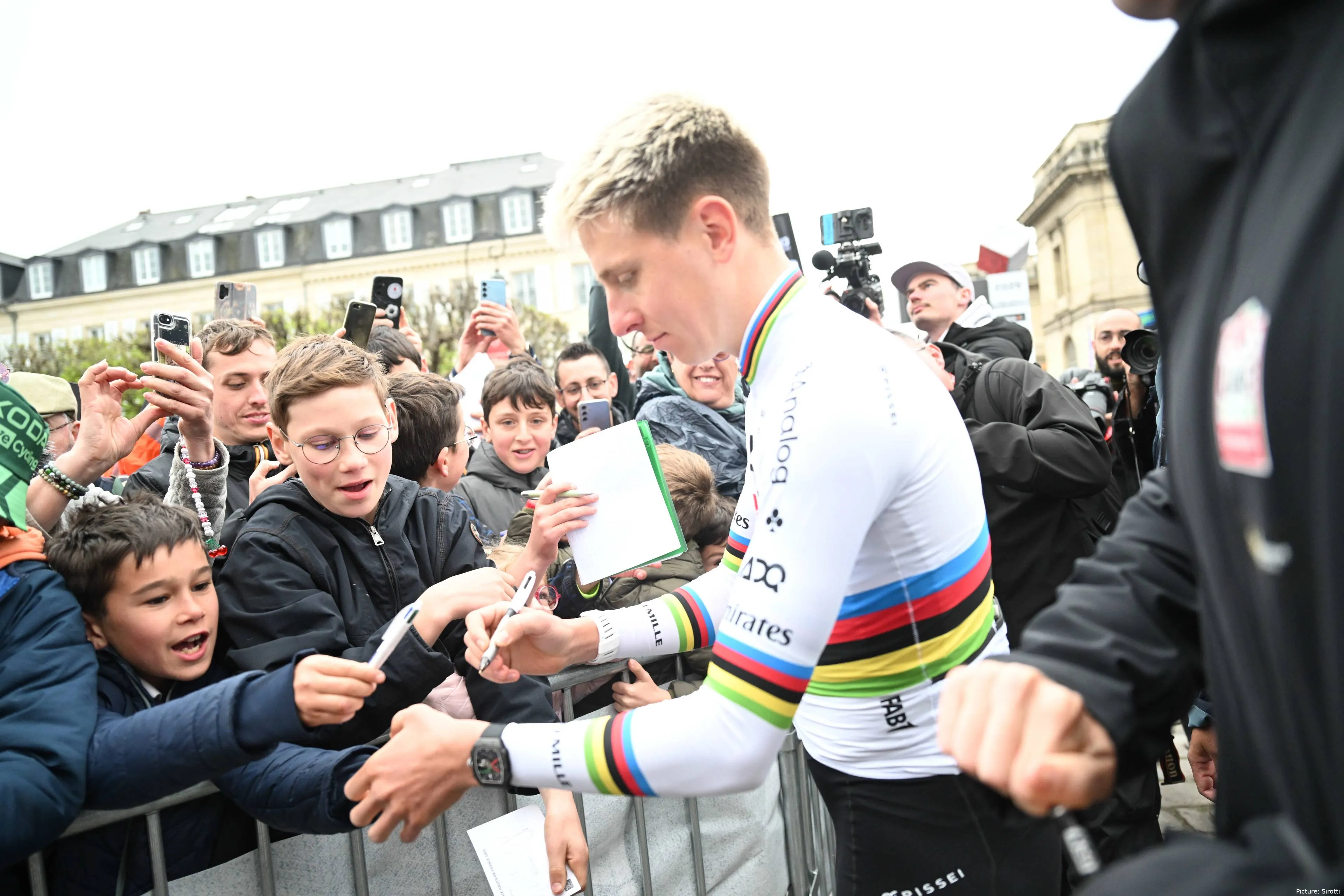
The question around Tadej Pogacar is no longer just how much he wins, but what is left to challenge him.
In the days following Paris-Roubaix 2026, that debate has taken on a different edge, with former French sprinter Arnaud Demare offering a blunt assessment of the Slovenian’s dominance and the motivations behind his increasingly varied race programme.
Speaking on RMC Sport, Demare did not attempt to soften his view of where Pogacar now sits within the sport.
“Yes I think Pogacar is the best cyclist in history. The guy is so bored that he says to himself: ‘I’ll go and ride Roubaix because I want a challenge’. He needs to challenge himself. At a certain point, he gets bored. He comes to Roubaix knowing he can’t win.”
Roubaix as the exception, not the norm
That framing places Paris-Roubaix in a very specific role within Pogacar’s calendar. Rather than being a realistic target in the same way as the Grand Tours or Ardennes Classics, it becomes something closer to a self-imposed test. A race chosen not because it suits him, but because it does not.
His two appearances so far have both ended in second place, including another near miss in 2026, reinforcing the idea that even in defeat, the performance remains exceptional. For Demare, that only strengthens the argument. Pogacar is not simply winning the races that fit him. He is actively searching for the ones that do not. “What he’s doing is already huge and at some point, he will tick it off.”

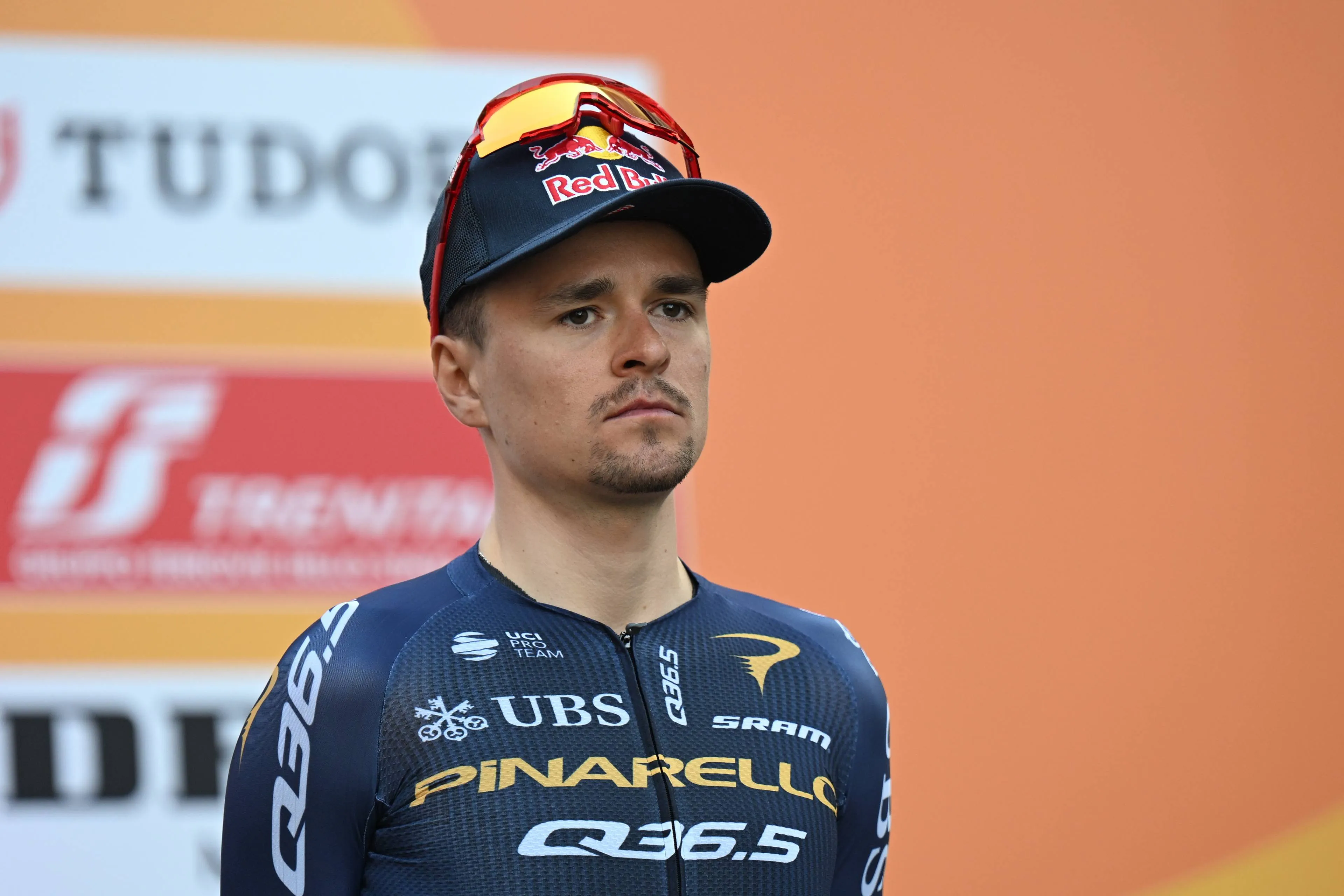
Tadej Pogacar ahead of Paris-Roubaix 2026
A dominance that reshapes the Tour
That same dominance, however, comes with consequences for the sport itself.
Demare points specifically to the Tour de France, where Pogacar’s control of the race can remove uncertainty before it has time to develop. “The Tour is starting to become difficult to watch, but at Roubaix everyone wanted to see what would happen. Would he win? It’s brave. He has the will to come, he’s not afraid.”
It is not simply a question of results, but of how those results are achieved. The image Demare describes is one of ease. A rider capable of letting the race unfold, then reasserting control without apparent strain. “He knows it comes easy to him. In the Tour de France, he even lets the break go and you think we won’t come back. So you position yourself for the climb to attack, you’re at full gas, and he’s chatting, he’s relaxed. That’s when you realise you’re not going to last long. He’s just so strong.”
“You race for second place when he’s there”
For those racing against him, the impact is not abstract.
Demare’s view reflects a reality often hinted at within the peloton but rarely stated so directly. When Pogacar is present, expectations shift. “He’s so strong that he’s strong at everything. In the sprint, he got beaten by Van Aert at Paris-Roubaix. He lacks the punch of a sprinter, if you can even say he lacks that…”
Even that perceived limitation is relative. Across stage races and one-day events, Pogacar’s range continues to stretch beyond traditional boundaries, leaving fewer and fewer opportunities for others to impose themselves. “If I was in the place of the puncheurs and climbers, it would be frustrating. I was winning in other races, but when he’s there, you race for second place.”
A career built on rewriting limits
What ultimately separates Pogacar, in Demare’s view, is not just his level, but his direction. “Pogacar is a legend and he wants to keep writing that legend. He wants to write a story that no one has written.”
That ambition reframes even the races he does not win. Paris-Roubaix, with its unpredictability and resistance to control, becomes part of a broader project. Not simply to add victories, but to test the limits of what is possible within modern cycling.
For now, it remains one of the few races that still pushes back. But as Demare’s assessment suggests, even that may only be temporary.
claps 1visitors 1
Just in

Popular news
Latest comments
- Good luck with the recovery Micheal.Cyclingsbestfan18-04-2026
- Did Mou say this: “Yes I think Pogacar is the best cyclist in history. The guy is so bored that he says to himself: ‘I’ll go and ride Roubaix because I want a challenge’. He needs to challenge himself. At a certain point, he gets bored. He comes to Roubaix knowing he can’t win.” Oh really, Mou didn't say it? Oh yeah, the former professional French sprinter Arnaud Demare said it. If Mou said it, he wolud get backlash again for being a Pogi fanatic. Eat your hearts out and suffer...I'm LOL !!!Dalmatian-Dog18-04-2026
- Also Giro was >2 km/h faster than the Tour last year but that's immaterialSexass18-04-2026
- What makes sponsors of French teams put their hands in their pockets? I'd argue a 19 yo phenom, who just won France's first ever WT stage race, making his TdF debut, ranks quite highly. Does Decathlon (or indeed any team!) have 8 riders more worthy of a Tour spot? Seixas isn't made of candyfloss, and he'd be under the *least* pressure if he debuts this summer (compared to debuting aged 24 à la Remco for example). Look at Bernal making his GT debut at the 2018 Tour, then winning in 2019! Vuelta GT debuts aren't obligatory; from both a sporting and commercial perspective it makes so much sense to let Seixas race the Tour!Sexass18-04-2026
- I like Paul and feel he could very well be the future. However, until we see some GT results and an ongoing face control like we have so far...let's not say he will win a GT. Let's say he should IF he can get better and keep up his learningmd197518-04-2026
- Pay him the money and sign him up for a long time. He’s French and good looking. You’ll make up the $8 million in marketing itself. He’ll be all over fashion magazines and advertisements. But a generational talent doesn’t come along that often. He’s dispatching his rivals with ease. He can keep up with Pogacar for quite a while. He’s the real deal. Make him an offer he can’t refuse ☺️PogiFan2Day18-04-2026
- He does seem to be trying to deflect attention from his team's strange behaviour.Hills3318-04-2026
- interesting article on here today about Michael Matthews - and a TRAINING RIDE CRASHmij18-04-2026
- training ride crash . . . @mistermaumau - you discounted these in the Roubaix discussion.mij18-04-2026
- Of course there is pressure it is the biggest race in the world. He has no experience of racing 3 week tours .the TDF is about 2mph faster and team riders going there are not going for experience but to win for their sponsor who pays the team wages and wants the air time o tv.paultryan200218-04-2026
Loading
1 Comments