Tom Pidcock reveals what you didn't see on TV - "I didn’t know what I’d hurt because everything was hurting and I couldn’t move"
Cycling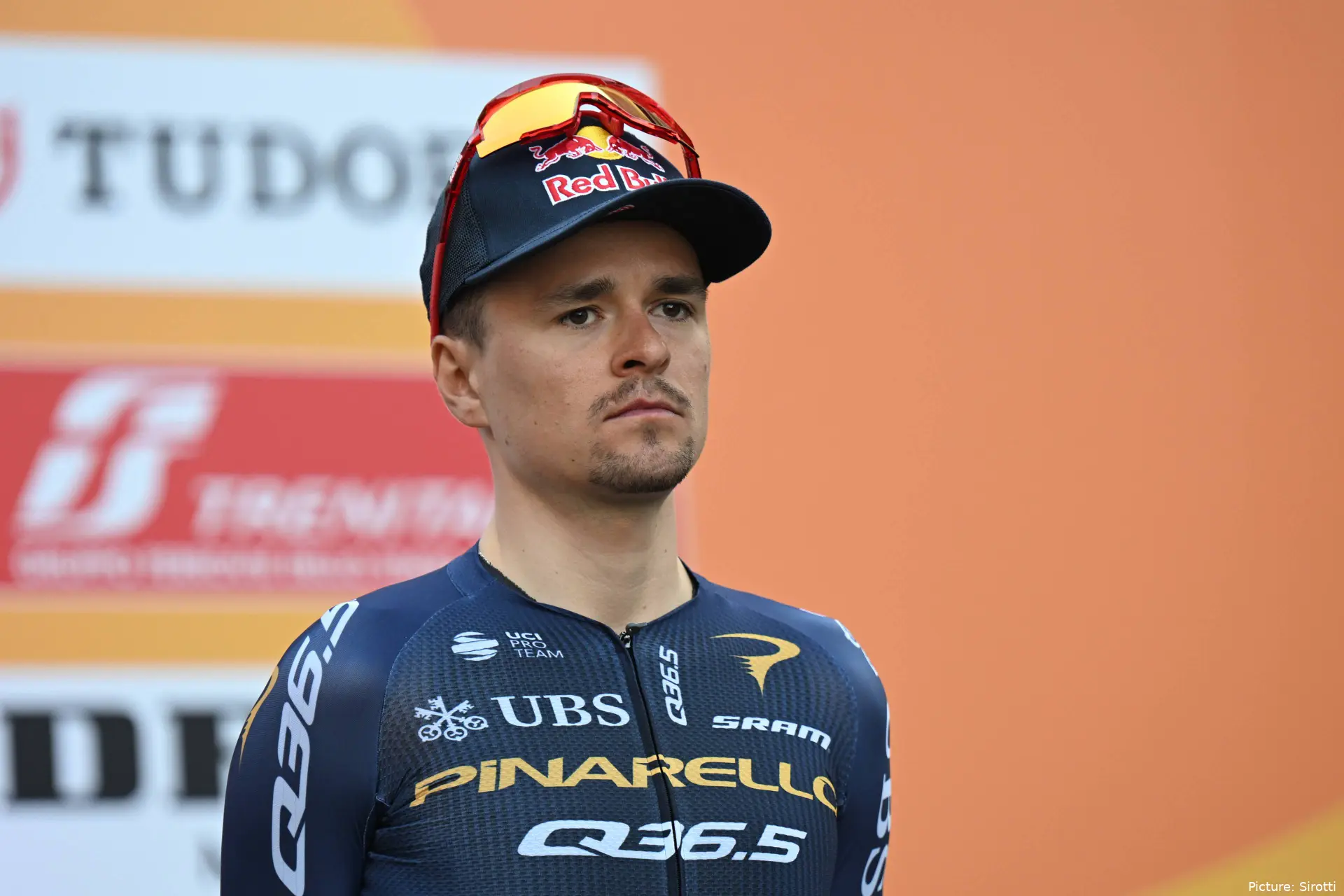
Tom Pidcock's start to the season was very strong, with podium results in many races; a victory at Milano-Torino and a second place only to Tadej Pogacar at Milano-Sanremo. His spring had everything to continue being a major success, but it almost ended on stage 5 of the Volta a Catalunya where he crashed out of a ravine. The Briton returns to racing within days, however he reveals the impressive details of his crash and injuries; and how he has been able to recover from them so quickly.
That day in the Pyrenees, finishing in La Molina, also saw João Almeida and several other riders crash on the technical descent of the Collada Sobirana, the penultimate climb of the day. It didn't look like a location that on paper would give the riders much trouble, however that ended up being the case. Pidcock went down a ravine after misjudging a corner whilst he was drinking. The fall was inevitable, in his point of view.
“I saw a fencing barrier, but I decided not to go for that because I thought ‘I’m going to go flying down the mountain into god knows what’. So instead I aimed for a tree — it wasn’t much more than a few branches really," Pidcock recalls in an interview with The Athletic.
“I landed, and just remember feeling like my arm couldn’t move. My leg was dead. And I was thinking that nobody else had crashed. I was alone down this hill, I didn’t know what I’d hurt because everything was hurting and I couldn’t move. And I didn’t know how long I was going to be down here for.”
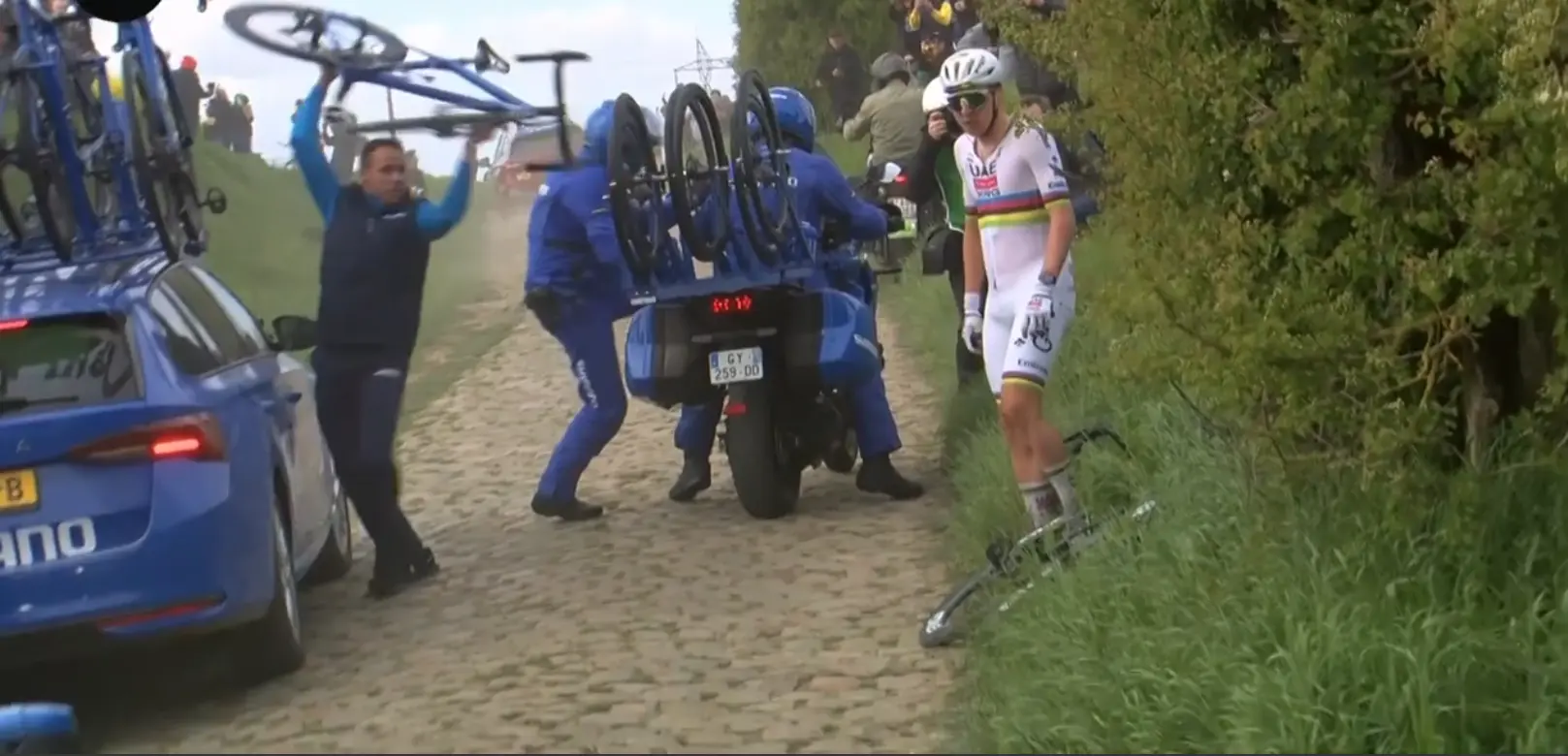
The details make for an incredible account of a crash that the TV broadcast did not capture. With no TV motorbike or helicopter footage, Pidcock just went missing from action. Shortly after it was learned he had crashed, and despite his injuries, he managed to finish the stage which ended atop a 16-kilometer long climb.
“Luckily, because of the way I had landed, I could send on the radio that I’d gone off, but the team car had already gone a kilometer down the road. And so after a few minutes, which felt like half an hour, I was able to move. And then I climbed out.”
Major injuries diagnosed
It put a stop to an excellent spring where his form looked to be perfect. “I think it’s partly why I crashed, because I was going so well. I was a little bit too complacent. That stage was the first day in proper mountains of the year, and I was feeling really good. Everyone was descending really nervously, pretty badly, all day. So I was leaving a gap to do my own pace, have a drink, have a gel," he details. "You know, when everyone starts stressing, I think that if I can be calm, it helps everyone keep calm behind me, we can just get down the descent safely without everybody racing for position and needing to be at the front for the final climb of the day".
“And everything just all at once went wrong. I misjudged the speed, I tried to slow down and then skidded, lost my balance. I tried to knock off some speed and go on the grass — and just ended up flying off the road. It was a really weird crash that probably shouldn’t have happened, but I was just maybe a bit too relaxed.”
“Actually, my legs didn’t feel that bad, it was my hand, which is still bruised, and my elbow and shoulder. They were the things that really hurt. And I thought: ‘There’s no way that this is right.’ But I thought that at least if I finish the stage, I have options to keep racing with a hurting arm. And it turned out actually that it was alright — but my knee had quite serious damage to it. The next day, it swelled up like a balloon.”
However the true consequences of the fall weren't felt right away, but instead only the next day. He did not start the sixth stage and the injuries became much more clear. It was his knee, which at that point had swollen up significantly, which was giving him problems.
Pidcock did suffer a fracture to the tibia but the extensive diagnosis of the leg injury included - besides bruising - damage to the ALL, MCL and an LCL sprain. Essentially, he avoided fractures to the knee but the impact was very strong, something that was easy to interpret.
Miraculous return after only a few weeks
Pidcock, a classics rider by nature, was likely to not only miss out on the Volta a Catalunya in itself, but also the Ardennes classics where he has in the past performed well and was expected to be leading Pinarello Q36.5 Pro Cycling Team. "The initial scans were far worse than what showed after a few days. They say it’s like a Picasso painting when you first do an MRI after a crash, you have to wait a few days until it calms down.
“I went to see a specialist in Barcelona, and he was asking about my race programme for the whole summer. He really thought it was going to be more serious because of the ligament damage — the MCL that I tore, if that snaps, you can’t do anything — but as it was, you just have to wait for it to get better.”
And so Pidcock waited, without doing anything. “I don’t like doing nothing, it’s difficult. We tried to get back on the bike to spin my legs after a week or so and it kind of made it worse. I was just thinking ‘you’re not in control’." But there would then be a rapid improvement in his condition, and shortly after he was able to get back on the bike. Whilst it's not expected that he carries his best form, the team has deemed it safe to return to racing.
“In reality, I’m going to be back racing after three, four weeks, it wasn’t the end of the world — but I had a new perspective on what it’s like to get properly injured. When I broke my collarbone, I was running on the road again after five days, so that was easy. It’s not really a cyclist’s injury, but it’s also lucky that I’m a cyclist. The pedalling motion is fine, but twisting, like in other sports, would have been more of an issue.”
Read also
Return to racing at the Tour of the Alps and eye on Liège-Bastogne-Liège
This return will take place at the Tour of the Alps, starting on Monday and having a five-day route through the mountains of northern Italy and also Austria. It is a race that is quite difficult in nature, but as Pidcock is still aiming to perform at Liège-Bastogne-Liége, the race will serve to get the racing rhythm back, whilst also looking at the big picture which is his Tour de France return.
“It's a good opportunity now to do another race with some big climbs. The more races like that I do, the more it’ll bring me on as a rider looking towards Grand Tours and performing in the mountains. I think it’ll also be a bit of a kick in the arse to get in good shape for Liège. It might not work, I might be completely knackered, but there’s nothing to lose.”
He has chosen it instead of the nervous and very explosive classics such as Amstel Gold Race and Flèche Wallonne which he initially had in his schedule, but will help attract more viewers onto the mid-week race as well. What he can achieve there is only something that can be discovered throughout the week.
“There’s a lot of unknowns. I feel actually pretty good in training, but that’s only one side of the story. You know, maybe the rest did me good, but when you have that amount of time off, because we normally train so much, it quickly falls away. But also, the reason why we’re doing a race is because I actually feel better than we thought.”
Read also
Rúben SilvaEditor-in-Chief
A founding contributor to CyclingUpToDate since its launch in January 2022, Ruben Silva has played a central role in shaping the site’s editorial direction and long-term growth. Before joining the project, he built his experience through independent blogging at Echelons Hub and by producing race previews for Ciclismo Internacional, developing a strong analytical voice rooted in daily engagement with professional cycling.
Beyond editorial work, he has been closely involved in the expansion and coordination of CyclingUpToDate’s wider network, helping establish and support sister platforms across multiple languages. This includes ongoing collaboration with CiclismoAlDia (Spanish), CiclismoAtual (Portuguese), WielrennenUpToDate (Dutch), and RadsportAktuell (German), contributing to a shared editorial vision and consistent international coverage.
He also helps oversee editorial governance across the network, setting standards for accuracy and consistency and coordinating updates or corrections when needed.
Originally from the Porto metropolitan area in Portugal, he holds a bachelor’s degree in Geography. His path into cycling journalism was shaped not through formal media training, but through independent reporting, community engagement, and sustained on-the-ground involvement in the sport.
Over the course of his career, he has conducted approximately 100 interviews across road cycling and cyclocross, ranging from one-to-one conversations and online formats to press conferences and on-site pre- and post-race coverage. His interviews include leading riders, team managers, and prominent figures within cycling media: Tadej Pogacar, Jonas Vingegaard, Mathieu van der Poel, Primoz Roglic, Wout van Aert, Joao Almeida and Tom Pidcock; managers like Patrick Lefevere and Joxean Matxin; and YouTube personality Bryan Kennedy (BKXC)...
Within 18 months of launch, he helped grow CyclingUpToDate’s English-language platform into one of the most-read cycling news websites, built entirely from the ground up. As both a professional journalist and lifelong cycling enthusiast, his focus remains on delivering accurate, timely, and well-contextualized coverage.
claps 6visitors 6
Just in

Popular news
Latest comments
- "And we’ll avoid rushing from race to race"...LOL he took all that time off between the end of the Tour and the Canadian one day races ! That got him one win and a failed worlds RR title ! Only thing he got a was TT titles and a Euro championship against a weak field !frieders321-10-2026
- Rasmussen hasn't been relevant for years and that's only because he was booted out of the tour wearing the yellow due to failed doping !frieders321-10-2026
- Yep Pogi can't win the Vuelta if he doesn't cross the finish line in stage 21! PogiFanStalker can't seem to understand that.frieders321-10-2026
- This PogiFanStalker can't seem to help himself with his constant nonsensical comments here.frieders321-10-2026
- Only thing boring here is reading your constant drooling comments about him!frieders321-10-2026
- So much clickbait hereDAS21-10-2026
- Yes, this site has truly become a joke... and about 3/4 of the commentators. For most of them UAE are dopers and Pogi is boring??? They're brainwashed and want Pogi out of cycling.... because he's boring. Yes, in their f***ed up brains, Pogi is the G.O.A.T. ... but he's boring???????PogiSloFans20-10-2026
- As long as the anti doping agencies are on the up and up and doing all they can I can live with the world we now live in without suspicion lurking in the back of my mind all the time.
 Brucegel20-10-2026
 - The message to honour the leaving Felix Gall's performances was more enthusiastic
 Rafionain-Glas20-10-2026
 - "We all know he would have won by a big margin if he didn't crash out." But he did crash out, so why does it matter?Rafionain-Glas20-10-2026
Loading
Write a comment