“Visma see him as Jonas Vingegaard’s successor” – Experts tip Jorgen Nordhagen for future Grand Tour leadership
Cycling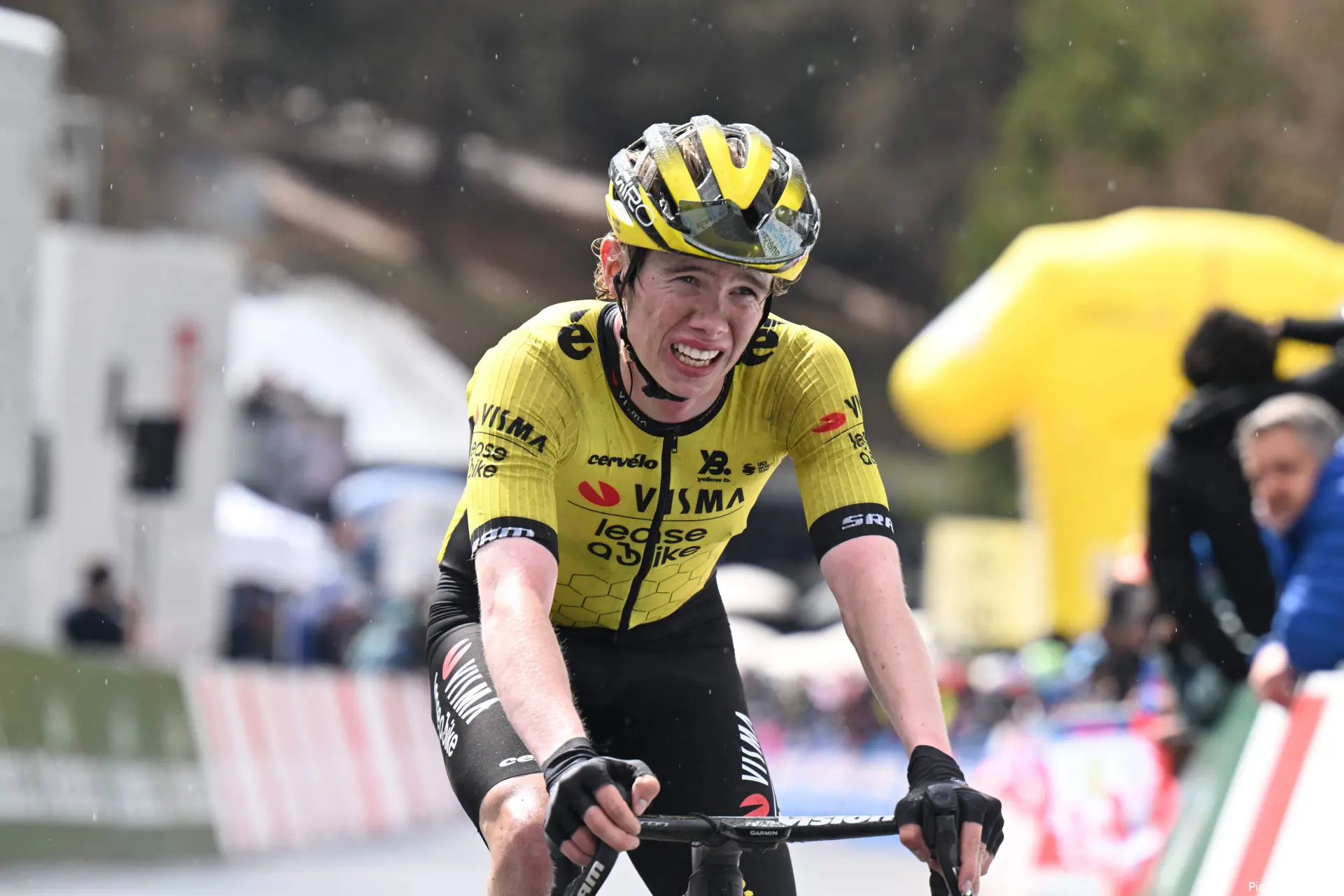
Jorgen Nordhagen’s start to life at WorldTour level has already shifted the conversation around him from raw potential to future role. After his early 2026 performances, the 21-year-old is no longer being discussed simply as another talented young climber. He is now being framed as the rider who could eventually step into Team Visma | Lease a Bike’s long term Grand Tour picture behind Jonas Vingegaard.
That is the real significance of the comments made by TV2 experts this week. The story is not that Nordhagen is suddenly being declared the next Vingegaard in any simplistic sense. It is that his profile, his climbing ability and his early results have made him the clearest young rider in the Visma structure to be linked with that future leadership path.
Why the Vingegaard successor angle is taking hold
Magnus Drivenes made the most eye catching version of that case when discussing Nordhagen’s place inside the Visma set-up. “They perhaps see Jorgen Nordhagen as the successor to Jonas Vingegaard at Visma-Lease a Bike. Vingegaard has won the Tour de France twice,” he said.
That is a big claim, but it was not presented in isolation. Drivenes also explained why Nordhagen stands out in the first place, describing him as “a capacity monster, a really strong climber” before going even further in his assessment of the Norwegian’s ceiling. “It’s easy to say that ‘we have a Norwegian Tour de France winner here,’ but we certainly have one of the biggest talents in cycling, and he is one of the biggest climbing talents. It’s incredibly big.”
That is where the piece becomes more than simple hype. The argument being made is not just that Nordhagen is promising. It is that his specific rider profile fits the type of leader Visma will eventually need again. For a team built around Grand Tour success, that matters more than broad praise ever could.

Praise, but also a clear warning
What makes the overall discussion stronger is that the praise was balanced by a much more careful note from Emil Axelgaard. Rather than just feeding the idea of a future Tour de France winner, he drew a line between leadership potential and unrealistic expectation.
“If you expect him to become a rider who wins as much as Vingegaard, you will probably be disappointed,” Axelgaard said. “There is nothing to suggest that he will be able to match one of the best Grand Tour riders in cycling history. It would be Norwegian overconfidence to claim that.”
That is an important distinction. Nordhagen does not need to become a replica of Vingegaard for the succession angle to be meaningful. The more relevant question is whether he can grow into a rider capable of leading in the same races, even if the level of success differs.
On that point, Axelgaard was much more direct in outlining how he sees the situation developing inside the team. “He is clearly the most promising Grand Tour rider they currently have in their squad,” he said, before adding a crucial condition around how that pathway could open up. “If they don’t bring in other talent from outside, I would expect him to take on a role as a Grand Tour leader in the future.”
That line moves the discussion away from theory and into structure. It is not just a projection of ability, but a view of how Nordhagen could fit into Visma’s medium term hierarchy depending on how the team evolves.

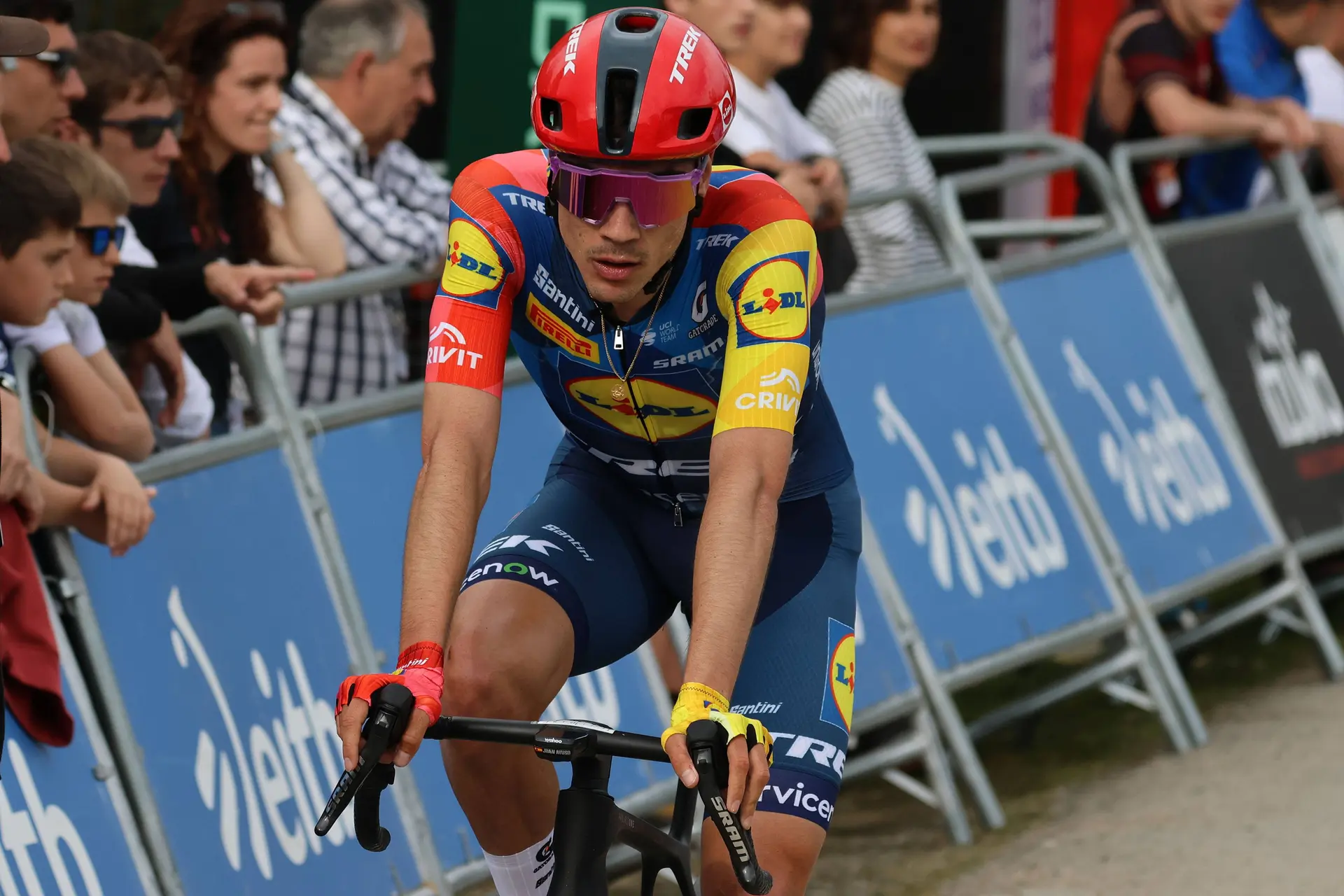
Jorgen Nordhagen has been tipped as Visma's future Grand Tour leader
Early 2026 form is what has changed the tone
The timing of those comments matters as much as the wording. Nordhagen is being discussed this way now because his 2026 season has started to provide evidence.
Axelgaard pointed to his early season level when explaining why expectations have risen again. “This year he finally looks set for a breakthrough. He delivered a strong top 10 in the UAE Tour, and although his race was disrupted by a crash on stage five, he showed his class when he destroyed the field on the steep Pradell climb in Catalonia, where he was riding in support of Vingegaard. Now I actually have him as a favourite to win in Galicia this week.”
That is what moves the story forward. The succession angle is not being built off reputation alone. It is being strengthened by visible progression at a higher level, including the kind of climbing displays that matter most when projecting a rider’s Grand Tour future.
For Team Visma | Lease a Bike, that does not create any immediate change in hierarchy. Jonas Vingegaard remains the leader and the benchmark. But Nordhagen is no longer just being filed away as one for the future in a vague sense. He is increasingly being spoken about as the rider who could one day inherit the team’s next serious stage race leadership role.

Kieran WoodDeputy Editor-in-Chief
Kieran Wood is a sports journalist based in Wales and has been active in journalism since 2022. He regularly contributes to DartsNews.com and CyclingUpToDate.com, where he covers professional cycling and darts. In cycling, his work includes liveblogs from major races, including the Tour de France, the Giro d’Italia, and La Vuelta a España, alongside race reports and analysis. He has also conducted interviews with professional riders.
His reporting spans the full racing calendar, from one-day classics to stage races, with a focus on accurate, real-time coverage and clear contextual analysis. For statistics, results, and historical context, he regularly uses resources such as ProCyclingStats. To support reporting on rider activity and training context where relevant, he also references Strava.
In his work, Kieran places strong emphasis on careful sourcing, editorial accuracy, and updating articles as new, verified information becomes available.
claps 22visitors 5
Just in

Popular news
Latest comments
- 'Children these days'... Wout, since the caveman learned to say "Ug", older generations have always said this about younger generations. Not every young rider is a cowboy. So what's to say that the fact that Poels was respectful meant that his peers were equally so?
 Rafionain-Glas19-10-2026
 - "...In a weakened field" Most definitely ! YAWN !frieders319-10-2026
- Noted. But I had to appease his fans.MajorPayne19-10-2026
- I wonder if he'll race Challenge MallorcaRafionain-Glas19-10-2026
- Head to head time-splits: Jay Vine vs Remco Evenepoel: 10.5 km - Vine lost 45 seconds to Evenepoel 34.2 km - Vine lost a further 1:10, and was caught in the vicinity of that checkpoint. Note: I remember Vine getting caught before the second checkpoint, and ProCyclingStats log supports that, however, the gap at the second checkpoint was less than 2 minutes. 45.4 km - Vine lost only 16 seconds Of course, Vine lost less time in the middle section than the early section, but at the final segment rate, he'd have lost 15 seconds in the opening section and and 34 seconds in the middle. It is possible that Vine paced himself very well but that seems unlikely. In comparison with Stefan Küng: Kung lost: 26 seconds at T1. A further 1:11 by T2. A further 40 seconds by the finish. Relative to Evenepoel, Küng did slow down by the end. Maxime Decomble: Lost 47 seconds at T1. A further 1:20 by T2. A further 26 seconds by the finish. Mikkel Bjerg: Lost 37 seconds at T1. A further 1:34 by T2. A further 46 seconds by the finish. It is not concrete evidence that Vine cheated though it certainly doesn't absolve him. However, watching the race, I am 100% sure that Vine did not pull over and follow a different line when Remco passed him. Remco pulled away quite quickly, but the gap did not balloon and Vine definitely got aero assistance.Rafionain-Glas19-10-2026
- That ship has sailed years agovappaxbipmv19-10-2026
- He doesn't have to. I'd be perfectly happy if he loses SB if he then wins everything elsevappaxbipmv19-10-2026
- Please don't put Remco in the same sentence as Tadej. It's disrespectful to Tadej. Please make a note of this.KissinKate19-10-2026
- ....and you just described how americans are fleecing american fans as well. We don't even get the eurosport coverage you get. What you see on yurrup HBO is not available in this country. Trust me, being a cycling fan sucks everywhere.KissinKate19-10-2026
- While media outlets point to the loss of Richard Carapaz, Kasper Asgreen, and rising talents like Steinhauser as a sign of trouble, this is actually classic EF Pro Cycling tactical pivot at play. Operating on less than half the budget of state-backed super-teams, Jonathan Vaughters smartly maximized Carapaz’s return on investment by turning high salary and health setbacks into Tour stage wins, Yellow, and the Polka Dot jersey, before freeing up vital capital when his valuation peaked. Let us be completely honest here: Carapaz’s departure to NSN is strictly about securing one final massive payday before calling time on his career, rather than building a lasting sporting legacy. EF built a squad around him and gave him tactical freedom that few teams would offer, but given his ongoing health concerns and age, keeping him at that price point represented an unsustainable risk. It is very unlikely he will match the freedom or success he enjoyed at EF with his new team, making this move a pure business decision for a veteran rider cashing in on his remaining value. In contrast, while signing Tao Geoghegan Hart carries its own physical risk, it comes at a vastly different financial scale that protects EF's bottom line while offering immense upside. Replacing that climbing depth won't happen overnight, but bringing in Tao fits EF’s proven reclamation playbook perfectly by providing a low-pressure, culture-first environment for a proven Grand Tour winner to find his magic legs again. Backed by a secured core in Ben Healy, Neilson Powless, and Sean Quinn through 2029, EF isn't crumbling; they are simply resetting their wage structure, staying nimble, and betting on high-ceiling upside where richer teams only see risk.wambo19-10-2026
Loading
Write a comment