“He is the best in the world, but…” – Miguel Indurain praises Tadej Pogacar while stopping short of GOAT claim
CyclingSaturday, 28 March 2026 at 19:00
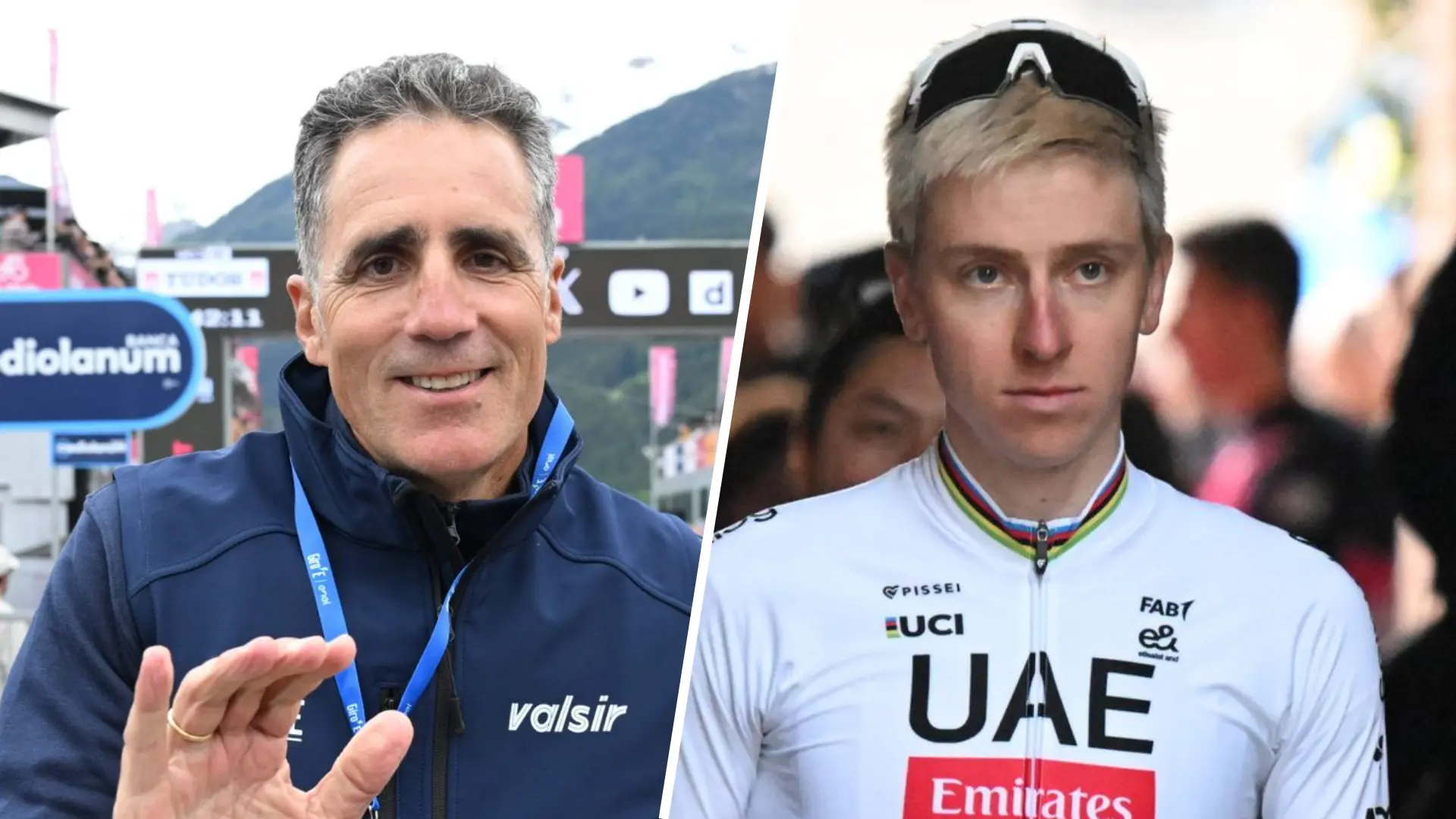
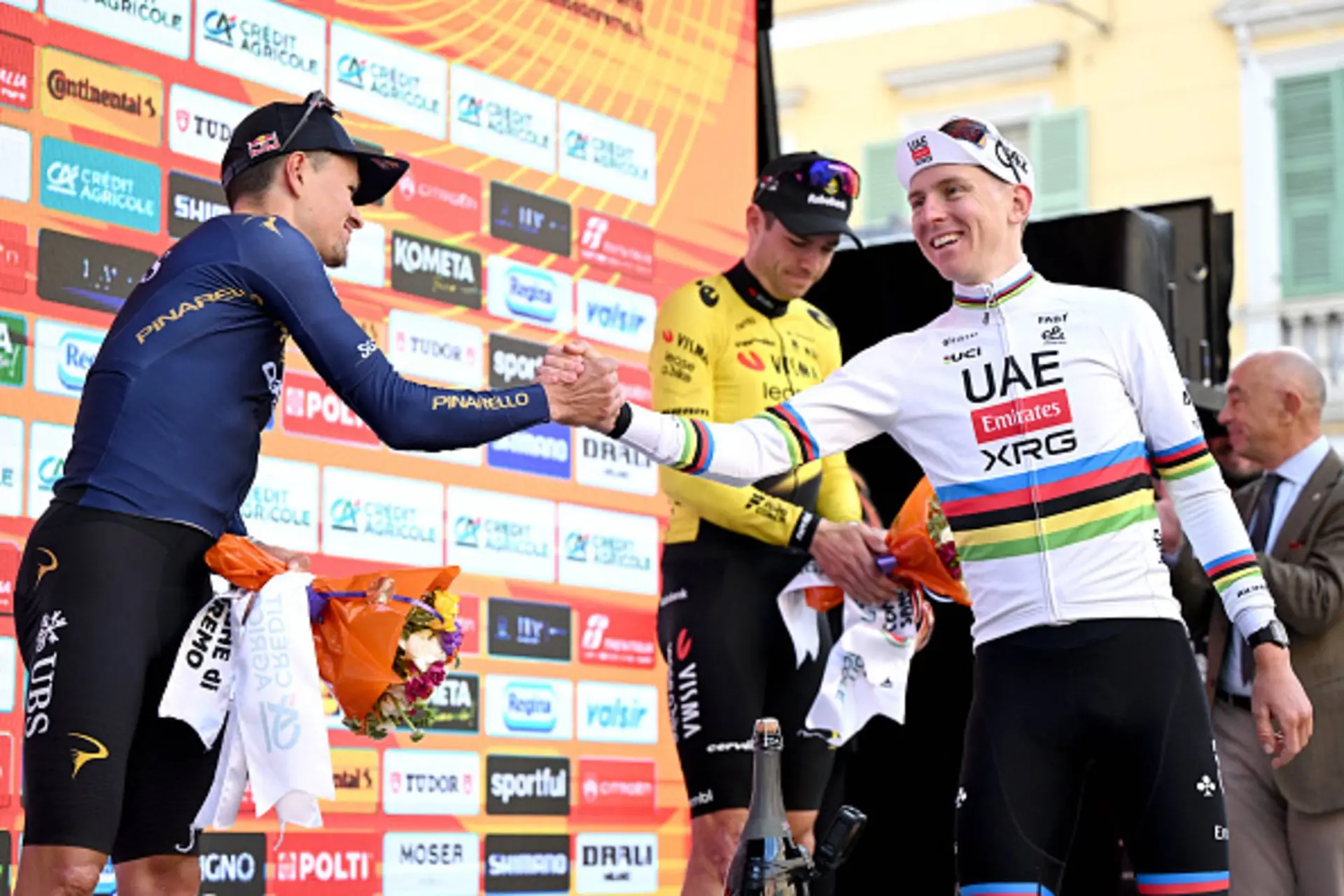
Tadej Pogacar’s 2026 season is already drifting beyond dominance and into something more historically loaded. Victory at Milano-Sanremo finally ticked off the Monument that had long resisted him, leaving Paris-Roubaix as the final Monument gap in a palmares that is rapidly starting to resemble one of the sport’s most complete ever.
With a fifth Tour de France now firmly on his agenda this summer, a result that would draw him level with Miguel Indurain, the comparisons to cycling’s greatest names are no longer theoretical. They are immediate. And when Indurain himself is asked the question, the response carries weight.
Speaking to RMC Sport, the five-time Tour winner did not hesitate when assessing Pogacar’s current level, placing him firmly at the top of the modern sport while acknowledging the scale of what he is attempting.
“He is very strong. He is building a very great palmares, he puts on a show, with great duels against Jonas Vingegaard and Mathieu van der Poel. He will already try to win his fifth Tour de France. He is obviously the big favourite, and I imagine he will go all in.”
Read also
Praise for the present, caution over history
It is a view that aligns with what Pogacar has shown so far this season. His long-range demolition at Strade Bianche and his decisive move on the Cipressa at Milano-Sanremo underline a rider still operating on instinct as much as control, continuing to attack races rather than manage them.
That approach has not only brought results but reinforced his standing as the sport’s most complete rider, capable of winning across Grand Tours and Monuments in a way rarely seen in the modern era.
Yet when the conversation shifts from dominance to legacy, Indurain draws a clear distinction. “It’s difficult. He is the best rider in the world currently. In the future, he will be one of the greatest, but there have been great names in cycling: Eddy Merckx, Bernard Hinault; they are legends. But he is building a very fine palmares.”
That hesitation is not dismissal. It is perspective. Pogacar may already be the defining rider of his generation, but the benchmark Indurain points to remains rooted in the sport’s deepest history. Names such as Merckx and Hinault are not simply part of the conversation, they are the standard it must be measured against.
For now, Pogacar is closing in on that territory rather than occupying it. Milano-Sanremo has brought him closer to a complete Monument set, while the Tour de France presents the opportunity to match one of the most enduring records in the sport.
Whether that is enough to shift the debate remains to be seen. But as Indurain’s words make clear, even in the face of modern dominance, cycling’s highest tier is not handed out lightly.
Kieran WoodDeputy Editor-in-Chief
Kieran Wood is a sports journalist based in Wales and has been active in journalism since 2022. He regularly contributes to DartsNews.com and CyclingUpToDate.com, where he covers professional cycling and darts. In cycling, his work includes liveblogs from major races, including the Tour de France, the Giro d’Italia, and La Vuelta a España, alongside race reports and analysis. He has also conducted interviews with professional riders.
His reporting spans the full racing calendar, from one-day classics to stage races, with a focus on accurate, real-time coverage and clear contextual analysis. For statistics, results, and historical context, he regularly uses resources such as ProCyclingStats. To support reporting on rider activity and training context where relevant, he also references Strava.
In his work, Kieran places strong emphasis on careful sourcing, editorial accuracy, and updating articles as new, verified information becomes available.
claps 12visitors 5
Top comment
Staal28-03-202616
Merckx doped.
Just in

Popular news
Latest comments
- Fantastic result for a rider who thoroughly deserves it.whit2pet28-09-2026
- He's been over-raced imo this yr
 leedorney28-09-2026
 - Literally no one hates Tadej on this site. I don’t think anyone hates any of the cyclists in the peloton, for that matter. So, shush, and stop making every discussion about yourself.anonymouscyclist28-09-2026
- In other words, we not be seeing the jersey much at all then ;-) Too bad he extended his contact already.Jumpyjohn28-09-2026
- BS argument, on the contrary, it’s what makes it more interesting. If rider safety would be the REAL issue, teams still don’t need radio, you can let riders have radio, only connecting to organisers. Let the UCI call team managers bluff by asking them to vote for this and see what excuses they find for arguing only teams can handle the safety issue., on closed frequencies.Jumpyjohn28-09-2026
- And so many people wrote him off or ignored his chances in advance None of those that were supposed to be stronger or better suited or ranked better beat him in the end.Jumpyjohn28-09-2026
- We’ll have to see how much is revealed in the interviews over the next years. Perhaps an invitation to the old white man’s house was sent to the UCI to influence things a little, just humour (for now).Jumpyjohn28-09-2026
- I knew one day I’d be able to reply directly to an ignoramus who doesn’t know how to distinguish between a country and its people. Just to remind you, everyone finished within a very short time difference and almost everyone showed their face when it came to working back to the front. To claim anyone is better than another after such a race is bad faith. You could re-run this 20 (or way more) times and have 10 different winners and never the same outcome. All we know is who was best on the day. Neither you, nor Horner, nor anyone here predicted anything right.Jumpyjohn28-09-2026
- Yours, which you make up, whilst claiming to despise others (the obsessive one especially) who do? Don’t you get free healthcare?Jumpyjohn28-09-2026
- People still have posters?Jumpyjohn28-09-2026
Loading
12 Comments