Tom Pidcock blew “the opportunity of a lifetime” in Milano-Sanremo sprint, says Paolo Bettini: "Pogacar would have lost both to Van der Poel and Van Aert”
Cycling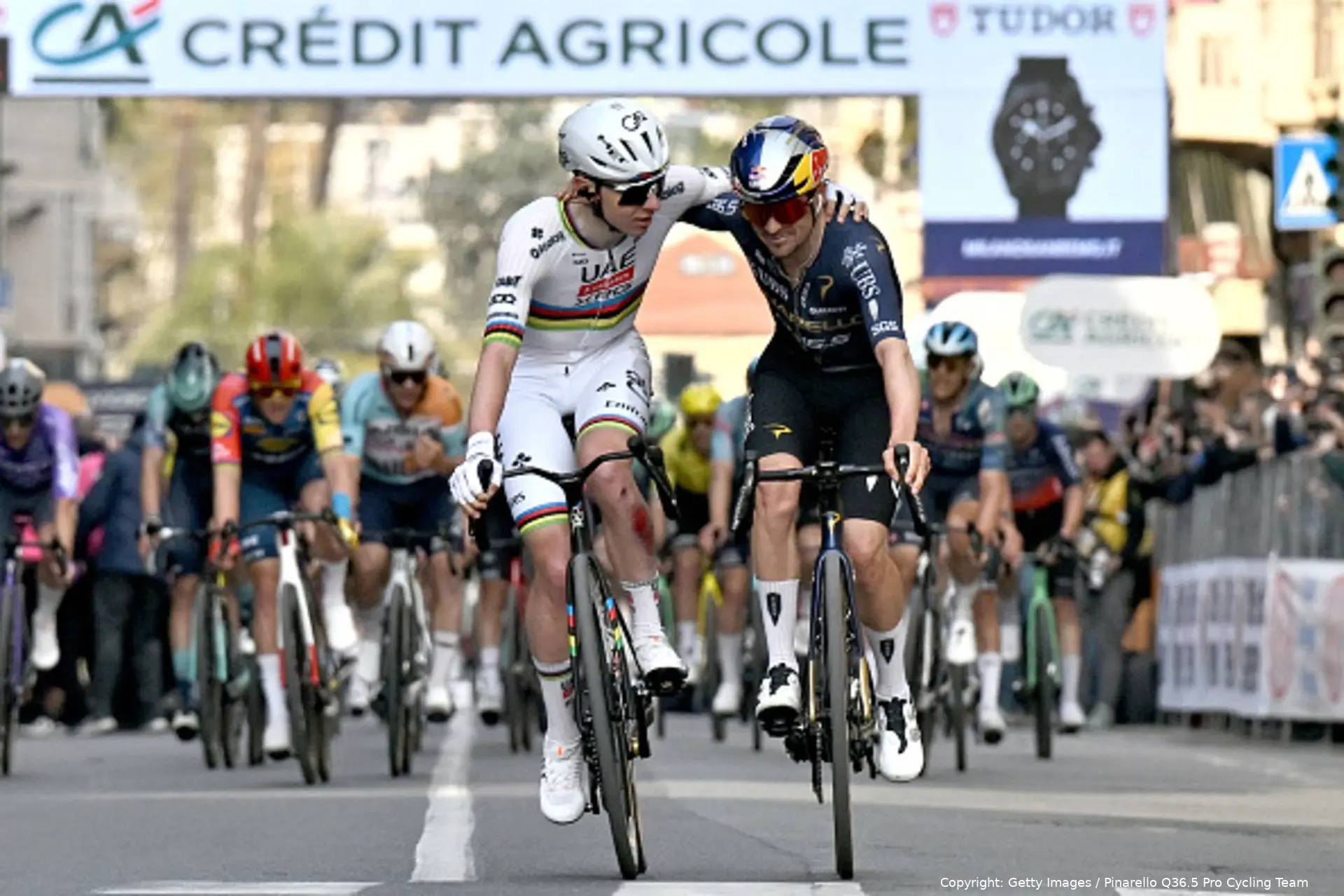
Tom Pidcock came closer than anyone else to matching Tadej Pogacar at Milano-Sanremo. He followed every move on the Cipressa and the Poggio, arrived on Via Roma alongside the world champion, and still left without the win.
For Italian cycling icon of the noughties and 2003 Milano-Sanremo winner Paolo Bettini, that final outcome came down to one decisive choice, but not before recognising just how strong both riders had been in shaping the race.
“Pogacar was superb, there’s no doubt about it: he made the race, he did exactly what he wanted. He crashed, got back up, dropped everyone except Pidcock,” Bettini said in conversation with Bici.Pro. “Pidcock had the opportunity of a lifetime. When the sprint started, he chose to go to the right, basically squeezing into the funnel between Pogacar and the barriers.”
A split-second decision on Via Roma
After nearly 300 kilometres, the sprint in Sanremo was always going to be defined by fine margins. Bettini’s analysis focuses not on power, but positioning. “Everything was regular, though. Pogacar didn’t close, he wasn’t irregular, he simply gave a signal by leaning slightly towards the barriers,” Bettini explained. “If you watch the sprint again, he comes out, goes around him and passes on the left. In the end, he lost by just a few hundredths, about thirty centimetres.”
That moment, where Pidcock initially committed to the narrow space on the right, is where Bettini believes the race tilted away from him. “Maybe, if he had gone on the wider side of the road, where he had all the space to express himself without hesitation, I don’t know how it would have ended. Maybe we would be talking about the photo finish of history.”

Race craft, not controversy
The positioning of Pogacar has drawn attention, but Bettini is clear in his interpretation. “I’d say professionalism. He did nothing irregular. It’s normal that if there is a metre between me and the barriers, ten centimetres of movement is enough. Sometimes just opening your elbow is enough to close a gap. It’s race craft.”
In that sense, the sprint was not decided by anything controversial, but by experience and instinct in the final metres.
Bettini even suggests that the outcome could have been very different had Pidcock committed earlier to a different line. “If he had gone straight into the middle of the road, he would have had the whole width available. At that point, for Pogacar to lean, he would have had to change his line. In that case, yes, it would have been irregular.”

Pidcock, Pogacar & Van Aert on the final podium
A mistake others may not have made
That is where Bettini’s wider conclusion becomes more striking. “Well, based on how it went with Pidcock, and the small mistakes we’ve analysed, I think Pogacar would have lost the sprint to both Van der Poel and Van Aert.”
Neither Mathieu van der Poel nor Wout van Aert were present in the final selection on Via Roma, but in Bettini’s view, their experience and decision-making in that moment would likely have led to a different result. It is a claim that both elevates Pidcock’s ride and sharpens the critique of the finish.
No regrets, only what if
Despite the analysis, Bettini does not suggest Pidcock has grounds for complaint. “He’ll watch it again and ask himself how the sprint of his life would have gone if he had gone left immediately. But with ‘ifs’ and ‘buts’ you don’t win Sanremo.”
And that is the lasting tension from the 2026 edition.
Pidcock proved he could match Pogacar over the climbs. He proved he belonged in the decisive moment of a Monument. But according to Bettini, when the opportunity finally arrived, it was not taken in the way it needed to be.

Kieran WoodDeputy Editor-in-Chief
Kieran Wood is a sports journalist based in Wales and has been active in journalism since 2022. He regularly contributes to DartsNews.com and CyclingUpToDate.com, where he covers professional cycling and darts. In cycling, his work includes liveblogs from major races, including the Tour de France, the Giro d’Italia, and La Vuelta a España, alongside race reports and analysis. He has also conducted interviews with professional riders.
His reporting spans the full racing calendar, from one-day classics to stage races, with a focus on accurate, real-time coverage and clear contextual analysis. For statistics, results, and historical context, he regularly uses resources such as ProCyclingStats. To support reporting on rider activity and training context where relevant, he also references Strava.
In his work, Kieran places strong emphasis on careful sourcing, editorial accuracy, and updating articles as new, verified information becomes available.
claps 15visitors 6
Just in
Popular news
Latest comments
- You can add weight to a bike and limit gears or make it single speed if you like. I doubt that would reduce crashes. It would just add another dymanique. All good and well, but It wont stop cars getting on to the course.Cyclingsbestfan18-10-2026
- Seixas is probably second best in the World on short climbs. But that hasn't translated as well to long climbs
 Rafionain-Glas18-10-2026
 - Idiotic fellaRafionain-Glas18-10-2026
- Nothing. Against Pogi nothingabstractengineer18-10-2026
- He didn't even try to sprint all outvappaxbipmv18-10-2026
- Campenaerts looked like a rolling pumpkin with that all orange leaders skinsuit !frieders318-10-2026
- He can take his dumb a$$ politics somehwere else !frieders318-10-2026
- good to have her back. fingers crossed she‘ll be able to stay!Ketterechts17-10-2026
- A tenner and he wins the Tour next year, too 😂anonymouscyclist17-10-2026
- the answer is either stick to classics or GTs but not bothabstractengineer17-10-2026
Loading
4 Comments