"GC is for Jai Hindley. I’m still young, and there’s no point overdoing it" – Giulio Pellizzari shuts down talk of Red Jersey challenge at La Vuelta 2025
Cycling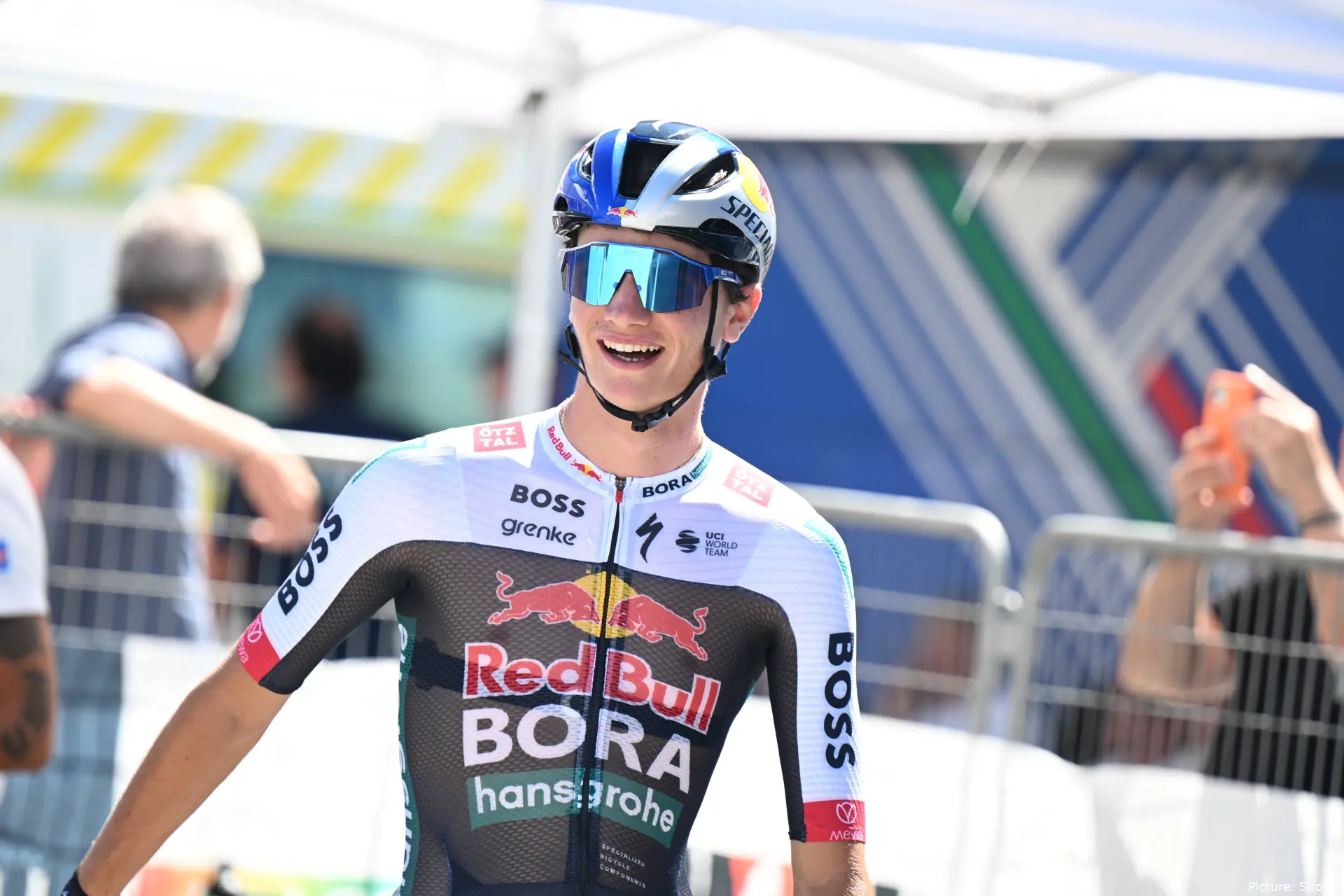
As the peloton gathers in Turin ahead of this year’s Vuelta a Espana, one of the most talked-about names on the startlist is Giulio Pellizzari — though not, as some might expect, for a general classification challenge. The 21-year-old Italian, fresh off a breakout Giro d’Italia and a strong showing at the recent Vuelta a Burgos, has been quick to manage expectations heading into what will be the second Grand Tour of his season.
"The GC is for Jai Hindley," Pellizzari states matter-of-factly in conversation with Bici.Pro. “I’m still young, and there’s no point overdoing it. The team is pushing for me to go for stage wins — that’s the goal. It’s my second Grand Tour this year, and the focus is on gaining experience and taking opportunities when they come.”
It’s a level-headed approach from a rider whose stock has risen sharply in 2025. Pellizzari, riding for Red Bull - BORA - hansgrohe, lit up the mountains at the Giro earlier this season, earning plaudits for his aggressive style and resilience in the high passes, giving a sense that his trajectory is only heading in one direction.
Yet, rather than chasing overall ambitions in Spain, the Italian is keeping his targets well-defined — and realistic.
The evolution of a climber
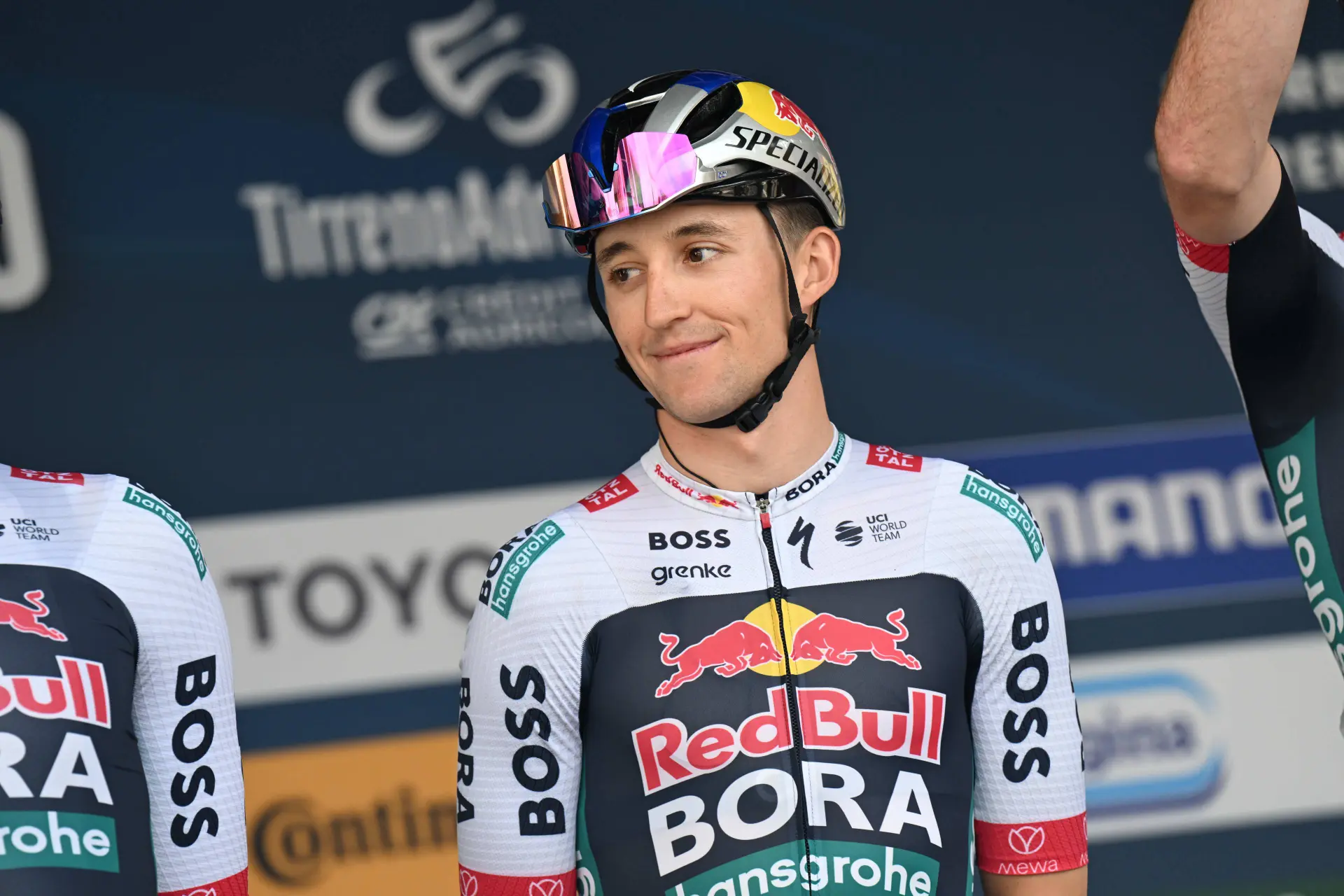
Back in May, Pellizzari won fans over with fearless rides in the Dolomites and a memorable performance on the slopes of San Valentino Brentonico, where he finished 3rd. “I like this kind of freedom,” he says now. “It reminds me of last year’s Giro, when I was free to do what I wanted. You can go for breakaways, or even stay with the favourites for as long as possible. It’s the kind of racing I enjoy.”
But it’s not just enjoyment — it’s education. While some young climbers might be tempted to chase GC results prematurely, Pellizzari and his team are taking a longer view, prioritising three-week endurance and stage-hunting opportunities over a red jersey dream.
“Three-week races are key for my development,” he explains. “We actually took the Vuelta out of my programme after the Giro, but I really pushed with my coach to bring it back. I knew it would help me take the next step — more than racing in Canada or Germany. This is where you grow.”
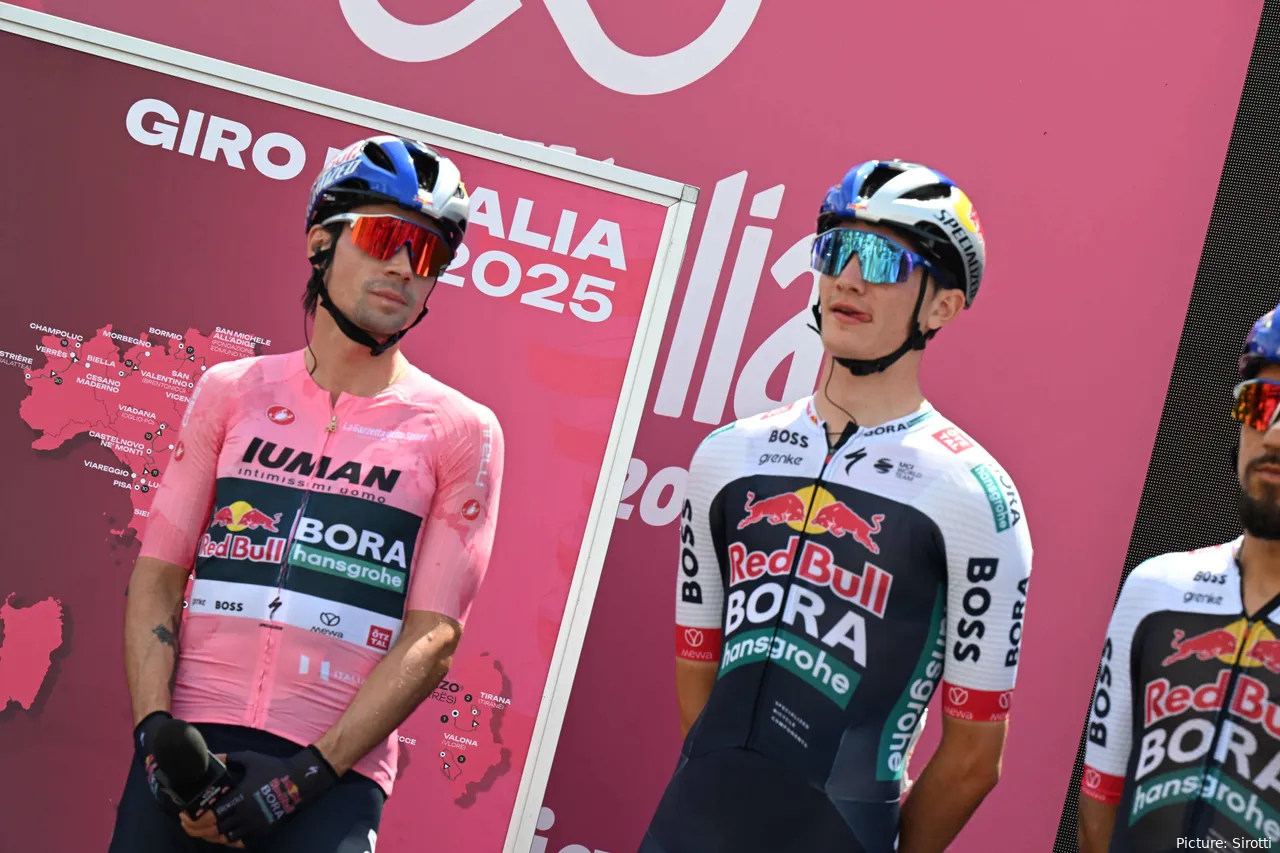
Pellizzari worked closely with Primoz Roglic during the Giro
Preparation at altitude
Pellizzari’s lead-up to the Vuelta has followed a structured rhythm, starting with a period of full recovery after the Giro. “I took two weeks off — one completely off the bike, and then one where I rode just when I felt like it,” he recalls. “Then I started building back gradually. At the Italian Nationals, I was really feeling the lack of form — still thinking about the legs I had at the Giro!”
Since then, it’s been a summer largely spent at altitude: a stint in Trentino, 23 days in Livigno, and plenty of structured training with a close-knit group of teammates, including Matteo Sobrero and Giovanni Aleotti. “It was tough,” he laughs. “We had a three-day training block where everything just hit me. The first day we had to delay because of rain, then the next was full-on intensity work — VO2 max intervals, 40-20s… The following days, I was cooked. But the group we had made it enjoyable — suffering together helps.”
Despite not feeling at his best in Burgos — “the sensations weren’t amazing,” he admits — Pellizzari still finished fourth overall, losing the podium only in the final stage. Against a field that included seasoned pros in peak form, it was a quiet reminder of his class.
“I knew it would be a hard race,” he says. “But looking back, I would have signed for a top-five before it started. And riding with the front group on the queen stage gave me confidence. It showed me that, even without top legs, I could still be there.”
Stage-hunting, not red-dreaming
That measured confidence is evident in how Pellizzari approaches this Vuelta. He hasn't studied the route in detail — “I’m taking it stage by stage,” he says — but is already eyeing the second individual time trial as a key objective. “I’ll go full gas,” he says. “It’s not just about this race — it’s about the future. Time trialling is important for stage racing, and I want to see where I stand.”
It’s a notably mature view from a rider just 21 years old, who seems to understand both his current level and long-term goals with unusual clarity. His focus is on process, not pressure. Growth, not glory — at least not yet.
When asked whether he’s noticed a change in how the peloton views him, he shrugs it off. “No, not really. I’ve always had a lot of friends in the bunch. I like laughing, joking around — even during races. That hasn’t changed, and I hope it never does.”

"I like laughing, joking around — even during races"
Testing himself against the best
That doesn’t mean he lacks ambition. Far from it. Pellizzari is still very much looking forward to measuring himself against the elite — names like Jonas Vingegaard, João Almeida, and Carlos Rodríguez. “There’s definitely curiosity,” he says. “And the fact I’m not racing for GC means I can still test myself. Whether that’s getting into breakaways or trying to stay with the top guys — I’m excited for that.”
In a sport increasingly obsessed with youth and precocity, Pellizzari offers a refreshing antidote: a rider who knows he’s talented, but isn’t in a hurry to prove everything at once. His Vuelta will be one of exploration, not expectation — and that may be exactly why he ends up surprising us.

Kieran WoodDeputy Editor-in-Chief
Kieran Wood is a sports journalist based in Wales and has been active in journalism since 2022. He regularly contributes to DartsNews.com and CyclingUpToDate.com, where he covers professional cycling and darts. In cycling, his work includes liveblogs from major races, including the Tour de France, the Giro d’Italia, and La Vuelta a España, alongside race reports and analysis. He has also conducted interviews with professional riders.
His reporting spans the full racing calendar, from one-day classics to stage races, with a focus on accurate, real-time coverage and clear contextual analysis. For statistics, results, and historical context, he regularly uses resources such as ProCyclingStats. To support reporting on rider activity and training context where relevant, he also references Strava.
In his work, Kieran places strong emphasis on careful sourcing, editorial accuracy, and updating articles as new, verified information becomes available.
claps 0visitors 0
Just in
Popular news
Latest comments
- Being the best rider left in the race is pretty much the only way to win in any edition, surely? Seems reductive to say "they only won because the entire peloton wasn't as absolutely stacked as it could've been" - you can only beat who is in front of you.wrsty08-10-2026
- I’m sorry but generally the coverage on your site is first class but this incident highlights something I just don’t get with cycling journalism. This accident should never have been allowed to happen, it comes uncomfortably close to the Finlay Tarling tragedy and two other incidents took place within days of this. I checked all of the cycling websites and you all put out basically the same story. Pidcock gave journalists the perfect opening to blow this sky high, what has the UCI got to say? What is Adam Hansen doing? What do the organisers say? Nothing, you all trot out the same easy quotes taken from Pidcocks interview after the race but do nothing to follow it up. I see it time and time again, journalists taking the easy way out but being outraged when it happens again as it surely will. Riders can’t do this but journalists should be independent and should be able to raise these uncomfortable questions but cyclinguptodate and every other on line publication prefer to take the easy way out. That’s the real tragedy here.Paul53108-10-2026
- Happy to help :-)Mistermaumau08-10-2026
- Well, ok but, it’s also a structural, team, budgeting, direction and all sorts of other issueMistermaumau08-10-2026
- I wouldn’t call it an analogy but maybe his criticism is a little unfair. On the other hand, the fact Cicco made a public affair out of it despite having received all the explanations and proof makes me feel he now deserves being criticised for not accepting there is nothing to discuss.Mistermaumau08-10-2026
- Much as I like him (one of my favourites), I do want to attract a little attention to the coincidence of his recent performances in the current context. Not the first time a rider improves noticeably when there’s a job interview to prepare. In the same lighthearted humour of his, i hope the UCI will let him wear it at home as the rules quite strictly state you can only wear it during participation in the discipline you won in, and we all know how capable they are of interpreting rule interpretation ;-) Also, if it’s going to be retirement (please not), I wouldn’t call that an agreement as somebody will probably feel they didn’t get what they wanted.Mistermaumau08-10-2026
- Agreed. There used to be a team willing to pay though. I take all these figures (that vary enormously according to who is publishing) with handfuls of salt. We don’t know how salaries are treated (especially between a UK employer and Andorran resident), we don’t know how numbers are derived and from where, if deductions have been taken into consideration, etc. but if he returns to Colombia, he’s going to need quite a bit in protection money.Mistermaumau08-10-2026
- And another one gone, another one gone, another one bites the dust. Ah gonna get you too…Mistermaumau08-10-2026
- Top marks RidesHills. A great post that sums up exactly Egan Bernals situation.Cyclingsbestfan08-10-2026
- Thanks for pointing out that typo. Now ammended.Prorodsandstuff08-10-2026
Loading
Write a comment