“Doing two Grand Tours in a year? It’s the mind that breaks first” – Italian icon warns of risks for riders doubling up at La Vuelta 2025
Cycling
As the peloton edges closer to the start of the 2025 Vuelta a Espana, many riders are preparing to take on their second Grand Tour of the season. While the conversation often centres on physical form, weight management and recovery metrics, one former pro believes the real battle is psychological.
“Doing two Grand Tours in a year? It’s the mind that breaks first,” says the Italian cycling icon Michele Bartoli in conversation with Bici.Pro. With over a decade of experience in the peloton and now a key figure behind the scenes, his assessment cuts through the usual numbers-driven talk around performance peaks and tapering strategies.
Tour–Vuelta vs Giro–Vuelta: Not All Doubles Are Equal
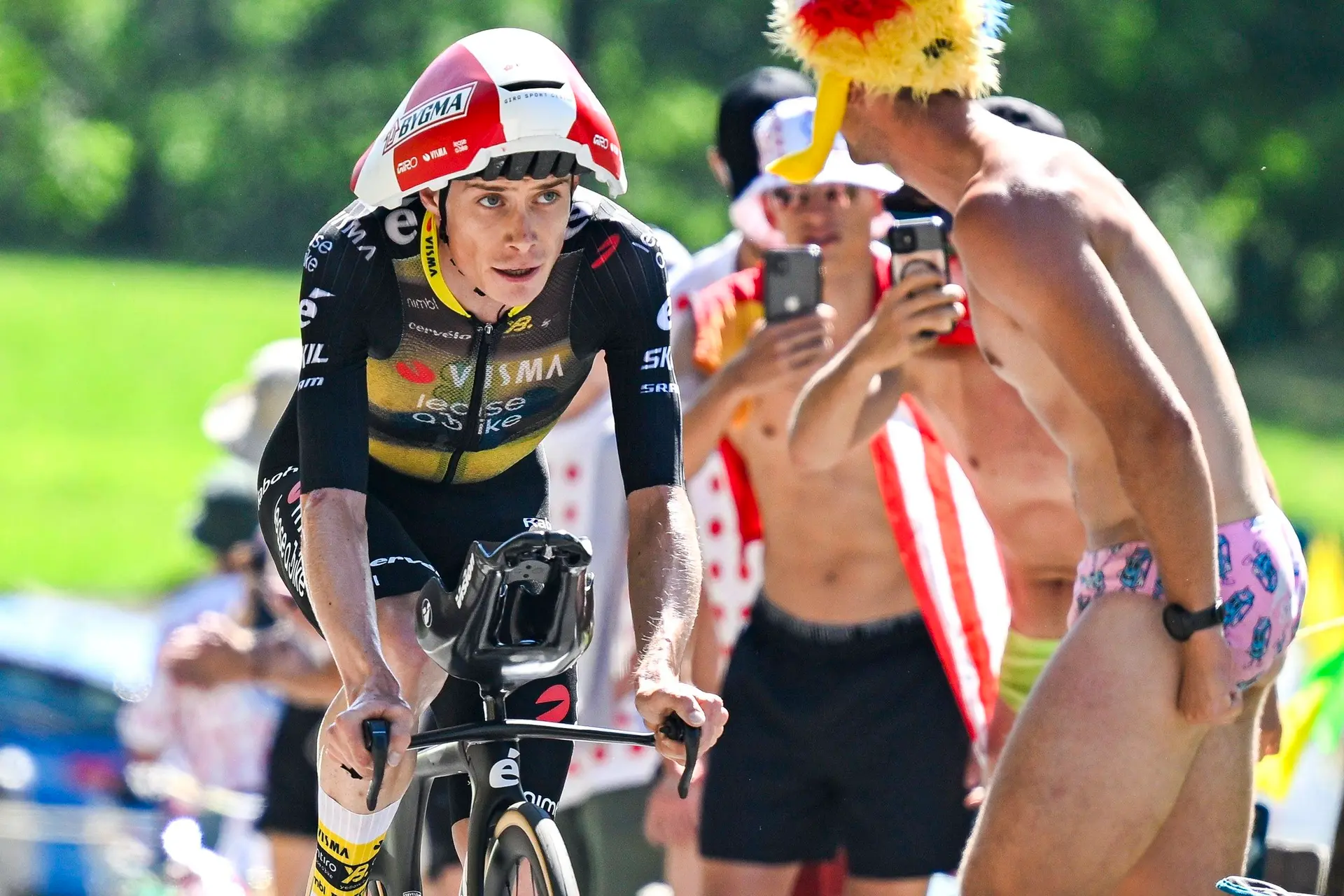
While a Giro–Vuelta double has long been seen as a manageable combination, especially with a larger recovery window, Bartoli warns that the Tour–Vuelta turnaround is far less forgiving. “In that case, the margins are incredibly tight. If a rider needs more than 10 days to recover, you're already in trouble. Everything becomes a race against time – physically, logistically, and mentally.”
He suggests that in many cases, riders would be better off abandoning the Tour early if form is compromised and the Vuelta is a genuine target. “Completing a Grand Tour isn’t always useful. If you’re empty and the legs are gone, it’s better to stop, reset, and prepare properly for the next one.”
Why the Head Fails Before the Legs
Interestingly, Bartoli, a five-time Monument winner, is quick to downplay the notion that physical decline is the biggest challenge when riders line up for their second Grand Tour. Thanks to advances in recovery protocols, nutrition, and data-driven training tools, most athletes can return to race-ready condition within a matter of weeks.
Even experienced pros, he says, are susceptible to the psychological drag. “You can be in peak condition, but if your head’s not in it, the performance won’t come. That’s why I tend to prefer working with veteran riders for a double Grand Tour – they know how to give clear feedback, they understand the sacrifices, and they can spot when they’re near the edge.”
Grand Tours as Foundations – Especially for the Young
While many World Tour teams are careful not to overload young riders too early, the Italian still sees Grand Tours as vital to long-term development. “For a young rider, missing a Grand Tour is a bigger deal than people think. It’s not just about experience — it’s about creating a more solid athletic baseline. A three-week race changes your physiology in ways no training block can replicate.”
That said, he acknowledges that data has helped bridge the gap between racing and preparation. “With the tech we have now — the monitoring, the nutritional planning, the recovery tools — even younger riders can handle a Grand Tour double, as long as they’re motivated. But without that internal drive, it becomes a serious liability.”
One major benefit of ending the season with the Vuelta? It sets the stage for a better winter. “There’s no question the off-season starts at a higher level after the Vuelta. You come out of it with deeper conditioning, better rhythm, and a much stronger platform for the next year.”
Conclusion: A Second Grand Tour Is a Mental Test Above All
As the Vuelta looms, the conversation will inevitably turn to form charts and W/kg speculation — but behind the numbers, the mental aspect could be the difference between survival and collapse. In the words of Bartoli: “Between Grand Tours, the training doesn’t change much. The weight, the power numbers — they’re often the same. But riding that second Grand Tour? That’s when your head has to carry you. Because if the mind goes, it’s over — even if the legs are still there.”

Kieran WoodDeputy Editor-in-Chief
Kieran Wood is a sports journalist based in Wales and has been active in journalism since 2022. He regularly contributes to DartsNews.com and CyclingUpToDate.com, where he covers professional cycling and darts. In cycling, his work includes liveblogs from major races, including the Tour de France, the Giro d’Italia, and La Vuelta a España, alongside race reports and analysis. He has also conducted interviews with professional riders.
His reporting spans the full racing calendar, from one-day classics to stage races, with a focus on accurate, real-time coverage and clear contextual analysis. For statistics, results, and historical context, he regularly uses resources such as ProCyclingStats. To support reporting on rider activity and training context where relevant, he also references Strava.
In his work, Kieran places strong emphasis on careful sourcing, editorial accuracy, and updating articles as new, verified information becomes available.
claps 4visitors 4
Just in

Popular news
Latest comments
- Predictable, sure! But boring??? OMG! Was Mike Tyson predictable and boring in his prime? Air Jordan? Schumacher or Senna? OMG!!!MajorPayne19-10-2026
- how it is "We’ve taken another big step forward for next year" he just lost in lombardia to a 20 year old, and two 30+ year olds. and not even top 10 for WCRR.abstractengineer19-10-2026
- This is similar to Lebron. first he said i need to consult my family , my daughter, need respectable money blah blah blah and then dont care about family , dont care about money, only onion rings, am off to Philly, very very far from family. Off season should be with family more, no?abstractengineer19-10-2026
- I hope he comes back strong for a proper battle with Tadejmij19-10-2026
- congrats to a great career and good retirement.mij19-10-2026
- Any artificial product should be reported.Any team that doesn't should be stripped of wins and fined.I know that this level of transparency does not and will never exist.All anyone can do is continue to test riders on a regular and surprise basis.If the test comes back clean then all any of us can assume is the rider is clean.
 Brucegel19-10-2026
 - Also, it's supposed to be hard to gain an advantage from drafting off Remco because he is so aero.Hills3319-10-2026
- How would stats back it up? You realise tactics involved could mean Vine saved his legs for a faster finish? Some riders can choose to go all out and fade later in the ride, others can hold steady state the whole way, and others can have a reserved start and power up later in the ride. You can't judge just by the stats unless you have power data to be able to prove Vine is riding faster even though he is putting out the same or less power (suggesting drafting). I'm sure the stats prove that Vine didn't cheat because UCI would monitor the stats to make sure this exact scenario doesn't happen (and disqualify them for drafting if the stats proved it).Pogboom19-10-2026
- Only one person would say such a thing here. Sorry to burst your bubble but I’m afraid that window of opportunity has now closed. You can beat some of the people all of the time and all of the people some of the time but you can’t beat all of the people all of the time.Jumpyjohn19-10-2026
- Both prizes are actually pathetic, almost amateur like, not even covering the cost of participatingJumpyjohn19-10-2026
Loading
Write a comment