“Collaboration, not coercion”: Disqualified Tour de Romandie teams accuse UCI of rule overreach in GPS tracker row
Cycling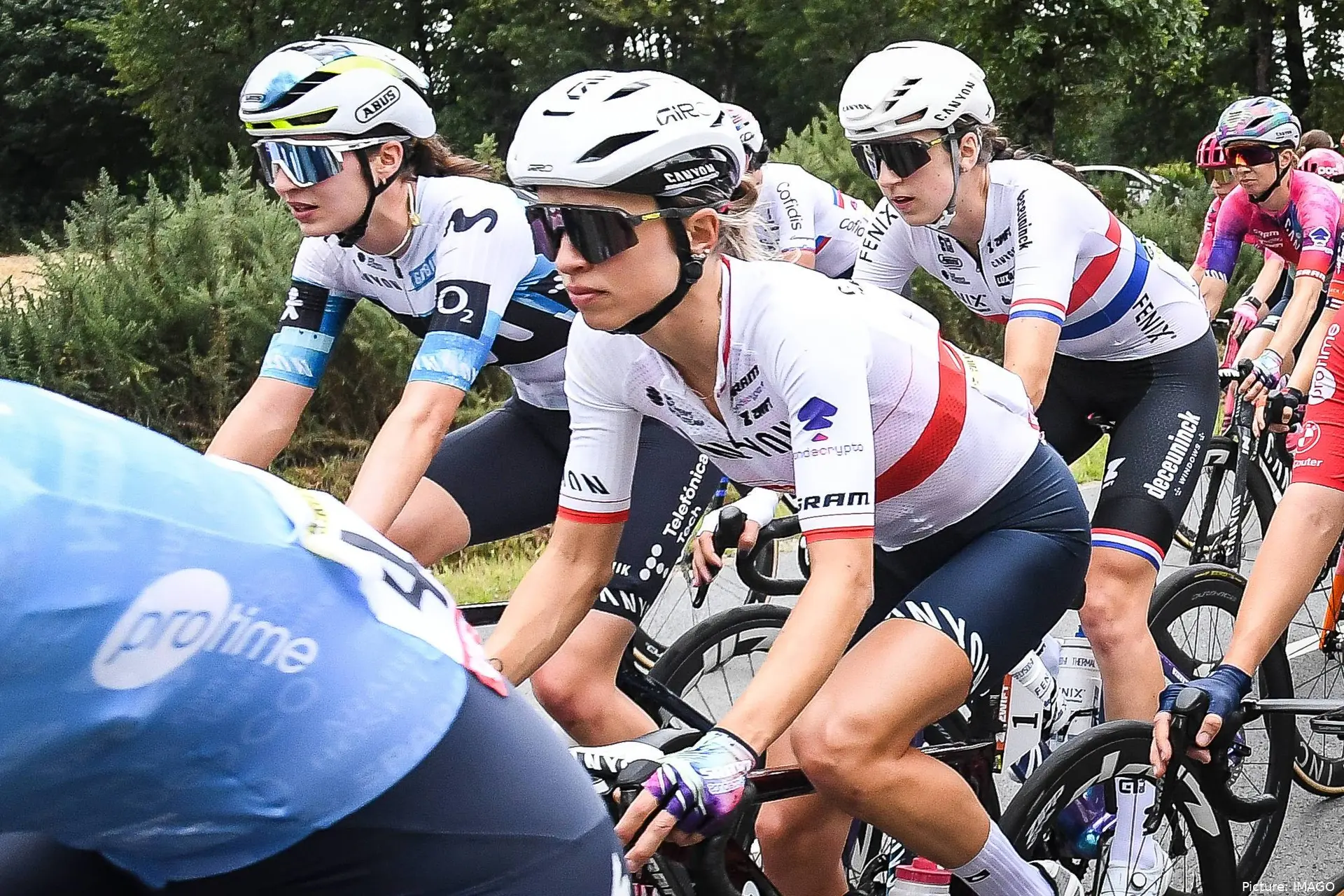
The fallout from one of the most extraordinary pre-race controversies in recent memory continues to deepen, as the disqualified teams from the 2025 Tour de Romandie Féminin issued a joint statement accusing the UCI of “disregarding the rights of teams and riders” and enforcing safety protocols in a “discriminatory manner.”
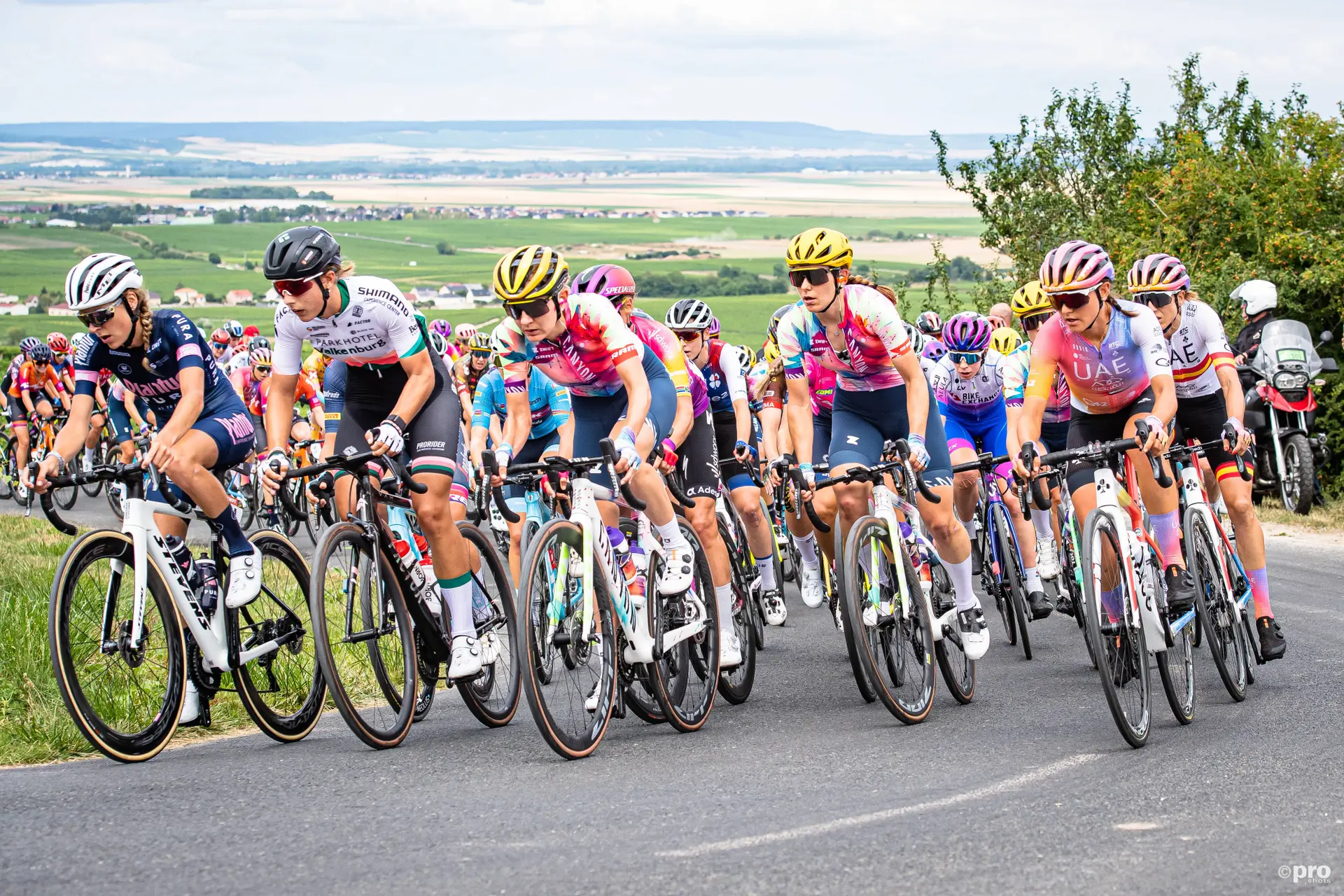
The statement — signed by Canyon//SRAM zondacrypto, EF Education–Oatly, Lidl–Trek, Team Picnic PostNL, and Team Visma | Lease a Bike — follows the governing body’s decision to eject them from the three-day Swiss stage race before the opening stage had even begun. At the heart of the dispute is the UCI’s trial of a new GPS tracking system, intended to improve rider safety by enabling real-time monitoring and faster medical response.
Under the test protocol, one rider per team was to carry a 63g GPS unit for the duration of the race. While the UCI insisted the system was safe and its rules were clearly communicated — citing Articles 1.3.073 and 2.12.007/3.5.3 of its regulations — the affected teams argued that the measure was imposed without sufficient consultation, clarity on liability, or agreement on how the test would be implemented.

Teams: “We Cooperated, but Would Not Nominate the Rider”
In their statement, the teams stressed that they were not opposed to GPS tracking in principle, and had in fact offered the UCI access to an alternative, fully operational system already in use at other major races and covering the entire peloton. They said their refusal centred on the UCI’s insistence that the teams themselves select which rider would carry the device — a choice they argued was unfair, potentially discriminatory, and beyond their responsibility.
“We would not select a rider ourselves, nor install, remove, or maintain the device,” their joint statement reads. “The UCI or its partner was free to select a rider and install the device at their own liability if they believe they are in their right to do so.”
Despite that position — and multiple letters sent earlier in the week expressing both safety concerns and willingness to cooperate under different terms — the teams say the UCI would not take on the task of rider selection, nor explain why.
“No Rule Basis Demonstrated”
The statement also accuses UCI commissaires of failing to produce a specific rule obligating teams to single out one rider for additional equipment requirements, despite “multiple requests over the last two days.”
Instead, they claim, officials referred only to an email from the teams’ union and pressed ahead with disqualification when no rider was nominated. “This action disregards the rights of teams and riders, applies the measure in a discriminatory manner, and contradicts the UCI’s own stated commitment to dialogue with stakeholders,” the teams wrote. “We are always at the forefront to make cycling a safer sport, but it should be achieved through collaboration, not coercion.”
UCI Holds Firm — and Points to Velon Links
The UCI has shown little sign of backing down, describing the teams’ refusal as “surprising” and “deplorable,” and arguing that it undermines efforts to improve safety ahead of a planned rollout of GPS tracking at the 2025 Road World Championships in Kigali.
In a pointed aside, the governing body noted that most of the disqualified teams are members of Velon, which operates its own GPS and telemetry technology. That line has been read by many in the sport as a thinly veiled suggestion that commercial rivalries may have influenced the standoff — something the teams have categorically rejected, insisting their objections are about process and fairness, not business interests.
Bigger than Romandie
The incident leaves the Tour de Romandie Féminin with a severely depleted peloton, missing not just six World Tour teams but also key riders such as defending champion Demi Vollering, sidelined by illness. It also reignites broader debates over the balance of power between cycling’s governing body and its top-tier teams, particularly when introducing new technology mid-season.
EF boss Jonathan Vaughters summed up the teams’ frustration in a now widely shared post on social media: “Using a World Tour event as a testing ground is wrong. Once you’ve chosen to impose your will, refusing to select which riders get to be the victims and throwing that decision on the teams? Not right. And then disqualifying teams for not choosing the victim?”
With the UCI hinting at “other measures” in accordance with its regulations, the stand-off could escalate beyond Romandie. Whether the two sides can find common ground before Kigali may set a precedent for how cycling’s technological future is shaped — and who gets to make those decisions. For now, the message from the disqualified teams is clear: safety is not the issue. The process is. And they believe the UCI’s handling of it has crossed a line.
𝗨𝗖𝗜 𝗳𝗮𝗶𝗹𝘀 𝘁𝗼 𝗰𝗼𝗻𝗳𝗶𝗿𝗺 𝗿𝘂𝗹𝗲 𝗰𝗹𝗮𝗿𝗶𝗳𝗶𝗰𝗮𝘁𝗶𝗼𝗻 𝗿𝗲𝗾𝘂𝗲𝘀𝘁 𝗱𝗲𝘀𝗽𝗶𝘁𝗲 𝘁𝗲𝗮𝗺𝘀’ 𝘁𝗿𝗮𝗰𝗸𝗶𝗻𝗴 𝘀𝘆𝘀𝘁𝗲𝗺 𝗰𝗼-𝗼𝗽𝗲𝗿𝗮𝘁𝗶𝗼𝗻
— Team Picnic PostNL (@picnicpostnl) August 15, 2025
Teams are shocked and disappointed by the UCI’s decision to disqualify several teams, including ours, from… pic.twitter.com/SwtB5H0Ace

Kieran WoodDeputy Editor-in-Chief
Kieran Wood is a sports journalist based in Wales and has been active in journalism since 2022. He regularly contributes to DartsNews.com and CyclingUpToDate.com, where he covers professional cycling and darts. In cycling, his work includes liveblogs from major races, including the Tour de France, the Giro d’Italia, and La Vuelta a España, alongside race reports and analysis. He has also conducted interviews with professional riders.
His reporting spans the full racing calendar, from one-day classics to stage races, with a focus on accurate, real-time coverage and clear contextual analysis. For statistics, results, and historical context, he regularly uses resources such as ProCyclingStats. To support reporting on rider activity and training context where relevant, he also references Strava.
In his work, Kieran places strong emphasis on careful sourcing, editorial accuracy, and updating articles as new, verified information becomes available.
claps 1visitors 1
Just in
Popular news

Latest comments
- Arrieta I think has more potential than Frigo and Balderstone. Ramírez is one who can become a GC rider, Fabries is more of a diesel climber. He only really does well in MTTs. When you add Molano and Sivakov, it seems a transfer loss overall. However, comparing the transfer season of a stacked team like UAE to lower teams isn't fair anyway. Riders tend to diffuse outwards anyway
 Rafionain-Glas26-10-2026
 - There's quite a large range of time where van der Poel is less likely to race than not, possibly a month. The Worlds sit in that window. So it seems that its more likely than not that he'll not race.Rafionain-Glas26-10-2026
- Maybe ruben silva still dont get it but visma is broke they aint signing anyone. They desperately need tier one climberse but all they can buy is fabio jakobsen..Typing is on the wall there to say the least...:(miguel26-10-2026
- I didn't say Tadej should ride it. I'm stating HE wanted to ride it and as a matter of fact had to be talked out of it. The other accidents mentioned in this headline were so much worse.mij26-10-2026
- I'm not downplaying the impacts. He would have been a fool to ride EU. I'm commenting that Roll's position is idiotic - to compare Tadej's two broken bones and a concussion to what Froome/Bernal/Jonas went through and suggest it could hold Tadej back is equally foolish. As bad as it might have been, Tadej's accident was a joke compared to what the others went through.mij26-10-2026
- If others agree and you do the same, maybe we have a shot at getting them to reverse the obvious deterioration they’ve decided to embark on. It would also leave you know mou more or less in an echo chamber.Jumpyjohn26-10-2026
- if you have three leaders , it has never worked in cycling properly. If you have two, one attacks the other follows as the US did it to perfection in the worldsabstractengineer26-10-2026
- Besides Pogi they dont need anybody else. I think that UAE is a bad team for development. One is the race is done at Pogi's intensity which is bad for a developing rider and you can only do part of the race, no energy left for the rest.abstractengineer26-10-2026
- Very distorted headlineKatla26-10-2026
- Agreed, but nobody thinks ahead that much, especially so-called fans, they are the first to demand their rights to joy and entertainment, regardless of the price their hero pays. You only have to look at boxing/rugby research on past athletes’ problems in retirement to see how little their OWN fans really care.Jumpyjohn26-10-2026
Loading
4 Comments