Bernardo Ruiz, first Spaniard to podium at the Tour de France and 1948 Vuelta winner, dies aged 100
Cycling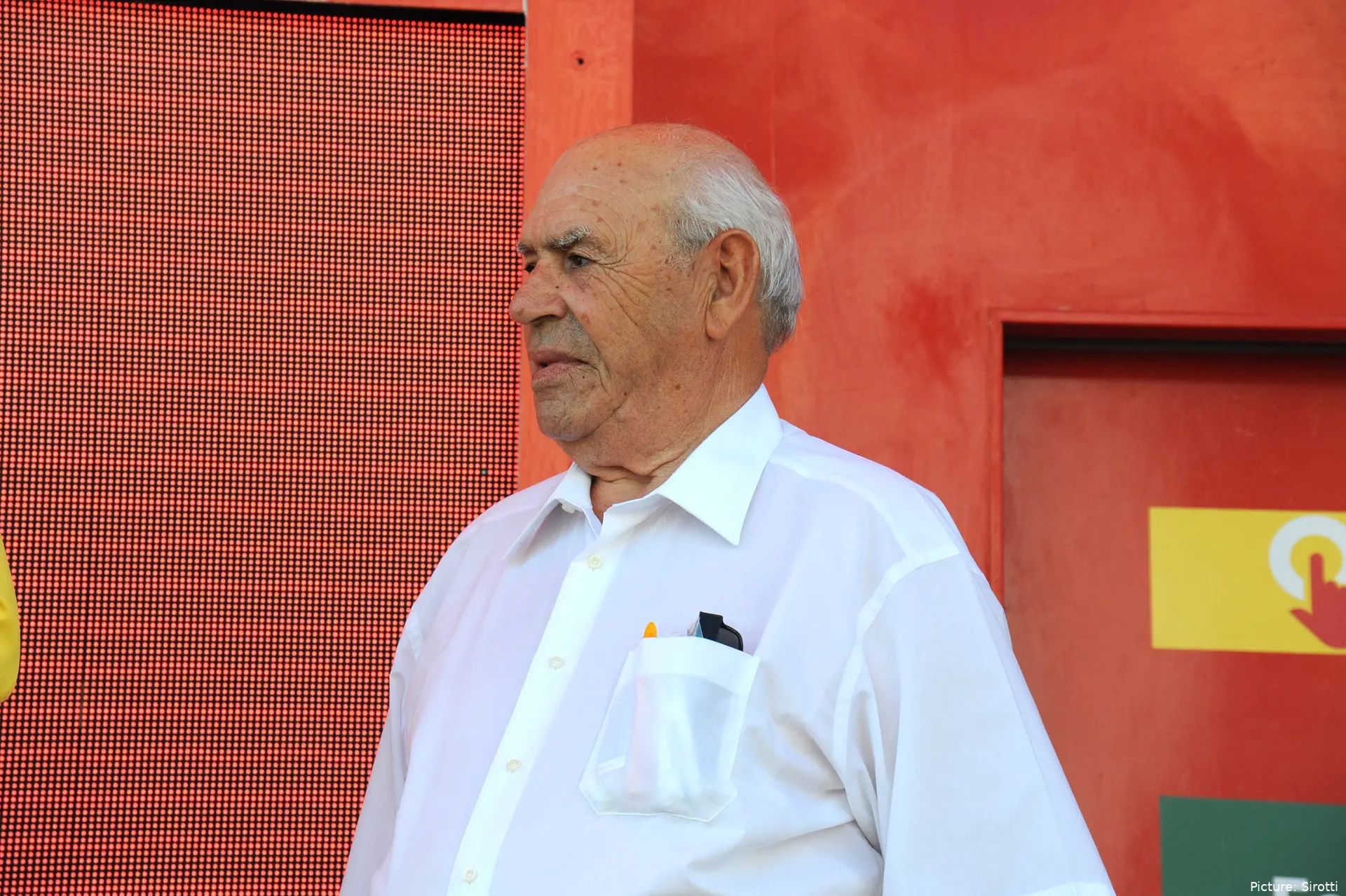
Spanish cycling is in mourning following the passing of one of its greatest pioneers. Bernardo Ruiz, the first Spaniard to stand on the podium of the Tour de France, has died at the age of 100. A true icon of post-war cycling, Ruiz was not only a prolific winner but a trailblazer who helped place Spanish cycling on the international stage in the 1940s and 1950s.
Born in Orihuela in 1925, Ruiz turned professional at the age of 19 and quickly established himself as a force in the peloton. By 1948, aged just 23, he won the Vuelta a España, taking not only the general classification but also the mountains jersey — a rare and dominant double that foreshadowed the breadth of his talents.
But it was in 1952 that Ruiz etched his name into cycling’s broader history. Riding in an era dominated by Fausto Coppi, Ruiz battled through the high mountains and long time trials to secure third place overall at the Tour de France — becoming the first Spaniard to ever reach the final podium in Paris.
His performance that year was built on consistency and courage. He finished second on stage 2 to Le Mans, second again in Sestrières on stage 11 in the high Alps, and maintained strong form deep into the third week — including a top-10 finish in the penultimate day’s time trial in Vichy. He ultimately stood on the podium behind Coppi and Belgian great Stan Ockers.
Ruiz’s Grand Tour résumé is among the most impressive of his generation. In addition to his 1948 Vuelta triumph, he claimed:
4 Vuelta a España stage wins (1948–1950)
2 Tour de France stage wins (1951)
1 Giro d’Italia stage win (1955)
His career spanned 22 Grand Tour appearances, yielding 38 professional victories in total — a remarkable tally in an era of brutal racing conditions and limited support.
Beyond the Grand Tours, Ruiz was a dominant force in the Spanish calendar. Among his many victories:
Volta a Catalunya (1945)
Tour of Burgos (1947)
Clásica a los Puertos (1950 & 1951)
Tour of Castile (1951)
Barcelona–Pamplona (1951)
Levante Tour (1957)
Plus stage wins in several of those events across multiple years
After a career that helped define Spanish cycling in the post-war era, Ruiz rode his final season in 1958, making one last appearance at both the Vuelta and Tour de France — returning to the race where he had made history six years earlier.
Though his name may not be as widely recognized among modern fans as some of his contemporaries, Bernardo Ruiz’s legacy is profound. He paved the way for generations of Spanish riders — from Bahamontes and Ocaña to Induráin and beyond — proving that riders from Spain could not only compete but excel on cycling's grandest stages.
A century after his birth, and nearly 70 years after his Tour de France podium, Ruiz remains a towering figure in the history of Spanish cycling and the wider sport as a whole.
Rest in peace, campeón.
Kieran WoodDeputy Editor-in-Chief
Kieran Wood is a sports journalist based in Wales and has been active in journalism since 2022. He regularly contributes to DartsNews.com and CyclingUpToDate.com, where he covers professional cycling and darts. In cycling, his work includes liveblogs from major races, including the Tour de France, the Giro d’Italia, and La Vuelta a España, alongside race reports and analysis. He has also conducted interviews with professional riders.
His reporting spans the full racing calendar, from one-day classics to stage races, with a focus on accurate, real-time coverage and clear contextual analysis. For statistics, results, and historical context, he regularly uses resources such as ProCyclingStats. To support reporting on rider activity and training context where relevant, he also references Strava.
In his work, Kieran places strong emphasis on careful sourcing, editorial accuracy, and updating articles as new, verified information becomes available.
claps 0visitors 0
Just in
Popular news
Latest comments
- Nothing. Against Pogi nothingabstractengineer18-10-2026
- He didn't even try to sprint all outvappaxbipmv18-10-2026
- Campenaerts looked like a rolling pumpkin with that all orange leaders skinsuit !frieders318-10-2026
- He can take his dumb a$$ politics somehwere else !frieders318-10-2026
- good to have her back. fingers crossed she‘ll be able to stay!Ketterechts17-10-2026
- A tenner and he wins the Tour next year, too 😂anonymouscyclist17-10-2026
- the answer is either stick to classics or GTs but not bothabstractengineer17-10-2026
- the exodus already stared with Ciccone. Already they were struggling with two sprinters, now there are three. Also Ganna will demand leadership. Gall is the most proven GC, Ayuso has the most potential. GC leadership for everybody will be impossible. Literally a UAE style mess without pogi.abstractengineer17-10-2026
- I raced as an amateur for 12 years, including six years on my country’s national road cycling team. I secured two national titles and competed in three World Championships plus more than 15 international stage races. At 23, we travelled to Italy for a training camp—or so I assumed. On a rest day, we watched a presentation about adopting a more “professional” training approach. It was crystal clear what “professional” meant. That moment first exposed me to this dilemma. After returning from Italy, I left cycling—at least at the competitive level I had known. Over the following two years, the whole team was caught doping. I hold that everyone is innocent until proven guilty. In my view, current stakeholders operate on a different scale, and the sums involved are vast. I am unsure whether any doping would ever be revealed. I try to stay positive and enjoy the show. My 2c.
 vannpelt17-10-2026
 - Fiver he wins 🤣
 leedorney17-10-2026
Loading
Write a comment