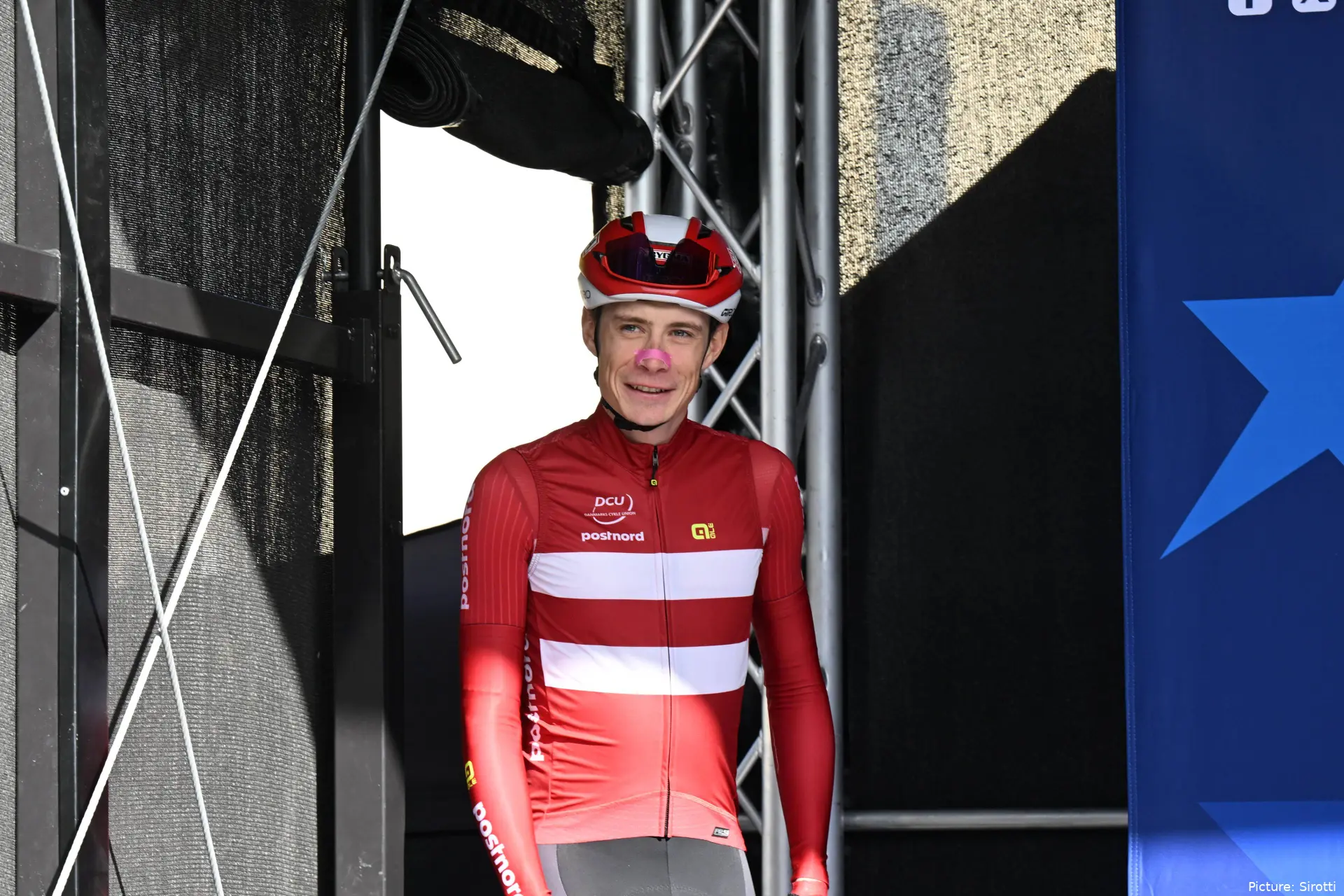
Jonas Vingegaard arrived at Sunday’s European road race with
a clear mission and a rare admission. He knows he hasn’t “really discovered how
to perform” in one-day races and wanted France to be the laboratory. Instead,
he was dropped on the Côte de Saint-Romain-de-Lerps with 108km still to ride
and climbed off soon after. So no, it was not the return to racing after the Vuelta
victory that he would have liked. The contrast with his Grand Tour pedigree
could not have been clearer than it was on Sunday afternoon.
“I haven’t ridden many one-day races recently because I
haven’t really discovered how to perform in them yet,” he told Wielerflits in
the days before the start. Those aren’t the words of a rider in denial; they’re
the words of a multiple-Grand Tour winner who understands that the craft of
one-day racing isn’t simply an extension of winning over three weeks. In fact,
they require completely different styles and tactics.
Vingegaard’s calendar and physiology are tuned to the long
game, multi-hour mountain efforts, controlled pacing, team tempo, and he has
built an era-defining résumé there: two Tours de France, runner-up at the 2021,
2024, and 2025 Tours, and victory at the 2025 Vuelta a España. None of that, as
Sunday proved, guarantees fluency in the spiky vocabulary of a classics style
race. Vingegaard is a man whose power and endurance fades slower than his
competitors, but that doesn’t necessarily help in one day races.
The immediate evidence is brutal. His bid to “crack the
code” of one-day racing turned south before the race’s decisive phase; the
moment the course demanded repeated surges and instant positioning, he lost
contact. Vingegaard’s own pre-race framing now reads like a diagnosis: “If I
find the recipe for tackling one-day races at this European championship, I’d
love to compete in more in the future.”

So why hasn’t a rider capable of dismantling rivals over
Alpine blocks been able to transpose that to a single day? Start with
specificity. The steadier, threshold-heavy exertions that decide Grand Tours
are worlds apart from the elastic, punch-repeat-punch patterns of major one-day
races. Vingegaard himself points to preparation puzzles others solved long ago:
“I find it difficult to figure out what I need to do the day before a one-day
race – what I need to do to be good at them.”
But, as we saw in the opening week of this year’s Tour,
Vingegaard does have explosive power. So maybe the question is less about the
physical side, and more about the mental side, in particular tactics.
His history
So let’s talk experience. Since 2022 he’s barely touched the
Classics calendar. Velo counted just one one-day start in 2024 (San Sebastián,
DNF) and listed his last five one-day results as: 2024 San Sebastián DNF; 2022
Il Lombardia 16th; 2022 Liège-Bastogne-Liège DNF; 2022 Flèche Wallonne DNF;
2022 GP Denain 76th.
He has only one win in a single-day event, and he downplays
even that: “The only time I won a one-day race at the Drôme Classic was the day
after another one-day race. So you couldn’t really call it a one-day.” Perhaps
then, the lack of classics form is simply due to the fact he doesn’t know how
to race them.
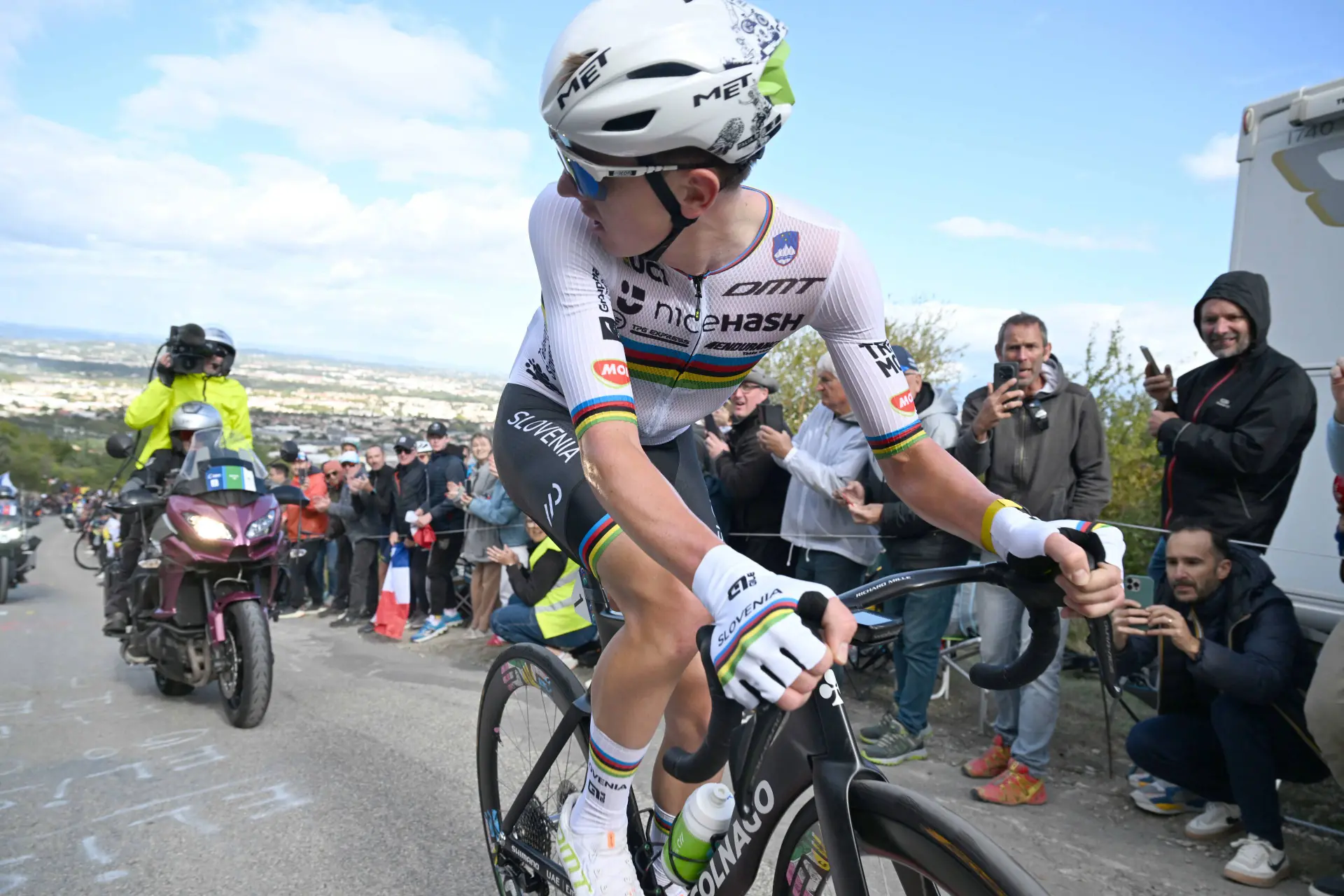
Tactics and team dynamics matter, too. In July, Team Visma |
Lease a Bike can blueprint mountain trains, control valleys, and neutralize
chaos on Vingegaard’s behalf. On a championship Sunday with national teams and
open-ended racing, the script is looser, the traps multiply, and the penalty
for one missed split is terminal. Rivals see the vulnerability.
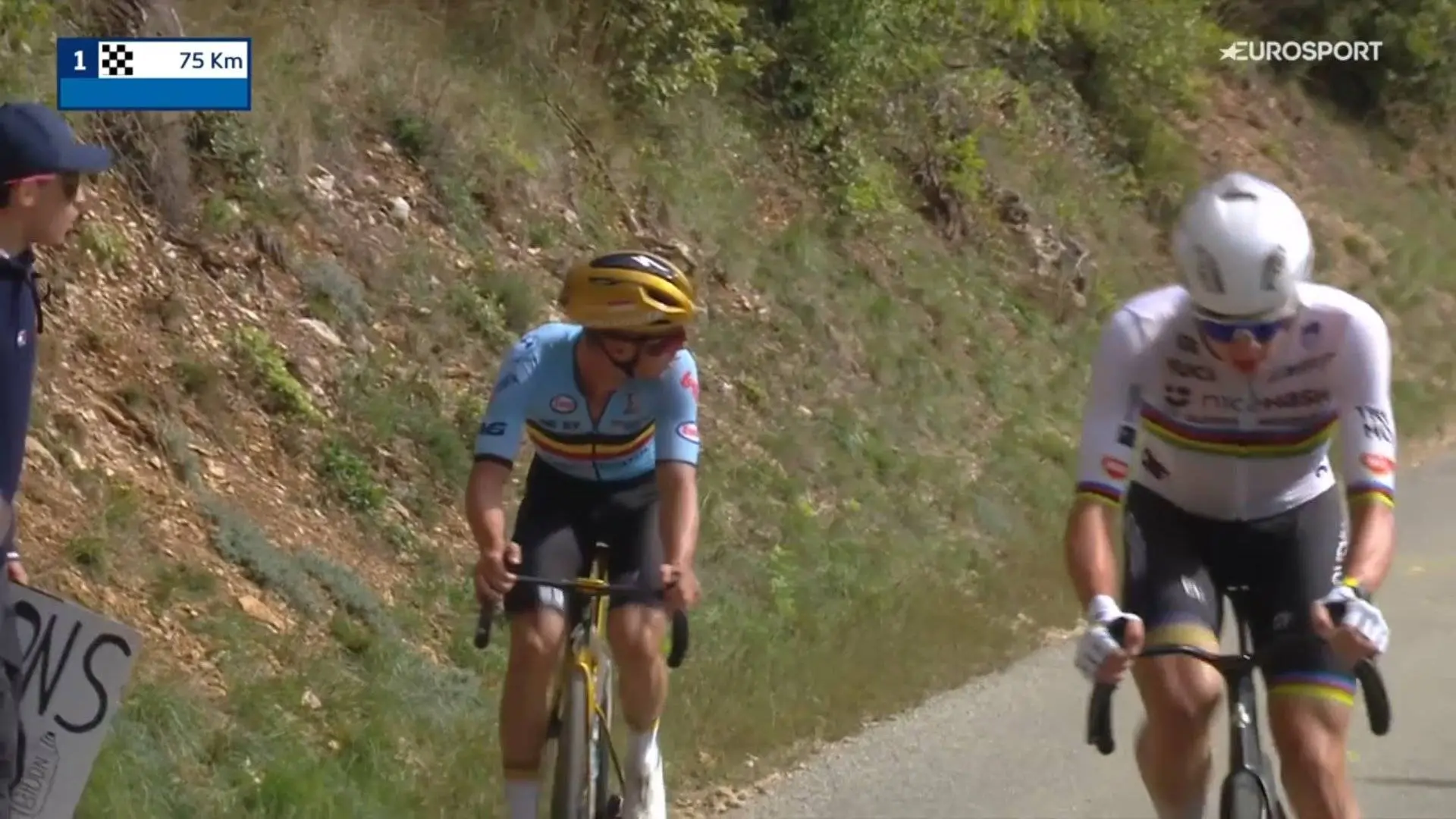
“Tadej and I have shown we’re in good form; Jonas is still a
bit of a question mark,” Remco Evenepoel said before the race, adding that
“one-day races have been a bit of a weak spot for him (Vingegaard) in the
past.” The race then played to type: Evenepoel and others stayed in the fight
while Vingegaard’s challenge evaporated long before the finale.
None of this means he’s condemned to struggle forever.
Denmark’s national coach Michael Mørkøv pushed back on the narrative: “I don’t
really believe he’s weak in one-days. He has already performed remarkably well
several times in the first stage of races he has participated in.”
Mørkøv pointed to the Dauphiné opener this summer, “He did
incredibly well there… It’s hard to argue that a first stage is not equivalent
to a one-day race”, as proof the Dane has the tools when the terrain suits and
the timing is right. On that day, he exploded the race including Tadej Pogacar,
Mathieu van der Poel, and Remco Evenepoel, but we saw nothing like that form at
the weekend.
There’s also the question of calendar architecture.
Vingegaard has long prioritized a Tour-first season, and this year he added the
Vuelta, where he won, on top of that. The price of that double can be a dulled
edge for a volatile one-day event staged just weeks later.
Pogacar and Evenepoel spent August and most of September
recovering and training after the Tour. Vingegaard, and Almeida, battled at the
Vuelta. Both pairs experienced hugely different fortunes on Sunday.
Crucially, Vingegaard is not pretending otherwise, and he is
fully aware that this an area he is yet to perfect. For a man that is already a
grand tour legend, the fact he has no presence whatsoever in the classics is
surprising. But are we just judging him based on the all-conquering characteristics
of his arch nemesis Tadej Pogacar?
For now, the split screen remains. On one side, Vingegaard
is one of the Kings of July and September, capable of carving minutes in high
mountains and closing out a Vuelta title. On the other, the rider who admitted
before France that one-day racing remains a puzzle and left the course early
after failing to hold the necessary accelerations. “If I find the recipe for
tackling one-day races at this European championship, I’d love to compete in
more in the future.” For now however, he’s yet to perfect that recipe. In fact,
he is a long way off.

Fin MajorCycling Journalist
Fin Major is a UK-based writer at CyclingUpToDate and has been part of the team since 2024. He is the site’s main writer for FAQs and evergreen explainers and has written around 2,000 pieces for the platform. Alongside this work, he focuses on in-depth analysis and covers the biggest races on the calendar, including the Tour de France, the Giro d’Italia, and La Vuelta a España, providing clear context around performance trends, tactics, and key storylines.
In his reporting, Fin uses reputable data sources such as ProCyclingStats for results, statistics, and historical context. He places strong emphasis on careful sourcing, editorial accuracy, and updating articles promptly when new, verified information becomes available. Outside of writing, Fin is an active cyclist, which supports his practical understanding of the sport and its demands.
claps 4visitors 1
Just in

Popular news
Latest comments
- sounds positive news for Lidl-Trek...still dirty on them for not resigning Lucinda Brand and why they arent all in with sponsorship of the Baloise team in 'cross.
 Davide26-10-2026
 - yeah your point about accidents happening in a chain of events, not a single event, is key. no police or barriers at a crossing. a car gets on the road. a trailing cyclist doesn't have an escort. no radio and GPS is being used to track stragglers. and tragedy. break one thing in the chain and it could be accident avertedmij26-10-2026
- The doctors called the concussion severe, even at the scene of the accident, because that is the term for it. The concussion protocol is the best they can do right now, with further research being done. It makes sense for Tadej's concussion to be severe because the freak circumstances lead to twisting of his head (and body) as he fell at high speed. Look at reports on the Toronto research published in early 2025 for starters, with images of the brain showing the effects that persist after symptoms clear up. Btw if Tadej had ridden the EC and fallen, he could have suffered more serious injury to the spine as the vertebra would not have been fully healed. Also serious consequences if he had hit his head. Don't know why you are so keen to downplay the impacts.Hills3326-10-2026
- Complete bullshit headline. The best thing this website can do is commit suicide.Renz26-10-2026
- If he wants to retire, he can spend a couple of non intensive low key seasons at UNO-X for lower salary as well.abstractengineer26-10-2026
- we need facts about these accidents and see the stats about these facts to find what can be done and what cannot be done. That is the job of the UCI. This has been done in many industries, Airlines, and Spacecrafts. Once teh UCI sets the rules, then the organizers can decide upfront whether or not they want to hold the race or not. UCI also needs to make the rules applicable to all stakeholders including riders and staff about what to do and not do, for safety. Parachutes are the safest to exit a jet fighter/bomber but none are provided on a passenger aircraft. most safety mechanisms are not viable on a spacecraft. in industries most accidents are the result of a chain of events, a single link not happening will not cause that accident. all these things are thoroughly investigated. inspite of all the safeguards, accidents happen and will happen, because humans remain inherently flawed but following rules/procedures minimize the risk and stats, not an individual accidentabstractengineer26-10-2026
- yeah total joke. It isn't at all attributed to MVDP, but you would never know it looking at the headlinemij26-10-2026
- there are no races, we gotta talk about something! The clickbait works, look at how many comments are here. I see these inane comments and can't hold my tongue. To compare Tadej's injuries to the others is an insult to all.mij26-10-2026
- exactly, it isn't even close. Tadej had a broken collarbone, standard issue cyclist break. he had a stable fracture at C7. since it was a stable fracture, it is no more serious than a broken wrist, in particular after it heels. And he had a concussion. the concussion itself will not hold him back at all. C7 is at the neck/shoulders, it won't affect his flexibility for a TT bike at all. the list of injuries for Froome, Bernal and Jonas are so much more extensive.mij26-10-2026
- he didn't break his back. he had a stable fracture at C7mij26-10-2026
Loading
2 Comments