“I’m surprised by how much of a reaction my words get – negative responses too”: Demi Vollering continues with open comments on how period pains affect women in sport
Cycling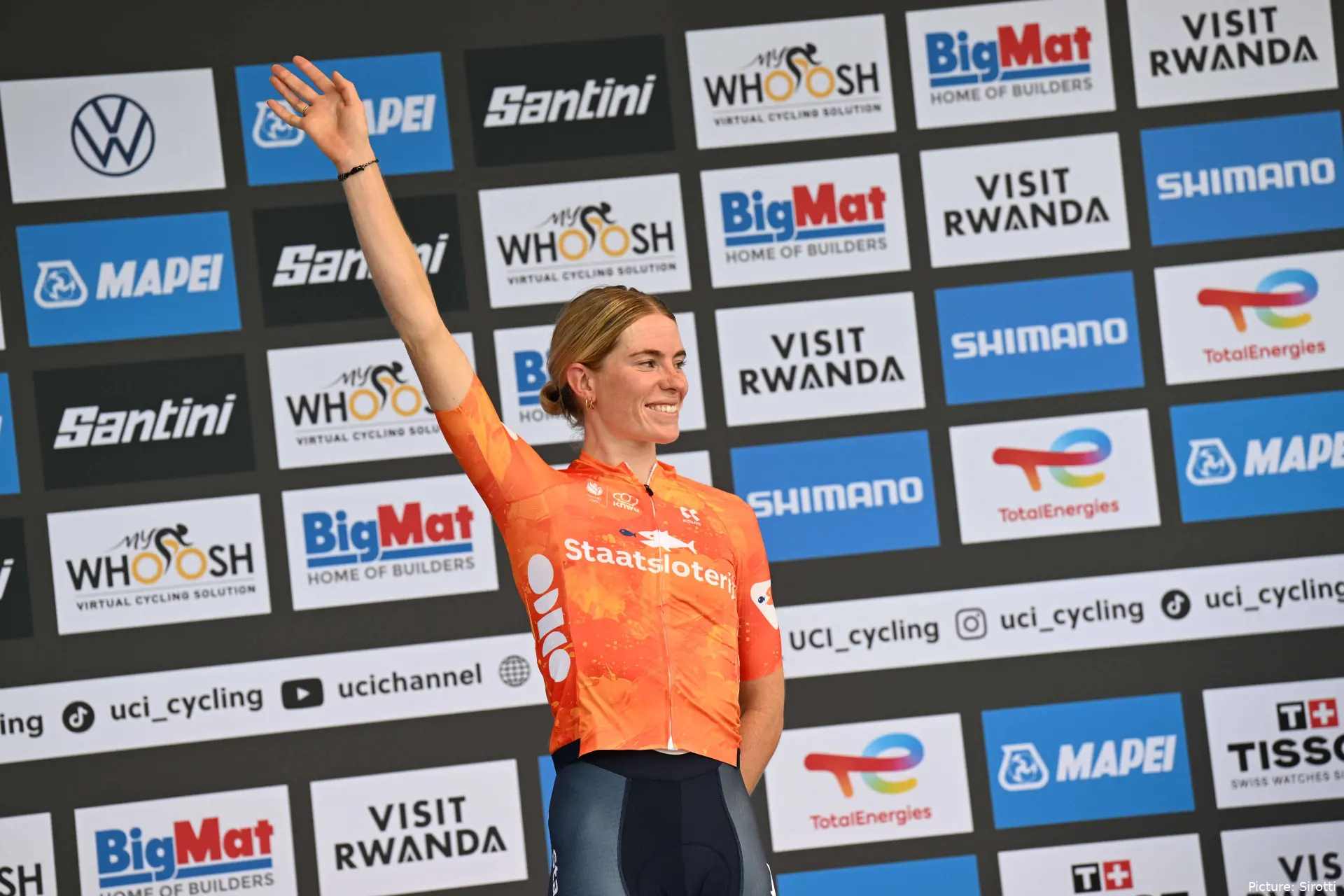
In a sport that often prides itself on grit, silence, and stoicism, Demi Vollering is choosing to speak up — and speak plainly — about an issue that continues to remain largely unspoken in elite competition: the impact of the menstrual cycle on female athletes’ performance.
Fresh off her dominant solo victory at the 2025 European Championships in France, the Dutch cyclist has once again opened up about the physical and psychological effects of competing while on her period. The honesty is striking. The reaction, she says, is often even more so. “It surprises me how much of a reaction my words get in society,” Vollering told Het Nieuwsblad. “Unfortunately, there are negative responses too. But overall, it’s positive — and if I can help even a few people by talking about it, that makes me very happy.”
The 28-year-old has increasingly used her platform to discuss the challenges faced by women in professional sport, challenging long-standing taboos. Her willingness to be candid about such topics — previously brushed aside or kept private — is now contributing to a growing wave of athletes advocating for transparency around menstrual health in elite performance environments.
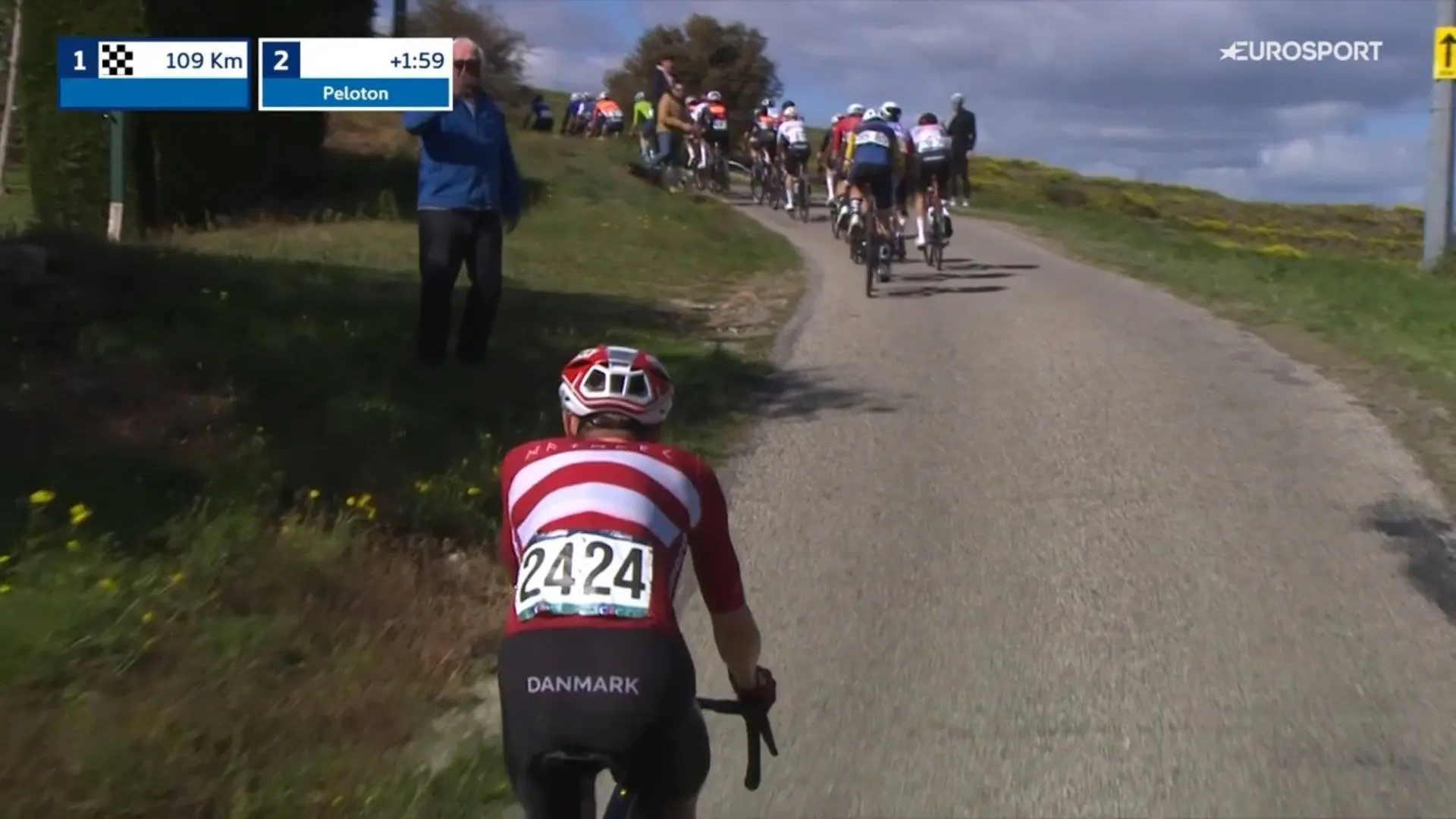
Vollering’s remarks come after a mixed World Championship campaign in Rwanda, where she finished a frustrating seventh in the road race. She now confirms that the underwhelming result was at least partly due to timing — not of tactics, but biology. “I had the same problem as during Liège–Bastogne–Liège earlier this year,” she said, referencing her period. “In Rwanda, it hit me again.”
She goes on to explain in simple physiological terms what this means for performance. “Your heart rate and body temperature are higher, your breathing becomes more irregular. You just don’t feel right in your body, and that also affects your confidence. But if you get through that phase, like I did at the Euros, sometimes you fly.”

Vollering in action in Kigali
A victory rooted in release
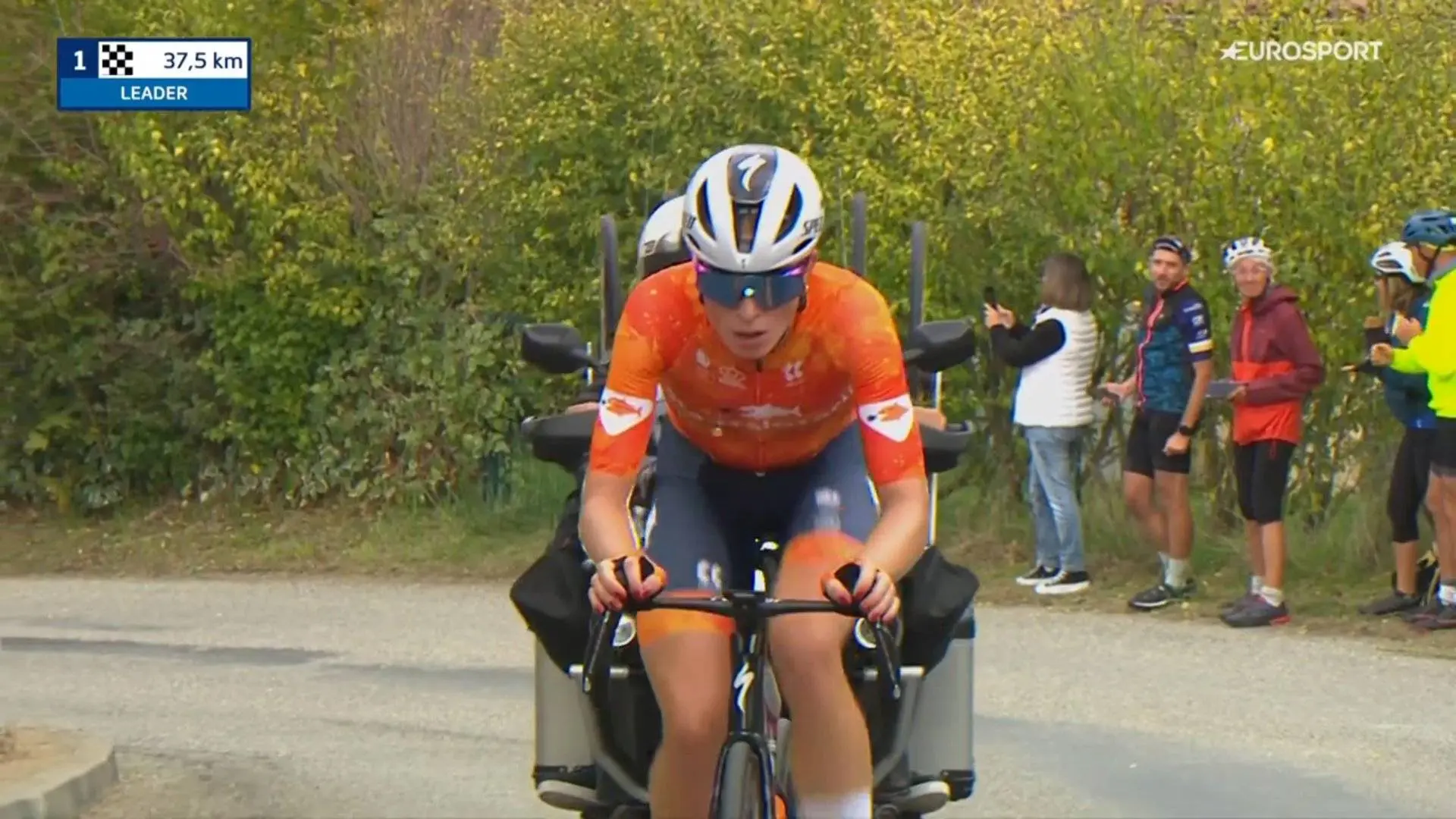
That "flight" came in the form of a 39-kilometre solo effort on the challenging French roads, a ride Vollering described as deeply satisfying — not only for the gold medal and European champion’s jersey, but for what it represented: a return to herself. “I knew that long climb suited me, and that’s where I wanted to make my move,” she said. “I wanted to finish it off for the team. We achieved this together.”
The win marked a cathartic moment after a season of highs and disruptions. Illness at the Tour de Suisse had derailed her mid-season form, but a high-altitude training block in Livigno leading into the Worlds had seemed promising — until menstruation struck again at the worst possible moment.
Read also

More than just medals
Despite her status as one of the peloton’s most dominant forces, Vollering is quick to step beyond the usual script of wins and wattage. She sees value not just in podiums, but in progress — especially when it comes to what sport demands of women, and how little it often gives back in terms of support or understanding.
“Sometimes I try to do too much,” she admits, reflecting on the World Championships in Zurich last year. “I was trying to manage everything — it all had to be perfect — and it just didn’t work. This time, I decided to let go a bit more. I even talked about that with national coach Laurens ten Dam. And everything just clicked.”
She is, by her own admission, a competitor at heart. She carries pressure into every race, shoulders expectations, and holds herself to high standards. But when it all comes together — as it did at the Europeans — the reward is amplified by knowing it was done as a team, and on her own terms. “There are always disappointments — like at the Worlds — but I don’t dwell on the past. I’m a winner, and I always look ahead. And when we win like this, together, it’s even more satisfying.”
Kieran WoodDeputy Editor-in-Chief
Kieran Wood is a sports journalist based in Wales and has been active in journalism since 2022. He regularly contributes to DartsNews.com and CyclingUpToDate.com, where he covers professional cycling and darts. In cycling, his work includes liveblogs from major races, including the Tour de France, the Giro d’Italia, and La Vuelta a España, alongside race reports and analysis. He has also conducted interviews with professional riders.
His reporting spans the full racing calendar, from one-day classics to stage races, with a focus on accurate, real-time coverage and clear contextual analysis. For statistics, results, and historical context, he regularly uses resources such as ProCyclingStats. To support reporting on rider activity and training context where relevant, he also references Strava.
In his work, Kieran places strong emphasis on careful sourcing, editorial accuracy, and updating articles as new, verified information becomes available.
claps 0visitors 0
Just in
Popular news
Latest comments
- yeah total joke. It isn't at all attributed to MVDP, but you would never know it looking at the headlinemij26-10-2026
- there are no races, we gotta talk about something! The clickbait works, look at how many comments are here. I see these inane comments and can't hold my tongue. To compare Tadej's injuries to the others is an insult to all.mij26-10-2026
- exactly, it isn't even close. Tadej had a broken collarbone, standard issue cyclist break. he had a stable fracture at C7. since it was a stable fracture, it is no more serious than a broken wrist, in particular after it heels. And he had a concussion. the concussion itself will not hold him back at all. C7 is at the neck/shoulders, it won't affect his flexibility for a TT bike at all. the list of injuries for Froome, Bernal and Jonas are so much more extensive.mij26-10-2026
- he didn't break his back. he had a stable fracture at C7mij26-10-2026
- he broke a bone in his neck, a stable fracture. are you referring to the broken back comment?mij26-10-2026
- yeah saw thatmij26-10-2026
- Agree, an injury without context is basically useless for any kind of retirement talk. Because of how that injury affects the motion. Also hidden in the context of the injury is how much pain do you get when you do the motion of cycling after recovery. Some commentators just want to create clickbait without proper understanding.abstractengineer26-10-2026
- Tadej will have to dramatically change his TT position this coming year. He's going to have to give up some 'aero' because of his C7 injury and try to replace it with power, which he has in spades. Paul is climbing really well, I think he learned a lot about himself this year and what his true capability is, and you can only learn about yourself when you're racing with the pro's. Remember, his finish at Il Lombardia saw him break Tadej's all time climbing record on the Civiglio by 38 seconds. If both guys finish upright on their bikes and both don't get sick for some reason, I think Paul will fight Tadej to the end and will possibly beat him in 2027 at the Tour, yes, I just said that. I had no expectations from Paul in 2026 at the Tour and he surprised me. My opinions are backed up by data, but data only takes you so far. I think it could happen.awp26-10-2026
- He broke a bone in his neck...much differennt than having a broken neck!frieders326-10-2026
- Why are they giving old irrelevant riders like Roll space on this site ?frieders326-10-2026
Loading
3 Comments