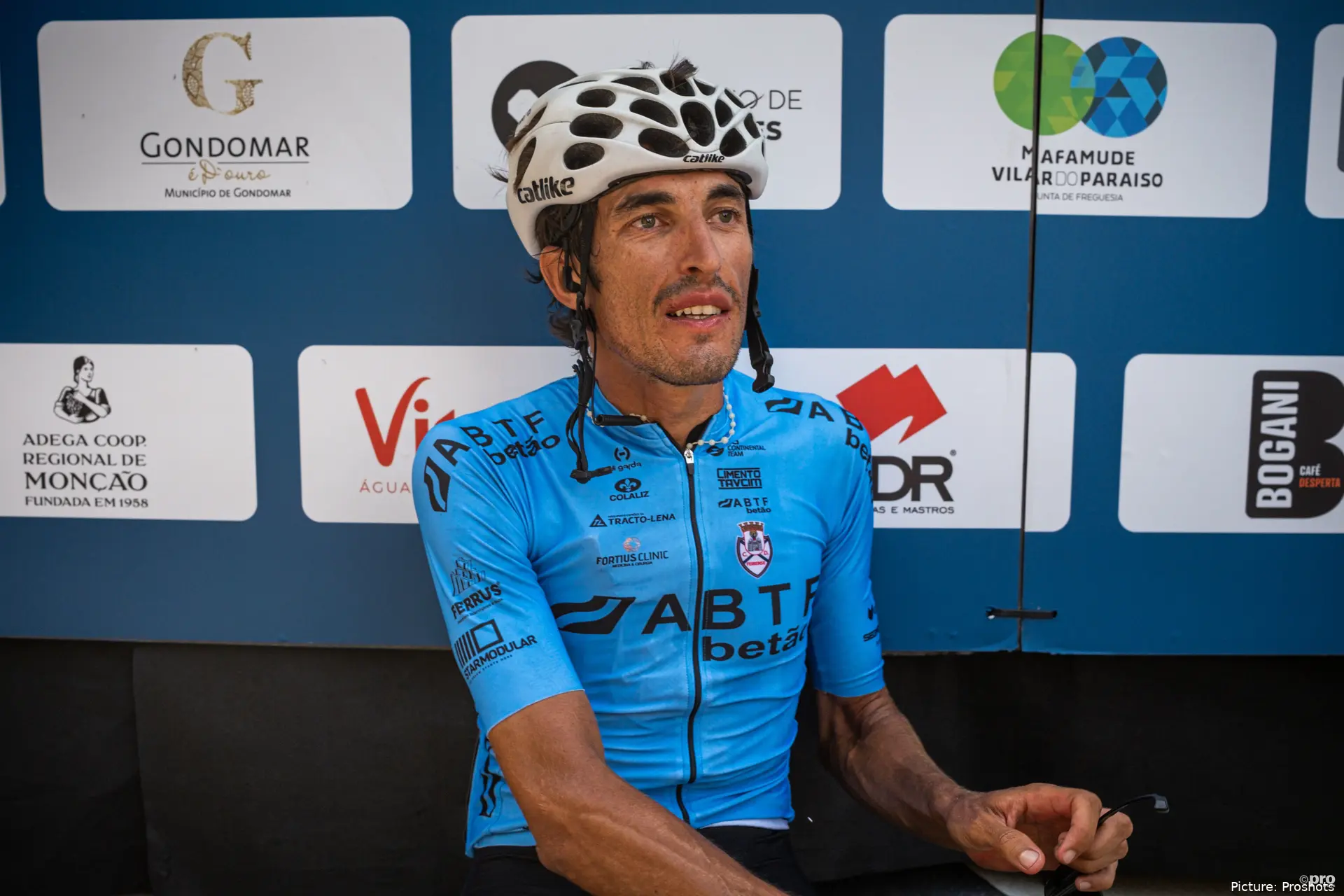
The wave of anti-doping headlines in professional cycling has continued, with the UCI confirming the provisional suspension of Portuguese rider António Carvalho Ferreira. The announcement arrives fresh after high-profile cases involving Oier Lazkano and Vinicius Rangel, marking a turbulent spell for the sport’s integrity efforts.
In a short statement, cycling’s governing body revealed that Carvalho Ferreira has been sidelined following “unexplained abnormalities in his Athlete Biological Passport… in 2018, 2023 and 2024.”
The UCI added: “The Union Cycliste Internationale (UCI) announces that Portuguese rider António Carvalho Ferreira has been provisionally suspended in accordance with the UCI Anti-Doping Rules, due to unexplained abnormalities in his Athlete Biological Passport (*) in 2018, 2023 and 2024.”
The rider has been provisionally suspended pending the outcome of disciplinary proceedings, and the UCI has stated it will make no further comment while the process continues.
Biological passport data under scrutiny again
The statement also reiterated the role of cycling’s Athlete Biological Passport (ABP) system, describing it as an electronic monitoring profile tracking data over time to flag potential doping indicators.
“The Athlete Biological Passport (ABP) is an individual electronic record for each rider, in which the results of all doping tests collected as part of the ABP programme over a given period are collated.”
The programme is operated by the International Testing Agency, with analysis supported by the Lausanne APMU and an independent expert panel.
Carvalho Ferreira now joins a rapidly developing list of riders facing provisional suspensions tied to passport anomalies. In the space of just over a week, both Oier Lazkano and Vinicius Rangel were also suspended, although the latter for missing tests rather than biological passport issues – prompting fresh debate around anti-doping vigilance and team due-diligence practices.
Growing spotlight on cycling’s anti-doping vigilance
While none of the cases have yet been adjudicated, the cluster of suspensions has inevitably sharpened scrutiny across the professional peloton. The UCI has repeatedly argued that such detections reflect a system functioning as intended, with cycling historically among the most aggressive sports in biological monitoring and data-driven enforcement.
For now, Carvalho Ferreira remains suspended while proceedings continue, with the UCI and ITA to determine whether an anti-doping rule violation will be confirmed.

Kieran WoodDeputy Editor-in-Chief
Kieran Wood is a sports journalist based in Wales and has been active in journalism since 2022. He regularly contributes to DartsNews.com and CyclingUpToDate.com, where he covers professional cycling and darts. In cycling, his work includes liveblogs from major races, including the Tour de France, the Giro d’Italia, and La Vuelta a España, alongside race reports and analysis. He has also conducted interviews with professional riders.
His reporting spans the full racing calendar, from one-day classics to stage races, with a focus on accurate, real-time coverage and clear contextual analysis. For statistics, results, and historical context, he regularly uses resources such as ProCyclingStats. To support reporting on rider activity and training context where relevant, he also references Strava.
In his work, Kieran places strong emphasis on careful sourcing, editorial accuracy, and updating articles as new, verified information becomes available.
claps 0visitors 0
Just in

Popular news
Latest comments
- TT But he won by a minute so he could have cut down on some of it
 Rafionain-Glas13-10-2026
 - weight is measurable. power is measurable. So why didn't he prepare that way from the TDF if he wanted to beat Pogi and after Pogi wasn't going to be there, to win.abstractengineer13-10-2026
- I hope Thibau and Tibor don't do the sameRafionain-Glas13-10-2026
- Seixas is exactly what I would like Pogi to be mentally and in his statements. Both come across as shy and who don't talk much but with Seixas, you can see that he enjoys success, that it boosts his ego, unlike Pogačar who seems to feel increasingly uncomfortable the more he wins. He's won so many times, people are saying he's boring. The french media hate him for winning so much, the french cycling fans are booing him... etc. etc. But remember one thing, Seixas will never physically reach Pogi's level. He's excellent, but he isn't at that level nor will ever be. His talking to the media, his relationship with people is already at a high level.PogiSloFans13-10-2026
- Paul Seixas is now the second-best rider in the world.megasmacky13-10-2026
- When will they start dropping Pogi? Oh yeah, when Pogi reaches 40+ years, that's when young cyclists will start dropping him. But until then... eat your hearts out and cry. Pogi will remain the G.O.A.T. for years to come. Capish?PogiSloFans13-10-2026
- I figure he would have found out how to outsprint Paul and take the win, maybe. He's 28 now but I would say he's right at the peak of his powers. It was great race though, Paul showed me something different about himself.awp13-10-2026
- Slowly, very slowly... 5-7 yrs. ;)MajorPayne13-10-2026
- Up to this point: "It is just not yet at the level of Vingegaard and Pogacar." First Jonas, and then level of Tadej. Period!MajorPayne13-10-2026
- The sport has long had a divide between the more diesel-like riders and the more explosive riders. Where does Pogačar fit? His explosive attacks are followed by a high speed diesel climb and he's rarely been caught in the past 5 years (people can name the moments, it's so rare). Seixas is young and we have no idea where his body will end up on this spectrum (just like we didn't with Pogačar when he was 20 and being a diesel up the Vuelta mountains of 2019). Speculation is fun, being a fan while it unfolds is going to be more fun.RidesHills13-10-2026
Loading

UCI statement on António Carvalho Ferreira bit.ly/3JDCSqP

Write a comment