“It was a battle with myself” – Tom Pidcock frozen out of Omloop contention as cold weather struggles undo strong form
Cycling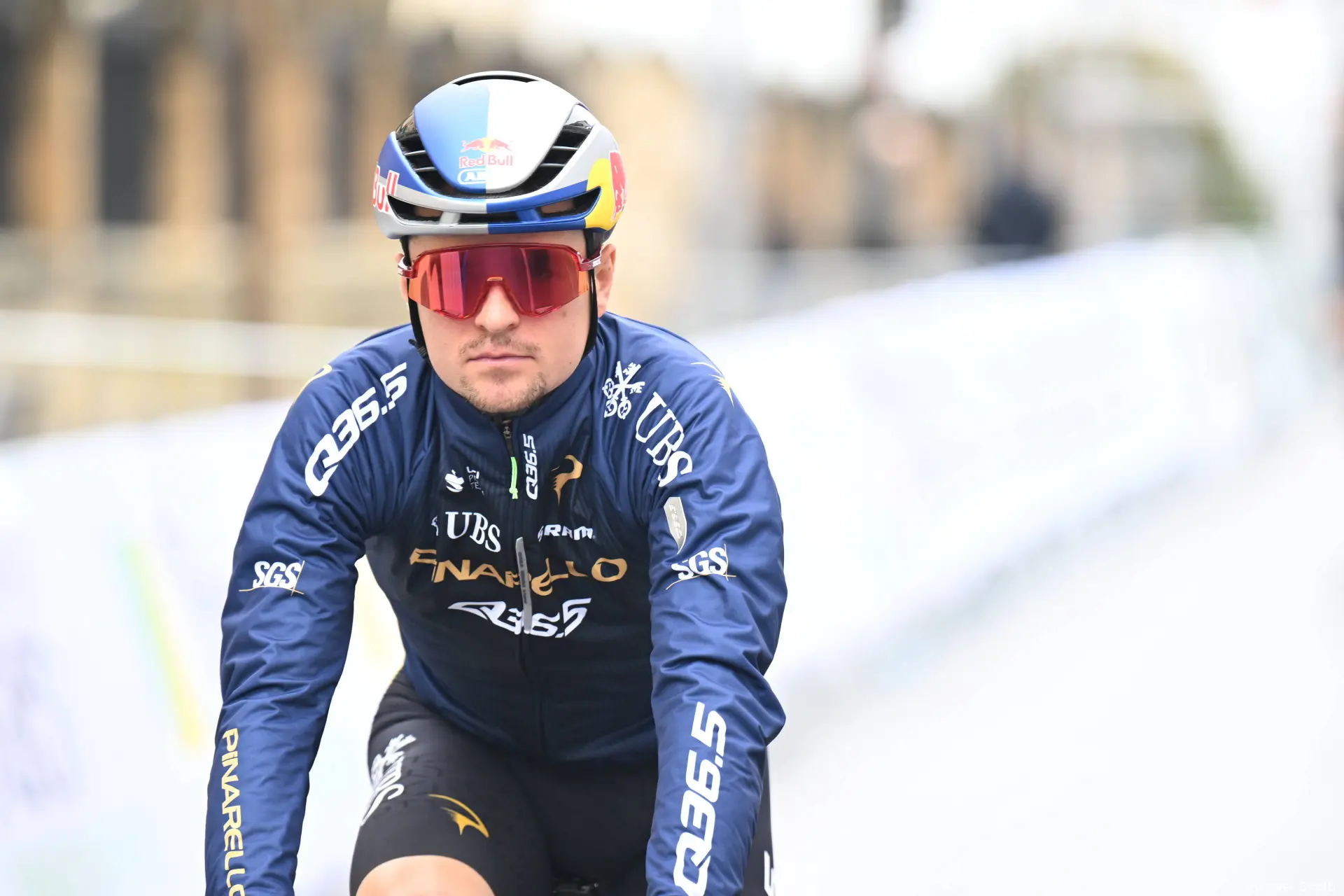
Tom Pidcock’s Omloop Het Nieuwsblad did not unravel because of his legs. It unravelled because of the cold.
While Mathieu van der Poel lit up the Molenberg and the Muur, and Tim van Dijke and Florian Vermeersch fought for the podium behind him, Pidcock was locked in a different contest altogether.
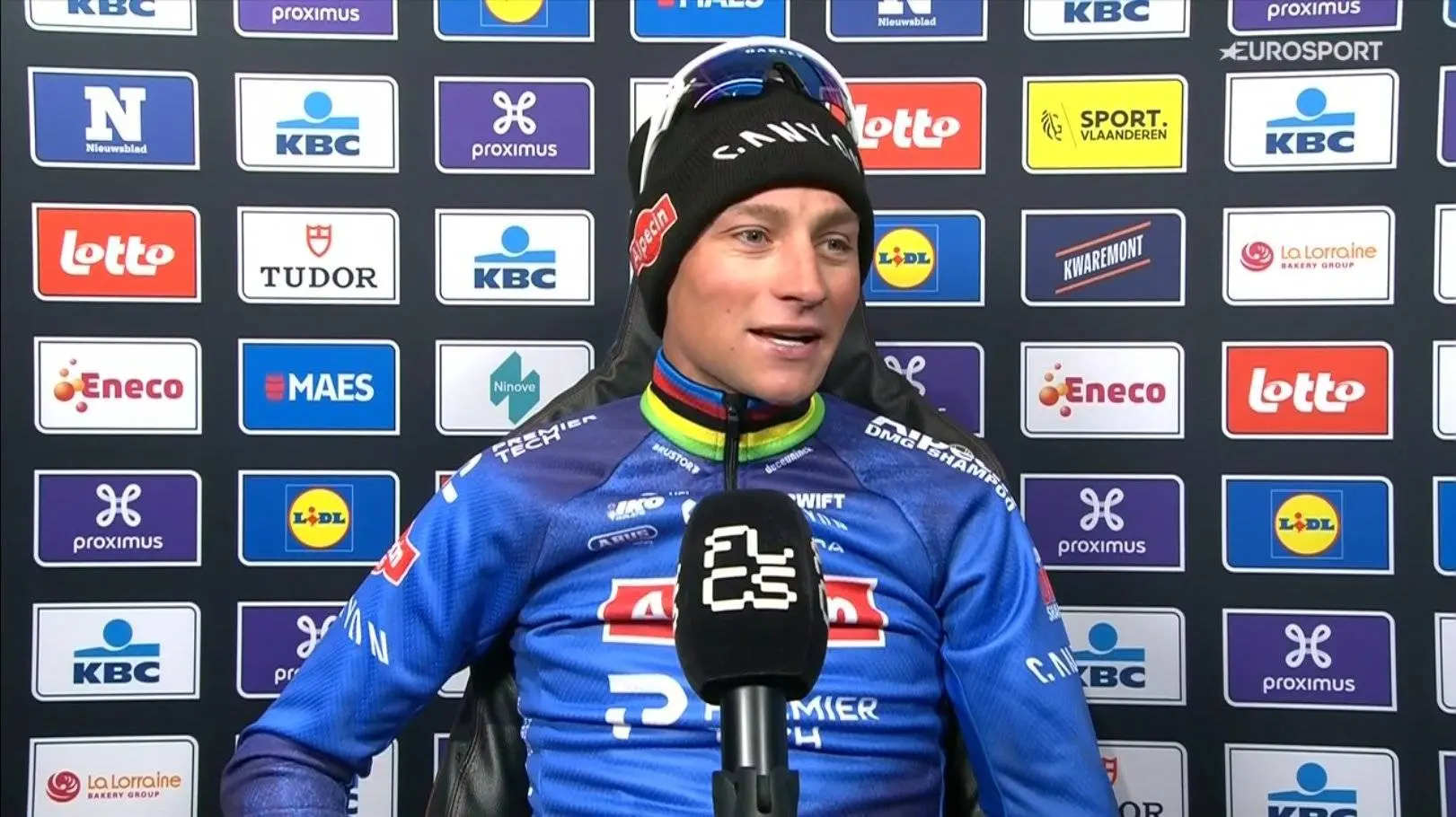
“To be honest, it was about surviving from the moment it started raining after 30 kilometres,” Pidcock admitted afterwards. “I could only focus on staying warm and not crashing — it was a battle with myself.”
By the time the race split decisively on the cobbles of the Molenberg, the Pinarello Q36.5 Pro Cycling Team leader was already fighting to stabilise rather than to attack.
Weather, not watts
According to sports director Jens Zemke, the issue was not condition but context. “There was not a problem with his jacket, but he was frozen from the beginning,” Zemke told Cycling News, explaining that the abrupt shift from warm training conditions to near-freezing rain had caught them out.
“It was maybe also the first time we really touched the ice-cold winter here, after spending a lot of time in the south regions and in the sun. Even the recon two days ago was in good weather, that was short pants. With this change in the weather today, he wasn’t feeling super.”
The signs were visible in the middle phase of the race. Pidcock repeatedly adjusted layers as conditions deteriorated, pulling rain jackets and gilets on and off while the peloton accelerated toward the decisive sectors.
“He put his rain jacket on, then off, his vest was on and off,” Zemke recounted. “He had a bit of hesitation, and we could not really focus on him and position him. We were always busy with things.”
In a race where positioning into the Haaghoek, the Eikenberg and especially the Molenberg is everything, distraction proved costly.
Mechanical and missed moment
When the race fractured for good, Pidcock was not where he needed to be. “We had to change his bike later on, I don’t think he fell, but it was twisted,” Zemke said. “When we came to him, he was in the third group.”
By the time he rejoined the second group, the decisive trio of Van der Poel, Van Dijke and Vermeersch had already formed ahead. The elastic never snapped back. “And if I look over the complete day, I would say that was the maximum outcome for us, to be honest,” Zemke added, with Pidcock eventually finishing 48th as teammate Aimé De Gendt sprinted to fifth.
The contrast with last season was stark. Twelve months earlier, under clearer skies, Pidcock had animated the race. This time the conditions told a different story. “Form-wise, he is absolutely up there, but the weather did not play into our hands,” Zemke said. “Last year was much better weather. He struggled a lot with the weather, and that was the difference.”
Survival over spectacle
For Pidcock, the day became about damage limitation. “At least I didn’t crash, so I’m happy I got through it. That’s positive,” he said.
In a race marked by multiple falls, including heavy crashes around the Eikenberg and Molenberg, simply reaching Ninove upright was not insignificant.
Yet the result leaves the obvious question hanging over the early Classics campaign.
Omloop was supposed to offer a first reading of Pidcock’s spring condition. Instead, it delivered little more than confirmation that Belgian February can still bite.
The next meaningful test comes quickly. Strade Bianche, circled on the calendar, offers a very different challenge: gravel roads, sharper climbs and, if forecasts hold, far kinder weather. If Zemke’s assessment is accurate, the legs are there.
Omloop may have been a battle with the elements. The real examination lies ahead.


Kieran WoodDeputy Editor-in-Chief
Kieran Wood is a sports journalist based in Wales and has been active in journalism since 2022. He regularly contributes to DartsNews.com and CyclingUpToDate.com, where he covers professional cycling and darts. In cycling, his work includes liveblogs from major races, including the Tour de France, the Giro d’Italia, and La Vuelta a España, alongside race reports and analysis. He has also conducted interviews with professional riders.
His reporting spans the full racing calendar, from one-day classics to stage races, with a focus on accurate, real-time coverage and clear contextual analysis. For statistics, results, and historical context, he regularly uses resources such as ProCyclingStats. To support reporting on rider activity and training context where relevant, he also references Strava.
In his work, Kieran places strong emphasis on careful sourcing, editorial accuracy, and updating articles as new, verified information becomes available.
claps 1visitors 1
Just in
Popular news
Latest comments
- This aged badly…anonymouscyclist10-10-2026
- Come on Seixas! This will be transforming for the young Frenchman’s career if he wins this…anonymouscyclist10-10-2026
- I know, news flash - a Dad isn’t a baby sitter. he is a parent. I can only assume something was lost in translation.mij10-10-2026
- Primoz is so chill, his attitude is amazingmij10-10-2026
- Primoz is so chill, his attitude is amazingmij10-10-2026
- I hope they work for him and the team gives him a chance.mij10-10-2026
- I hope he gets MSR next yearmij10-10-2026
- Not for me now ;-) Because now that you have after all gone into some detail I have new questions (though maybe not ones you can answer) What is considered the official finish seeing as the drawn finish line is not infinitely thin. Is it the front, middle or back (I suppose the front seeing as that is the easiest to use for distinguishment)? I can imagine there is more imprecision in the straightness of the drawn line than the line of view for the apparatus, a couple of mm of tolerance accross the width of a road seems almost impossible to stick to with physical colour on typical surfaces so are riders not enlightened that it isn’t the actual paint that counts but the photo finish, that they should only consider tve line as an aiming target? Are moving and static objects treated separately or are they automatically created together?Mistermaumau10-10-2026
- congrats to him - that win did come from nowheremij10-10-2026
- congrats to him - that win did come from nowheremij10-10-2026
Loading
1 Comments