"You don't need to be the big guy anymore": The peloton's fastest agree the era of the pure sprinter is over
Cycling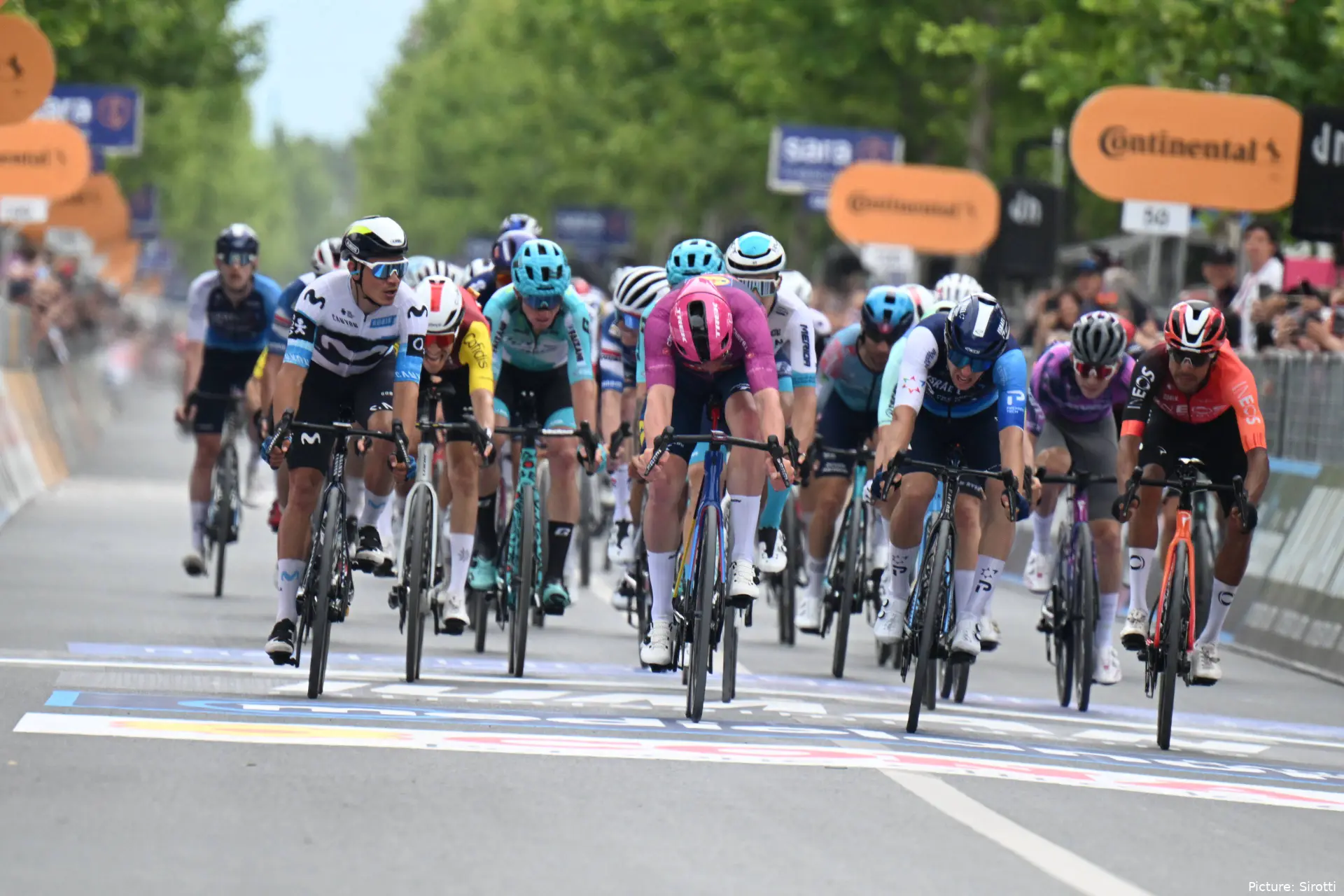
There are few traditions in cycling as sacred as the sprint on the Champs-Élysées. Yet, last summer, the Tour de France changed it. Inspired by the Paris Olympics, the organizers swapped the traditional circuit for three ascents of the cobbled Montmartre, turning the finale into a playground for puncheurs rather than pure fast men.
No more pure sprinters?
As the 2026 season gets underway, the consensus among the sprinters is clear: the era of the pure sprinter is over. "If you want to be the best sprinter in the world, you don't need to be the big guy because there aren't that many flat races left anymore," Biniam Girmay explained in words shared by Cycling News.
The modern route profile is hostile to the heavyweights of the past. Organizers, desperate to avoid "boring" transition stages, are including climbs and technical challenges that force sprinters to evolve. Jonathan Milan notes that opportunities are becoming scarce. "I'm seeing maybe a little change in that there are fewer flat stages," Milan admits. "Most sprint finishes, either they have echelons, or there is some elevation."
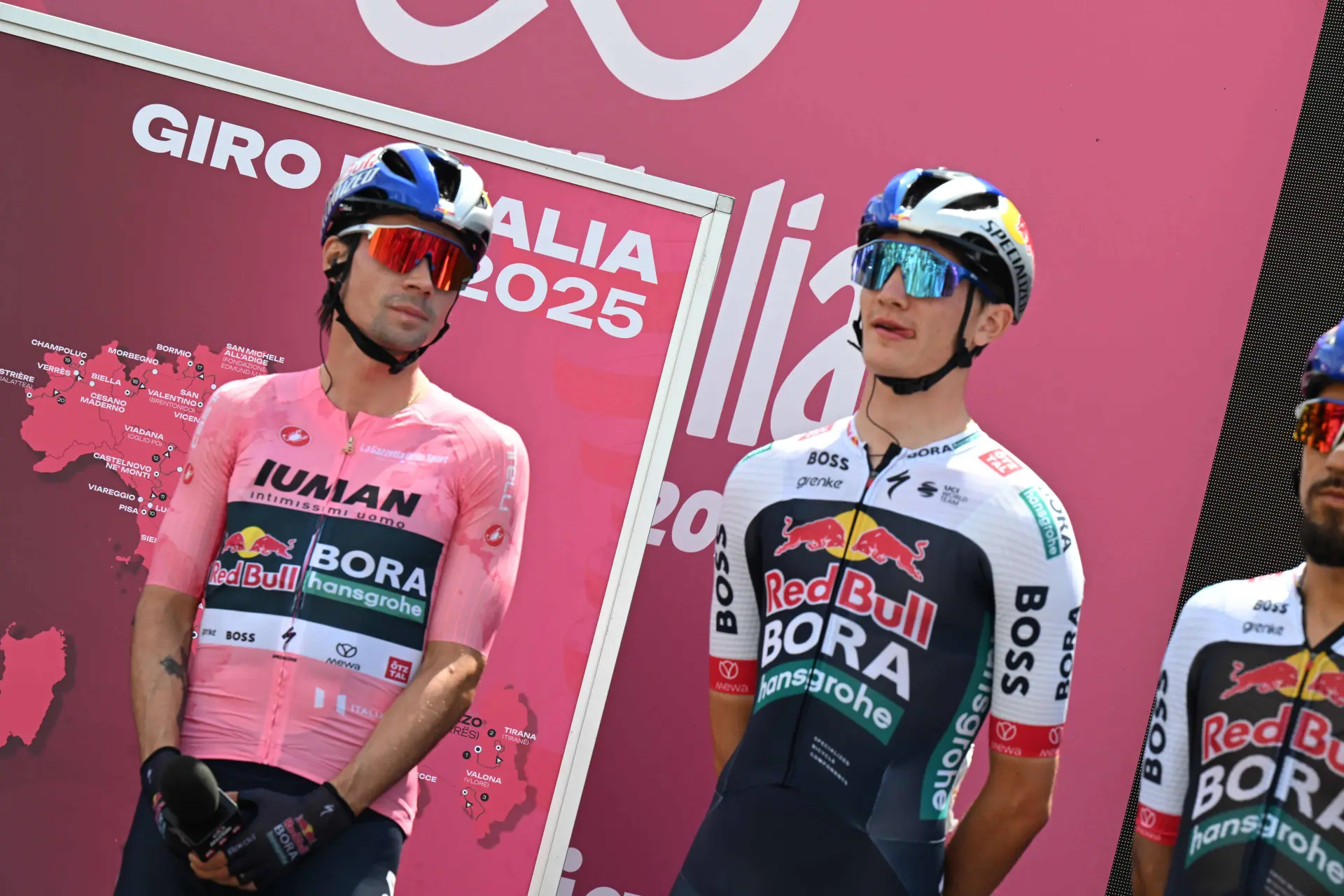
According to Jasper Philipsen, this shift is driven by the entertainment industry. "Race organisers are changing the route as they want to make it more exciting for the public," the Belgian says. "[The win is] open to the more versatile riders; these kinds of parcours leave multiple race situations possible."
It isn't just the mountains that have changed, but also the sprint itself. Jordi Meeus, the last man to win a "traditional" Champs-Élysées sprint in 2023, argues that higher overall speeds have fundamentally changed the mechanics of the lead-out. "In the past, sprinters were launching at 250 to 300m and leading all the way. Nowadays, I think sprints are a bit shorter," Meeus said.
The reason? Aerodynamics. As the peloton moves faster, the slipstream effect becomes more potent, punishing anyone who hits the wind too early. "You can be the strongest, but if you launch at the wrong moment and you catch too much wind too early, you can still get caught," Meeus added.
"Nowadays, it's really hard to anticipate because the pace is so high. Guys like Pogacar or Van der Poel, they have such a strong team, and they like a hard race, so they go fast from the beginning to the end, so it's really hard to get some distance ahead."
The safety battle: Is 5km enough?
With higher speeds comes higher risk. A study by the UCI's SafeR project found that 13% of crashes in the 2024 season were caused by tension at tactically critical points. In response, the UCI has introduced a yellow card system for dangerous riding and extended the "safety zone" (where riders crashing get the same time as the group) from 3km to 5km on flat stages.
However, Biniam Girmay believes these measures are not enough, and he advocates for a radical 10km rule to neutralize the danger completely.
"The 3km rule, and sometimes 5km, why don't they put it at 10km to go? It doesn't change anything. It's flat anyway, and then we finish in the city most of the time. If you take [rider finish times] at 10km to go, we'll only have 10, nine or eight sprint teams [contending for the win], so we will be safer."

Félix SernaCycling Journalist
Félix Serna is a writer at CyclingUpToDate and has been part of the team since 2025. He covers professional cycling across both the men’s and women’s calendars, with a focus on UCI rankings, race developments, and rider performance. His work includes interview-based reports, liveblogs, and tournament coverage designed to provide clear, accurate context throughout the season.
In his reporting, Félix regularly uses ProCyclingStats for results, statistics, and historical reference. He places strong emphasis on careful sourcing, editorial accuracy, and updating articles promptly when new, verified information becomes available. He holds a bachelor’s degree in International Studies.
claps 1visitors 1
Just in
Popular news
Latest comments
- well this one definitely makes my STUPIDEST ARTICLES OF 2026 list. chapeau…OCexile14-10-2026
- Cyclocross is nothing without stars like MVDP, WVA, Pidcock... etc. Out of all cycling disciplines, road racing is the most popular discipline in professional cycling, especially in terms of global prestige, major-event audiences, and the historical status of its greatest riders. People that don't follow cycling as a sport have heard of Merckx, Hinault, Pantani, Armstrong, Remco, Vingegaard, MvDP, Van Aert, Pogačar etc. So if we're talking about professional cycling and the sport's most famous athletes, road racing is the clear number one. Road cycling's greatest champions are judged across such a wide scale. E.g. - Pogačar can win the Tour de France and then go after Paris–Roubaix and other prestigious one day races. These races also have a wide range of versatility: cobbles, gravel, punchy, hilly, TT. This versatility is a huge part of why road racing is No.1 in cycling. Maybe Sven Nys is a dutch cycling "legend"... but that's where it starts and ends. Ad acta.PogiSloFans14-10-2026
- “at some point those guys will turn their backs on OUR sport”? after dedicating so much of their lives to cyclocross and in mathieu’s case winning more world championships than anyone, it would seem to me like they’ve earned the right for it to be always be THEIR sport, too, even after they retire from it.OCexile14-10-2026
- It takes two to tango. Riders also have a say. Maybe they didn't see any opportunities on a stacked team such as Visma's? Who knows, but could be a multitude of reasons why deals fall through.Pogboom14-10-2026
- Eventually Pogi will get older and slower. Father Time will favor the young. The question is whether he can beat Pogi before Pogi decides to retire. You never know... Pogi may retire after winning paris-roubaix :)b3tlla14-10-2026
- i think he can continue to race for maybe another 2 years till he drops out of podium contention. With his TT and his follow the leader in the Mountains,he should not need too many teammates too.abstractengineer14-10-2026
- Aren't they still shopping around for a main sponsor for next year?wrsty14-10-2026
- How broke is visma now? wtf they cant even fight moviestar and decathlon for riders and lose both their mid targets based on their budget and they cant even get those? Crazy...:/miguel13-10-2026
- TT But he won by a minute so he could have cut down on some of it
 Rafionain-Glas13-10-2026
 - weight is measurable. power is measurable. So why didn't he prepare that way from the TDF if he wanted to beat Pogi and after Pogi wasn't going to be there, to win.abstractengineer13-10-2026
Loading
Write a comment