"When I raced with PDM, I realized that was the first true organized doping team": Greg LeMond reflects on the start of the EPO era
Cycling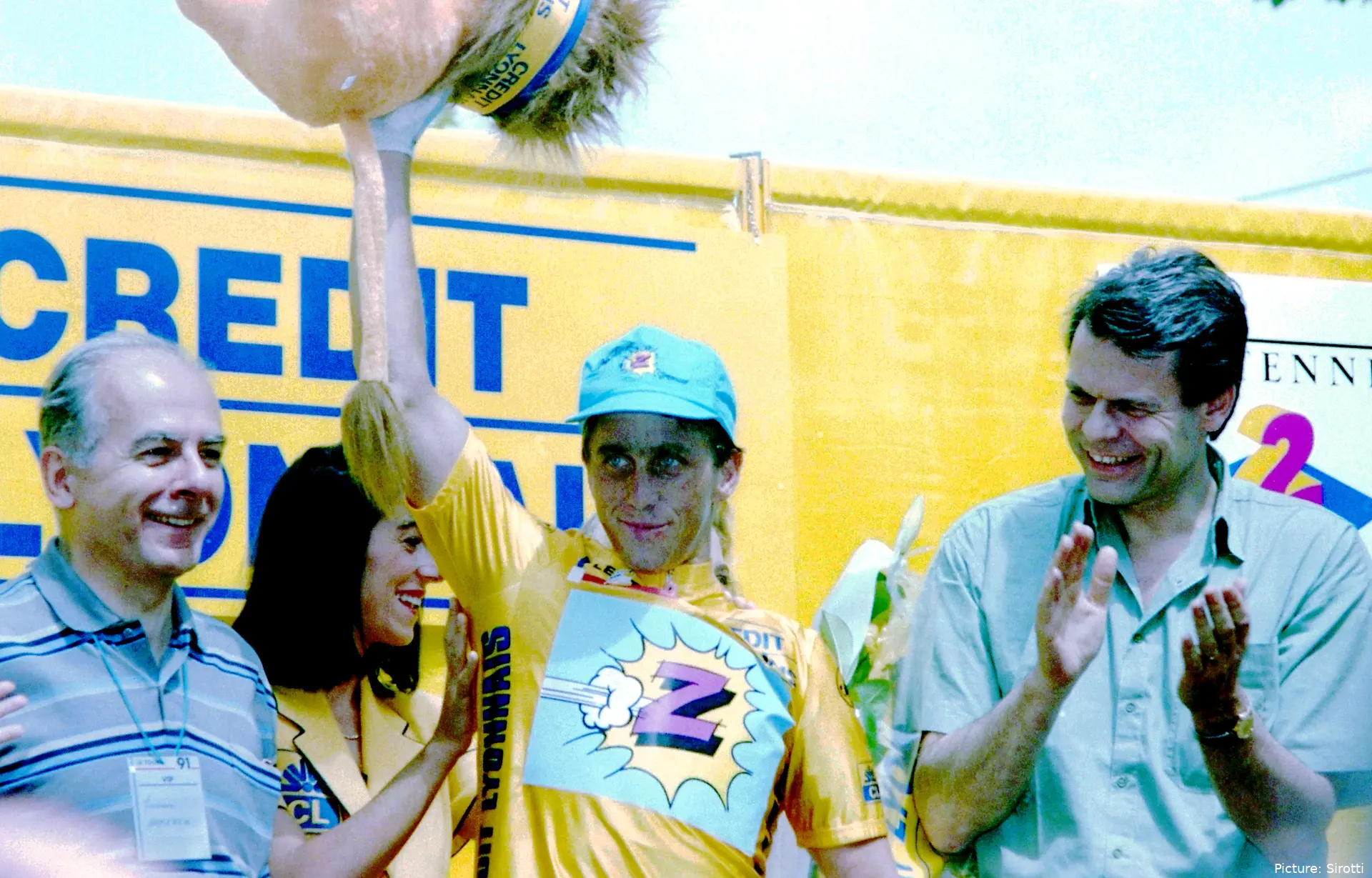
Greg Lemond, the only American to officially win the Tour de France, has opened up about the immense pressure and confusion that defined the peloton during the early 1990s. In a recent interview with Anthony Walsh, the three-time Tour champion described how the arrival of EPO transformed average riders into superstars and forced clean athletes into impossible negotiations just to keep their salaries.
Lemond’s career spanned the transition from the old-school era of the 80s to the hyper-charged EPO era of the 90s. He recalled the sudden shift in performance levels, particularly highlighting the transformation of Italian rider Claudio Chiappucci.
The Sestriere shock
For Lemond, the 1992 Tour de France was a turning point. He recalled watching Chiappucci, a rider he had known as a domestique in the mid-80s, pull off a legendary breakaway to Sestriere that left the American stunned and far behind.
"I raced with Chiappucci since 1986. He was a domestique. I'm sorry, he was not [a] good of a rider," LeMond stated bluntly. "And then I remember in 1992, he broke away to Sestriere. I'd won the Tour three times. I was the last rider in that stage. I was an hour behind him."
The disparity in performance was not only demoralizing, but it also had financial consequences. LeMond revealed a tense negotiation with his team, where the management threatened to cut salaries by 50% due to lack of results.
"[My team said]: 'We're going to have to reduce your salary. This is just really happening in the teams, they're taking EPO, they're taking testosterone,'" LeMond recalled.
He described how he fought back against the pay cut, arguing that he shouldn't be penalized for staying clean in a dirty sport. "Either you lay off and let us race and no changes [to the] salary, or you deliver the same doctor," he told them, clarifying that he wasn't asking to dope, but pointing out the hypocrisy of demanding wins without providing the "medical support" other teams were using.

Greg Lemond and Laurent Fignon were teammates at Renault
The tragedy of PDM
LeMond also reflected on his time with the Dutch team PDM in the late 80s, which he identified as the beginning of systematic team doping. "When I raced with PDM, I realized that was the first true organized doping team. And I left that team for that reason," he said.
The consequences of this experimentation were sometimes fatal. LeMond shared a heartbreaking memory of Johannes Draaijer, a young Dutch teammate at PDM who died in his sleep in 1990 at the age of 27. The cause of death was officially heart failure, but rumors of EPO use - which thickens the blood and can cause cardiac arrest during rest - have long surrounded the tragedy. "His wife called my wife in the middle of the night because her husband had passed away. So sad," LeMond said.
LeMond believes that many riders in that era were involuntary test subjects. He pointed to Professor Francesco Conconi, a mentor to the infamous Dr. Michele Ferrari, who was officially working on developing tests to detect EPO for the Olympic Committee.
"I do believe some riders there had no clue if they were giving [them] something because Conconi at the time was working for the Olympic Committee trying to do tests on 'how do you detect EPO'. But he was using pro riders as guinea pigs."

Félix SernaCycling Journalist
Félix Serna is a writer at CyclingUpToDate and has been part of the team since 2025. He covers professional cycling across both the men’s and women’s calendars, with a focus on UCI rankings, race developments, and rider performance. His work includes interview-based reports, liveblogs, and tournament coverage designed to provide clear, accurate context throughout the season.
In his reporting, Félix regularly uses ProCyclingStats for results, statistics, and historical reference. He places strong emphasis on careful sourcing, editorial accuracy, and updating articles promptly when new, verified information becomes available. He holds a bachelor’s degree in International Studies.
claps 28visitors 26
Just in

Popular news
Latest comments
- TT But he won by a minute so he could have cut down on some of it
 Rafionain-Glas13-10-2026
 - weight is measurable. power is measurable. So why didn't he prepare that way from the TDF if he wanted to beat Pogi and after Pogi wasn't going to be there, to win.abstractengineer13-10-2026
- I hope Thibau and Tibor don't do the sameRafionain-Glas13-10-2026
- Seixas is exactly what I would like Pogi to be mentally and in his statements. Both come across as shy and who don't talk much but with Seixas, you can see that he enjoys success, that it boosts his ego, unlike Pogačar who seems to feel increasingly uncomfortable the more he wins. He's won so many times, people are saying he's boring. The french media hate him for winning so much, the french cycling fans are booing him... etc. etc. But remember one thing, Seixas will never physically reach Pogi's level. He's excellent, but he isn't at that level nor will ever be. His talking to the media, his relationship with people is already at a high level.PogiSloFans13-10-2026
- Paul Seixas is now the second-best rider in the world.megasmacky13-10-2026
- When will they start dropping Pogi? Oh yeah, when Pogi reaches 40+ years, that's when young cyclists will start dropping him. But until then... eat your hearts out and cry. Pogi will remain the G.O.A.T. for years to come. Capish?PogiSloFans13-10-2026
- I figure he would have found out how to outsprint Paul and take the win, maybe. He's 28 now but I would say he's right at the peak of his powers. It was great race though, Paul showed me something different about himself.awp13-10-2026
- Slowly, very slowly... 5-7 yrs. ;)MajorPayne13-10-2026
- Up to this point: "It is just not yet at the level of Vingegaard and Pogacar." First Jonas, and then level of Tadej. Period!MajorPayne13-10-2026
- The sport has long had a divide between the more diesel-like riders and the more explosive riders. Where does Pogačar fit? His explosive attacks are followed by a high speed diesel climb and he's rarely been caught in the past 5 years (people can name the moments, it's so rare). Seixas is young and we have no idea where his body will end up on this spectrum (just like we didn't with Pogačar when he was 20 and being a diesel up the Vuelta mountains of 2019). Speculation is fun, being a fan while it unfolds is going to be more fun.RidesHills13-10-2026
Loading
17 Comments