“When crashes happen, there is no space for emotions” – Pogacar’s mechanic on chaos, calmness and unfinished goals
Cycling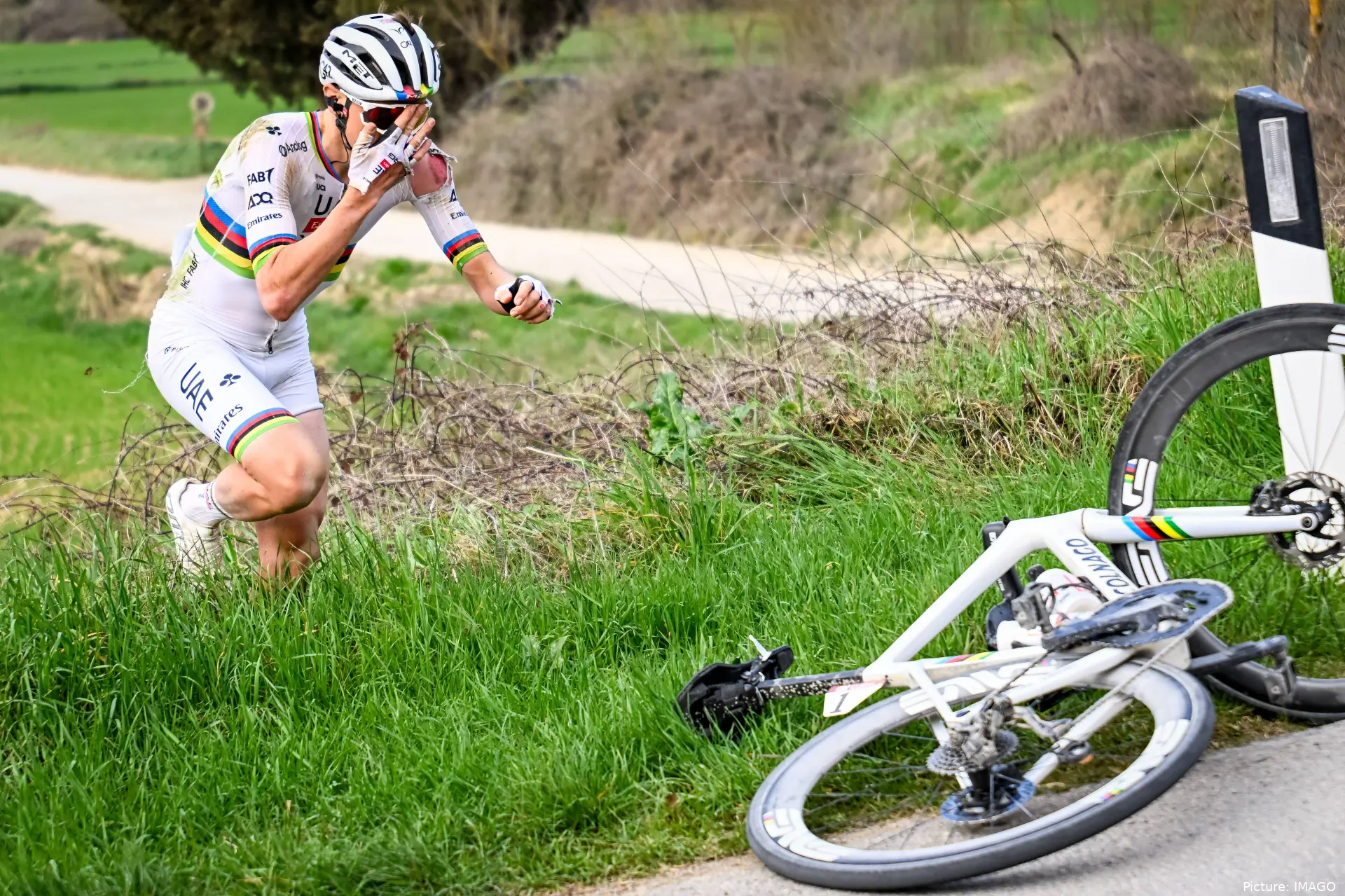
“When crashes happen, there is no space for emotions.” For Bostjan Kavcnik, the sentence is not philosophical. It is practical. In professional cycling, crashes strip the sport back to instinct, coordination and speed. And it is in those moments, he believes, that Tadej Pogacar’s character is most clearly revealed.
“Crashes are part of cycling,” the world champion's mechanic said in conversation with Siol. “When they happen, there is no space for emotions. Mechanics are there to intervene immediately and resolve the situation as quickly as possible.”
From the outside, Pogacar’s composure often goes unnoticed. Inside the team car, it is unmistakable.
What the cameras do not show
When Pogacar crashed at Strade Bianche earlier this season, the images on television looked dramatic. Dust, speed and a sudden loss of control. From close range, the picture was more nuanced. “First, it should be said that he crashed in a relatively good way, even if that sounds strange,” Kavcnik said.
Luck played a role.“He was lucky. There was no curb, no pavement, no drop,” he explained. “He slid and ended up in bushes.”
The distinction matters. For mechanics and sports directors, the difference between a slide and an impact can decide whether a rider continues or whether a season is altered.
Kavcnik and the UAE Team Emirates - XRG staff were not immediately behind Pogacar when the crash happened. “First comes the commissaire car, then the neutral service, sometimes the doctor,” he said. “Only then do we come.”
Until the convoy is allowed to stop, there is nothing a mechanic can do. “The procedure is clear,” Kavcnik said. “You wait until the car stops and only then react.”

Calm instead of chaos
In those moments, coordination is everything. “The better coordinated the driver, sports director and mechanic are, the faster and more precise the intervention,” Kavcnik said.
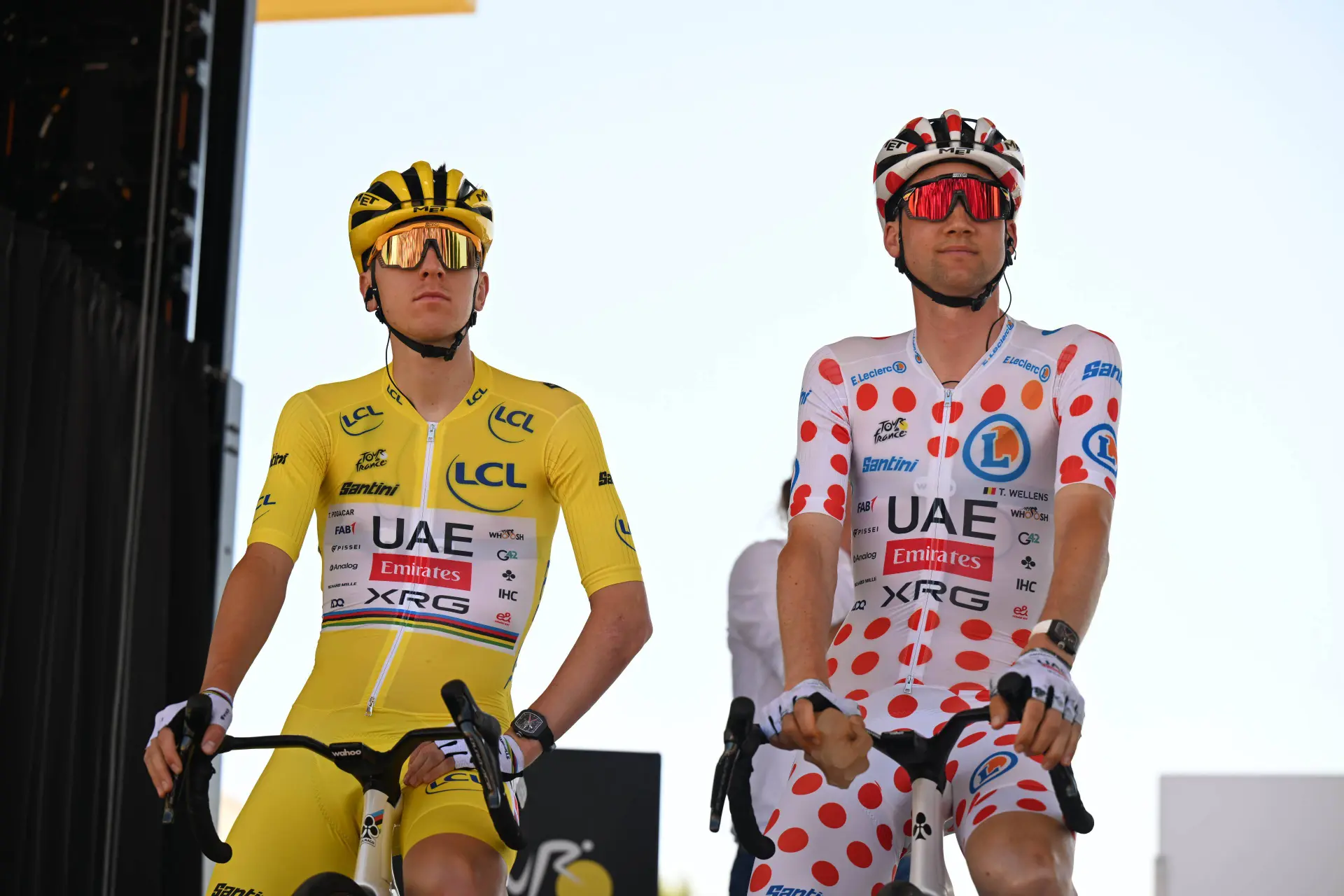
What stands out to him is Pogacar’s behaviour once help arrives. “If I think of all the riders I have worked with at UAE, I can say without exaggeration that he is among the calmest,” he said.
Kavcnik has seen the opposite too. “I saw Cavendish throw his bike in anger at the Tour of Slovenia,” he recalled. “Bernhard Eisel tried to calm him down, but it did not help.”
Those reactions, he believes, say a lot about personality. “Moments like that reveal a lot about a person’s character,” Kavcnik said.
Pogacar reacts differently. “In such moments it is crucial to remain level headed and to know that you have someone beside you who will do everything necessary for you,” he said.
Liege and the limits of control
That calm was tested far more severely at Liege in 2023, when Pogacar crashed and injured his wrist in an incident caused by a rider ahead suffering a sudden puncture. “That was a completely different crash,” Kavcnik said. “At Strade Bianche he made a mistake himself. At Liege it was an accident.”
The memory remains vivid. “I still remember the moment he was lying on the ground, catching his breath,” he said. “You could already see from his face that the impact was heavy.”
Despite the pain, Pogacar tried to continue. “He got back on the bike,” Kavcnik said. “He changed helmets because the first one was cracked, took the spare bike and rode for another kilometre.”
Only then did reality catch up. “He had to admit that it would not work,” Kavcnik said.
Even as his own race was ending, Pogacar’s focus stayed with the team. “Before they took him away, he told the guys over the radio to continue the race and to follow Remco,” Kavcnik said.
For the mechanic, it was another example of instinct overriding emotion.
Security in the chaos
Kavcnik believes that Pogacar’s calm is closely linked to trust in those around him. “That sense of security, that feeling that you can completely trust the mechanic beside you in a critical moment, strongly influences who you are as a competitor,” he said.
When rider and mechanic function as one, panic has less space to grow. “If rider and mechanic are compatible and function as one, then things simply work,” Kavcnik said.
The fire that still burns
Despite the crashes and the accumulated success, Kavcnik does not believe Pogacar is anywhere near slowing down. “I think Tadej is driven above all by the races he has not yet won,” he said.
Two Monuments sit firmly at the top of that list. “Milano Sanremo and Roubaix,” Kavcnik said. “Those two bother him the most.”
There is also one Grand Tour missing. “And of course the Vuelta,” he added.
Retirement, in his view, is not a current concern. “As long as he still has that fire, he does not think about retirement,” Kavcnik said.
For now, Pogacar arrives at races with the same mindset. “On principle, he comes to every race with the goal of winning,” Kavcnik said.
And when things go wrong, he does not waste energy on emotion. “When crashes happen,” Kavcnik repeated, “there is no space for emotions.”
Kieran WoodDeputy Editor-in-Chief
Kieran Wood is a sports journalist based in Wales and has been active in journalism since 2022. He regularly contributes to DartsNews.com and CyclingUpToDate.com, where he covers professional cycling and darts. In cycling, his work includes liveblogs from major races, including the Tour de France, the Giro d’Italia, and La Vuelta a España, alongside race reports and analysis. He has also conducted interviews with professional riders.
His reporting spans the full racing calendar, from one-day classics to stage races, with a focus on accurate, real-time coverage and clear contextual analysis. For statistics, results, and historical context, he regularly uses resources such as ProCyclingStats. To support reporting on rider activity and training context where relevant, he also references Strava.
In his work, Kieran places strong emphasis on careful sourcing, editorial accuracy, and updating articles as new, verified information becomes available.
claps 16visitors 6
Just in

Popular news
Latest comments
- Lance never won a TdF, so not sure why he and Hincapie are listed here. I thought this was best domestiques for TdF winners.mij24-10-2026
- Pelizzaari is not Remco's domestiqueabstractengineer24-10-2026
- YetJumpyjohn24-10-2026
- Nibali got into the lead because he wanted the team car further forward in the caravan (I love this as a sign of tactical thinking). He solidified the lead on the rainy cobbles day when he was just brilliant, while other contenders crashed out on the wet roads. Strategic and skillful, yes, but the English roads weren’t as decisive as they might seem.RidesHills24-10-2026
- The Domedancy is the one designed for Seixas - anaerobic short climbs. Seixas isn't as good with the long climbs
 Rafionain-Glas24-10-2026
 - no i just type inivitable facts, nothing else. I wish UAE wasnt so damn good but hey the reality is they are. Visma on opposite direction crashing with no money and riders, coaches leaving mid contract ffs..i wish that wasnt the case but im not pretednig its not real when it is reality... RbH and Lidl i UAE cloesst opponents now thats clear. But if were real how can you stop that team with del toor and pogacar (greatest ever rider they made him) and you have mcnulty as a dom with (who would be captain in other teams and wins world and 10 more behind him..) history also says their the best team by far so what you want me to say? fake and be delusional and tell myself things? Its not a matter for praising anyone its a matter of beeing real nothing else, i wish visma for instance was better and like before but they cant buy any proper climbing guys cause their broke...heck they cant even keep their riders and coaches who flee mid contract what you want me to do lol.miguel24-10-2026
- Far as I recall, Nibali used the 2012 tdf UK stages to win it, most wanting to get them over with, cept he built his lead in them.. Armstrong's wrong, IF and it's an IF, the summers good in '27 like 26 then it'll be attritional.. if it's 'normal, then it'll be 50/50 on the weather, also the roads are VERY VERY narrow, very windng + on the 2nd steep short little climbs I know cause it goes thru my arse 👍
 leedorney24-10-2026
 - ❤️Lozza24-10-2026
- No, it's not about him crashing... he just won't win. Ad acta.PogiSloFans24-10-2026
- I'm always gutted to see the road season come to an end, but the excitement for cyclocross to kick off totally makes up for it.anonymouscyclist24-10-2026
Loading
Write a comment