"What did we have to do with it? We were a cycling team" - Former Israel - Premier Tech DS criticises how riders and staff were targeted during chaotic end to 2025 season
Cycling
DS Francesco Frassi has spoken openly about the hostility faced by riders and staff during the turbulent final months of the 2025 season, describing the treatment of the then–Israel - Premier Tech squad as unfair and often deeply uncomfortable.
Speaking to Bici.Pro, Frassi reflected on the surge of protests that erupted at the Vuelta a Espana and later spread to races in Italy and France, influencing the team’s ability to compete normally and forcing late-season withdrawals.
Frassi — who has stayed with the same organisation throughout its transition from Israel – Premier Tech to its new 2026 identity as NSN Cycling Team — said the most difficult aspect was being singled out for something wholly outside the team’s control.
“More than stress, it was annoying. Because what did we have to do with it? We were a cycling team,” he told Bici.Pro. “Yes, we carried the name Israel, but from a sporting point of view the owner has a great passion for cycling. In the end, for a political issue, we were the ones paying the price.”
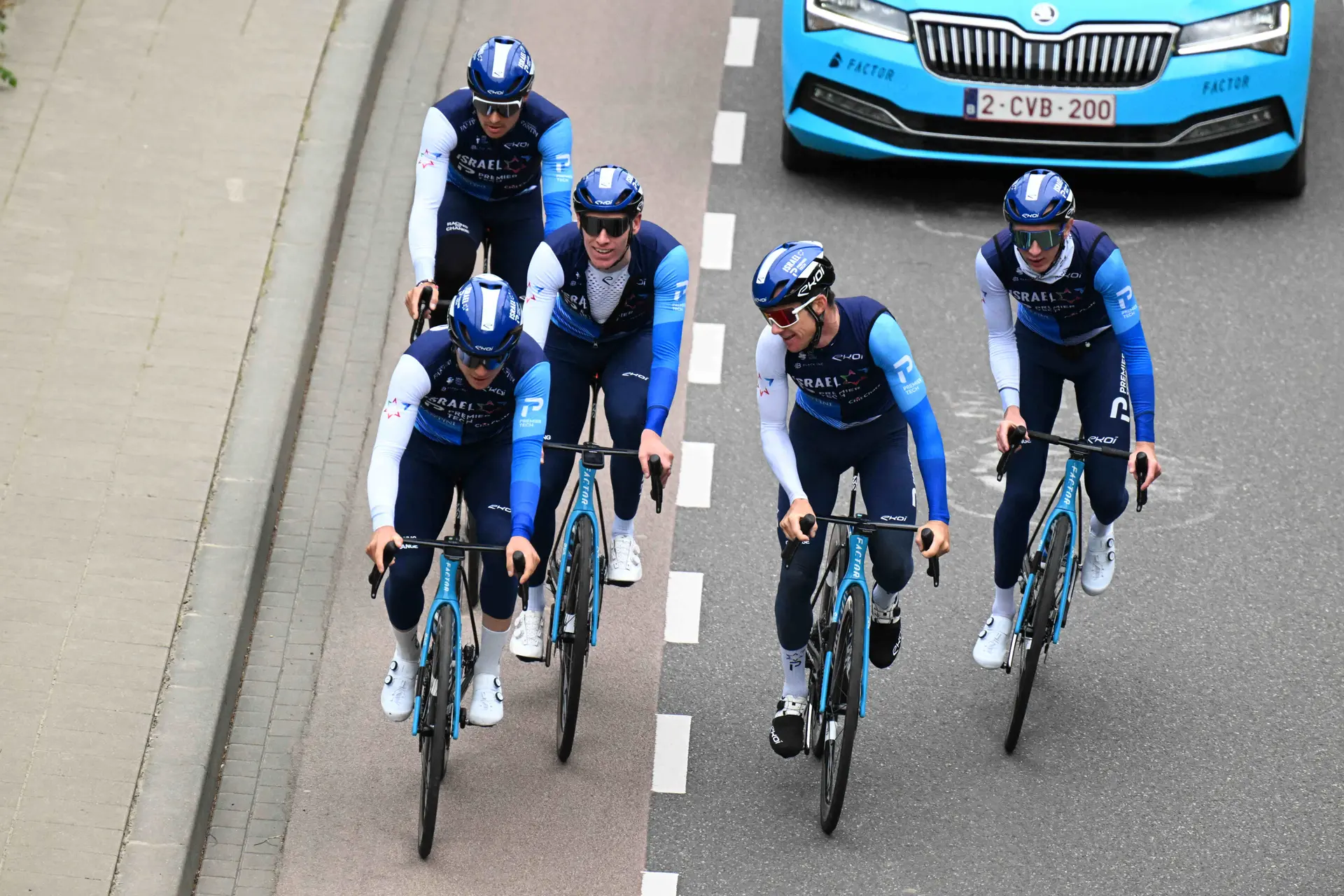
From Vuelta flashpoints to Italian cancellations
Although Frassi was not physically present at the Vuelta, the intensity of the situation was obvious from constant communication with staff on-site. “There was a lot of stress. Not being there, I could not fully understand the situation, even if on television you could clearly see what was happening.”
Once the calendar returned to Italy, the pressure shifted to race organisers, who feared disruption could prevent their events from going ahead. “Being an Italian sports director, the organisers phoned me. The real problem began with the GS Emilia races, and then all the others. What I sensed most was the fear that the races would not be able to take place, because those protests could have stopped everything.”
Ultimately, continuing in certain events became impossible. “In the end the team decided that it was not appropriate for us to turn up at the start. Fortunately we were safe enough in terms of points to return to the WorldTour.”

Stage 21 of the 2025 Vuelta a Espana was cancelled completely due to protests
“Middle fingers, people shouting at us”: life inside the hostility
Beyond logistical uncertainty, roadside hostility created a difficult environment even outside Spain. “Several times we found ourselves faced with ugly gestures. Even in a race in France, at the Grand Prix d’Isbergues, passing under the finish we would get middle fingers, people shouting at us. It was not a nice situation: they portrayed you as an indecent person when you are not.”
Frassi said cycling’s open-road nature made the sport an easier target for protests compared with other major events. “It became clear that cycling is easier to target: whereas in a football World Cup qualifier, like Italy–Israel, no one did anything.”
Despite everything, riders handled the sudden calendar reshuffles with impressive calm. “They took it well. They started their off-season a bit earlier.”
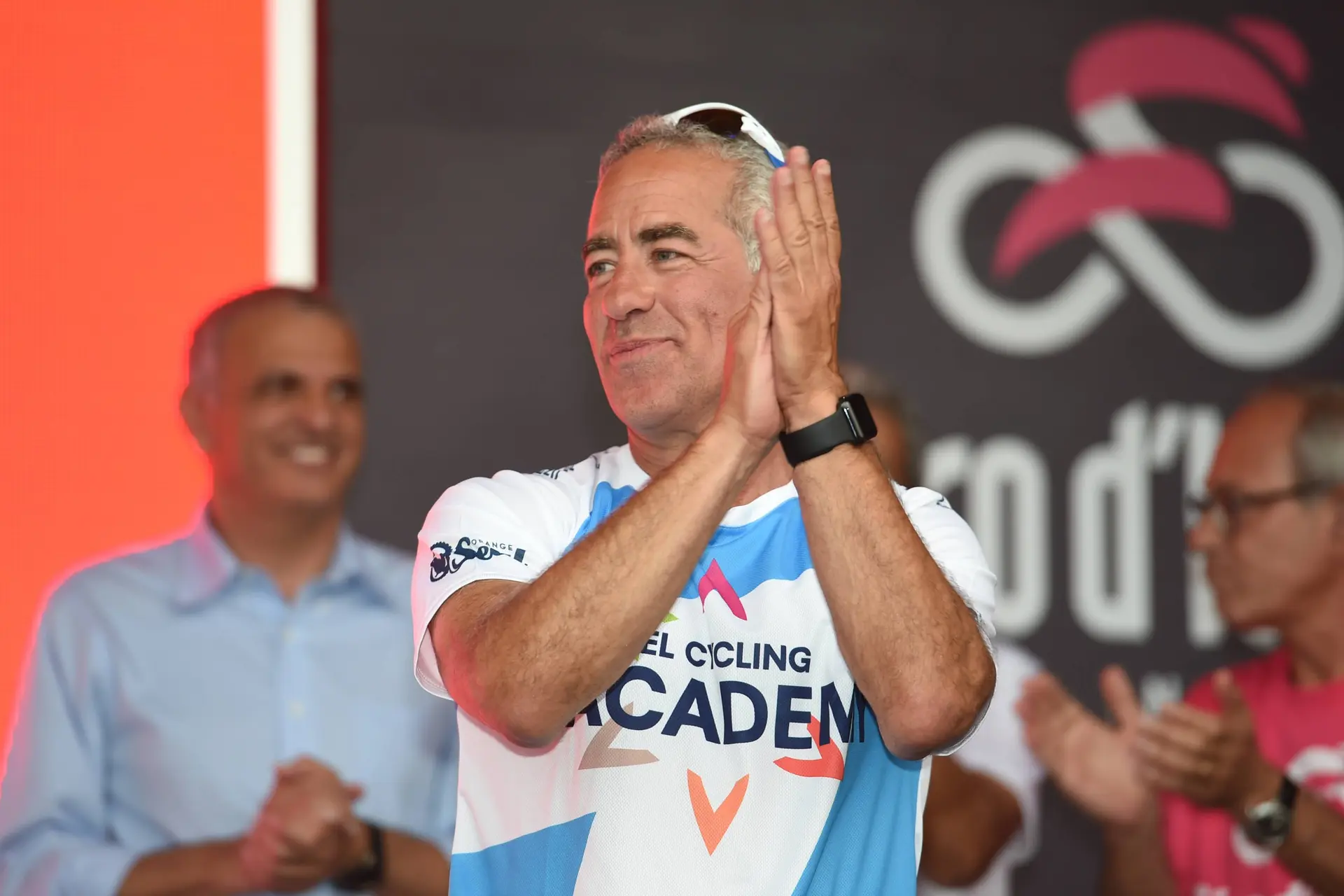
Transition to NSN Cycling brings relief and renewed energy
Frassi praised team manager Kjell Carlstrom for helping staff remain steady through the uncertainty. “He always gave us reassurance. He kept everyone informed about everything. This way of communicating really helped keep us calm.”
The move into the new NSN Cycling structure has brought an immediate sense of relief and clarity. “We understood there was a clear, solid path for 2026. Finally we were stepping out of the political storm and talking only about cycling again. That is what we wanted.”
Having arrived in Rome directly from the team’s training camp in Denia, Frassi said morale within the rebranded setup is markedly higher. “There is a lot of enthusiasm. We are really well equipped and highly motivated, and definitely more relaxed than before. We want to set our programmes and objectives. In one word: we are happy.”


Kieran WoodDeputy Editor-in-Chief
Kieran Wood is a sports journalist based in Wales and has been active in journalism since 2022. He regularly contributes to DartsNews.com and CyclingUpToDate.com, where he covers professional cycling and darts. In cycling, his work includes liveblogs from major races, including the Tour de France, the Giro d’Italia, and La Vuelta a España, alongside race reports and analysis. He has also conducted interviews with professional riders.
His reporting spans the full racing calendar, from one-day classics to stage races, with a focus on accurate, real-time coverage and clear contextual analysis. For statistics, results, and historical context, he regularly uses resources such as ProCyclingStats. To support reporting on rider activity and training context where relevant, he also references Strava.
In his work, Kieran places strong emphasis on careful sourcing, editorial accuracy, and updating articles as new, verified information becomes available.
claps 7visitors 5
Just in


Popular news

Latest comments
- A shame to see him retire, I really liked him as a rider. His dignified tribute along with Matej Mohorovic to Gino Mader after his death was class and will always live in my memory. Enjoy your retirement.GregT11-10-2026
- A shame to see him retire, I really liked him as a rider. His dignified tribute along with Matej Mohorovic to Gino Mader after his death was class and will always live in my memory. Enjoy your retirement.GregT11-10-2026
- I thought Seixas had hit the end of the road from a fatigue standpoint, after the WC meltdown - and he still finished ok. This was impressive and an amazing return.mij11-10-2026
- totally, eating crow for breakfast this morning. after the world championships I thought we were looking at a late season fade from fatigue. way to go Paul!mij11-10-2026
- Well if UAE the best team in history comes knocking their the only team in the world who can get Seixas. Seixas will become unbeatable and incredible there. Lets see if he stays at decathlon or goes to UAE.miguel11-10-2026
- Pogi would have won the Vuelta at around 10 min. But it would have been boring for fools like you. Capish?PogiSloFans11-10-2026
- Rather than me describing the technology at length on here, If you google. Line-scan cameras. They are also sometimes called Slit-Scan cameras. Either search will fill you in. You can read all about how they. work. Enjoy! Just to be clear the cyclist is saying he wants to see exactly where the digital finish line is in relation to the actual physical finish. At this point we only have the word of the authority that the digital line corresponds to the exact starting edge of the physical finish line. That seems like a reasonable request to me.Prorodsandstuff11-10-2026
- 100% @Jumpyjohn, good point well raised.anonymouscyclist11-10-2026
- The media keep stirring the soup.. or spitting in it
 leedorney11-10-2026
 - Yes, he has won many races... second class races. He isn't the real deal... Seixas is the real deal. Capish?PogiSloFans11-10-2026
Loading
22 Comments