"We don't want to damage France": Tour de France boss Christian Prudhomme addresses the Ballon d'Alsace tree-felling controversy
CyclingSaturday, 02 May 2026 at 06:00
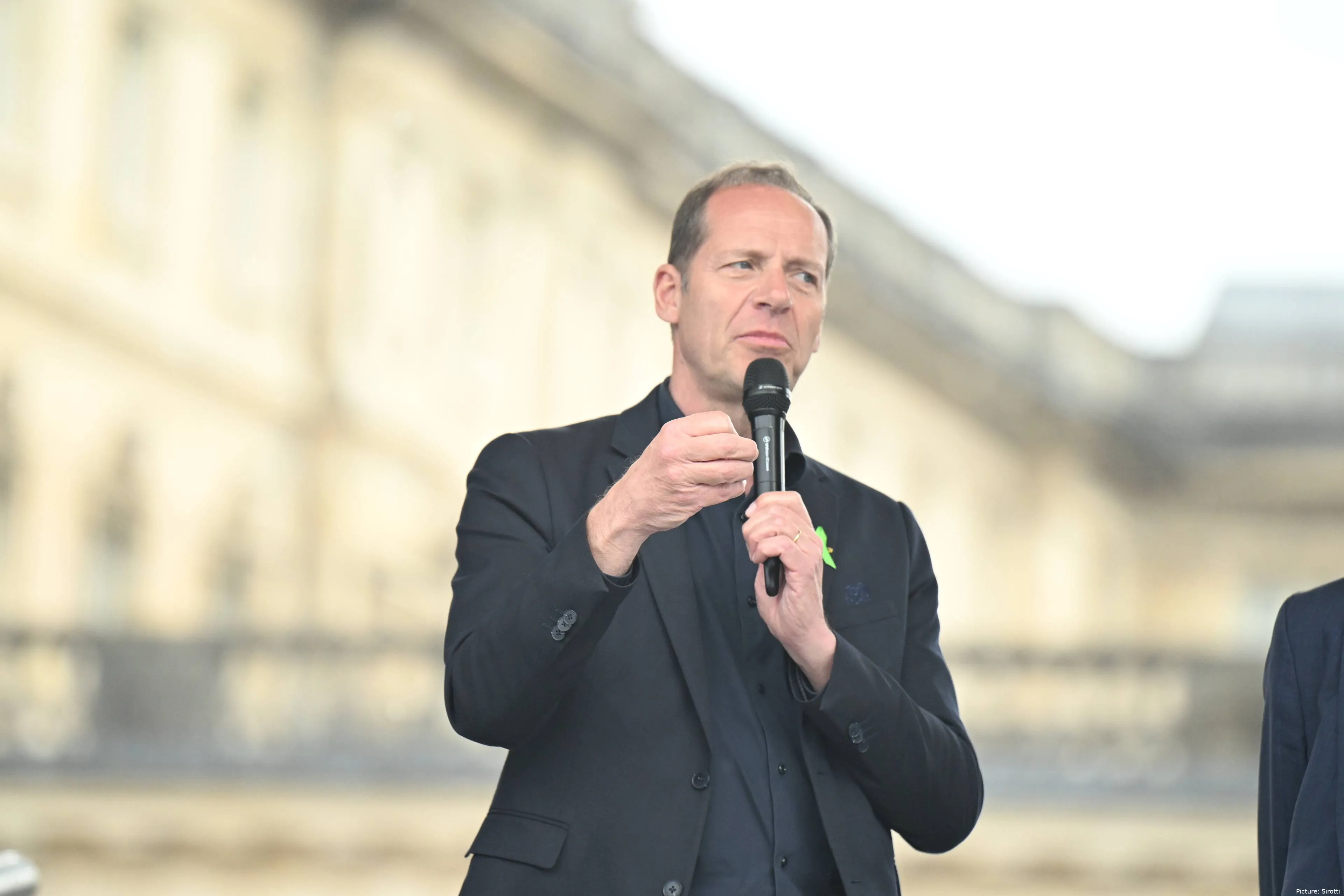
A massive logging operation on the road to the Ballon d'Alsace has sparked outrage among environmental groups ahead of the 2026 Tour de France. With the peloton scheduled to tackle the climb during Stage 14 between Mulhouse and Le Markstein on July 18, critics have pointed fingers at the cycling event. However, Tour de France director Christian Prudhomme has firmly denied that the race is responsible for the felling of over 800 trees, citing long-planned safety measures by local authorities.
In recent days, four environmental protection associations in the Alsace region have fiercely criticized the ongoing road-clearing project. While the stated goal of the operation is to secure the roadside, the groups are raising alarms about the ecological impact.
Their primary concerns revolve around the timing of the operation, which falls right in the middle of the animal breeding season, and the location, which is a highly sensitive Natura 2000 classified ecological zone.
"While securing roads can be a legitimate goal, the timing of the work and the methods used raise profound questions," the associations wrote in a joint press release, demanding full transparency regarding the administrative and regulatory framework of the project. They have also threatened legal action if the work is found to be non-compliant with environmental laws.
Prudhomme defends the Tour
Speaking to the regional newspaper L'Alsace, Tour de France boss Christian Prudhomme addressed the controversy head-on, validating the public's emotional response while grounding the situation in administrative reality.
"Eight hundred trees being cut down shocks everyone, including me," Prudhomme admitted. "But it is a decision that was taken in 2023, and at that time, no one knew we would be coming in 2026. It is primarily a safety measure. I think mostly of the people who risked having a tree fall on their heads if we hadn't cut them down."
Prudhomme did concede that the arrival of the Tour often speeds up local infrastructure projects, but he firmly denied that his organization issues ultimatums or demands environmental destruction.
"Of course, the Tour de France is passing through there and it is an accelerator of works," he explained. "But we are never going to ask for anything, obviously... We never ask to build roads. If the road exists, we come. The Tour feeds on the beauties of France, we don't want to damage France."

Mark Cavendish and Christian Prudhomme at the unveiling of the 2027 Tour de France Grand Depart in Edinburgh
Decaying trees and accelerated timelines
Local authorities have corroborated Prudhomme's defense, emphasizing that the project was not born out of the Tour's route announcement. Stéphanie Rauscent, director of the Haut-Rhin departmental forestry agency, confirmed that the issue has been a known problem for a decade, pointing to the high number of "decaying" trunks threatening the roadway.
However, the local government did acknowledge the race's impact on the current timeline. The Haut-Rhin prefecture stated that a total of 1,071 trunks will ultimately be cut across a 4.5-kilometer stretch. They confirmed that while this was a "long-planned" safety project, the execution was indeed "accelerated in light of the predictable higher public attendance in this zone" expected when the Tour de France caravan rolls into town this July.
claps 0visitors 0
Just in
Popular news
Latest comments
- Rideshills, you nailed it. Visma’s laissez-faire is what’s now cost Rogliç his 5 Vueltas (not that they care now he’s left). Kuss was a domestic and there was never any discussion of letting him win before the games started, he was there to prepare for a leader to take GC, his nationality probably played into pressure from loud voices calling for granting him the win (which is what ultimately happened as the other two held back for a fake result, don’t think anyone has ever been ALLOWED to win like that). Probably the fact PR already won the Giro and JV the Tour also played into the way of « solving » the situation. PR’s attitude is totally understandable, he’d already seen too many GC chances slip away through tiny errors of judgement and obviously wasn’t going to let another slip by lying down.Jumpyjohn02-05-2026
- Selective memoryJumpyjohn02-05-2026
- They will have thought of planting new trees then right? A more suitable type in light of warming and diseases affecting the historical species, otherwise we may see the whole road wash away in the next mudslide from increased rainfall on barren mountain tops. Often it seems those in charge of works only think in one dimension. Hopefully there won’t be a heatwave for riders now.Jumpyjohn02-05-2026
- He’s actually more fragile than he shows and afraid of a few more riders, otherwise he’ dare to attack from other than the most obvious, predictable parts of races.Jumpyjohn02-05-2026
- WVA is such a winner of a human being. Anyone that isn't team Wout, I don't understand. I am a major MVDP fan actually, but am always happy when Wout wins.mij02-05-2026
- Jonas was there to win, and unlike Roglic he had a realistic chance of doing it. The most amazing thing is that Visma turned this very public display of dirty laundry (and a loss of tge Tour-Vuelta double for Jonas) into a PR triumph.Hills3302-05-2026
- WVA won Roubaix because Pog had a mechanical and had to pull a large group for 20km to rejoin the group. Nothing to do with Visma tactics.Renz02-05-2026
- Great assessment! I'm looking forward to this year's tour. While I'm not team pog, and am fully team Wout. now that he's won Paris~Roubaix, I hope he is as great as when he was the best of the rest, including his Ventoux stage. I know that he can now coast at this point, but no one is more 100% in for the team than him. That's what makes the difference when it comes to teammates.Colnago-fan02-05-2026
- Good on Visma its a pity other teams and riders wouldnt make it more difficult and take on UAE and Pog. He dont like it when he gets beat . Typical was when Wally beat him fair and square at Roubaix and didnt see him congratulate him .Davide02-05-2026
- after the 2025 tour redbull should have gave him to another team for 1/3-1/2 his contract value and taken whatever the hit, the writing was on the wall and it was clear, Primoz agianst tadej and jonas is too freaking good to ride for 5th place and/or help a teamate podium?? , he is completely lost, and he isn't changing.......god forbid he does the smalllest amount of work he immediatly figures out a way to reduce his value by 10X the work he contributed, the Jumbo Vuelta was just the start of his tarnish my legacy years.jad2901-05-2026
Loading
1 Comments