Mass logging on the Ballon d’Alsace puts Tour de France under pressure from French environmental groups
Cycling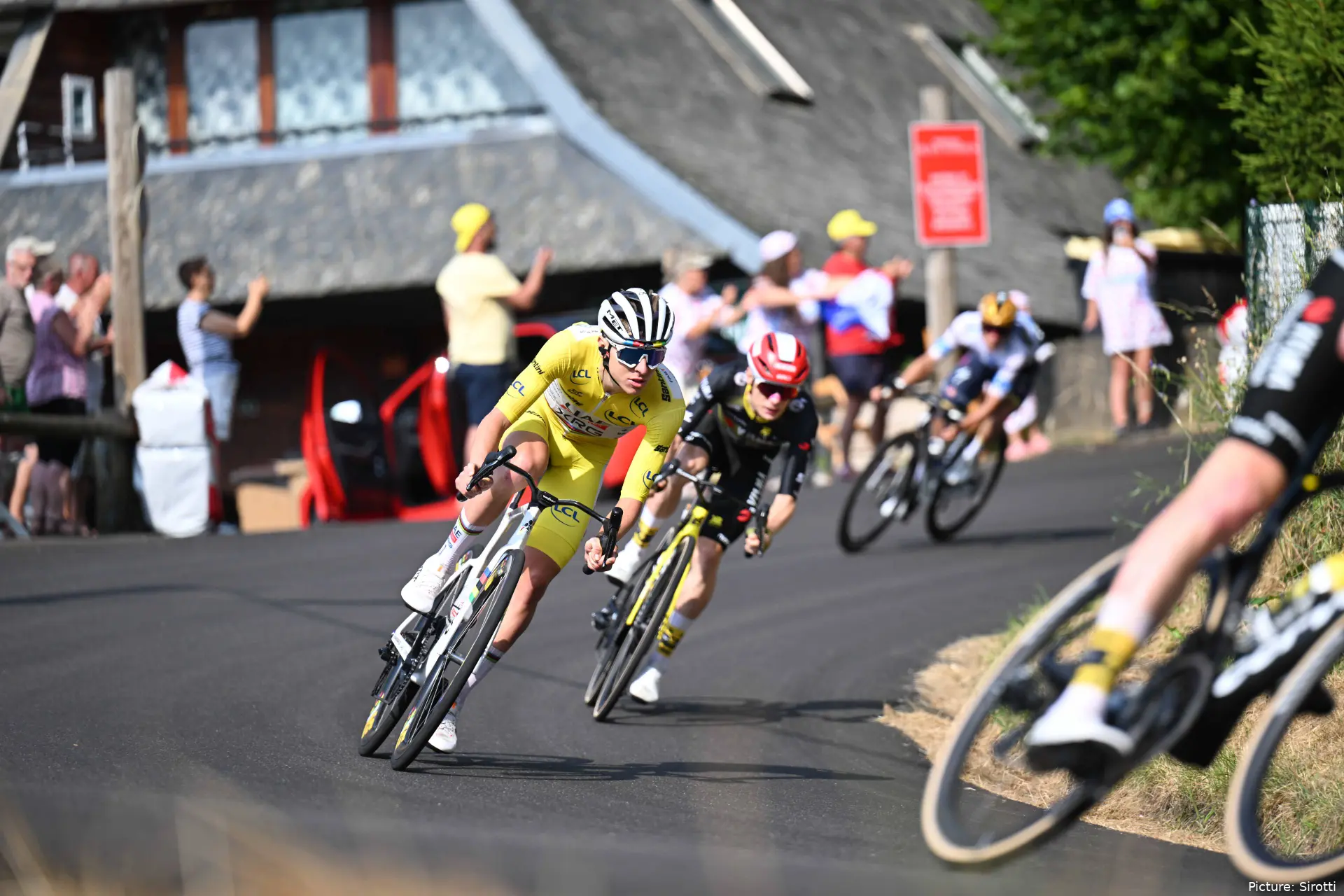
The 2026 Tour de France will pass over the Ballon d’Alsace in less than two months, and stage preparations have sparked a sharp environmental dispute. The removal of more than a thousand trees in the area prompted an immediate response from environmental groups, who denounce an excessive intervention in the name of sporting spectacle.
Four Alsatian associations have spoken out, arguing that the works went far beyond what is reasonable. With a clear message — defend safety without ravaging the landscape — the groups say the operation has inflicted unnecessary damage on the local ecosystem.
This is not a new situation in the world of cycling, which often leads the peloton, convoy and fans into the high mountains and isolated areas, which are at times heavily protected. Last fall, the summit finish at Bola del Mundo was in jeopardy over the final kilometers. It was ultimately raced, but without fans in the final steep stretch of the climb.
Among the critical organisations are Alsace Nature, LPO Alsace, Gepma, and Bufo. All agree that the rush to ready the road ahead of the Tour does not justify the scale of the logging.
In a joint statement, they question both the timing and the manner of the works, suggesting the race calendar outweighed the protection of the natural environment.
Institutional response: safety and prior planning
The authorities, however, offer a very different version. The Prefecture of Haut-Rhin maintains that the intervention meets a real need: adapting the road to the surge in traffic the race will generate.
According to official figures, 1,071 trees have been felled over roughly 4.5 kilometres. They insist the operation is not solely tied to the event, but to road safety criteria.
An old project with accelerated execution
The regional head of the Office National des Forêts, Stéphanie Rauscent, stressed that the project is not new. She explained it is a plan conceived around a decade ago, now carried out at a quicker pace due to the Tour’s proximity.
She also argues that many of the removed trees were in poor condition or deteriorating, making their removal necessary for both safety and forest management.
The case reopens the debate on the impact of major sporting events on the natural environment. While the Tour seeks to guarantee safety and a top-class show, the associations warn of the risk of prioritising media visibility over conservation.
With the stage drawing nearer, tension continues to rise on the Ballon d’Alsace, now a symbol of a broader conflict between sport, territory, and sustainability.
Read also


Juan LarraCycling Journalist
Juan Larra is a writer for Cyclinguptodate and editor-in-chief of Ciclismoaldia, where he has played a central role since its inception. Under his leadership, the website has become a trusted source for professional cycling coverage, offering in-depth analysis, news, and feature stories.
A sports journalist with over 20 years of experience, Juan earned his degree in Journalism from the University of Seville in 2007. He began his career covering a wide range of sports—including football, basketball, Formula 1, MotoGP, tennis, and cycling—for platforms such as the official La Liga app, Vodafone and Movistar websites, NBA Blogdebasket, and Cadena Cope, honing his skills in writing and editorial management.
In addition to his work at Ciclismoaldia, Juan contributes to Cyclinguptodate and serves as editor-in-chief for the tennis-focused site Tenisaldia. Throughout his career, he has conducted exclusive interviews with cyclists and sports figures, provided detailed analysis of competitions ranging from local Spanish races to major international events, and acted as a special correspondent at prestigious races including Paris-Roubaix, the Tour de France, and the Vuelta a España.
Juan’s combination of experience, expertise, and direct access to athletes has established him—and the platforms he leads—as authoritative voices in professional cycling.
claps 2visitors 2
Just in


Popular news
Latest comments
- Rather than me describing the technology at length on here, If you google. Line-scan cameras. They are also sometimes called Slit-Scan cameras. Either search will fill you in. You can read all about how they. work. Enjoy! Just to be clear the cyclist is saying he wants to see exactly where the digital finish line is in relation to the actual physical finish. At this point we only have the word of the authority that the digital line corresponds to the exact starting edge of the physical finish line. That seems like a reasonable request to me.Prorodsandstuff11-10-2026
- 100% @Jumpyjohn, good point well raised.anonymouscyclist11-10-2026
- The media keep stirring the soup.. or spitting in it
 leedorney11-10-2026
 - Yes, he has won many races... second class races. He isn't the real deal... Seixas is the real deal. Capish?PogiSloFans11-10-2026
- What are you talking about? I'm not the one you guys are spitting on. I'm a Slovenian Pogi fan, that's all... the guy you're talking about is a Croation Ustasha. Capish?PogiSloFans11-10-2026
- It would be epic if Seixas came to UAE. 3/4 of the commentators on this site would stop watching cycling... ha ha ha ha ha ha...PogiSloFans11-10-2026
- UAE's problem is Seixas wants to beat Tadej.Renz11-10-2026
- You are blinded by your infatuation with Pogi. IdT has done crazy good stuff. One of the strongest ever first three years in the peloton. poor showing in his last couple of races btu I don't think he is quite washed up yetmobk11-10-2026
- Absolutely not. The guy has finished so many races 2nd to Pogi so absolutely not a shocker that when Pogi isn't there he wins a fewmobk11-10-2026
- GOATmij11-10-2026
Loading
Write a comment