"We don't know if we are ready for this form of doping" - Belgian expert suggests ITA might've suspected gene manipulation
CyclingFriday, 24 July 2026 at 09:00
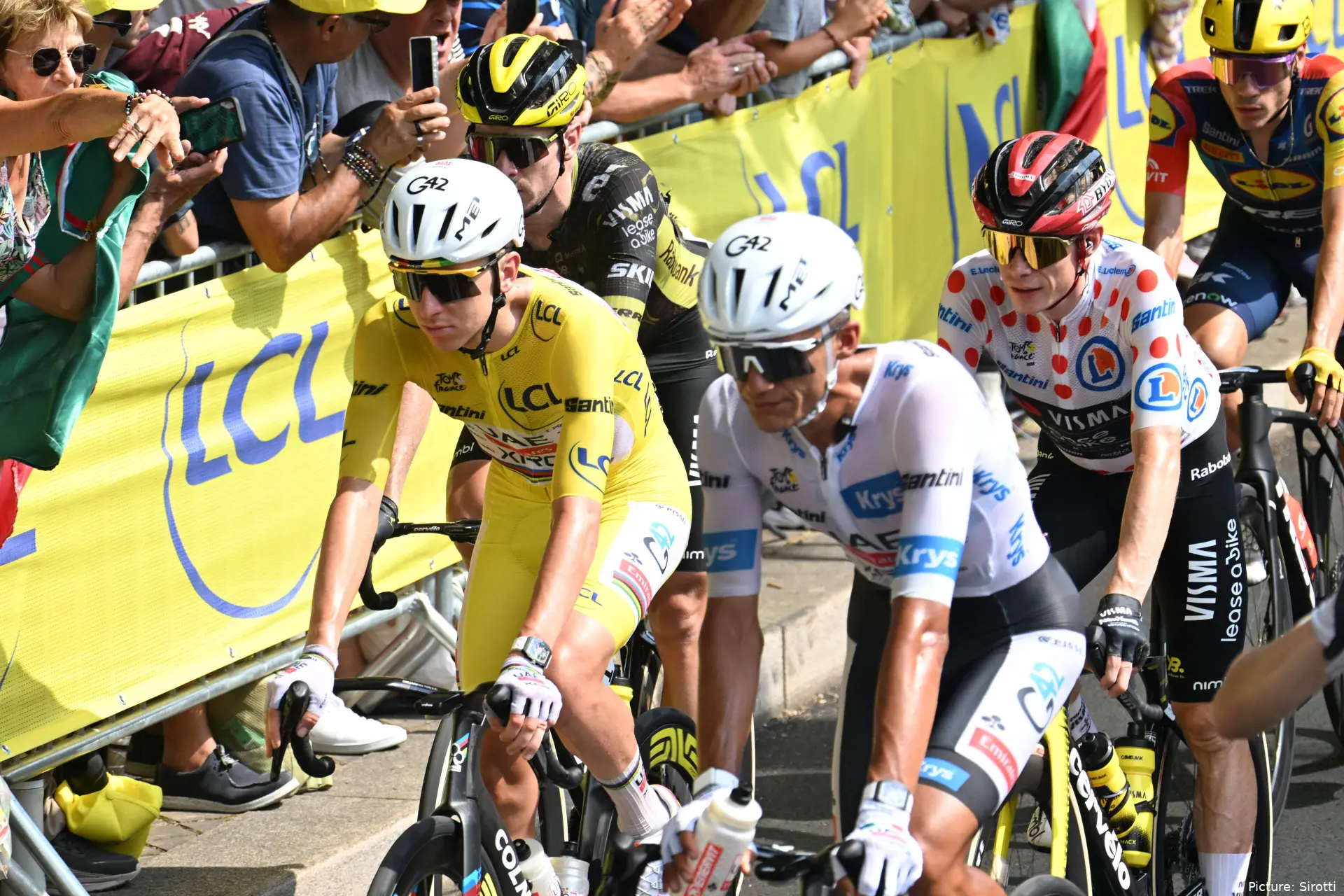
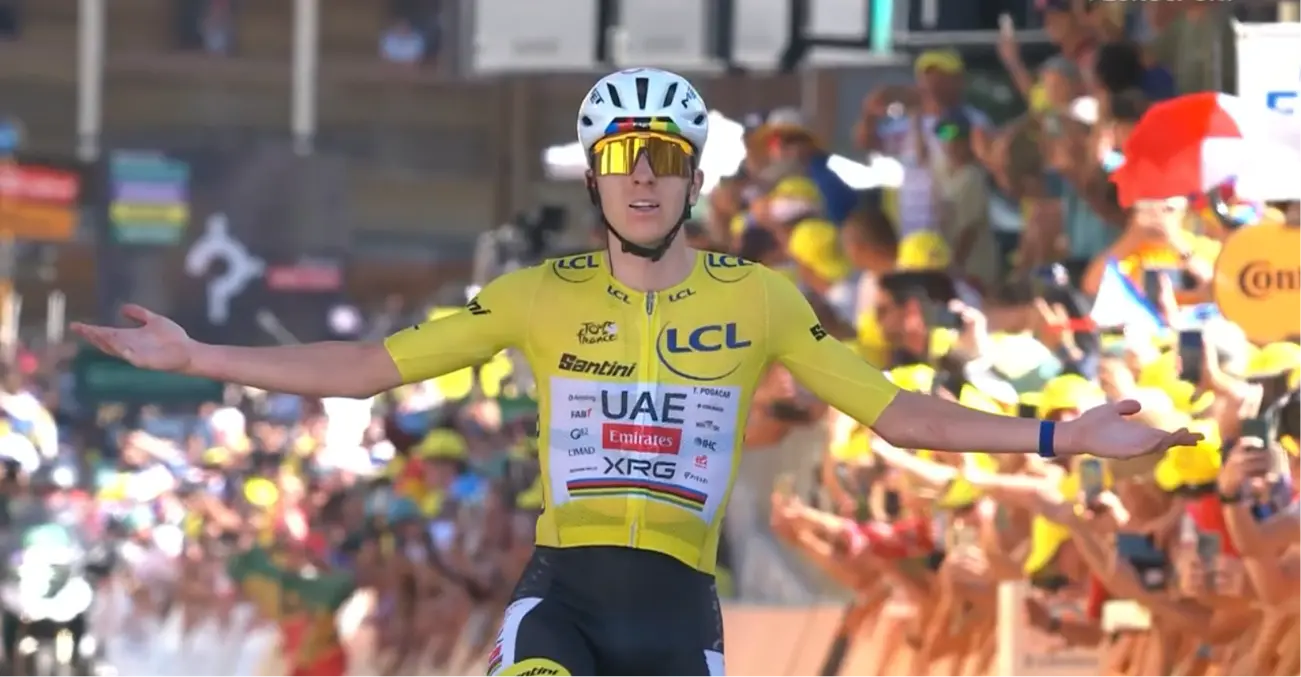
The topic of doping has returned to the cycling community after anti-doping authorities paid a late night visit to Tadej Pogacar and Jonas Vingegaard ahead of key stage 15 of the 2026 Tour de France. While Pogacar took the stage in a leisurely pace, for his rival the consequences of interrupted sleep were catastrophic as a late-stage crash caused him to abandon the race while second overall.
The results of this "investigation" will not be known for a while. In the meantime, we may only speculate on what could've the authorities' concern to pick up such drastic measures. Head of the Ghent doping control lab Peter Van Eenoo proposes one possibility:
"You will be introducing or altering some genetic material somewhere. In the past, we really thought we had to change our DNA, but that doesn't have to be so drastic," explains Van Eenoo on De Avondetappe.
"The coronavirus vaccine, for example, is a form of gene therapy. You introduce mRNA (a molecule that transmits genetic instructions from DNA, ed.), and that triggers the production of a protein that gives our immune system a boost."
Read also
There might be a way to...
While genetic modification allowed several breakthroughs on the field of medicine, Van Eenoo points out that it may be just as easily used for personal gain in the sport of cycling.
"You could just as easily have a protein synthesized, which then leads to the production of EPO or growth hormones. My fear is that the same methodology, which worked fantastically during the corona pandemic, will be used as a new doping agent," said Van Eenoo. "We have three methods to detect doping, but we do not know if we are ready for this form of doping."

Jonas Vingegaard and Tadej Pogacar
But what is the difference compared to the 'classic' forms of doping? "With those, you introduce products that are, in principle, self-acting. What you are doing here is introducing something that your body will synthesize itself. That then disappears from your body within three days. But the consequences, the process that has been set in motion, last for months. Here, you are dealing with a system where you can increase or decrease production."
Is gene doping completely undetectable then? "It is not that it is completely undetectable. You still have those changes, and the blood passport looks at endogenous values that fluctuate. If you use gene doping, you see fluctuations. So we do have indirect methods to detect it, but indirect methods are always less powerful than direct methods, where you can effectively say: this is synthetic EPO or testosterone."
It could well be happening already
Then the question is at hand; does the expert suspect gene therapy is ready for use in professional cycling? "I wouldn’t dare say no to that answer," Van Eenoo reveals after a long silence. "That would be very naive. I suspect not, but I am not sure. I think it is very difficult for an individual to apply this, but I do think it is within the capabilities of certain countries."
Ondrej ZhasilCycling Journalist
Ondřej Zhasil is a cycling journalist at CyclingUpToDate and has been part of the team since 2023. He is based in Ostrava, the third-largest city in the Czech Republic, and covers professional cycling across the main UCI competitions, including the Tour de France, the Giro d’Italia, and La Vuelta a España. A key focus of his work is startlist analysis and pre-race coverage, where he examines team selections, rider line-ups, and tactical scenarios ahead of major events.
Alongside WorldTour coverage, Ondřej has developed specific expertise in junior cycling and in racing across East Asia, including competitions in China and Japan. He also maintains a broad working knowledge of other disciplines and levels, including cyclocross, while continuing to expand his understanding of mountain bike racing.
Ondřej holds a bachelor’s degree in Mathematics and Physics, which supports his analytical, data-driven approach to performance and race analysis. In his reporting, he regularly uses ProCyclingStats for results, statistics, and historical context. He places strong emphasis on careful sourcing, editorial accuracy, and updating articles promptly when new, verified information becomes available.
claps 4visitors 2
Just in
Popular news

Latest comments
- Of course CO is a poison. Just saying it won't kill you in small doses, therefore it's not a poison makes no sense. That is true of every poison.mobk24-07-2026
- Tomorrow Tadej follows wheels until they get close and then he'll make a decision. He has to be thinking about his Vuelta participation.awp24-07-2026
- In awe with that performance. I was in the middle of a workout and it made me pause just to watch the final few KM. Chapeau Tadej, amongst the rumours surrounding the blacks shorts, ill teammates, early doping tests, you proved your dominance still. You can’t not respect that.anonymouscyclist24-07-2026
- No, Jakob is entirely correct to classify CO as a poisonous gas, as it is intrinsically highly toxic. Its dosage doesn’t make it ‘less’ poisonous. In fact, this danger is precisely why teams are not allowed to use the Detalo Performance rebreathing machine without direct, in-person supervision. Because CO binds tightly to haemoglobin and leaves the body extremely slowly, without the correct, monitored and supervised dosage, it can build up overtime and suffocate you. It does not become ‘non-poisonous’ at low levels, it simply has a cumulative effect. CO is poisonous because, upon inhalation, it binds to the haemoglobin 200-300 times more strongly than oxygen. Haemoglobin carries oxygen to your body, and consequently, a sudden high dosage, or repeating low dosages, cause suffocation. You can’t compare it to CO2 either, it does not bind to haemoglobin anywhere close to the rate at which CO does. CO2 is only dangerous in massive, enclosed concentrations by physically displacing the oxygen in the air and suffocating you by physically preventing you from breathing oxygen. And let’s not get started on carbon monoxide inhalation.anonymouscyclist24-07-2026
- Tomorrow solo for Pogačar from Galibier. He has to keep trampling everyone because that's the only way we love him. Pogi Hulk-Smash!!!mus-musculuspeedypogigonzales24-07-2026
- Good lord what a performance, meaning Martinez and Carapaz, after all their idiotic start-stop attacking. Speechless about and in awe of the dominant ride by Pogačar, so I have nothing more to say about him right now.RidesHills24-07-2026
- Really? What if this was actually a warning that they know something is going on and will be taking a closer look in future. Controls had been pretty lax the last decade and never found much, we may be entering a new round of catch up. This kind of stuff would only be available to the best off teams, it’s not something you can just order on the internet with a big black wallet..Mistermaumau24-07-2026
- Please stop referring to CO as a poison, it it the dosage that makes it poisonous. Most of us breathe some in every day, some of us quite a lot more than others, It is basically the same as CO2 just 100x more effective (at killing you) because it does chemically (or more precisely, biologically) what CO2 does physically which is to deprive you of enough Oxygen. Oxygen is also deadly (as is a water overdose), we can only breathe air (around 80% nitrogen) if the O2 concentration stays within a quite narrow range. CO use is basically no different from enriched O2 use, fine if controlled and temporary. The problem is doping always drives people to experiment with limits for max gains so at some point you get the Gianetti effect, a dosage that reveals an undetectable product through unwanted symptoms (putting it mildly).Mistermaumau24-07-2026
- This is just stupid for a team that has won the TDF >5 timesabstractengineer24-07-2026
- No Balls All Excuses Remco. He has a nerve calling other people not having any ballsabstractengineer24-07-2026
Loading
2 Comments