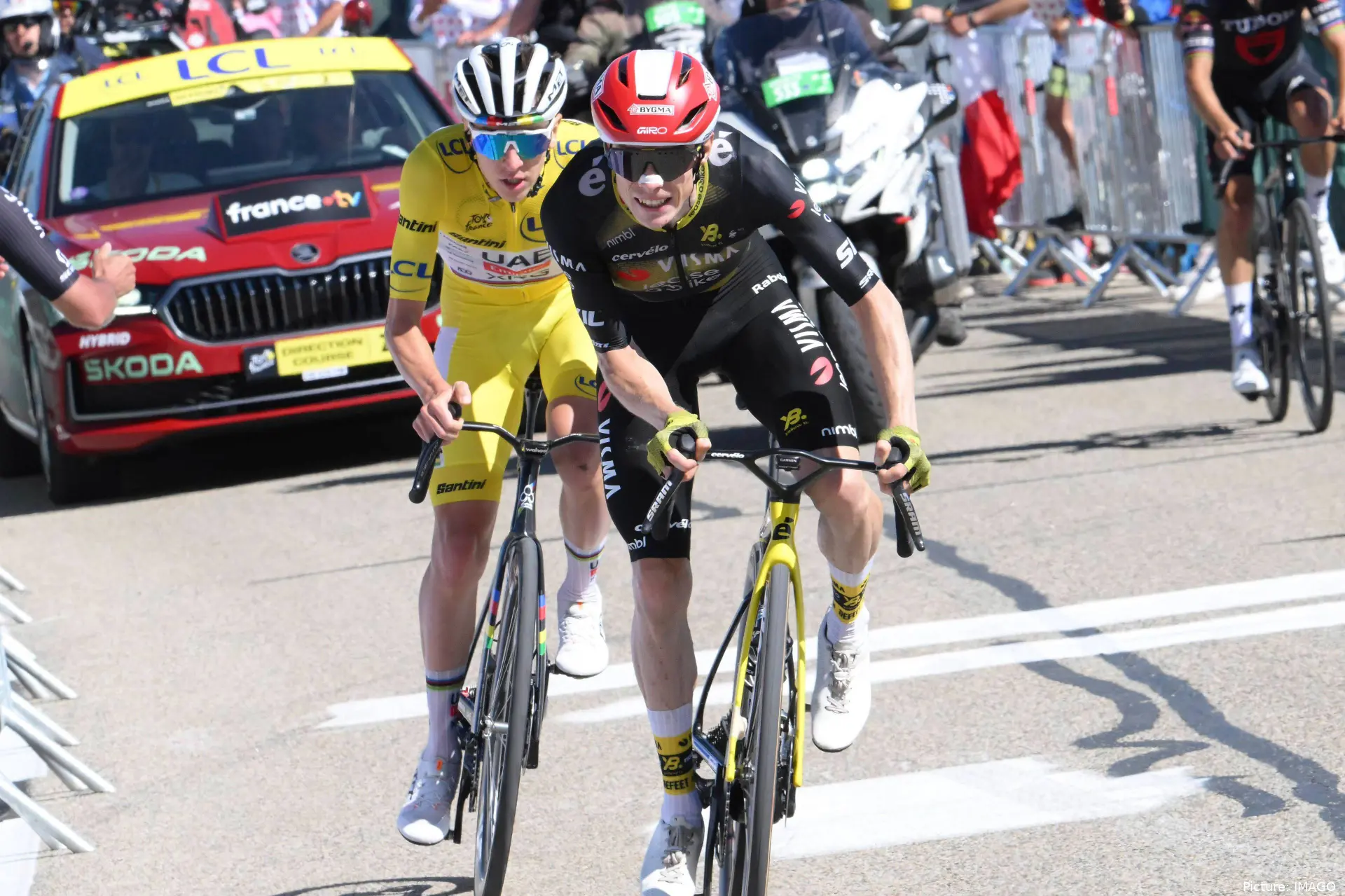
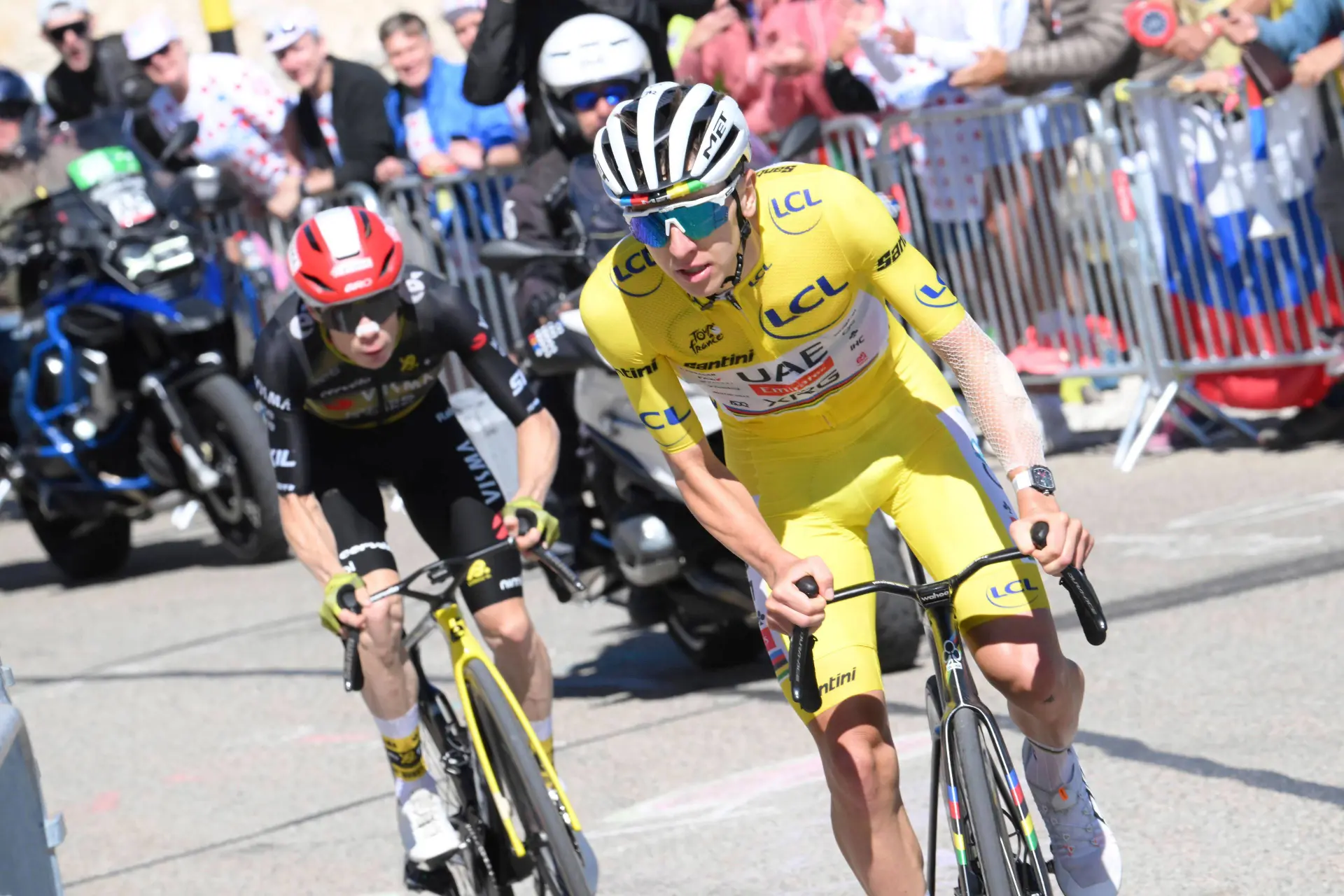
When a large breakaway arrived under Mont Ventoux with 6 minutes of advantage, it seemed clear that the men in leading group would battle it out for the prestigious stage win. But numbers 1 & 2 in the GC; Tadej Pogacar and Jonas Vingegaard had other plans and nearly caught the leaders with what will go down as one of the most superhuman climbing displays in history.
According to data expert Karlis Ozols who dived into the data files for La Flamme Rouge, we have witnessed a performance that breaks imaginable and sets a new standard of what is possible to achieve on two wheels.
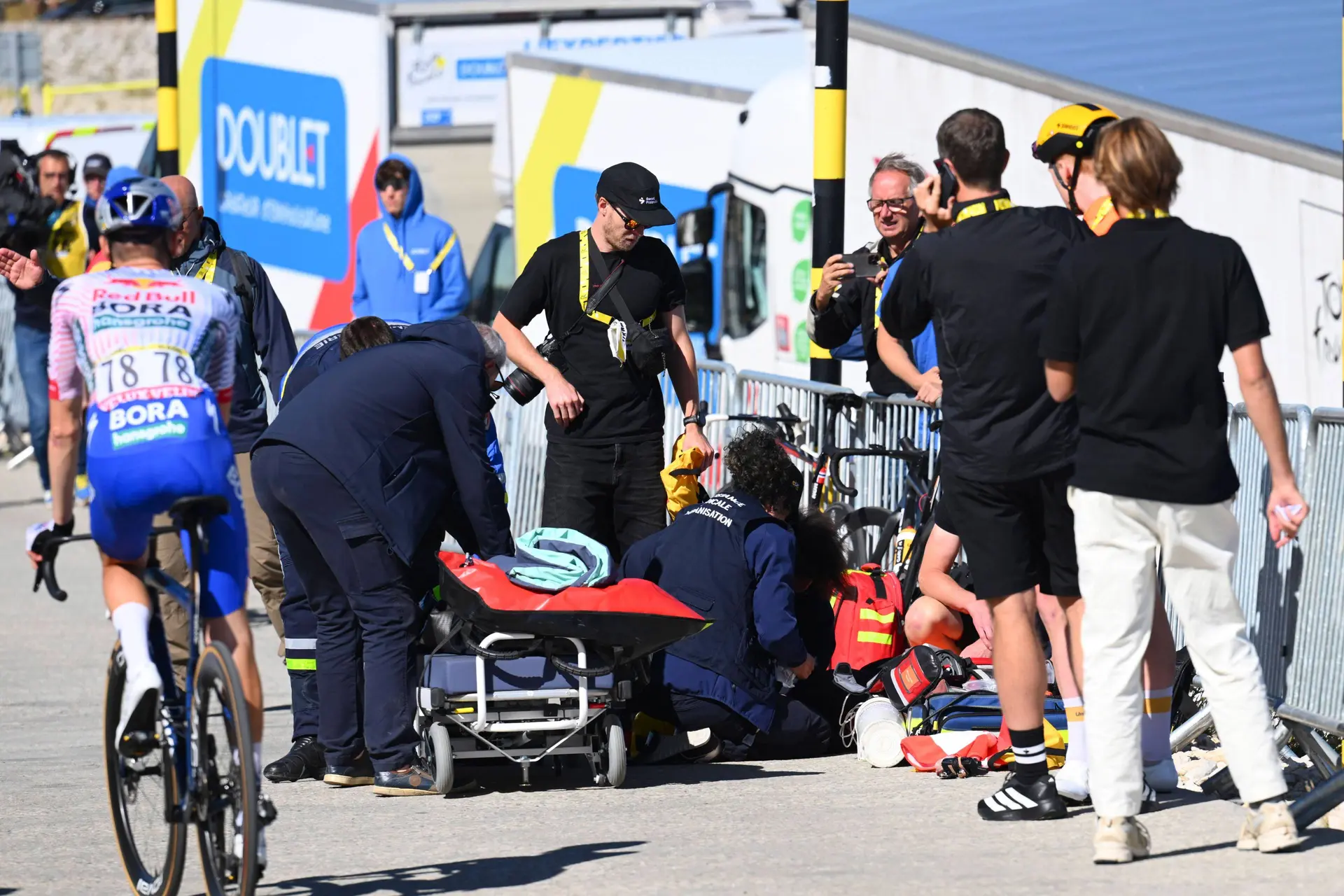
Jonas Vingegaard did Ventoux in 54 minutes and 32 seconds, averaging an estimate of 6.52 W/Kg. Tadej Pogacar, who spent much of the climb shielded from the wind in the wheel of Vingegaard, was two seconds faster, but his estimated power is thus slightly lower at 6.44 W/Kg. Ozols goes as far as to claim this might've been the best long climbing performance ever.
The long-standing record of Iban Mayo, who rode up the windy mountain in a time of 55:51 during an individual timetrial at the 2004 Critérium du Dauphiné, was beaten by a few more men on Tuesday.
Primoz Roglic continues his upward trend set with a strong timetrial last Friday by crossing the line as a third of the GC men, pushing 6.35 W/Kg for 55 minutes and 38 seconds. His teammate Florian Lipowitz who arrived shortly afterwards would also beat the historical time of Mayo.
Already impressive, the performances gain an extra dimension when he take into an account that Mayo didn't have race for three hours before Mont Ventoux. Yes, it was relatively easy day for the GC men, but it was from a fresh effort.
Meanwhile the fastest road race effort was another decade older. Marco Pantani rode up Ventoux in 57 minutes and 33 seconds back in 1994, full three minutes slower than Pogacar and Vingegaard. In fact, such performance would hardly even allow Il Pirata to finish among 10 best riders today.

Ondrej ZhasilCycling Journalist
Ondřej Zhasil is a cycling journalist at CyclingUpToDate and has been part of the team since 2023. He is based in Ostrava, the third-largest city in the Czech Republic, and covers professional cycling across the main UCI competitions, including the Tour de France, the Giro d’Italia, and La Vuelta a España. A key focus of his work is startlist analysis and pre-race coverage, where he examines team selections, rider line-ups, and tactical scenarios ahead of major events.
Alongside WorldTour coverage, Ondřej has developed specific expertise in junior cycling and in racing across East Asia, including competitions in China and Japan. He also maintains a broad working knowledge of other disciplines and levels, including cyclocross, while continuing to expand his understanding of mountain bike racing.
Ondřej holds a bachelor’s degree in Mathematics and Physics, which supports his analytical, data-driven approach to performance and race analysis. In his reporting, he regularly uses ProCyclingStats for results, statistics, and historical context. He places strong emphasis on careful sourcing, editorial accuracy, and updating articles promptly when new, verified information becomes available.
claps 4visitors 4
Just in
Popular news
Latest comments
- Could we give Seixas time to be Seixas and not make comparisons too soon? Maybe it’s my age speaking, but he’s a mere 20, barely started. Sure, a phenom, but so young. Will he win 8 Monuments like van der Poel so far, will he win 4 grand tours like Vingegaard? Those have been the two seconds to Pogačar’s first, since covid. Yes, there’s an eventual changing of the guard, but Seixas will need time to build the palmares to make his case. Might we please give him that time (while we enjoy the hell out of his riding)?RidesHills15-10-2026
- You've been dropped multiuple times from this site LOL !frieders315-10-2026
- 'Seixas will never each Pogi's level?' WTF...you have a crystal ball or you just blowing more smoke here !frieders315-10-2026
- lol great point, but the riders have to do something. I know these are open roads, lots of cars, but these is not good for the riders of course.mij15-10-2026
- its kind of hard to believe that standing at the starting line in protest, at a race that didn't have a saftey issue, hasn't fixed the problem......jad2914-10-2026
- Comparing young riders to greats leaves them open for failure and disappointment. At one time, Moscon was compared to Boonen by his team and it turned out nothing like that. Currently its a very crowded space especially with Pogi wining everything.abstractengineer14-10-2026
- This is crazymij14-10-2026
- This is crazymij14-10-2026
- This is crazymij14-10-2026
- problem is they are not stacked at all with most of their stars declining. Behind jonas they basically have zero climbers of top tier quality its insanely bad.miguel14-10-2026
Loading
Write a comment