"The way we fuel has completely changed": Pavel Sivakov details the extreme nutrition of modern cycling at UAE Team Emirates
CyclingSaturday, 02 May 2026 at 03:00
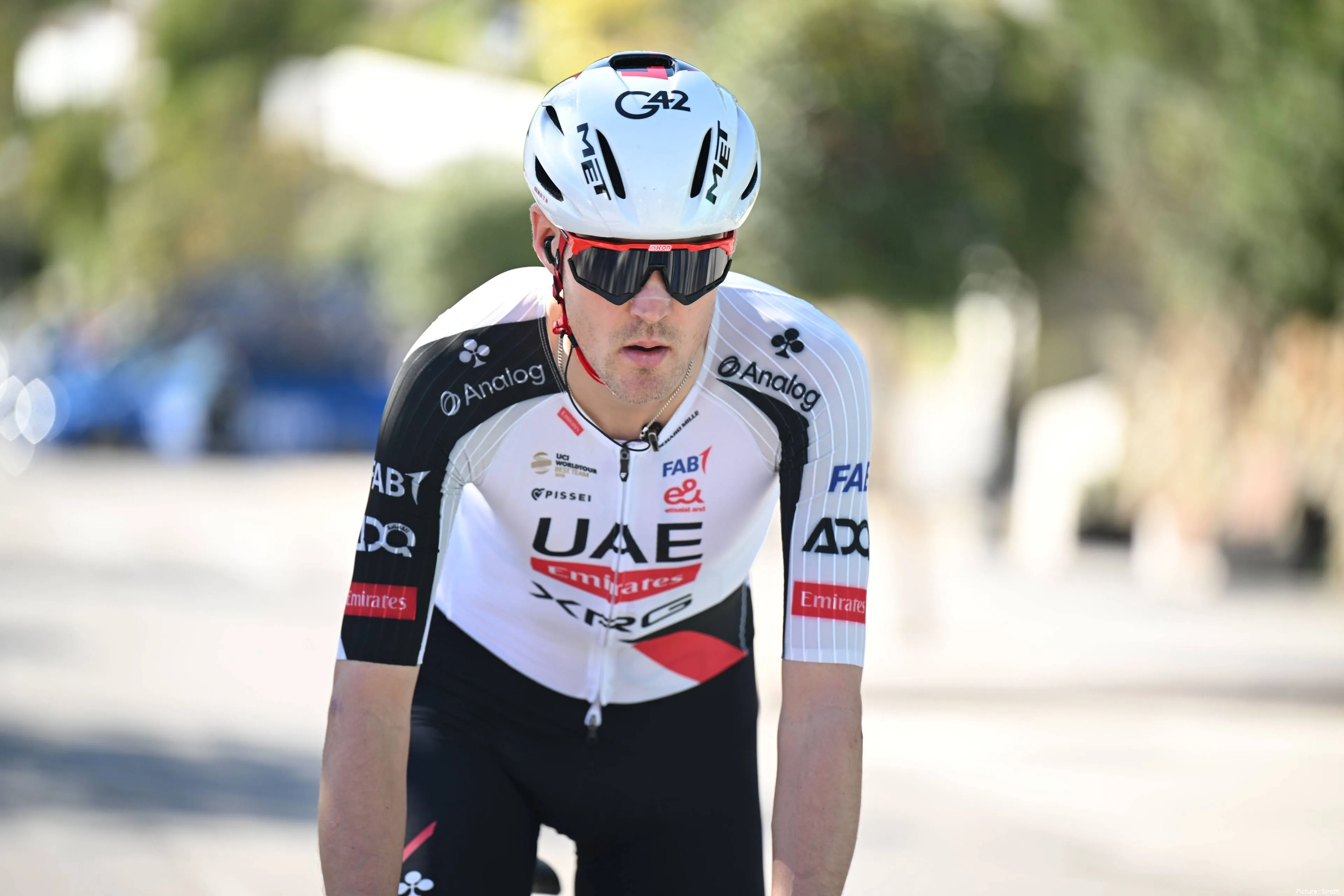
After spending his early professional career with the Team Sky/Ineos setup, Pavel Sivakov made the jump to UAE Team Emirates - XRG in 2024. While he has adapted well to the Emirati squad's highly scientific environment, one constant in his career has been a strict focus on diet. Having turned professional right as the peloton's eating habits began to shift, Sivakov recently opened up about the dramatic evolution of race fueling, breaking down exactly how many carbohydrates it takes to power through a modern classic.
The end of the low-carb era
Sivakov turned professional in 2018, arriving in the WorldTour just as his former team, Sky, was pioneering new frontiers in sports nutrition. He points to Chris Froome's famous 2018 Giro d'Italia victory as the turning point, marking one of the first times riders began pushing past 100 grams of carbohydrates per hour.
"I started my professional career in 2018, not so long ago, but from then to today the way we fuel has completely changed," Sivakov explained in an interview to bici.pro. "There was a time when we raced with low carbohydrate content, but now it is completely over. Of course, you don't fuel with carbs every day, but the perception has changed a lot. The shift started with Covid and now it's all a bit crazy."
Consuming such massive amounts of sugar while exercising at the limit is a challenge in itself, but Sivakov admits he doesn't mind the eating part. "Personally, it never was [difficult]. I love food, I like to eat... I think it is more difficult to adapt the gut to sustain this level of feeding for many hours. You can't say it was difficult, but it is certainly an aspect to train."
To illustrate just how extreme modern fueling has become, Sivakov broke down his exact nutritional intake for a 250-kilometer race like Liège-Bastogne-Liège. The protocol is relentless, relying heavily on easily digestible liquids and gels rather than solid food.
"Starting with breakfast, I don't know exactly how many carbohydrates I ate, but certainly around 250 grams. Then a small snack, like a rice cake, before the race. And before starting, another snack with 20-40 grams of carbs. During the race, I tried to take in about 150 grams of carbohydrates per hour."
To ensure he never misses a beat, technology steps in. "I always have a small notification on my Wahoo to remind me to replenish energy every half hour, so I don't forget and I always pull a gel out of my pocket."

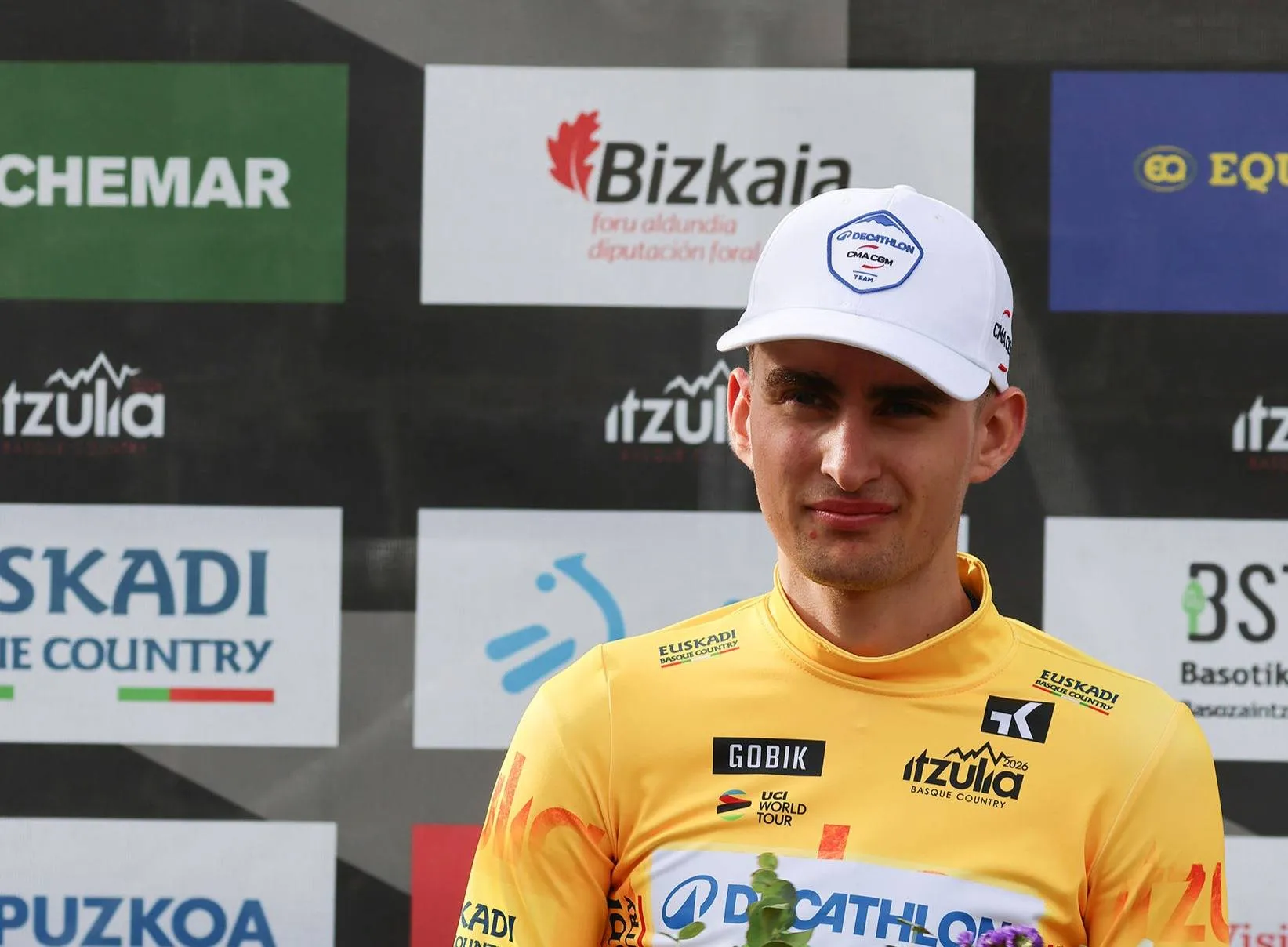
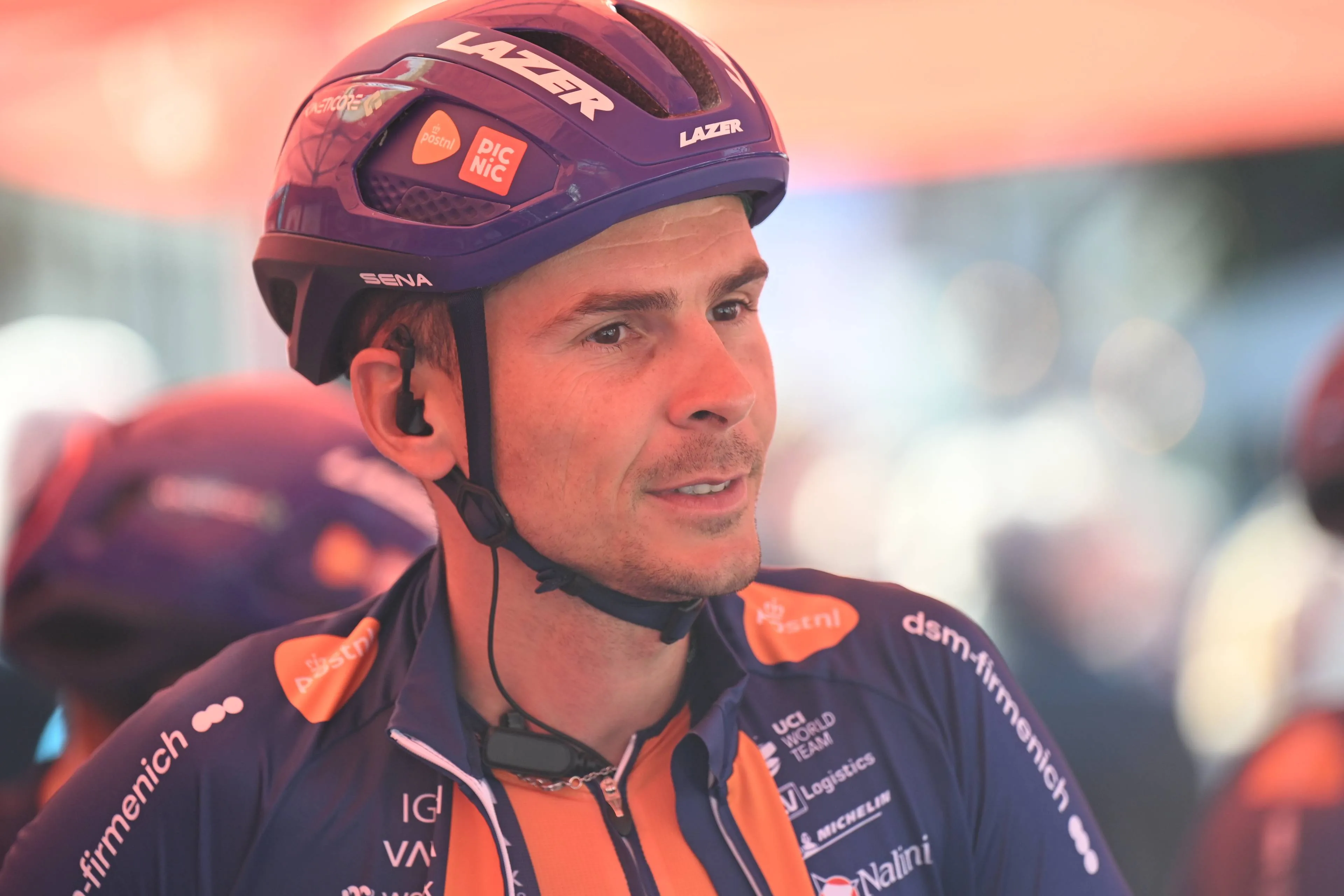
Pavel Sivakov and Isaac del Toro on Giro del Veneto 2025 podium
Sodium tracking and flavor fatigue
UAE Team Emirates nutritionist Gorka Prieto also places a massive emphasis on sodium intake, tailoring the amounts to each individual rider's sweat rate. While Sivakov isn't overly sensitive to sodium loss, he aims for a baseline of about 600 milligrams per hour during races, noting that taking too much can leave a rider feeling bloated the next day.
When it comes to the actual taste of the endless stream of gels, the Frenchman has clear preferences. "I really like the mango one, because it tastes good and mango is actually one of my favorite foods. Instead, the gel with caffeine, the cola-flavored one, is not my favorite in terms of taste. But at the end of a race you always need a boost, a bit of caffeine, so yes, it's always good to have one with you."
The fueling doesn't stop when the finish line approaches. Sivakov forces himself to keep consuming carbohydrates until just 30 minutes before the end of the race. He notes that the body's metabolism is working so intensely during the effort that it absorbs the carbohydrates incredibly efficiently, giving him a head start on his recovery for the next day.
Once back on the team bus, the recovery protocol begins immediately with an Enervit carbohydrate and protein shake, accompanied by a recent trend in the peloton: tart cherry juice. "I would say these cherry juices became common use when I arrived at UAE Emirates. It's not so much for the juice itself or something you feel in the moment, but I feel it helps me recover well."
After the scientific shakes and juices on the bus, the team strictly switches back to standard meals at the hotel. As Sivakov points out, after six hours of processing engineered sports nutrition, "returning to normal foods is also good for the gut."
Read also
claps 0visitors 0
Just in

Popular news
Latest comments
- WVA won Roubaix because Pog had a mechanical and had to pull a large group for 20km to rejoin the group. Nothing to do with Visma tactics.Renz02-05-2026
- Great assessment! I'm looking forward to this year's tour. While I'm not team pog, and am fully team Wout. now that he's won Paris~Roubaix, I hope he is as great as when he was the best of the rest, including his Ventoux stage. I know that he can now coast at this point, but no one is more 100% in for the team than him. That's what makes the difference when it comes to teammates.Colnago-fan02-05-2026
- Good on Visma its a pity other teams and riders wouldnt make it more difficult and take on UAE and Pog. He dont like it when he gets beat . Typical was when Wally beat him fair and square at Roubaix and didnt see him congratulate him .Davide02-05-2026
- after the 2025 tour redbull should have gave him to another team for 1/3-1/2 his contract value and taken whatever the hit, the writing was on the wall and it was clear, Primoz agianst tadej and jonas is too freaking good to ride for 5th place and/or help a teamate podium?? , he is completely lost, and he isn't changing.......god forbid he does the smalllest amount of work he immediatly figures out a way to reduce his value by 10X the work he contributed, the Jumbo Vuelta was just the start of his tarnish my legacy years.jad2901-05-2026
- obviously, roglic couldn’t care less about gc when he sees no chance to win. so he rides himself out of gc and hopes gc contenders will let him go if he goes in the next stages.MehrBums01-05-2026
- Jonas needed to win a stage to dedicate to the ex-girlfriend of his second cousin, or something like that I recall. IMO Jonas was the worse offender than Roglic in the 2023 Vuelta in the "attacking your team mate category"mobk01-05-2026
- A shark does not fit Pogačar well. A shark is a rider who aggressively chases rivals down with no compassion - like Niels Vandeputte in CX. Pogačar attacks and is the one being chased, bur never gets caught
 Rafionain-Glas01-05-2026
 - The issue was very much that Roglič had expected sole leadership at the Vuelta, then Vingegaard was added. Kuss was always supposed to ride in support. But when Vingegaard passed Roglič for second place behind Kuss, oh man, that was some anger. So Roglič was attacking Vingegaard more than Kuss that day, because of how Vingegaard had passed him for second place during his previous attacks. They treated Roglič pretty badly, and nobody should have been surprised that he left.RidesHills01-05-2026
- Do you support the USA? They also have a fascist dictatorship. Their president is the the most hated man in the world, orange Donald Trump. The USA helped Israel commit genocide in Gaza, and USA is bombing schools in Iran and killing 160 young girls.M-cOnstitUtion01-05-2026
- Nope. No need to. I can read enough to know that they are funding genocide in Africa. The same reason I cannot support bahrain or jayco alula.
 Andrew01-05-2026
Loading
Write a comment