DISCUSSION | Romandie stage 3 & Eschborn-Frankfurt 2026 - Godon 2 vs Pogacar 2. INEOS’s tactics. Pidcock narrowly misses out in Germany
Cycling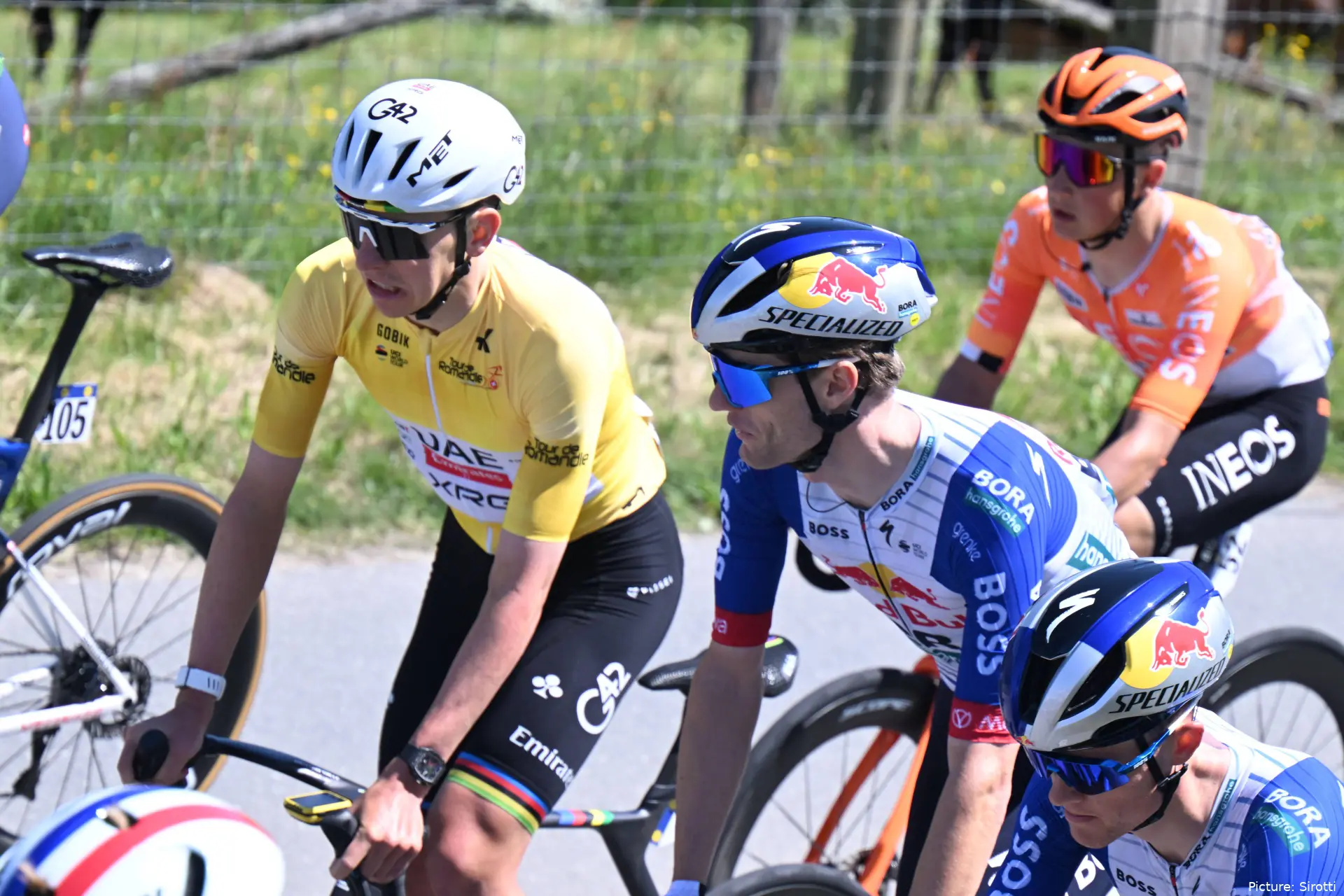
Friday delivered a compelling double act on the WorldTour stage, with two very different races unfolding in Germany and Switzerland, yet both decided by sharp race instinct and perfect execution in the finale.
At the Eschborn-Frankfurt, it was Georg Zimmermann who rose to the occasion in front of his home crowd, while in stage four of the Tour de Romandie, Dorian Godon once again proved his speed and composure in a reduced sprint.
Eschborn - Frankfurt
The German one-day race, often seen as a final flourish to the spring campaign, took on a more demanding character this year. Organisers had toughened the course, adding both distance and elevation, with the Mammolshain climb featuring prominently in the finale.
Covering more than 210 kilometres and accumulating around 3,300 metres of climbing, the route created the perfect conditions for a selective and unpredictable race.
From the outset, the peloton allowed a breakaway to form, with five riders committing to a long day in front. Matyas Kopecky, representing Unibet Rose Rockets, was among those eager to animate the race, joined by Samuel Leroux, Thomas Gachignard, Aivaras Mikutis and Jonas Rutsch. Their cooperation was solid, and the gap quickly stretched beyond seven minutes, forcing a reaction behind.
Responsibility fell largely on Uno-X Mobility and the Pinarello Q36.5 Pro Cycling Team, both teams carrying clear ambitions for the day. Uno-X Mobility had Magnus Cort Nielsen as a key card to play, while the Pinarello Q36.5 Pro Cycling Team placed its hopes on Tom Pidcock, one of the standout names on the start list. Together, they ensured the break remained within reach, steadily bringing the race back under control without burning too many resources too early.
The first real turning point came with roughly 80 kilometres remaining. By that stage, the break had begun to fracture under the accumulated effort, and the peloton sensed opportunity. Tim Wellens, Emiel Verstrynge and James Meehan launched a well timed counterattack, bridging across to some of the earlier escapees. The move injected fresh energy into the race, but it was the next acceleration that truly reshaped the contest.
Wellens and Verstrynge quickly distanced their companions, committing fully to an ambitious long-range move. For a moment, their effort looked promising. The peloton, already reduced in size due to the repeated climbs, hesitated just enough to allow the gap to grow beyond a minute. However, the demanding nature of the course, particularly the repeated ascent of Mammolshain, began to weigh heavily.
Wellens eventually pushed on alone, dropping Verstrynge in a bid to stay clear. It was a bold move, but the dynamics behind him were shifting rapidly. On the decisive slopes, riders such as Ben Tulett and Alex Baudin launched their own attacks, bridging across and effectively neutralising the Belgian’s effort. As the race approached its final phase, the front began to reorganise.
A group of around a dozen riders formed at the head of the race, representing a mix of climbing strength and sprint capability. Among them were Tom Pidcock, Ben Tulett, Pello Bilbao, Ion Izagirre and Georg Zimmermann. The composition of the group made cooperation logical, yet the threat from behind remained ever-present.
The peloton, though diminished, had not given up the chase. With several teams still believing in a sprint scenario, the gap began to shrink rapidly in the closing kilometres. At one point, it seemed inevitable that the attackers would be caught, particularly as the margin dropped to just seconds.
In that moment of uncertainty, Michael Valgren played a crucial role. Sacrificing his own chances, he increased the pace at the front to support teammate Alex Baudin. His effort proved decisive in keeping the group just out of reach, setting up a sprint among the attackers rather than a chaotic bunch finish.
In the final metres, Georg Zimmermann showed both strength and composure. Timing his effort perfectly, he launched a powerful sprint that none of his rivals could match. Tom Pidcock and Ben Tulett followed, but neither could come around the German champion, who secured a memorable victory on home roads. It was a result built not only on physical ability, but on patience and precise positioning in a constantly evolving race.
Tour de Romandie
While Germany celebrated a home success, attention in Switzerland turned to a different kind of challenge. Stage four of the Tour de Romandie, held on a circuit starting and finishing in Orbe, revolved around a single key difficulty: the Col du Mollendruz.
The climb, measuring nine kilometres at an average gradient of 6.1%, offered a clear opportunity for climbers to make their mark, though the long run in to the finish left room for multiple scenarios.
A strong breakaway of seven riders formed after several attempts, featuring Sam Oomen, Damiano Caruso, Georg Steinhauser, Lorenzo Germani, Josh Kench, Rémy Rochas and Steff Cras. It was a dangerous group, particularly with Steinhauser sitting relatively close on general classification. This forced UAE Team Emirates - XRG, the team of race leader Tadej Pogacar, to maintain control.
The peloton allowed the break some freedom, but never to the extent that it would threaten the overall standings. The pace remained steady, with the gap hovering at just over two minutes as the race approached the key climb.
An unusual moment disrupted the rhythm of the break when a crash at a roundabout brought down several riders, including Rochas and Oomen. Fortunately, all were able to continue, and the group reformed quickly, though the incident added an element of unpredictability.
On the slopes of the Col du Mollendruz, the race began to take shape. Damiano Caruso proved the strongest climber among the breakaway, accelerating clear of his companions. His move forced a reaction, and while he initially gained ground, Steinhauser and Cras managed to reconnect on the descent.
Behind them, the peloton was being thinned out. Red Bull - BORA - hansgrohe increased the tempo, reducing the group to around thirty riders. However, despite the increased pace, no decisive attacks emerged from the favourites. The race remained finely balanced.
As the kilometres ticked down, the breakaway trio fought to maintain their advantage, but the coordinated effort behind them began to tell. INEOS Grenadiers and Lidl-Trek took control of the chase, setting a pace that gradually eroded the gap.
By the time the race entered its final kilometres, the outcome was becoming clear. The break was caught just before the decisive phase, and attention shifted to a likely sprint from a reduced group.
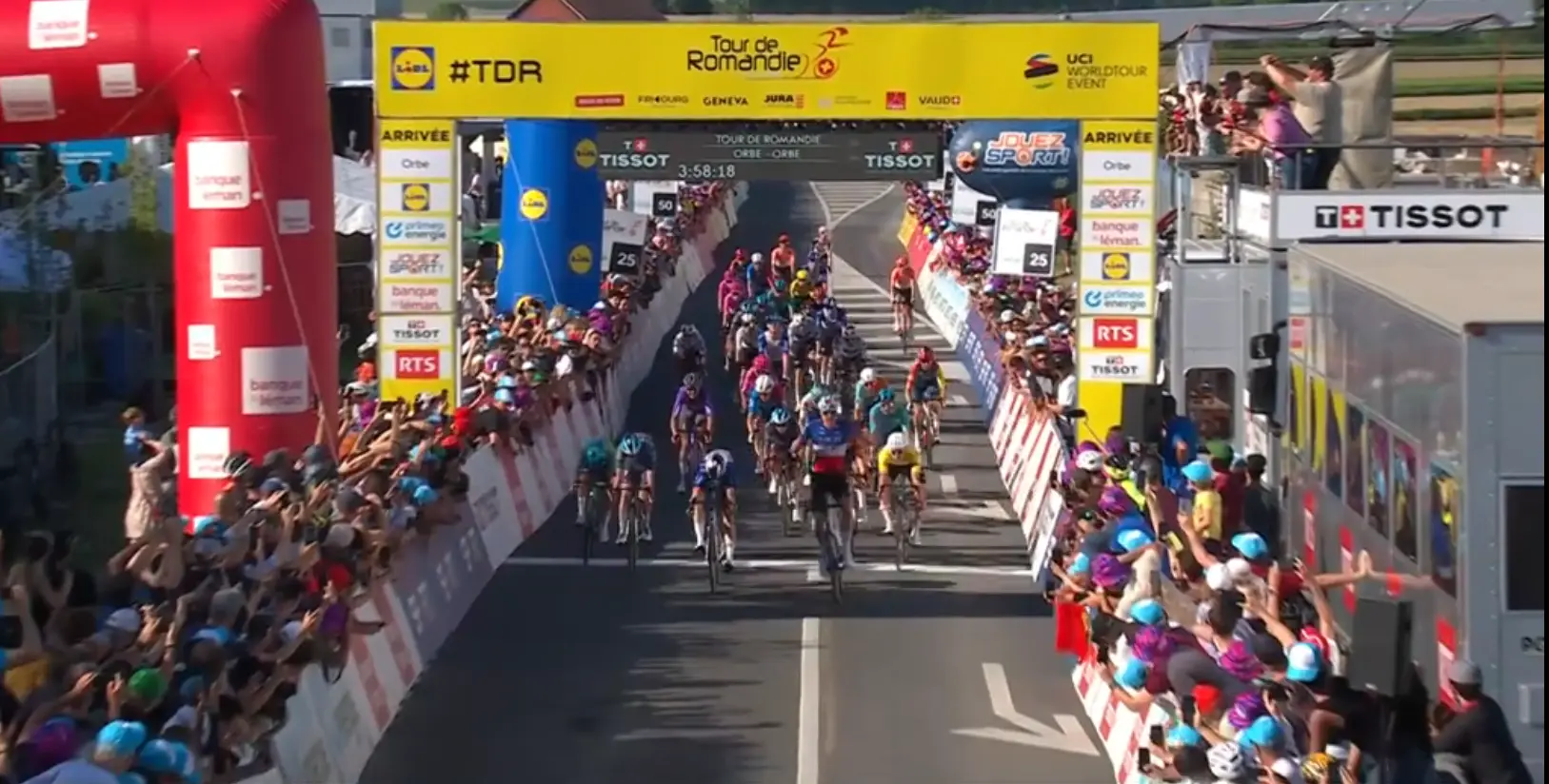
In that scenario, positioning and timing were once again crucial. Dorian Godon, already a stage winner earlier in the race, was perfectly guided into position by his teammates, notably Carlos Rodríguez. When the sprint opened, the Frenchman delivered a powerful acceleration, immediately gaining the upper hand.
Finn Fisher-Black attempted to respond, but could not match Godon’s speed, while Valentin Paret-Peintre completed the podium. Tadej Pogacar crossed the line in fourth place, maintaining his overall lead without difficulty and avoiding any unnecessary risks.
The stage confirmed Godon’s consistency and finishing strength, marking his second victory in this edition of the race. It also underlined the control exercised by UAE Team Emirates - XRG, who managed the day effectively despite the presence of a strong and potentially dangerous breakaway.
Carlos Silva (CiclismoAtual)
What a race that was at Eschborn - Frankfurt. I know a lot of people don’t really get excited about the hillier Classics, and when it’s a German race with a start list that might not look the most appealing on paper, it tends to fly under the radar.
But honestly, if you missed it, go back and watch it, it’s absolutely worth your time. With the favourites’ group hitting the final kilometre, and the peloton just a handful of seconds behind. It was incredibly close, they were on the brink of being caught, and one small hesitation could have dragged the bunch back into the fight for the win.
And that final sprint? Pure adrenaline. A perfect 10. I can safely say that Georg Zimmermann fully deserved that win, it was completely wild.
Over at Tour de Romandie, it’s more of the same storyline. Dorian Godon two wins, Tadej Pogacar two wins. Tomorrow might be the day the Slovenian from UAE Team Emirates - XRG tips the balance.
If yesterday Godon didn’t have the legs to really unleash his sprint after that final climb, today he managed to hang on, even with the pace being ramped up by Red Bull - BORA - hansgrohe, though without doing major damage.
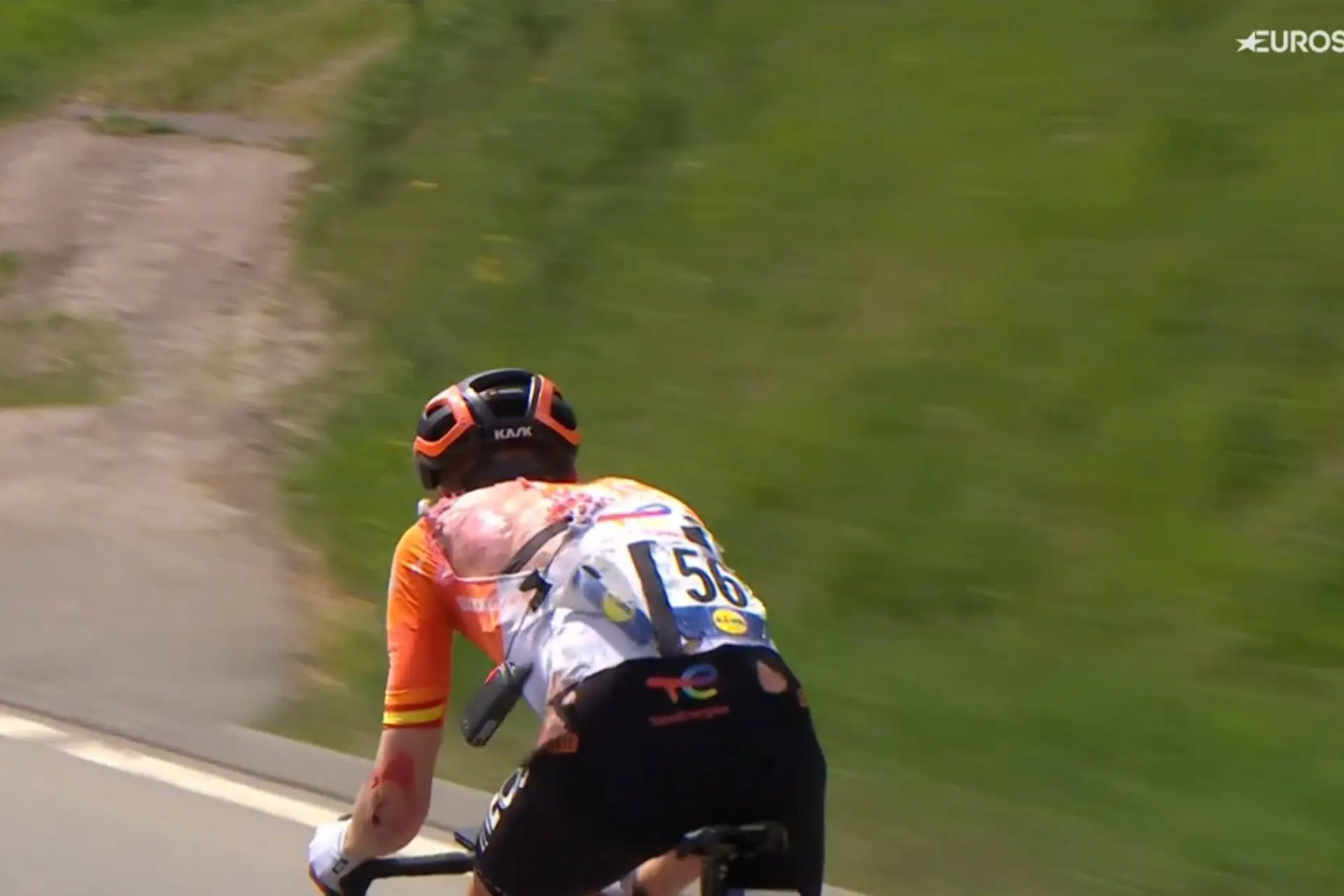
But the opening phase of today’s stage was a completely different story compared to the previous days. Attacks were flying left and right, every team wanted a rider in the break. And that breakaway made things difficult for INEOS Grenadiers, fighting all the way until the final kilometres.
In the final balance, the German race came out as the more spectacular one. Romandie, on the other hand, was all about tactics.
Javier Rampe (CiclismoAlDia)
TDR 2026:
Dorian Godon’s revenge came just 24 hours after being outplayed by the intelligence of Tadej Pogačar. The Frenchman from Ineos Grenadiers can now say he’s one of the very few this season, along with Wout van Aert, to have taken down the modern-day benchmark.
Alongside Godon, the spotlight also fell on Damiano Caruso. The ever-reliable Italian threw everything at it, trying to carry the break all the way to the line. There’s something old-school about him, a rider cut from another era. It didn’t quite come off, but he’s clearly blowing the dust off the engine ahead of the long-awaited Giro.
As it stands, Ineos and UAE Team Emirates - XRG are dominating this Tour de Romandie 2026 through two names: Godon and Pogačar. They’re the only riders to have won on Swiss roads so far this week, and unless something unexpected happens this weekend, it’s hard to see anyone else stepping up.
Eschborn-Frankfurt:
The so-called “Beer Classic” in Germany has a habit of rewarding bold racing when the breakaway commits, and on May 1st, International Workers’ Day, that’s exactly what happened.
The day’s real workers, the ones who animate every race, formed a strong group of around a dozen. With the peloton closing in, Georg Zimmermann, a name that sounds more like a composer, played his own symphony, much to the frustration of the sprint teams who hesitated when it mattered most.
That lack of conviction from the bunch opened the door for a rider willing to believe in the impossible. Wearing the German national champion’s jersey, Zimmermann became a prophet on home soil, triumphing beneath the rebuilt Henninger Tower.
Long may spring racing continue: Pello Bilbao, Ion Izagirre and Adrià Pericas all finishing inside the top ten.
Read also

And you? What’s your opinion on Eschborn - Frankfurt 2026 and Tour de Romandie stage 3? Tell us what you think and join the discussion.
Carlos Silva is a writer for CyclingUpToDate.com, where he contributes race reports, interviews, analysis pieces, and live coverage of the international cycling calendar. Holding a degree in Sports from the Jean Piaget Institute, he combines academic knowledge of performance, training, and competition with hands-on journalism experience in professional cycling.
Throughout his career, Carlos has conducted interviews with leading figures in the sport, including Alberto Contador, Joaquim Rodríguez, Óscar Pereiro, João Almeida, Isaac del Toro, Derek Gee, John Degenkolb and Geraint Thomas. These conversations reflect direct engagement with Grand Tour winners, Classics specialists, and emerging talents.
He has provided on-site coverage at major events ranging from the Vuelta a España to the Tour de France, alongside stage races such as Vuelta a Andalucía, Volta ao Algarve, Volta a Portugal and O Gran Camiño. Covering the mythical climbs of the Giro d'Italia remains one of his professional ambitions.
Carlos is responsible for liveblog coverage of all major WorldTour races and beyond, including the Tour de France, Giro d'Italia and Vuelta a España. His reporting integrates verified data from ProCyclingStats to ensure statistical accuracy, contextual depth, and analytical precision.
A lifelong cycling enthusiast, he approaches storytelling across written, photographic, and video formats with a focus on credibility, tactical insight, and informed race interpretation.
claps 0visitors 0
Just in
Popular news

Latest comments
- 👍👍👍PogiSloFans15-10-2026
- First: If there has been a translation error then I gave you my answer... sarcasm. Second: The author knows nothing on the state of doping within the peleton. His guess is no better than yours or mine. Maybe he's having an illusion, his own misinterpretation of reality. PS: No, I didn't miss the point of your post.PogiSloFans15-10-2026
- hey, brother. well, it took some real jerry-rigging this time, but you found a way to talk about your hero in response to an article that’s 100% about cyclocross and has 0% to do with pogačar. a bit inelegant — “cyclocross doesnt matter so i’m going to just talk about tadej” — but you’ve certainly shown commitment.OCexile15-10-2026
- All very good, we know what the word means. But you missed the point of my post. There are two questions to answer. Quote: "Has there been a translation error, or is the author of the piece making a comment on the state of doping within the peleton?!Cyclingsbestfan15-10-2026
- Hey awp, what's your beef with Pogi? So Seixas wins Lombardia and now he's going to demolish Pogi next year or what? You have to understand, Pogi isn't "old" yet, he can be on his highest level until he's 32 or 33 years old, that's another 4 to 5 years. What more does he need? For many cycling experts he's already the G.O.A.T. and he will keep proving it for the next few years. So what are you trying to say, that 10 years from now young cyclists will be beating Pogi??? Common, pull yourself together and stop making a fool of yourself. Capish? PS: What was this BS?: "I'm not sure Tadej could have beaten him last Saturday. But with his experience he may have been able to." !?!?!? Can you hear yourself? All of a sudden you think Pogi could have lost? Why does your brain work this way?PogiSloFans15-10-2026
- An ILLUSION is something that appears real or true, but is actually false, fake BS or a misinterpretation of reality. Saying that, the anti-doping bodies are an important part of cycling. Thanks to their hard work, the community can live in an ILLUSION that the current cycling is a "clean sport." In other words, cyclists like Pogi, Remco, Jonas, MVDP, Van Aert, Pidcock, Mads Pedersen, tilted head Ben Healy... might all be doped to the gills but we'll never know it.PogiSloFans15-10-2026
- i hope they DO, so sven has to eat this stupid argument he’s making.OCexile15-10-2026
- They’ll retire anyway sooner or later, so get over it!Lozza15-10-2026
- Hope it’s not gone for good!Lozza15-10-2026
- I can no longer take you seriously here. I suppose you don't want to be a part of our community.awp15-10-2026
Loading
Write a comment