"He will never be able to start with lower expectations than right now": Marc Sergeant urges Paul Seixas to make his Tour de France debut
Cycling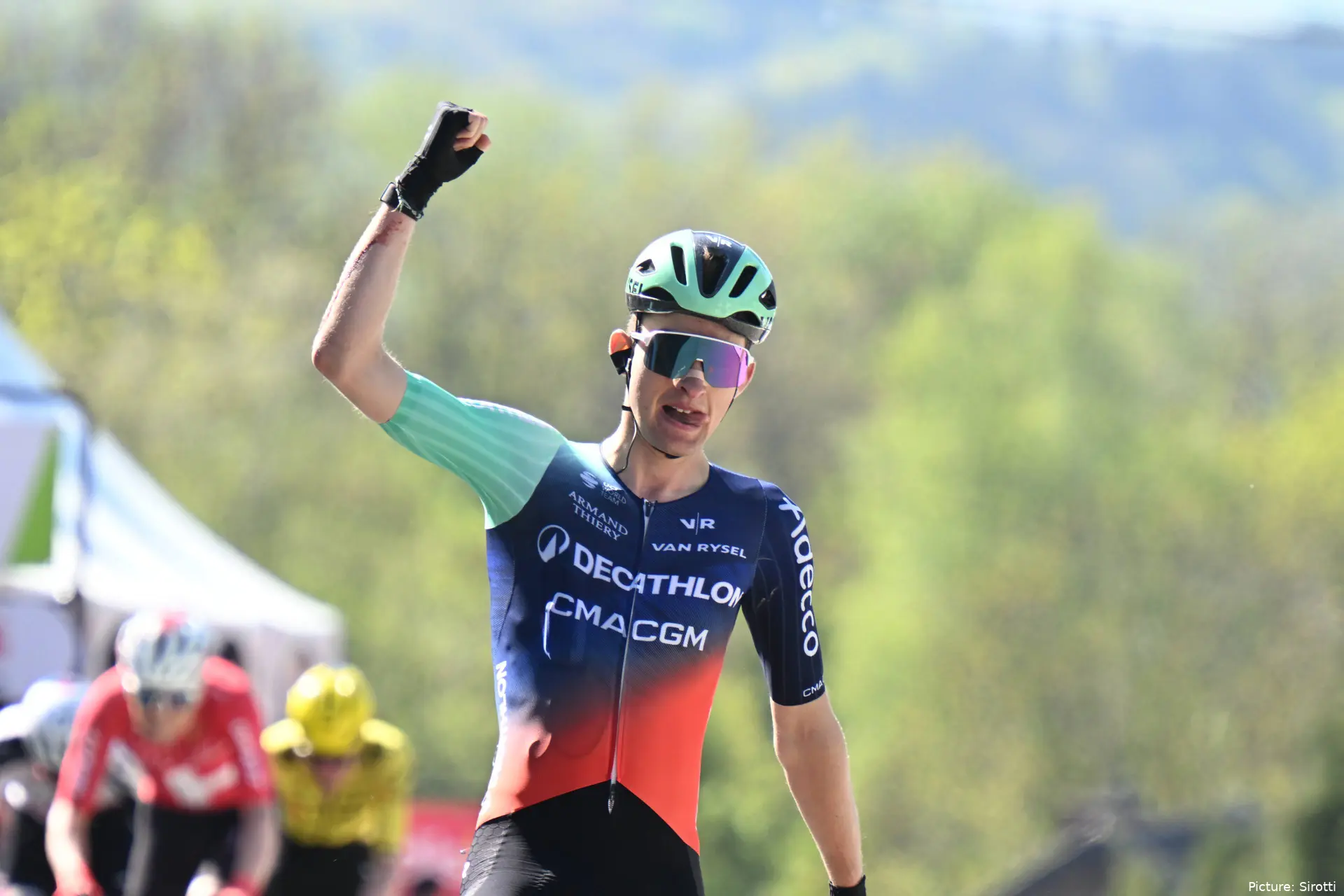
The cycling world is abuzz with one major question: will French prodigy Paul Seixas make his Tour de France debut this summer? After an extraordinary spring campaign, the debate over whether the teenager is ready for the biggest race in the sport continues to rumble on. Former professional cyclist Marc Sergeant recently weighed in on the discussion, arguing that there is no better time for the young talent to take on the Grande Boucle.
The perfect time to learn without pressure
According to Sergeant, sending Seixas to the Tour this year offers a unique psychological advantage. Because he is still so young, the burden of expectation would be virtually non-existent compared to making his debut later in his career when he is an established professional.
"He will never be able to go to the Tour with less pressure than this year. He can do nothing wrong, precisely because he is still so young," Sergeant explained. "If it goes badly, he can say: 'Maybe it was a bit early, but I came here to learn,'" he said in an interview to Het Nieuwsblad.
Waiting too long, Sergeant warns, could actually backfire and create an unnecessarily harsh environment. Furthermore, simply being exposed to the sheer scale of the event early on is a massive asset.
"If he rides the Tour for the first time as a 21-year-old and it disappoints, people will quickly say: 'He has been a professional for three years and still fell through the ice.' He will never be able to start with lower expectations than right now," Sergeant continued. "And the experience he can gain this year is enormously important. The Tour is a circus like nothing else. He can discover all of that now, while the stakes are lower."

Paul Seixas at the 2026 Liège-Bastogne-Liège
Physically ready for the challenge
Beyond the mental aspect of racing the Tour, there are naturally concerns about whether a teenager's body can withstand three grueling weeks of Grand Tour racing. However, Sergeant is relaxed about the physical toll, pointing to Seixas's recent performances in highly demanding stage races.
"I am fairly certain he will come through the Tour well," Sergeant stated confidently. "When you see how he performs day after day at the Itzuliae Basque Country, a very hard race, I don't think you can assume he will crack in the Tour."
Furthermore, Sergeant notes that modern cycling offers plenty of scientific safeguards to protect young riders from doing long-term damage to their bodies. If the fatigue becomes too much, there is no shame in pulling the plug early.
"And if he genuinely feels bad, he can simply abandon. Especially with the data monitoring they have now, the right decision can easily be made."

Félix SernaCycling Journalist
Félix Serna is a writer at CyclingUpToDate and has been part of the team since 2025. He covers professional cycling across both the men’s and women’s calendars, with a focus on UCI rankings, race developments, and rider performance. His work includes interview-based reports, liveblogs, and tournament coverage designed to provide clear, accurate context throughout the season.
In his reporting, Félix regularly uses ProCyclingStats for results, statistics, and historical reference. He places strong emphasis on careful sourcing, editorial accuracy, and updating articles promptly when new, verified information becomes available. He holds a bachelor’s degree in International Studies.
claps 0visitors 0
Just in
Popular news

Latest comments
- 👍👍👍PogiSloFans15-10-2026
- First: If there has been a translation error then I gave you my answer... sarcasm. Second: The author knows nothing on the state of doping within the peleton. His guess is no better than yours or mine. Maybe he's having an illusion, his own misinterpretation of reality. PS: No, I didn't miss the point of your post.PogiSloFans15-10-2026
- hey, brother. well, it took some real jerry-rigging this time, but you found a way to talk about your hero in response to an article that’s 100% about cyclocross and has 0% to do with pogačar. a bit inelegant — “cyclocross doesnt matter so i’m going to just talk about tadej” — but you’ve certainly shown commitment.OCexile15-10-2026
- All very good, we know what the word means. But you missed the point of my post. There are two questions to answer. Quote: "Has there been a translation error, or is the author of the piece making a comment on the state of doping within the peleton?!Cyclingsbestfan15-10-2026
- Hey awp, what's your beef with Pogi? So Seixas wins Lombardia and now he's going to demolish Pogi next year or what? You have to understand, Pogi isn't "old" yet, he can be on his highest level until he's 32 or 33 years old, that's another 4 to 5 years. What more does he need? For many cycling experts he's already the G.O.A.T. and he will keep proving it for the next few years. So what are you trying to say, that 10 years from now young cyclists will be beating Pogi??? Common, pull yourself together and stop making a fool of yourself. Capish? PS: What was this BS?: "I'm not sure Tadej could have beaten him last Saturday. But with his experience he may have been able to." !?!?!? Can you hear yourself? All of a sudden you think Pogi could have lost? Why does your brain work this way?PogiSloFans15-10-2026
- An ILLUSION is something that appears real or true, but is actually false, fake BS or a misinterpretation of reality. Saying that, the anti-doping bodies are an important part of cycling. Thanks to their hard work, the community can live in an ILLUSION that the current cycling is a "clean sport." In other words, cyclists like Pogi, Remco, Jonas, MVDP, Van Aert, Pidcock, Mads Pedersen, tilted head Ben Healy... might all be doped to the gills but we'll never know it.PogiSloFans15-10-2026
- i hope they DO, so sven has to eat this stupid argument he’s making.OCexile15-10-2026
- They’ll retire anyway sooner or later, so get over it!Lozza15-10-2026
- Hope it’s not gone for good!Lozza15-10-2026
- I can no longer take you seriously here. I suppose you don't want to be a part of our community.awp15-10-2026
Loading
Write a comment