E3 Saxo Classic 2026 preview, profiles, favourites & predictions - Is Mathieu van der Poel set to dominate 'mini Tour of Flanders'?
Cycling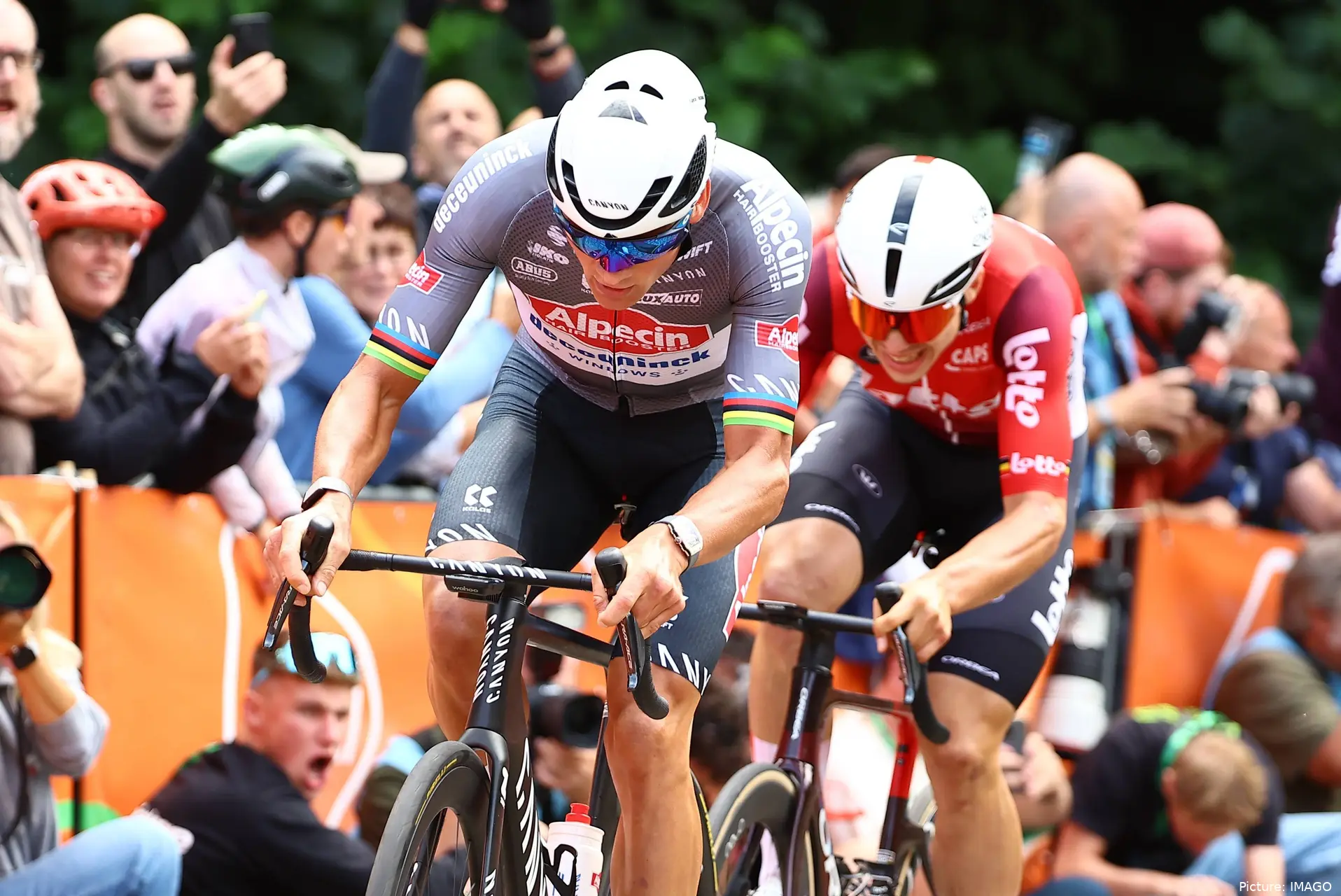
On the 27th of March the peloton takes on the E3 Saxo Classic, nicknamed often as the 'mini Tour of Flanders'. With the peloton taking on the famous Paterberg and Oude Kwaremont, the races comes as the most similar event to the first cobbled monument and is a key part of most riders' spring campaign. We take a look at its profile; with its start and finish estimated at 12:50 and 17:10CET.
The race's first edition was back in 1958, won by Armand Desmet. Belgian legend Rik van Looy won it four times between 1964 and 1968 and right after Roger de Vlaeminck also left his mark in the race's history. E3 doesn't pack the palmarès of the Tour of Flanders, but isn't far behind, being so competitive that despite several attempts, Eddy Merckx has never managed to win it.
Some sprinters have also managed to leave their mark here, including Mario Cippolini in 1993 and of course Peter Sagan more recently. But the Flandrien legends were all present and winning throughout the generations: Johan Museeuw, Peter van Petegem, Tom Boonen (four consecutive wins from 2004 to 2007)... Fabian Cancellara won it three times; and the likes of Geraint Thomas, Michal Kwiatkowski, Greg van Avermaet, Niki Terpstra, Zdenek Stybar, Kasper Asgreen have also marked their names in the race.
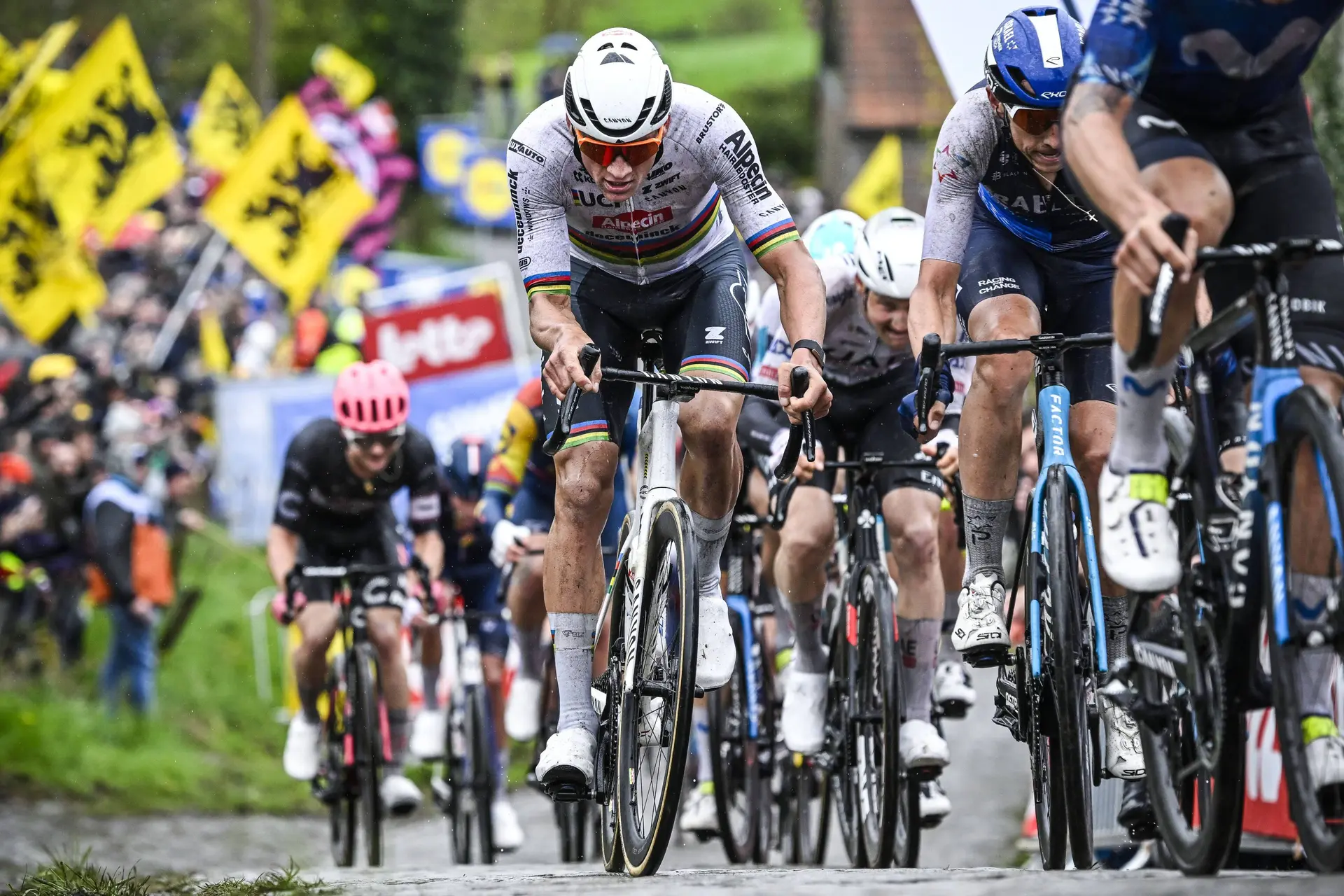
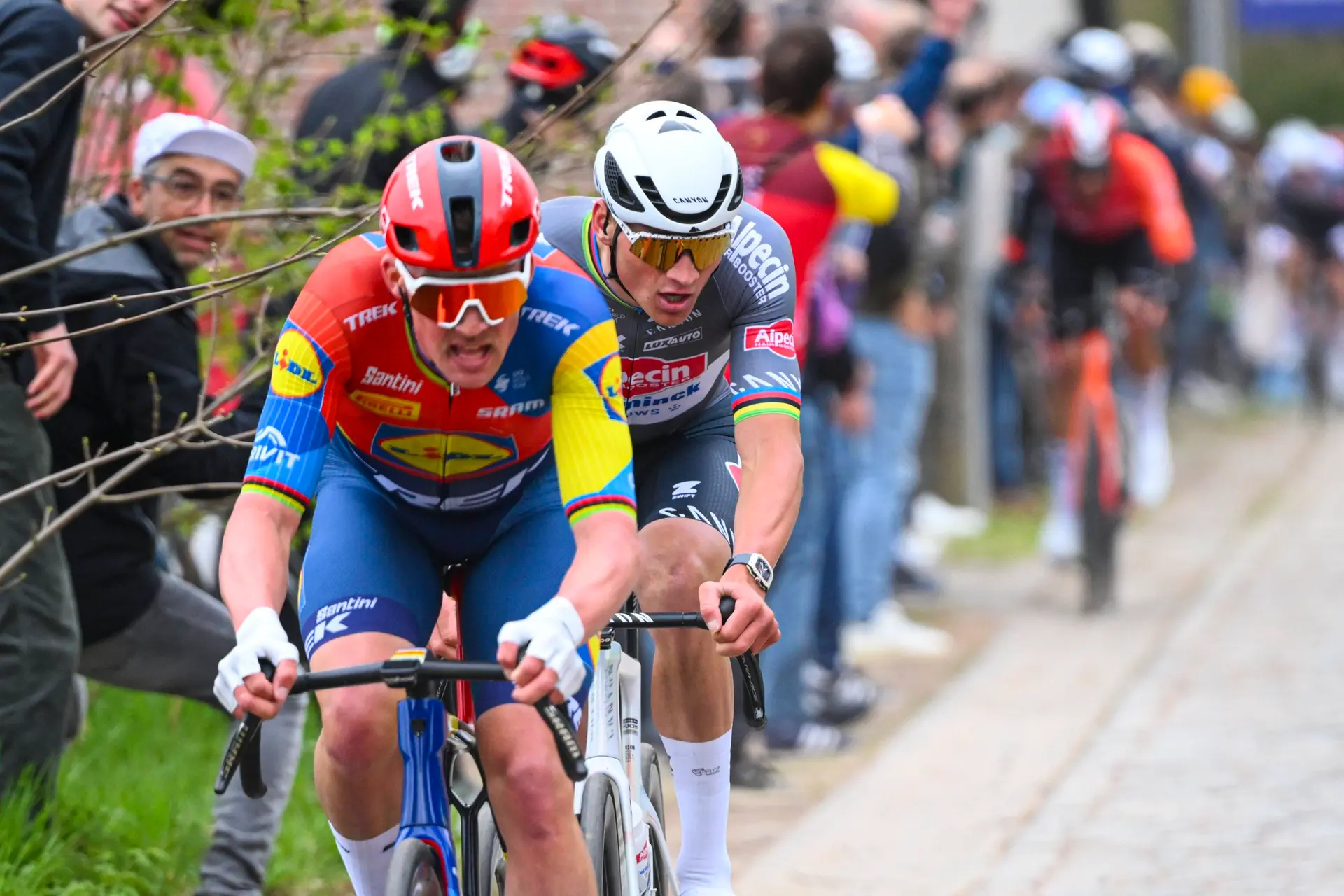
In 2022 and 2023 Wout Van Aert won it, in the latter taking perhaps his best win over Mathieu van der Poel and Tadej Pogacar directly. However in the last two years van der Poel took uncontested wins - in 2025 he won with a long-range solo attack, beating Mads Pedersen.
Read also
Profile: Harelbeke - Harelbeke

Harelbeke - Harelbeke, 208.5 kilometers
This is the 'mini Tour of Flanders', however in all reality it is not far away from the Belgian monument. It features an hour less of racing in comparison to the second monument of the season, however the profile is very similar and the race is to be decided on a very similar set of climbs.
With 209 kilometers on the menu it’s still a fairly long race. When the race hits 100 kilometers to go it will see an increase in activity as the peloton enter the bergs. The route was changed, and fitting in with the modern trend, the race has been made more difficult, as a second ascent of the Oude Kwaremont has been added to the route. Like Flanders, this will be the first key point of the race, and will come with 85 kilometers to go.
From there on the small climbs - and cobbled sectors in some - come thick and fast. Hotondberg, Kortekeer, Taaienberg (70Km to go) mark the continuation of the first key period of the race; followed by the Boigneberg and the Eikenberg. The final of these is a 1.2-kilometer long cobbled sector at 5%, which ends with 59Km to go. What follows are a few kilometers of flat roads.
But then, the key point in the race. The order is the opposite of Flanders here, as the Paterberg/Oude Kwaremont combo sees the short ascent first, and it comes with 42 kilometers to go, still quite far away from the finish but with it’s toughness it will inevitably cause damage in the peloton.
With 37 kilometers to go comes the Oude Kwaremont. In very quick succession, these two ascents will be the platform for the main attacks from the race favourites who want to make their moves on the bergs. With 30 and 19 kilometers to go there are some small bergs, and a cobbled sector as well with 22Km to go. These won’t be as hard, however after a hard race they can be used to create further damage, however it is more expected that groups will try to consolidate their gaps.
The final 20 kilometers will be essentially pan-flat, and it is possible to organize a chase with the goal of catching smaller groups or an eventual solo rider that may be in front. This flat section will force a lot of tactical decisions, and should be crucial for the outcome. They are roads where you can put on a chase, but simultaneously big splits are frequent in E3 by this point. Those racing for victory and starting the flat section in the lead have the advantage.
The Favourites
In the bergs, it is always hard for the wind to make true difference, as the splits will occur due to different reasons. There will be rain leading up to the race meaning we should have some wet cobbled sectors and sketchy areas; whilst the southwestern wind should make for a crosswind approach to the finish line in Harelbeke.
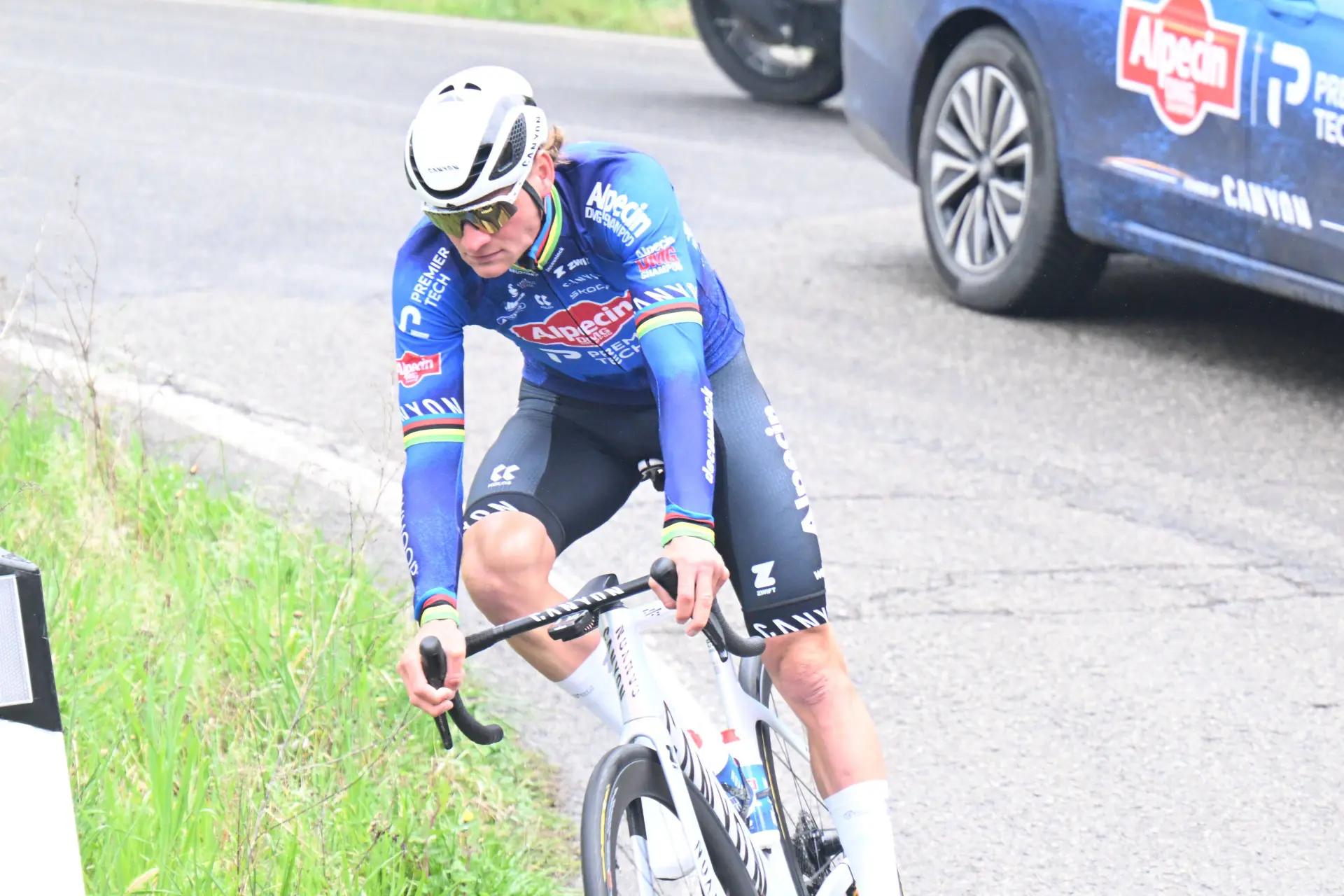
Mathieu van der Poel - A rider who is technically gifted, incredibly explosive and incredibly strong in this terrain, it is very hard to see a different outcome other than his win. His crash at Sanremo definitely wasn't nothing, and he might still be slightly injured from it, however I think his legs will be just as good. Last year, against peak form Pedersen and Filippo Ganna, the Dutchman dominated the race. This time around it's just very hard to see a different outcome, van der Poel's form is sky-high and he remains just as strong as ever.
Mads Pedersen - The Lidl-Trek man is back to competition after a long injury, and his Milano-Sanremo display was highly promising. But in the cobbles and dangerous roads, his wrist injury will be put to the test in a much more thorough way, which may be difficult for him. With a strong and experienced team, Lidl-Trek have everything to perform well, it comes down to their leader - and runner-up last year. In regular conditions Pedersen would be the only rider able to challenge van der Poel here, but I can't be too sure if this time around he will be so close to the Dutchman.
There are a few men that are currently in excellent form, such as Alec Segaert and Per Strand Hagenes who delivered an incredible performance on the GP de Denain and proved their form - as did, in a way Brent Van Moer, all three riders who aren't traditionally seen as top classics riders but those who have an enormous engine.
We have the big experienced classics riders such as Matej Mohoric, Gianni Vermeersch, Dylan van Baarle, Jasper Stuyven and Nils Politt to consider; puncheurs such as Romain Grégoire, Jenno Berckmoes, António Morgado, Michael Valgren and Magnus Sheffield who may try to split the race in the early climbs so as to avoid a tactical race, but one where the climbs dictate the results...
And then a mix of riders who are mostly rouleurs and classics specialists who can be a massive threat to the rest such as the powerhouse Jonas Abrahamsen (and his teammate Rasmus Tiller); and the Omloop het Niuwsblad podium outsiders in Florian Vermeersch and Tim van Dijke.
If the race comes down to a sprint - highly unlikely, but very likely when it comes to deciding places in the Top10 - there are a few men that stand out of course. Some of them are above, Pedersen and Christophe Laporte being the clear outliers, but a few others depend fully on a sprint to take a top result.
Perhaps Tobias Lund Andresen, Ben Turner and Matteo Trentin are above that, but their big chance of striking big is in a larger group finale. We must consider men like this to fill out the Top10 as if van der Poel attacks early on, the pace shouldn't be consistently high behind, and the gaps not overly big on the climbs. Luca Mozzato, Biniam Girmay, Laurence Pithie, Luke Lamperti, Marijn van den Berg and Axel Zingle will also be men to watch.
Prediction E3 Saxo Classic 2026:
*** Mathieu van der Poel
** Mads Pedersen, Tobias Lund Andresen, Christophe Laporte
* Alec Segaert, Jonas Abrahamsen, Tim van Dijke, Michael Valgren, Per Strand Hagenes, Jasper Stuyven, Florian Vermeersch, Romain Grégoire, Ben Turner, Biniam Girmay, Ben Turner, Matteo Trentin
** Mads Pedersen, Tobias Lund Andresen, Christophe Laporte
* Alec Segaert, Jonas Abrahamsen, Tim van Dijke, Michael Valgren, Per Strand Hagenes, Jasper Stuyven, Florian Vermeersch, Romain Grégoire, Ben Turner, Biniam Girmay, Ben Turner, Matteo Trentin
Pick: Mathieu van der Poel
How: Solo win
Original: Rúben Silva
Rúben SilvaEditor-in-Chief
A founding contributor to CyclingUpToDate since its launch in January 2022, Ruben Silva has played a central role in shaping the site’s editorial direction and long-term growth. Before joining the project, he built his experience through independent blogging at Echelons Hub and by producing race previews for Ciclismo Internacional, developing a strong analytical voice rooted in daily engagement with professional cycling.
Beyond editorial work, he has been closely involved in the expansion and coordination of CyclingUpToDate’s wider network, helping establish and support sister platforms across multiple languages. This includes ongoing collaboration with CiclismoAlDia (Spanish), CiclismoAtual (Portuguese), WielrennenUpToDate (Dutch), and RadsportAktuell (German), contributing to a shared editorial vision and consistent international coverage.
He also helps oversee editorial governance across the network, setting standards for accuracy and consistency and coordinating updates or corrections when needed.
Originally from the Porto metropolitan area in Portugal, he holds a bachelor’s degree in Geography. His path into cycling journalism was shaped not through formal media training, but through independent reporting, community engagement, and sustained on-the-ground involvement in the sport.
Over the course of his career, he has conducted approximately 100 interviews across road cycling and cyclocross, ranging from one-to-one conversations and online formats to press conferences and on-site pre- and post-race coverage. His interviews include leading riders, team managers, and prominent figures within cycling media: Tadej Pogacar, Jonas Vingegaard, Mathieu van der Poel, Primoz Roglic, Wout van Aert, Joao Almeida and Tom Pidcock; managers like Patrick Lefevere and Joxean Matxin; and YouTube personality Bryan Kennedy (BKXC)...
Within 18 months of launch, he helped grow CyclingUpToDate’s English-language platform into one of the most-read cycling news websites, built entirely from the ground up. As both a professional journalist and lifelong cycling enthusiast, his focus remains on delivering accurate, timely, and well-contextualized coverage.
claps 1visitors 1
Just in

Popular news
Latest comments
- He didn't even try to sprint all outvappaxbipmv18-10-2026
- Campenaerts looked like a rolling pumpkin with that all orange leaders skinsuit !frieders318-10-2026
- He can take his dumb a$$ politics somehwere else !frieders318-10-2026
- good to have her back. fingers crossed she‘ll be able to stay!Ketterechts17-10-2026
- A tenner and he wins the Tour next year, too 😂anonymouscyclist17-10-2026
- the answer is either stick to classics or GTs but not bothabstractengineer17-10-2026
- the exodus already stared with Ciccone. Already they were struggling with two sprinters, now there are three. Also Ganna will demand leadership. Gall is the most proven GC, Ayuso has the most potential. GC leadership for everybody will be impossible. Literally a UAE style mess without pogi.abstractengineer17-10-2026
- I raced as an amateur for 12 years, including six years on my country’s national road cycling team. I secured two national titles and competed in three World Championships plus more than 15 international stage races. At 23, we travelled to Italy for a training camp—or so I assumed. On a rest day, we watched a presentation about adopting a more “professional” training approach. It was crystal clear what “professional” meant. That moment first exposed me to this dilemma. After returning from Italy, I left cycling—at least at the competitive level I had known. Over the following two years, the whole team was caught doping. I hold that everyone is innocent until proven guilty. In my view, current stakeholders operate on a different scale, and the sums involved are vast. I am unsure whether any doping would ever be revealed. I try to stay positive and enjoy the show. My 2c.
 vannpelt17-10-2026
 - Fiver he wins 🤣
 leedorney17-10-2026
 - “…measures to reduce speeds.” Might as well shorten the race course to just 50km as well? ASO generates at minimum €300m a year and 30- 40% profit. Maybe stop being greedy and spend more of the profit to protect the riders instead.b3tlla17-10-2026
Loading
Write a comment