“He definitely feels it” – Mathieu van der Poel's loyal lieutenant admits Milano-Sanremo crash is still affecting Alpecin leader
Cycling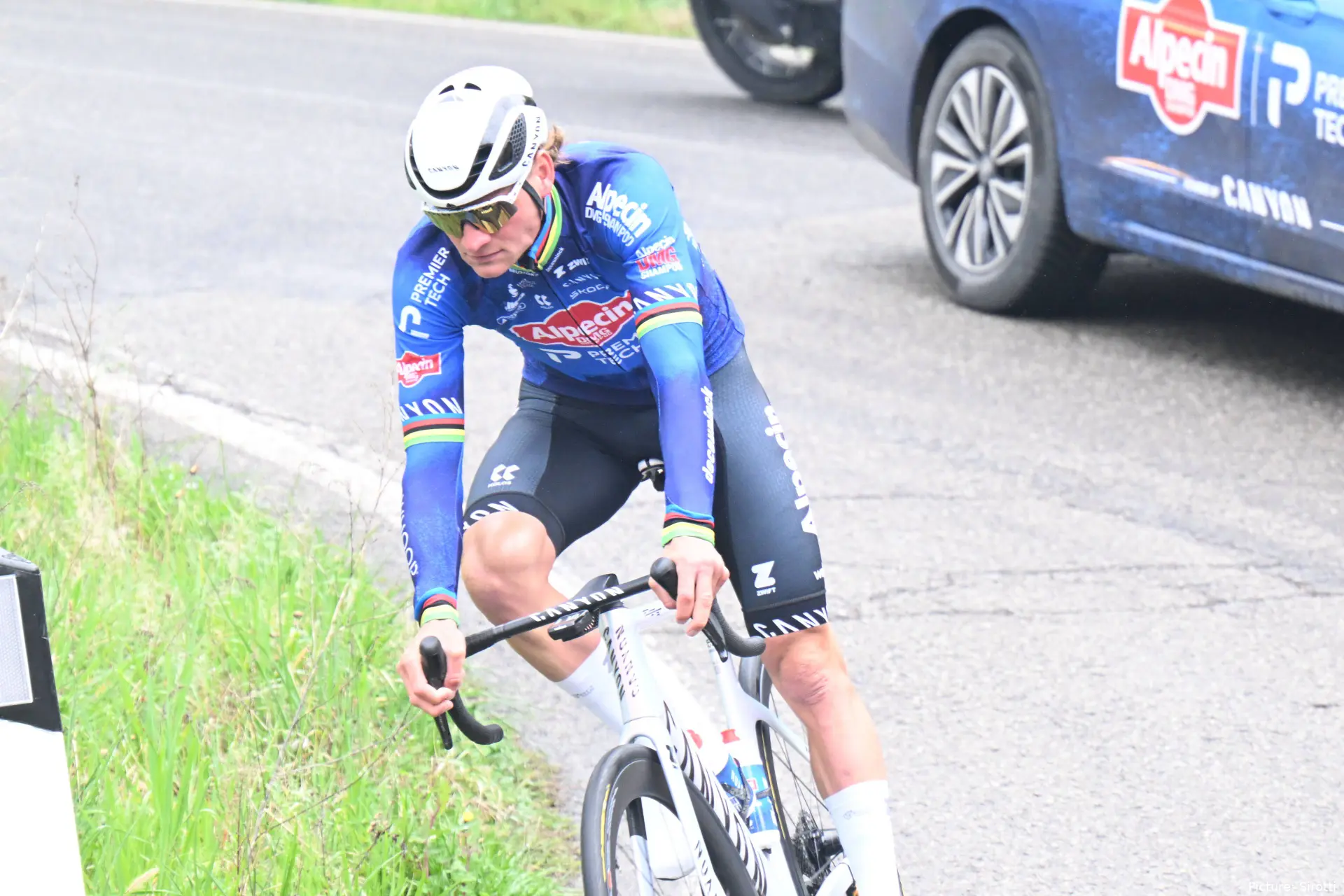
Mathieu van der Poel is heading into the cobbled Classics still feeling the effects of his Milano-Sanremo crash, with Alpecin teammate Silvan Dillier admitting the injury has not gone away.
Van der Poel was left with a hand issue after crashing on the run-in to the Cipressa, later revealing he struggled to properly hold his handlebars in the decisive phase of the race.
While he was still able to follow the key move on the climb, he could not respond when Tadej Pogacar attacked on the Poggio, as the race split for good.
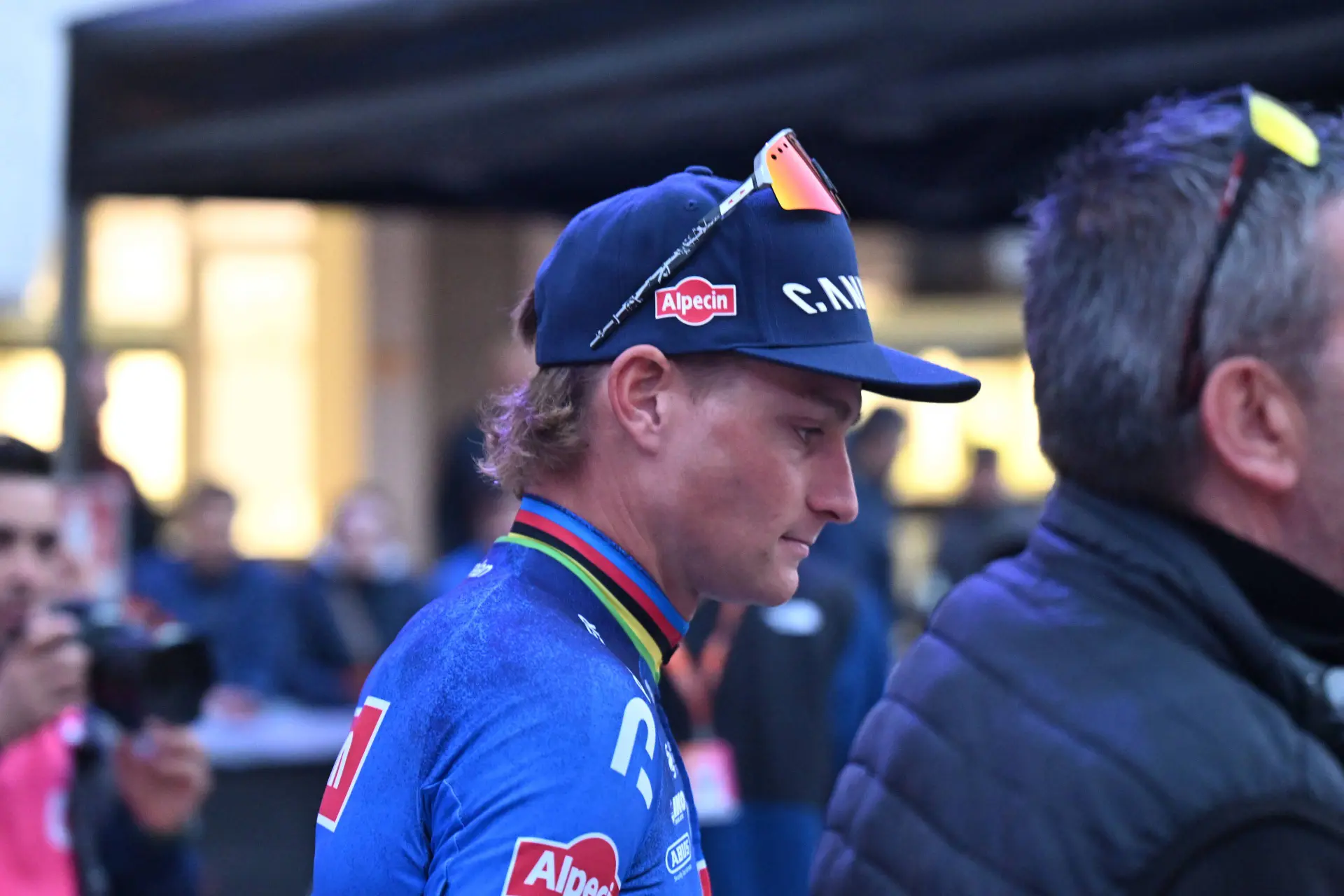
Now, days on from Sanremo, the problem remains. “The hand is kind of okay. I think he still… he definitely feels it,” Dillier told Cycling News. “If it bothers him too much in a race situation, I don’t know, but when he’s at the start line, he will be our leader, for sure, no doubt.”
Not severe, but not gone
That assessment places Van der Poel in an uncomfortable middle ground. He is not dealing with an injury serious enough to stop him from racing. But equally, he is not fully clear of it, and that distinction becomes more important as the demands increase.
Milano-Sanremo already offered a first indication. The race was ridden harder into the Cipressa than usual, stretching the effort and reducing the margin for error before the Poggio. Van der Poel still made the selection, underlining that his level remains high, but the combination of that longer effort and the aftermath of the crash left him just short when it mattered most.

Mathieu van der Poel at Milano-Sanremo 2026
A different test awaits
The concern now is not what happened in Sanremo, but what comes next. Cobbled racing places constant stress on the hands and upper body, turning even minor issues into something harder to manage over repeated sectors. It is the kind of environment where discomfort can build, rather than fade.
Greg van Avermaet pointed to that risk in the immediate aftermath of Sanremo. “As long as it’s not a bone, it’s manageable on the cobbles. But that nail was split, and anyone who's lost a nail knows how painful that can be.”
Van der Poel has already shown he is strong enough to compete with the very best. The uncertainty is whether he can do so without limitation.
For now, the message from within his own team is clear. He will start, and he will lead. But as Dillier’s words underline, the problem he picked up in Italy is still very much present.

Kieran WoodDeputy Editor-in-Chief
Kieran Wood is a sports journalist based in Wales and has been active in journalism since 2022. He regularly contributes to DartsNews.com and CyclingUpToDate.com, where he covers professional cycling and darts. In cycling, his work includes liveblogs from major races, including the Tour de France, the Giro d’Italia, and La Vuelta a España, alongside race reports and analysis. He has also conducted interviews with professional riders.
His reporting spans the full racing calendar, from one-day classics to stage races, with a focus on accurate, real-time coverage and clear contextual analysis. For statistics, results, and historical context, he regularly uses resources such as ProCyclingStats. To support reporting on rider activity and training context where relevant, he also references Strava.
In his work, Kieran places strong emphasis on careful sourcing, editorial accuracy, and updating articles as new, verified information becomes available.
claps 0visitors 0
Just in

Popular news
Latest comments
- He didn't even try to sprint all outvappaxbipmv18-10-2026
- Campenaerts looked like a rolling pumpkin with that all orange leaders skinsuit !frieders318-10-2026
- He can take his dumb a$$ politics somehwere else !frieders318-10-2026
- good to have her back. fingers crossed she‘ll be able to stay!Ketterechts17-10-2026
- A tenner and he wins the Tour next year, too 😂anonymouscyclist17-10-2026
- the answer is either stick to classics or GTs but not bothabstractengineer17-10-2026
- the exodus already stared with Ciccone. Already they were struggling with two sprinters, now there are three. Also Ganna will demand leadership. Gall is the most proven GC, Ayuso has the most potential. GC leadership for everybody will be impossible. Literally a UAE style mess without pogi.abstractengineer17-10-2026
- I raced as an amateur for 12 years, including six years on my country’s national road cycling team. I secured two national titles and competed in three World Championships plus more than 15 international stage races. At 23, we travelled to Italy for a training camp—or so I assumed. On a rest day, we watched a presentation about adopting a more “professional” training approach. It was crystal clear what “professional” meant. That moment first exposed me to this dilemma. After returning from Italy, I left cycling—at least at the competitive level I had known. Over the following two years, the whole team was caught doping. I hold that everyone is innocent until proven guilty. In my view, current stakeholders operate on a different scale, and the sums involved are vast. I am unsure whether any doping would ever be revealed. I try to stay positive and enjoy the show. My 2c.
 vannpelt17-10-2026
 - Fiver he wins 🤣
 leedorney17-10-2026
 - “…measures to reduce speeds.” Might as well shorten the race course to just 50km as well? ASO generates at minimum €300m a year and 30- 40% profit. Maybe stop being greedy and spend more of the profit to protect the riders instead.b3tlla17-10-2026
Loading
Write a comment