PRESS CONFERENCE | “I would not take any risk for anything other than the GC” - Paul Seixas makes bold Tour de France call at just 19 on debut
Cycling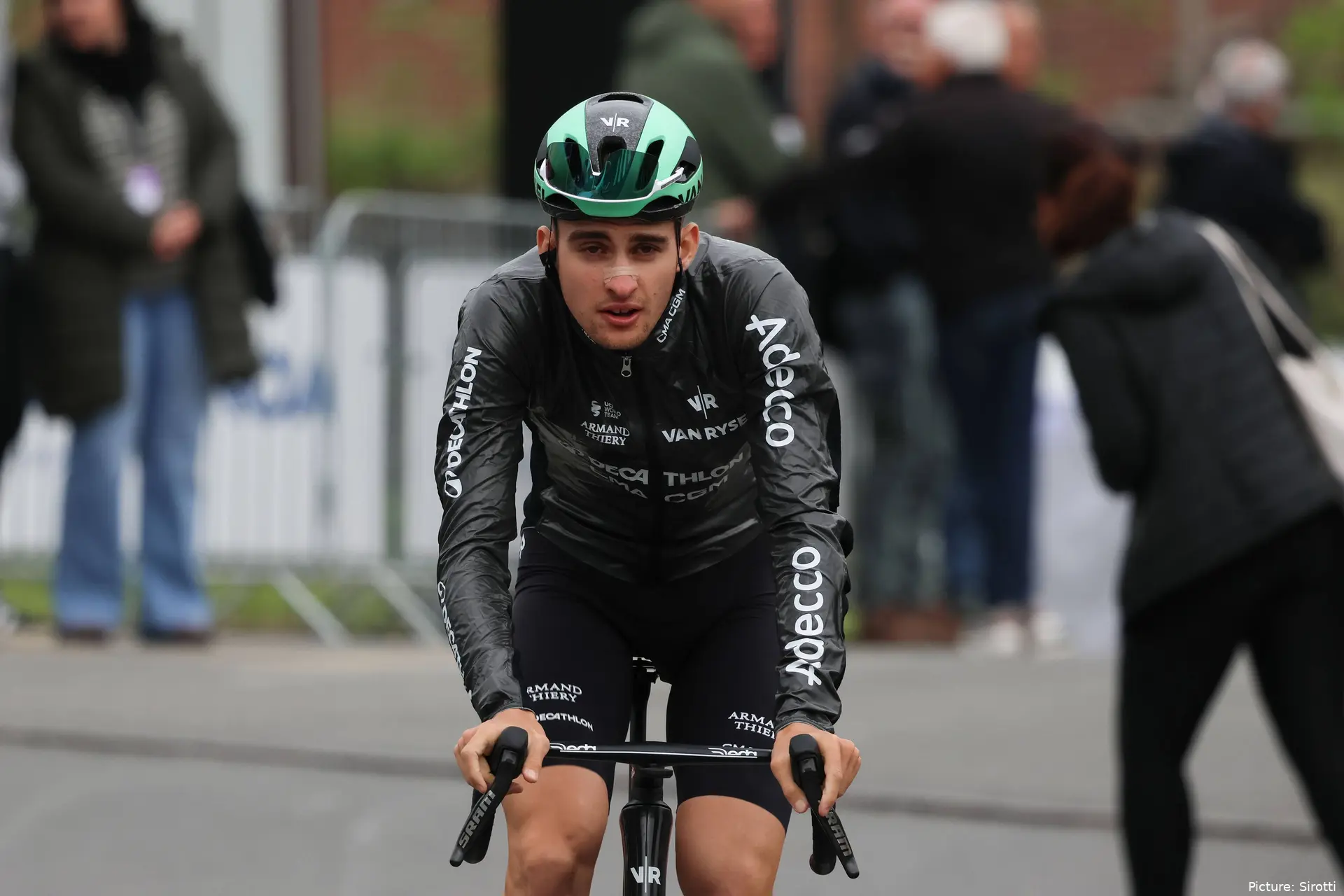
Paul Seixas arrives at the 2026 Tour de France as one of the most fascinating names on the startlist. At just 19 years old, the Decathlon CMA CGM Team rider is set for a historic debut, carrying both France’s long-term GC hopes and the immediate attention that comes with entering the biggest race in cycling so young. CyclingUpToDate were present at his pre-Tour press conference in Barcelona to document every word.
His build-up has not been entirely smooth. After crashing at the former Criterium du Dauphine, Seixas had to manage pain in his hands and a disrupted training period, but he insisted ahead of the Grand Depart that his condition had improved well enough for him to start the race with confidence.
Seixas also made it clear that he is not heading to the Tour merely to collect experience or chase a romantic stage win. Asked whether he would risk his general classification position for a stage victory or a possible yellow jersey opportunity, the Frenchman said his priority is the GC, even if he does not yet know what final position that could mean.
Alongside questions about his injuries, the pressure of public expectation, Olav Kooij’s selection, the white jersey and the heat expected in the first week, Seixas spoke about the unknown of racing for three weeks, the importance of Tiesj Benoot as road captain and the childhood memories that make his Tour debut such a significant moment.
Full Paul Seixas press conference
Question: Paul, how are your injuries, and especially the pain in your hands that prevented you for a while from riding properly on the handlebars?
Paul Seixas: Of course, at the beginning, it was not the easiest few days after the Dauphine, but things have developed well. I was able to resume training after a few days. We had a very good training camp at Les Arcs and then at Lautaret with the team, and I am happy to be able to start again.
Question: What is going through your head in these final hours and final days before the Tour? How are you living with your own expectations, and the expectations of the public?
Paul Seixas: I approach it like any race, with maximum seriousness and attention. I am ready for any possibility. Of course, the Tour is a childhood dream, but inevitably I will focus on it like any other race.
Question: What does it feel like to be on the stage, in the leaders’ press conference, by yourself? There may never have been so many people in a press room for one of your interviews. Does it make you feel that you are entering the ceremonial side of the Tour de France?
Paul Seixas: Of course, it is special. I knew that the Tour would be another dimension, and this is proof of that. I think it is a new experience that starts for me, and I think it will be good.
Question: What do you expect from the opening team time trial on Saturday? What are the team’s objectives, and what do you think of the formula where times are taken individually rather than collectively?
Paul Seixas: I think we have a very good team. We made the first real adjustments today on the Barcelona circuit and it went very well. I think we have a very solid team for the time trial. It will be special with the course, which is very fast, and we will see how we manage that. We do not know yet, but we will see how it goes. I think we are in good shape.
As for the regulation, it is something we experienced at the Tour de l’Avenir, so that is good.
Question: What would count as a win for you?
Paul Seixas: Of course, one part of what you want is to win, but this is the Tour. It is a new experience for me at first. You want to win something you know you can win, and something you have already normally done. First, I have to gain experience.
Of course, there are different ways to win in a race like this, so I will see how it goes, how I perform, at what level and in what position. Then we will see how we can call it a win or not.
Question: At the Dauphine, we had the impression that you sometimes made small mistakes, maybe a big one with that crash, linked perhaps to a form of impatience. Do you share that analysis, particularly in the time trial when you pushed quite early? Have you spoken about that with your staff ahead of this Grand Depart?
Paul Seixas: Honestly, it is not a subject. I think when we talk about impatience, it was more about the race management I had at the Dauphine, which was different.
As for the crash, of course it was linked to a mistake on my part. I did not really feel it was about impatience. I could have positioned myself on a descent like any other rider. I made a mistake, that is how it is, it happens.
I think there is always impatience in a race, but it must not be felt in this kind of race. So I think that is about it.
Question: More generally, beyond the start and beyond this first Tour de France, what is the first image that comes to mind when you hear “Tour de France”?
Paul Seixas: I would say what comes to mind most is the period when I started watching it, the first memories I have. Since then, I have followed the Tour every year. They are great moments I spent in front of the TV with my family. Now participating in it is something exceptional for me.
Question: If you had to choose between the yellow jersey, a stage victory or the general classification, what would you choose? Are you ready to put the general classification at risk in order to win a stage or take the yellow jersey?
Paul Seixas: No, I think the priority is the general classification, to be able to make the difference there and see how it goes. What position that means, I do not know yet, I cannot tell you.
But I would not take any risk for anything other than the general classification. In any case, it depends on the situation I am in.
Question: Olav Kooij is also in the team for the Tour de France. There was a lot of speculation in recent weeks over whether he would be selected or not. Did you have any influence on that decision, and how do you think the cooperation between you and Olav will work?
Paul Seixas: I think the cooperation between Olav and me is really good. He is a really nice rider and, with the whole team, we have already enjoyed some good moments so far. So that is quite okay.
As for the team management, honestly, I do not really take part in that. That is up to the team management.

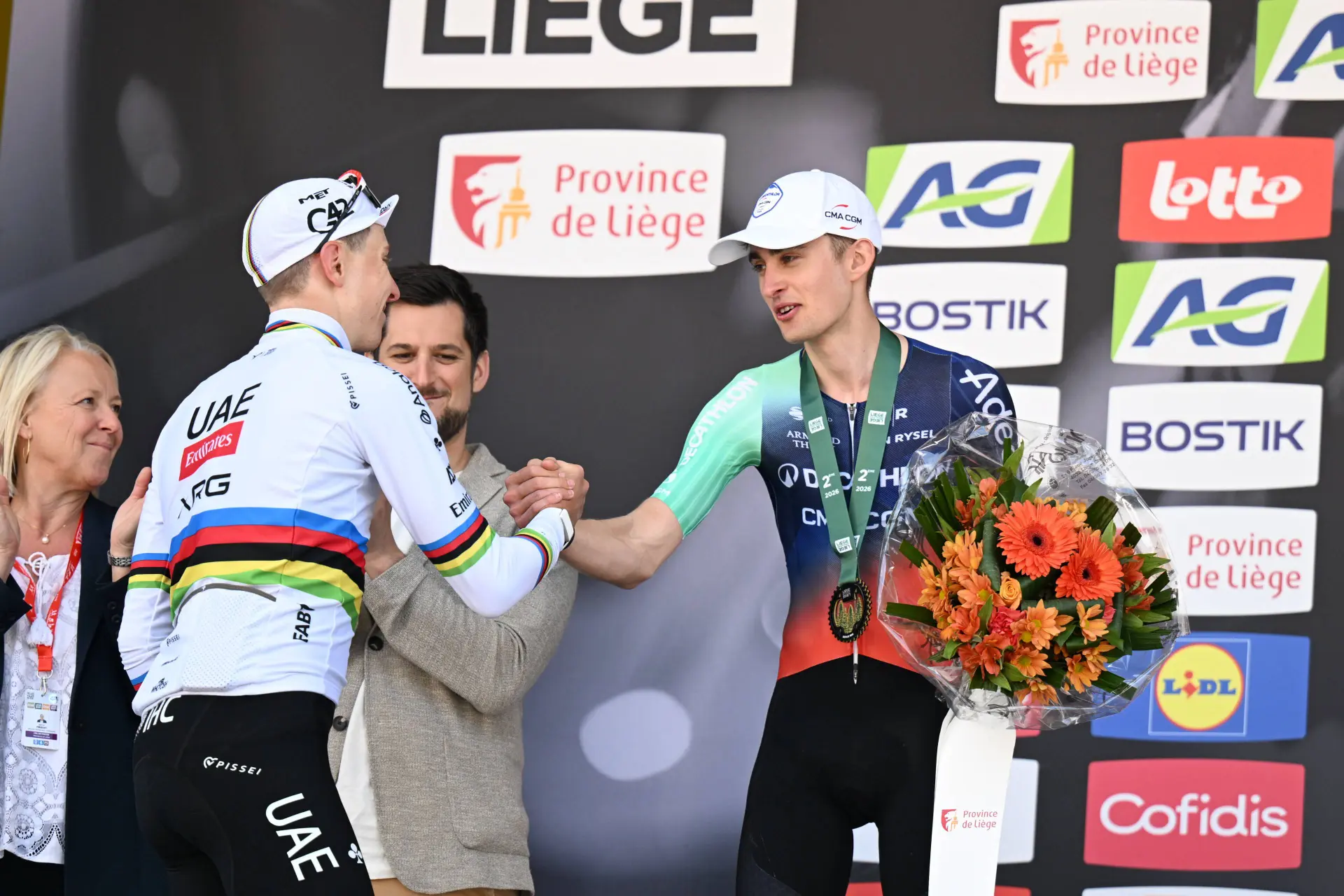
Paul Seixas and Christian Prudhomme ahead of La Fleche Wallonne 2026
Question: You are the youngest rider on the Tour since 1937. What does that mean to you? Can mistakes be forgiven because of your age, or is it not really about age?
Paul Seixas: I would say it is more about the fact that it is my first Tour than about age statistics or anything like that. I will try to gain experience.
It depends what kind of mistakes we are talking about, of course. We cannot be perfect, and we will make a few mistakes over these three weeks. It is long. But I will try to play the general classification, do the best I can, and then we will see. We will do the maths after three weeks.
Question: You spoke about not taking risks for the general classification, but if one or two leaders we know attack, could following them be a risk for your general classification?
Paul Seixas: I would say we will see on the road. It depends how I feel. There is no particular barrier. I am not saying that if there is a certain attack, I should or should not follow. It will depend on my feelings on the bike and how I feel that day.
Question: You have spoken about the yellow jersey and the general classification, but the white jersey is a nice colour too, isn’t it?
Paul Seixas: Yes, of course. It is part of the general classification, the white jersey. I do not set a main goal. My main goal is to do a good general classification, and then if I can fight for the white jersey, that would be great.
Question: Is there anything in particular that you are afraid of?
Paul Seixas: At the moment, I do not have anything particular in mind. It is more about seeing how my recovery will be after 10 to 15 days. It is more questions than fears.
If there are mistakes, or if there are moments when it is harder, that will teach me a lot for the future. So it is more positive.
Question: I had a question about Tiesj Benoot, who you discovered last week because you had not had the opportunity to race with him before. How has it been going with him, and what has your collaboration been like?
Paul Seixas: Tiesj is a very important rider for me in the team. He is very experienced and you feel that he really knows what he is doing. He is going to be our road captain, and I think he will guide us well.
I think he is really key in the team because of his experience. He has already helped one of his leaders win a Grand Tour, so I think that experience is really valuable in a three-week race like this. Making the right efforts at the right time and being well led by him in the team is really important.
Question: We are talking about strong heat arriving in the first week of this Tour. How do you view that potential heat, and can it worry you in these opening stages?
Paul Seixas: I do not think the heat will really worry the riders. It depends how you train, but it has been very hot all over Europe. In France, it has been very hot, so we have been in it for a while and have had time to adapt.
If we had not already done heat training sessions, then maybe. But overall, the races will not last that long. The worst thing would have been if the heat had arrived at the start of the Tour and not before. I think we have all adapted.

Kieran WoodDeputy Editor-in-Chief
Kieran Wood is a sports journalist based in Wales and has been active in journalism since 2022. He regularly contributes to DartsNews.com and CyclingUpToDate.com, where he covers professional cycling and darts. In cycling, his work includes liveblogs from major races, including the Tour de France, the Giro d’Italia, and La Vuelta a España, alongside race reports and analysis. He has also conducted interviews with professional riders.
His reporting spans the full racing calendar, from one-day classics to stage races, with a focus on accurate, real-time coverage and clear contextual analysis. For statistics, results, and historical context, he regularly uses resources such as ProCyclingStats. To support reporting on rider activity and training context where relevant, he also references Strava.
In his work, Kieran places strong emphasis on careful sourcing, editorial accuracy, and updating articles as new, verified information becomes available.
claps 7visitors 1
Just in
Popular news
Latest comments
- "inside the tent pissing out" is an idiom based on a quote from President Lyndon Johnson. Not sure if you're saying you don't understand the term. The full phrase is "it's probably better to have him inside the tent pissing out, than outside the tent pissing in."wrsty12-10-2026
- Pissing out?? Who is forcing them? They can follow Ayuso's example. And they can be leaders on another team. Ayuso's example again. :)MajorPayne12-10-2026
- Hmm it's an interesting take with certain disclaimers e.g. comparing them at the same age (Pogi wasn't given chances so early in his career so we will never know), the level of the competitors in the race or tour (really hard to compare, as you would be looking at multiple competitors, let alone comparing just Seixas vs Pogi). In any case, Seixas' future certainly looks very bright, especially as he has the advantage of youth, access to new scientific knowledge/methods that weren't around when Pogi started, and most importantly has Pogi as an extremely good example to aspire to (e.g. copying training methods, nutrition, tactics, race craft, etc., to list just a few...).Pogboom12-10-2026
- > He’s so much better than Pogacar was at 20 years old It does not mean NOTHING. What is important how long you can be at the top. Most of the best riders are (really) good for 4-5 years (Alaphilippe, Sagan), of course outside this window you can win stages etc. but forget about GC winner in main tours. Talents like Pogacar (in case of GC) or MvdP (monuments or CX - 15 years being on top!!!) are rarity. It might be that if you start being good fast, you end up being good still young.averagecyclist12-10-2026
- Winning Il Lombardia would surely mean much more to Remco than to Seixas, after his crash there and then second places where he was far ahead of the rest but still far behind Pog, and had to blink away tears at the finish. Wonder if he will ever have such a good chance again.Hills3312-10-2026
- Yeah him, Del Toro for sure - not that they all pan out, but then how can you tell what someone was going to be capable of if they never got to be an out-and-out leader? Either way, their squad has a lot of riders who could be leaders at other teams but they are safely inside the tent now, pissing out.wrsty12-10-2026
- "removing any barriers to their golden goose" What barriers? Ayuso maybe? :) :) :)MajorPayne12-10-2026
- And let's not forget, Tadej Pogačar won his first Tour de France eating pizza, drinking beer and playing Playstation. This kept goinig on for another two years and when he lost the Tour 2X to Jonas, things dramaticaly changed. Today Pogi is a "killing machine." In 2024, in the Tours rest day, Pogi said: "If I compare the year 2019 to what we're doing today, we were real amatuers." ... That is the difference between Pogi and Seixas. Seixas immediately got professional help and advice, he knows exactly what he wants and is already at a very high level. So, the paths of Pogi and Seixas weren't the same.PogiSloFans12-10-2026
- Paul Seixas took off from the WC to Lombardia - smart move it seems. Although Remco at least got the Euro jersey.mij12-10-2026
- Why on EARTH would a rider capable of leading races, leading an entire squad in any race he wishes to go and be (yet another) second fiddle rider to his main competition? Especially when his career is in the ascendant, holding the hope of a nation. You want to be the best - then you want to race against the best. I wish UAE as a team all the best for the most part, but I really dislike their approach of removing any barriers to their golden goose by warehousing them on their squad until they get sufficiently bored and/or pissed off and leave.wrsty12-10-2026
Loading
Write a comment