"I sat stark naked on my doorstep until 6am" - Former Tour de France winner reveals hardships of dealing with anti-doping system
CyclingWednesday, 12 August 2026 at 10:15
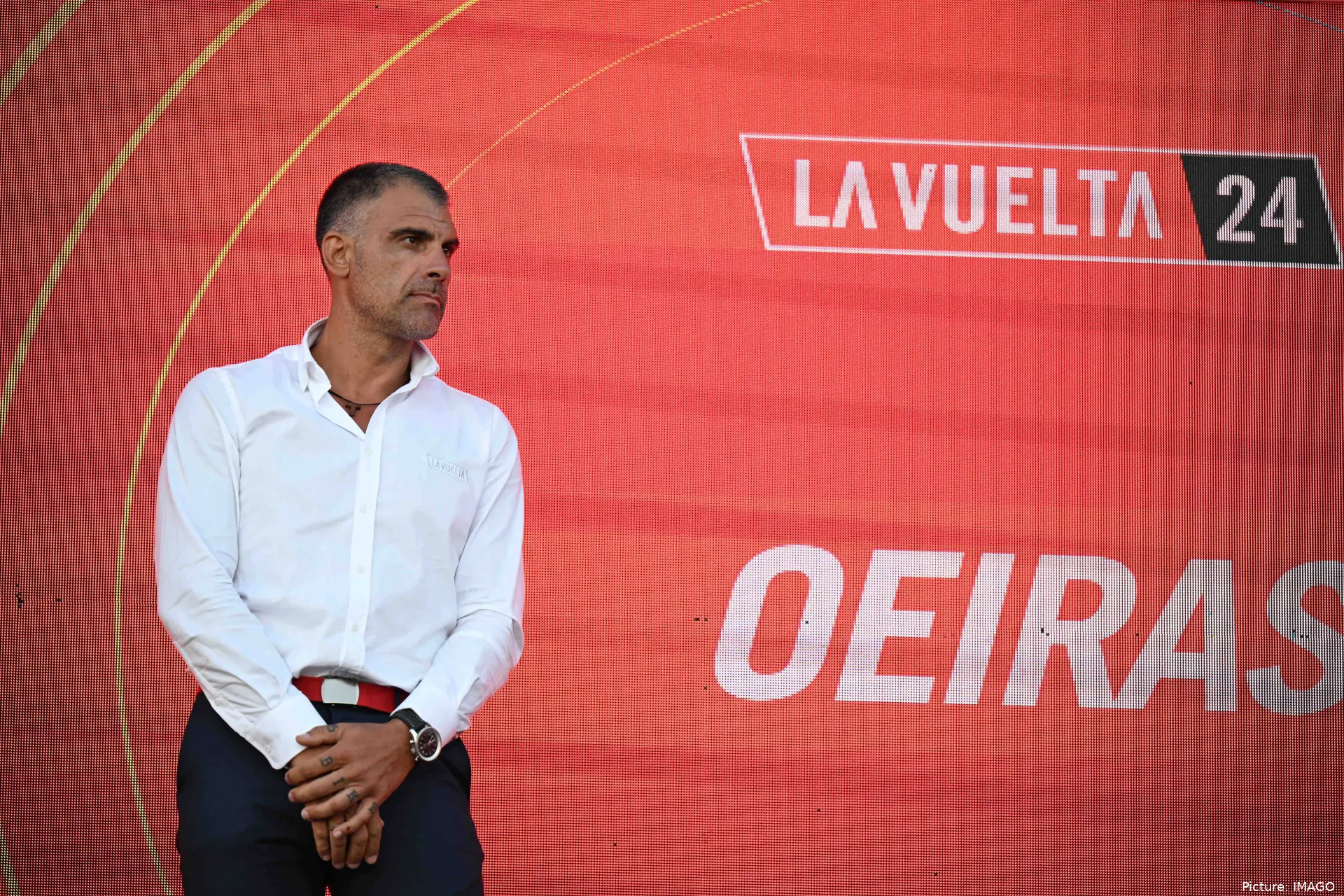
Turning professional should be one of the happiest moments in any cyclist’s life. After years of sacrifice, training, and racing, reaching the top tier means fulfilling the dream pursued since childhood. Yet for former Tour de France winner Óscar Pereiro, that step into the pro ranks also exposed a far more uncomfortable reality: a sport overshadowed by the permanent specter of doping.
The Galician former pro recalls on the podcast En Modo Avión how, suddenly, the thing he had loved all his life became surrounded by suspicion. The rider ceased to be just an admired athlete and, for part of society, became someone permanently under suspicion.
“People admired the cyclist and then there comes a moment when you turn professional, the happiest day of your life, you start competing and suddenly you realize your life is still the sport you love, but for society it’s a tainted sport, you’re a cheat,” Pereiro explains.
The situation had a considerable psychological impact. The Galician admits he has always taken criticism to heart, and that insults linked to doping affected him deeply.
“I don’t want to live in this rotten world”
For a professional cyclist, routine demands near-total discipline. But, according to Pereiro, it’s far harder to sustain that motivation when the environment is permanently contaminated by suspicion.
“To perform at a high level you need to lift the shutter every morning and it doesn’t matter what’s outside. You have to be passionate about what you’re doing,” he recalls. The problem came when that passion clashed with an atmosphere he came to find unbearable.
“I don’t want to live in this rotten world. I don’t want to feel like a criminal doing something that costs me a lot every day,” he says.
One of the major turning points in his career was the rollout of the ADAMS system, a tool that required athletes to pre-declare their whereabouts so they could be located at any time.
Read also
Doping, a turning point in his career
Pereiro had been used to anti-doping controls since the youth ranks. He considers them a natural part of professional cycling and says he never minded undergoing tests. The issue arose when controls no longer stayed within competitions and began to condition virtually every aspect of daily life.
With ADAMS, riders had to indicate months in advance where they would live and set a daily one-hour window during which they were required to be reachable at a specific location.
“You had to enter where you’d be living for those six months and, obligatorily, where you’d be for one hour a day on each of those days,” he explains.
The margin for error was minimal. If the rider wasn’t at the stated place during that hour, or couldn’t submit to a test when located, he received a yellow card. Three cards could lead to a four-year sanction. “You’re terrified because you know your future is on the line,” Pereiro admits.
Surreal situations
Then came the surreal episodes. One occurred before the 2007 Tour de France. The rules required riders to be in London on the Thursday before the start, but Pereiro had already left home to travel when a control team turned up at his house.
His wife had to explain that he was already en route to London. The scene, Pereiro argues, exposed the contradictions of a system that demanded extreme planning yet didn’t always adapt to the realities of professional cyclists.
Another occasion proved even more troublesome. After recording a TV show in Madrid, the plane taking him back to Vigo couldn’t land due to a storm. The flight returned to Madrid and the airline provided accommodation. Pereiro forgot to update his whereabouts in the ADAMS system.

Óscar Pereiro reveals that he has in the past forgot to update his whereabouts, risking a suspension
A yellow card on the line
“It’s very common. You forget to change your location,” he explains. He eventually managed to justify the situation, but the episode shows the relentless pressure riders faced. Still, none of his stories tops one of the most surreal moments he recalls.
One morning before 6am. agents rang his doorbell to conduct a test. Spanish law at the time barred entry to a home before that hour. Pereiro opened the door and, still half-asleep, saw who was on the other side.
His reaction was immediate. “You’re not coming in here before six in the morning,” he remembers saying. Since the agents had seen him and couldn’t lose sight of him, Pereiro decided to wait, seated at his doorstep, until the permitted time.
“I sat stark naked on my doorstep until 6am,” he says, half incredulous, half amused. But the most striking episode came in December 2010, the year he retired. Pereiro was having lunch with friends in Santiago de Compostela and had drunk a few beers when he got a call informing him there was an anti-doping control at his home.
An anti-doping control in a restaurant
The problem was obvious: he had no idea when he would be back. “I’ve got no bloody idea, I’m with some friends,” he replied. The officers eventually tracked him down at the restaurant. They arrived with a cool box and all the paperwork needed to carry out the test.
The scene was utterly surreal. The procedure required Pereiro to strip naked and provide a urine sample under direct supervision, as well as undergo a blood draw. The space available was tiny and the officers had to carry out the process in conditions the former rider himself deems hard to justify.
“They were imagining all sorts. And a guy and a woman there with me,” he recalls. Beyond the anecdotes, Pereiro does not question the need for anti-doping controls. His criticism targets the system and, above all, the burden placed on the athlete.
“I support anti-doping tests and a level playing field, so everyone competes under the same conditions,” he says. His proposal was far simpler: monitor the athlete without forcing him to become solely responsible for his own surveillance.

Doping is a blight on cycling and the rest of sport
“I even offered to have a chip implanted. I don’t want to cheat the system,” he insists. He even floated the idea of a tracking bracelet. For him, the issue was never being tested, but that a simple administrative error could end up shaping an entire career. “You can’t put the responsibility on me so that one mistake could screw up my life,” he sums up.
The conversation also widens into a broader reflection on how cycling was treated during the darkest years of doping scandals. Pereiro believes the sport was singled out and recalls the impact of operations like Operación Puerto. He does not deny that cycling had problems. On the contrary, he acknowledges they existed and needed to be pursued.
But he also believes other sports faced similar issues without the same level of scrutiny. “Cycling was a persecuted sport. Not because it deserved it more, but it deserved it the same as others that weren’t punished,” he maintains.
Years after retiring, Pereiro’s stance remains clear: testing, yes; oversight, too; but without turning the athlete into a permanent suspect. Because behind every test, every whereabouts check and every potential sanction, there was a person. A rider who, beyond any controversy, just wanted to do what he had worked for all his life.
Javier RampeCycling Journalist
Javier Rampe is a sports analyst with more than 15 years of experience. He holds a degree in Economics from the University of Rome and a Diploma in Business Studies from the University of Cádiz. Despite coming from an academic background not particularly associated with cycling, his passion for both cycling and journalism was instilled in him from an early age. He grew up following Miguel Indurain and José María “El Chava” Jiménez. An admirer of Michael Robinson’s communication style and journalistic approach, he was inspired to pursue a degree in Journalism at the University of Buenos Aires, which he is currently completing.
He has always maintained close ties with the worlds of sport and culture, contributing from a young age to sports blogs and film and music review websites. His work has appeared in media outlets such as Cope, RAI, and Radio Con Vos. He is also the founder of the cycling-focused podcast El Contraanálisis and the football interview channel Días De Fútbol, dedicated to conversations with professional footballers.
In addition to his work at Ciclismoaldia, Javier has interviewed some of the most influential figures in modern cycling, including Alejandro Valverde and Tadej Pogačar, as well as key voices in anti-doping policy such as Alberto Yelmo, David Varillas, and Marcelo Milano. Marcos Maynar, in relation to the ‘Operación Ílex’ case, is also among the personalities he has interviewed. He enjoys conducting in-depth analysis of the cycling ecosystem and has attended major events such as Strade Bianche, the Vuelta a Andalucía, and Itzulia, as well as numerous national cyclo-cross races.
His background in economics, combined with extensive experience in marketing and corporate communications, drives his continuous study of positioning strategies and ensures that he always keeps his focus on crafting compelling and evocative headlines.
claps 2visitors 2
Just in

Popular news
Latest comments
- @CRO: (You're back?!) What a ridiculous statement to make, for no reason at all. It is both sexist and ignorant.RidesHills12-08-2026
- @SLO: Oh c'mon, just stop. What does a relationship between cyclists have to do with geo-politics? Just stop these comments, they only reflect badly on you.RidesHills12-08-2026
- The 2006 TDF that Pereiro won after Landis was disqualified was a very memorable tour. On stage 17 Landis was off on his own out front constantly pouring bottles of water over himself to keep him cool as he ploughed on. Watching it we knew he was doping. At the end of the stage you could see he was as high as a kite. He got of the bike and coasted along on one pedal like a postman delivering the mail. Crazy times! knowing what was going on back then, I don't know if Pereiro was doped? According to this article he wasn't. That's hard to believe and unfortunately that's the cross he has to bear.Cyclingsbestfan12-08-2026
- Looks like Urska is wearing the pants in that relationshipMou12-08-2026
- "I don't think it's too controversial to say that the women's Tour is much better view than the men's." ... WHY???: 1) Because Demi Vollering is Dutch? 2) Because Jonas is a Dane, but keeps constantly losing to Pogi, a Slovenian? 3) Because Pogi is beating everyone with his "left foot"? 4)Because you can't handle the losses anymore? Just asking...for a friend.PogiSloFans12-08-2026
- "Pogacar will do what he wants" ... That's right... and there is noting anyone can do about it !!!PogiSloFans12-08-2026
- Pogi is a cycling superstar, an extremely famous talented cyclist, but yet a normal down to earth person. He's so normal because he's from Slovenia, a former almost Balkan country, where most people are down to earth and normal. Unlike the Americans, who always think they are No.1, which is far from the truth. They are becoming the most hated people in the world. The EU hates them, the Middle East hates them, Canada hates them, South America hates them, China hates them ... all because of Trump, his MAGA republican politicians and his MAGA voters. Thank god Pogi isn't American.PogiSloFans12-08-2026
- from a racing fans point of view of cause as a spectacle for some good racing and various winners of stages the womens TDF was great. Ok the womens peloton certainly doesnt have the depth of talent compared to the mens they do some great racing. Demi moving to FDJ after being dudded by SD worx and Reusser going to Movistar has been good for the sport . SD worx still get results thru their sprinter weibes and breggen. Breggen has done well after not racing for a few years. I follow the womens tour,MTB,'cross as much as the mens for the competitiveness actually more for MTB and 'cross. the womens racers appear to be a more even riding field whereas the mens in some races just plain boring and just dont look right.
 Davide12-08-2026
 - i'd like to see her get out of UAE, not sure about Movistar as they have Reusser ...Davide12-08-2026
- This team are trying very hard to become 2nd rate. Thomas and co are killing them. He must go, clueless off of the bike.
 Senna196012-08-2026
Loading
1 Comments