“Pogacar and Van der Poel are the favourites, but I’m going there to win” – Wout van Aert rejects claims he’s lost his killer instinct ahead of Milano-Sanremo
CyclingSunday, 15 March 2026 at 14:45
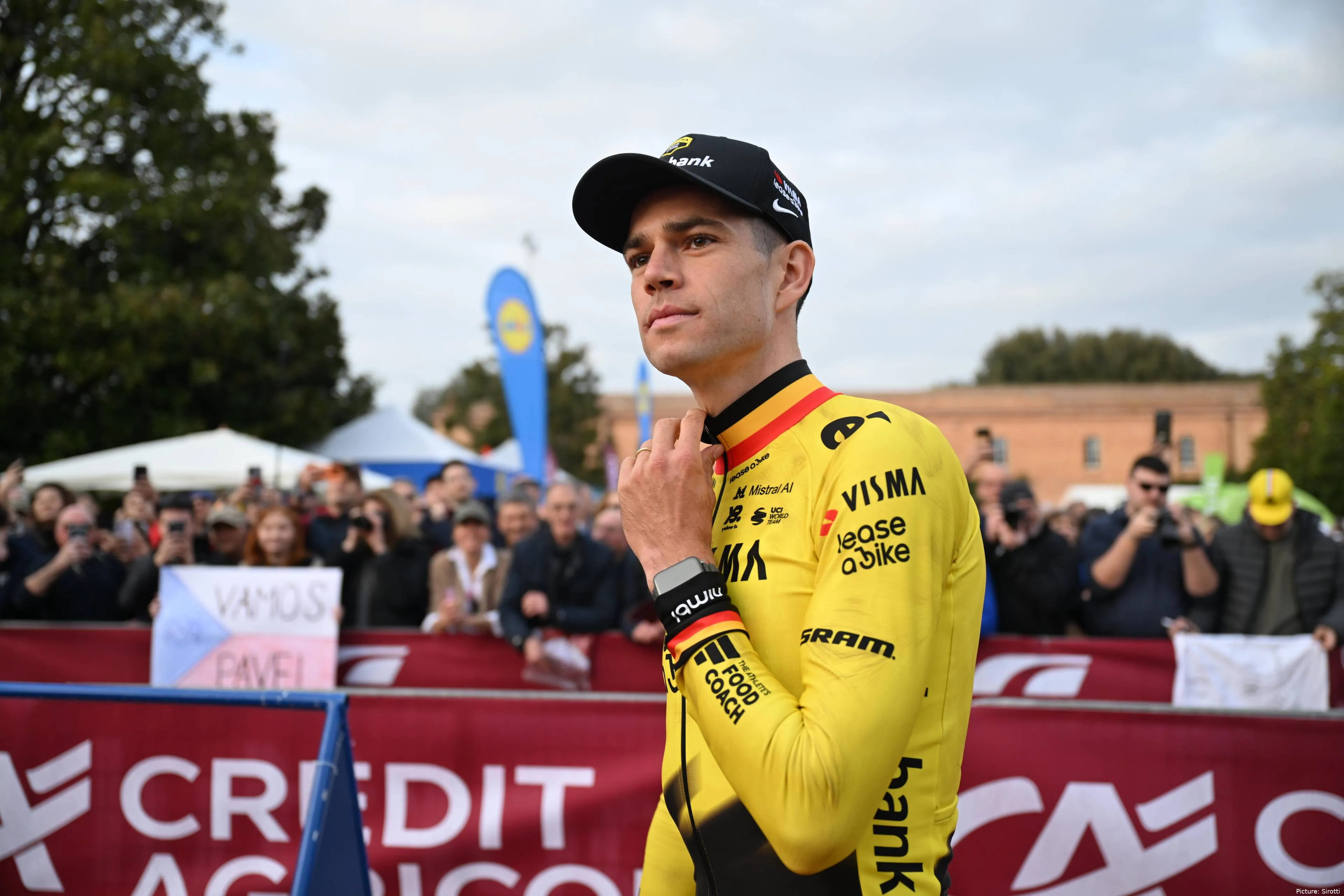
Wout van Aert heads into Milano-Sanremo acknowledging that the balance of power at the top of the sport has shifted. The Team Visma | Lease a Bike rider accepts that riders like Tadej Pogacar and Mathieu van der Poel currently occupy the position of standout favourites for cycling’s first Monument of the season.
But that acknowledgement, he insists, should not be confused with a loss of ambition.
“I don’t think I’m one of the favourites. Pogacar and Van der Poel are the big favourites,” Van Aert said in conversation with Sporza. “I’m going to Milano-Sanremo to win.”
The Belgian arrives at the race after another week of racing at Tirreno-Adriatico that has offered signs of encouraging form, even if it did not deliver the victory that has so far eluded him in 2026.
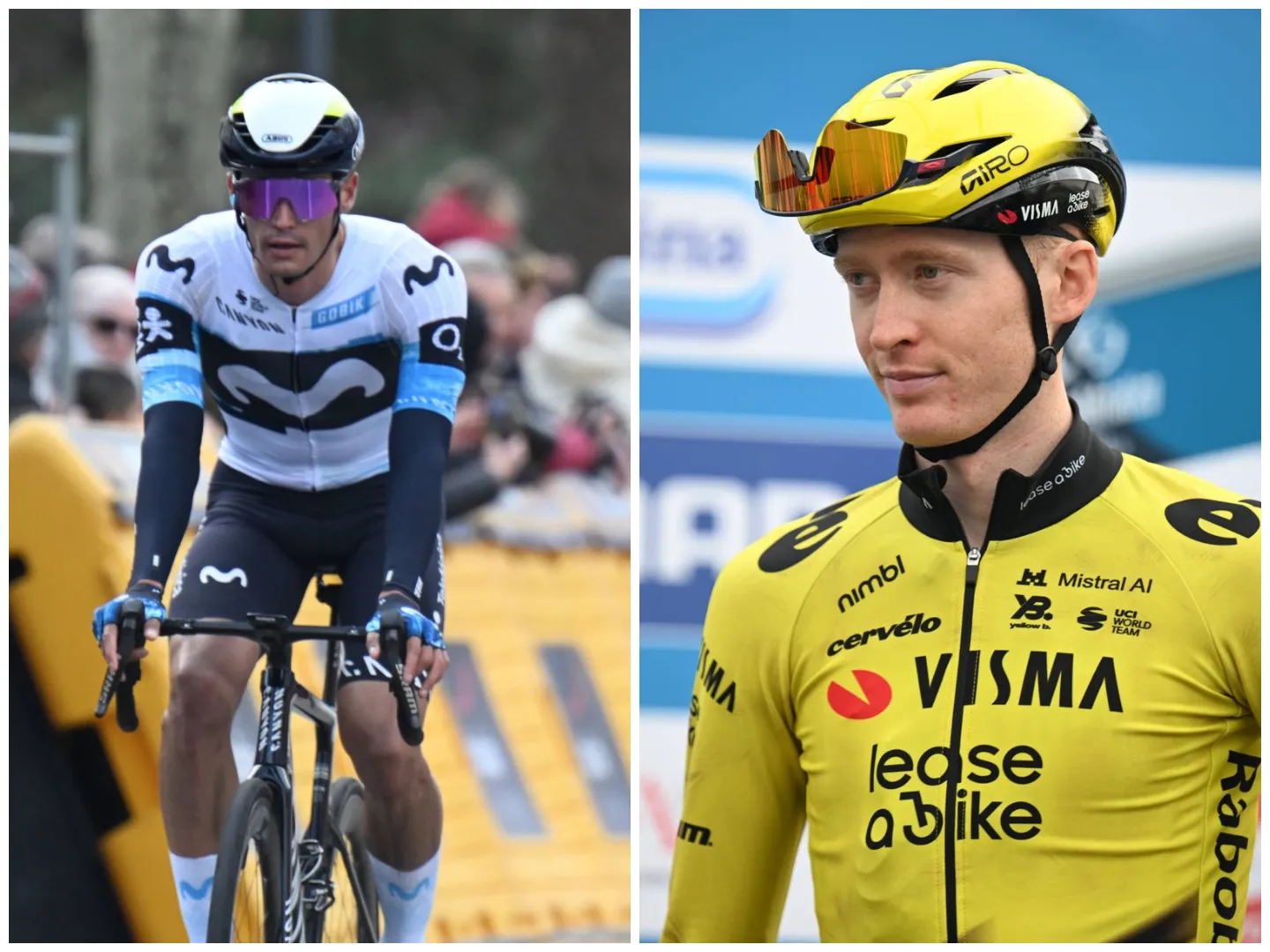
Tirreno-Adriatico offers final preparation for the Classics
Van Aert’s campaign in Italy has largely been about sharpening condition rather than chasing immediate results. From the opening time trial to the punchier middle stages, the focus has been on building rhythm ahead of the spring Classics rather than forcing the race.
That approach has still produced flashes of the strength that has made him one of the most versatile riders in the peloton. He was involved in several key moments across the week and came closest to a result on stage four, where he finished among the leading riders after an aggressive finale.
It is the type of performance that reinforces the sense that his condition is building at the right moment. Tirreno-Adriatico traditionally serves as a final rehearsal for Milano-Sanremo and the races that follow, and Van Aert has used the Italian stage race in precisely that way.
When asked how much progress he feels he has made during the week, however, the Belgian offered a typically straightforward answer. “I don’t know,” Van Aert said. “I think my legs have been good this week.”
His confidence extends beyond his own form. When asked whether the eventual Milano-Sanremo winner has already been racing at Tirreno-Adriatico this week, Van Aert answered with a mixture of humour and belief. “Do I think the winner of Sanremo has ridden here? Yes. If I said no, I would have very little confidence.”

Wout van Aert during stage 2 of the 2026 Tirreno-Adriatico
Sanremo consistency gives Van Aert confidence
If there is one Monument where Van Aert has consistently shown his ability to fight for victory, it is Milano-Sanremo.
The Belgian famously won the race in 2020 after surviving the Poggio and outsprinting the select group that reached the Via Roma. It remains one of the defining victories of his career and confirmed that his combination of endurance, climbing ability and sprint speed is ideally suited to La Primavera.
Across his appearances, he has repeatedly been present in the decisive moments of the race, whether the action unfolds on the Poggio or in the sprint that often follows. “I’ve never had a bad Sanremo, so I’m happy to be back there,” Van Aert said.
Last year’s edition was a very different experience for Van Aert, who watched the finale from afar while training in Tenerife. “Last year I watched the finale unfold from altitude training in Tenerife with a bit of pain in my heart.”
Those memories only reinforce his motivation to return to the start line ready to compete again. “I can win, because Milano-Sanremo is a race where a lot can happen,” Van Aert explained. “I’m going there to win.”
“The winner in me hasn’t disappeared”
Part of the conversation surrounding Van Aert in recent seasons has centred on whether the ruthless finishing instinct that characterised the early phase of his career has faded.
Analysts have occasionally suggested that the Belgian wins less frequently than he once did. Van Aert himself recognises that the numbers have changed, but he rejects the idea that the competitive drive behind those victories has disappeared. “I don’t know who started that claim,” he said. “I understand that I win considerably less than I used to, but that doesn’t mean the winner in me has disappeared.”
For Van Aert, the objective for the coming weeks is straightforward. If he can consistently deliver his best performances throughout the Classics, he believes the results will follow. “If I can simply have a good Classics period from now on where I’m able to give my best each time, I’ll be satisfied,” Van Aert said. “I hope the results will follow. The work is more or less done, and I’ve done everything possible to be in the best condition. Now the big one-day races can come.”
And with Milano-Sanremo now just days away, the first opportunity to test that belief is approaching quickly.

claps 0visitors 0
Just in

Popular news
Latest comments
- That's CutD's go to photograph for Johnny Milan. I think it's from stage 2 of the Dauphinè 2025
 Rafionain-Glas15-03-2026
 - The headline photograph isn't even from this year or this race! Why is Fred Wright in the background 😂sophos15-03-2026
- So you’re of the fan group that wants people to race for 2nd or less?Mistermaumau15-03-2026
- Another shot in the foot Because you assumed that one horse was representative of all horses. He should have listened to what all 4 had to say before deciding what advice to hand out. That’s the whole point of philosophy, considering ALL information and seeing what can be deduced from it and that’s why thousands of years later there is still plenty to discuss and discover, in fact more than ever seeing as it’s ever more impossible for anyone to gather enough knowledge, even on just one subject. You pick like Trump, am really quite surprised he’s not your type.Mistermaumau15-03-2026
- Ah, funny how few people are willing to touch on that subject. Totally agree,Mistermaumau15-03-2026
- I didn’t call you a fanboy, I make a big distinction between that (derogatory) and a fanatic (almost neutral and not usually negative when it comes to sport) so I’m not reading past your first sentence in case you want to edit something you may have written due to misunderstanding.Mistermaumau15-03-2026
- LOL!!!MajorPayne15-03-2026
- That’s all you’ve got? Angry manMistermaumau15-03-2026
- heading into the spring monuments, van der poel looks very fieryOCexile15-03-2026
- Did you know that P-R is perfectly flat from start to finish? It is a sprinter's classic, just like MSR. Advantage MVDP. Did you also know that MVDP weighs 10 kg heavier than TP, and that the cobbles favor heftier riders, because it gives them extra kick to get over the paves, whereas lighter riders tend to get thrown here and there by the cobbles and thereby lose control and momentum? Can you imagine Jonas doing P-R? This is why Tadej deserves your salute.. because he confronts the odds squarely, even when they are stacked heavily against him. He just loves to race, even against the odds. No wonder Tadej crashed the first time, which seldom happens.. there are so many haters just wishing him to crash, or get a flat or something..FredMan15-03-2026
Loading
2 Comments