Milano-Sanremo 2026 preview, profile, favourites & predictions - Pogacar versus van der Poel; Van Aert, Pidcock and Ganna the outsiders
Cycling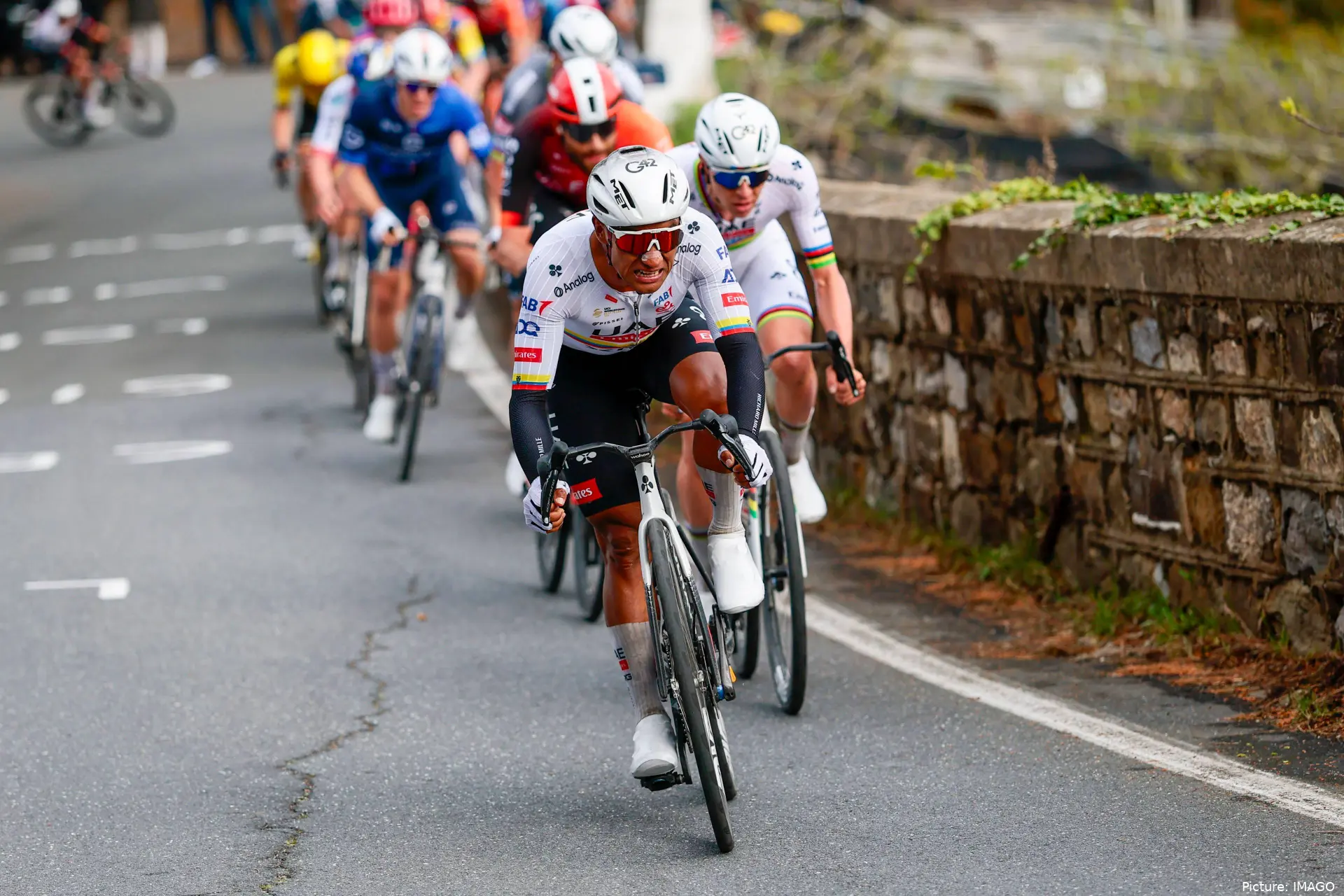
The queen of all classics: Milano-Sanremo. The Italian race is the first of the five monuments of the cycling season and is the longest race on the professional road calendar. Every year it delivers a lot of action and is often termed the closest out of all monuments in the calendar. We preview the race. The race is expected to start and finish at 10:10 and 16.35CET.
The race first held back in 1907 where the legendary Lucien Petit-Breton won its first edition. The race was destined for success right from the get-go, and has had plenty historical winners in its roads. Alfredo Binda, Gino Bartali, Faustro Coppi, Rik van Looy, Raymond Poulidor, Tom Simpson, Eddy Merckx, Roger de Vlaeminck, Francesco Moser, Laurent Fignon, Claudio Ciappuci, Erik Zabel, Mario Cippolinni, Paolo Bettini, Óscar Freire, Filippo Pozzato...
Every generation has had some of its very best win in Sanremo, increasing the race's prestige to a level that few others can, whilst its route provides the opportunity for open races, and for winners of different specialities. Almost every single name in its modern win list have been some of the very best of their times.. Fabian Cancellara, Mark Cavendish, Alexander Kristoff, John Degenjolb, Arnaud Démare, Michal Kwiatkowski, Vincenzo Nibali, Julian Alaphilippe, Wout van Aert, Japer Stuyven, Matej Mohoric, Mathieu van der Poel, Jasper Philipsen...
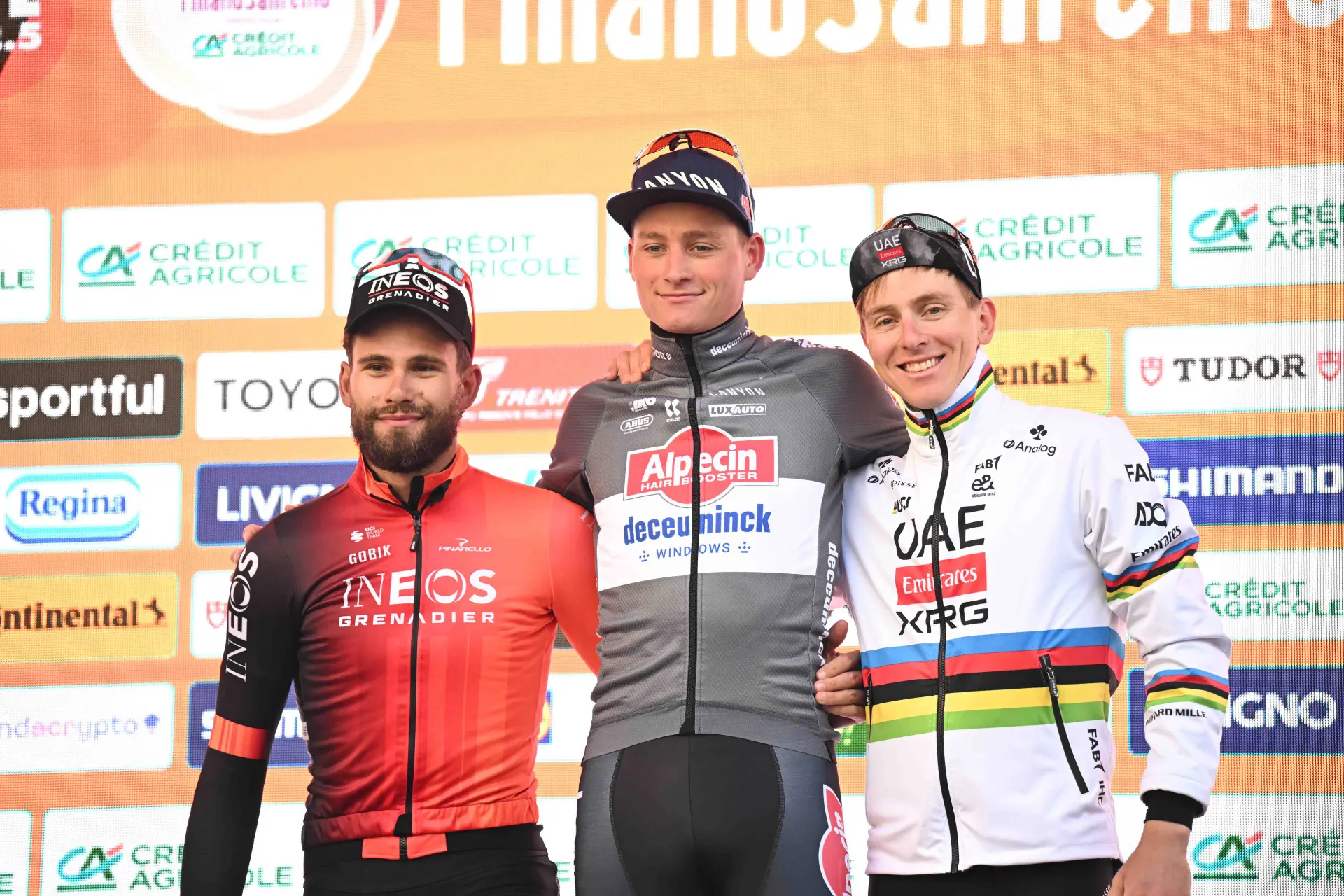
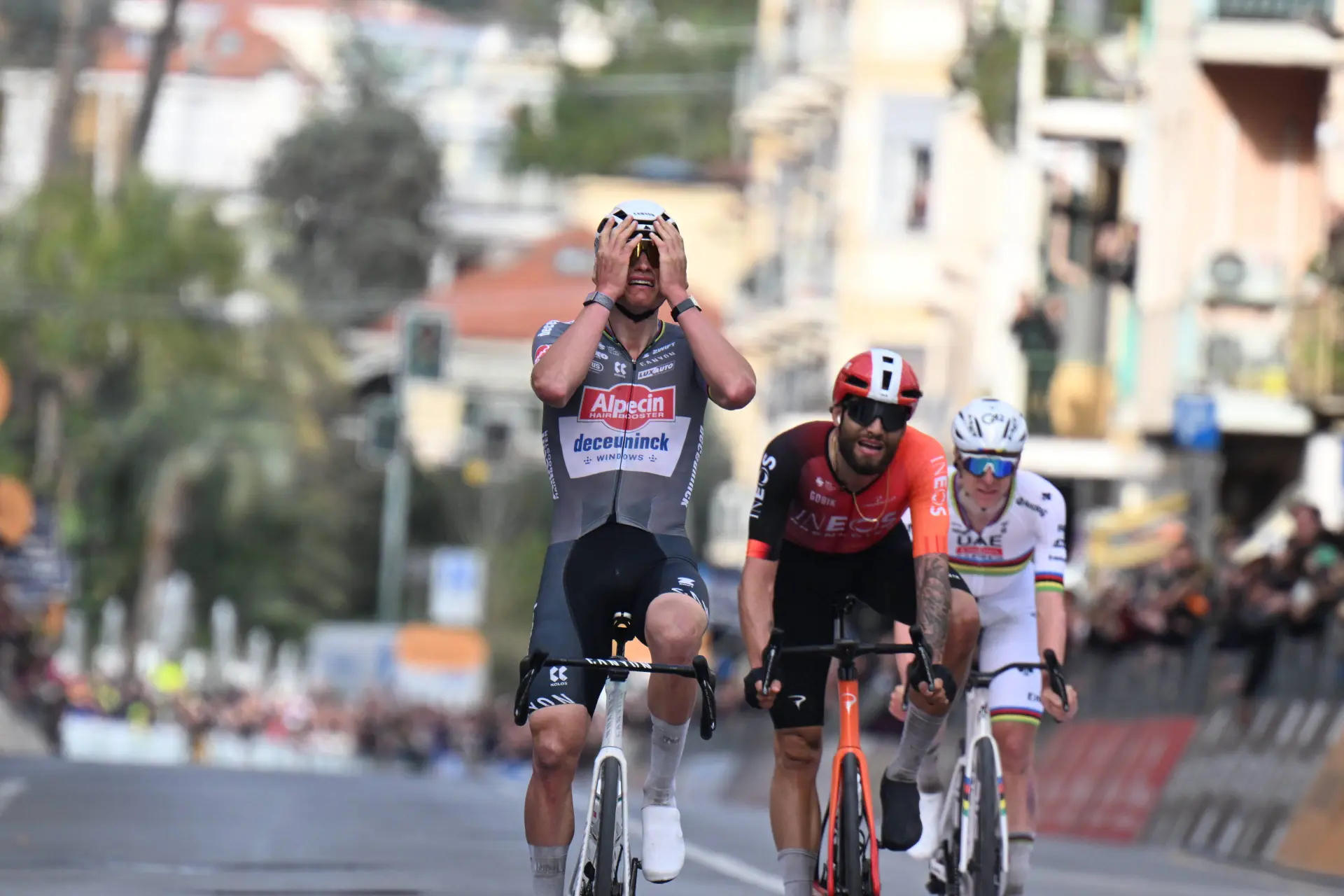
It truly is a race like no other. In 2025 Mathieu van der Poel won the race following an incredible battle with Tadej Pogacar on the Cipresa and Poggio di Sanremo
Read also
Profile: Pavia - Sanremo

Pavia - Sanremo, 298.2 kilometers
Starting in Pavia this year, this is the longest pro race in the calendar! 298 kilometers (plus neutral start) will heavily weigh on everyone’s legs by the end, which has it’s usual features. The race’s traditional route through the Ligurian sea, includes the Tre Capi. No important attacks will come here, however the teams looking to make damage on the climbs may look to push the pace.
Capo Mele – 1,9Km; 4.2%; 52Km to go
Capo Cerve – 1.9Km; 2.8%; 47.4Km to go
Capo Berta – 1.8Km; 6.7%; 39Km to go
Quickly the riders will move on to the final and decisive features.
The Cipressa is 5.6Km at an average gradient of 4.1% it doesn’t make for a particularly hard climb, but taking into account when the riders top it they’ll have over 6 hours of racing. In recent years, this has been attacked as hard as any climb in the World Tour calendar, and it has turned the race once again into one where the climbers stand a chance, although positioning is as important as anything into this climb and the approach is very dangerous.
The purest sprinters try to remain hidden, but always well positioned as the descent from Cipressa is very technical, so not only will there be the teams trying to suffocate the sprinters early on as there will be the fight for positioning before the climb and in the summit of it, making for a very nervous and fast section of the race.
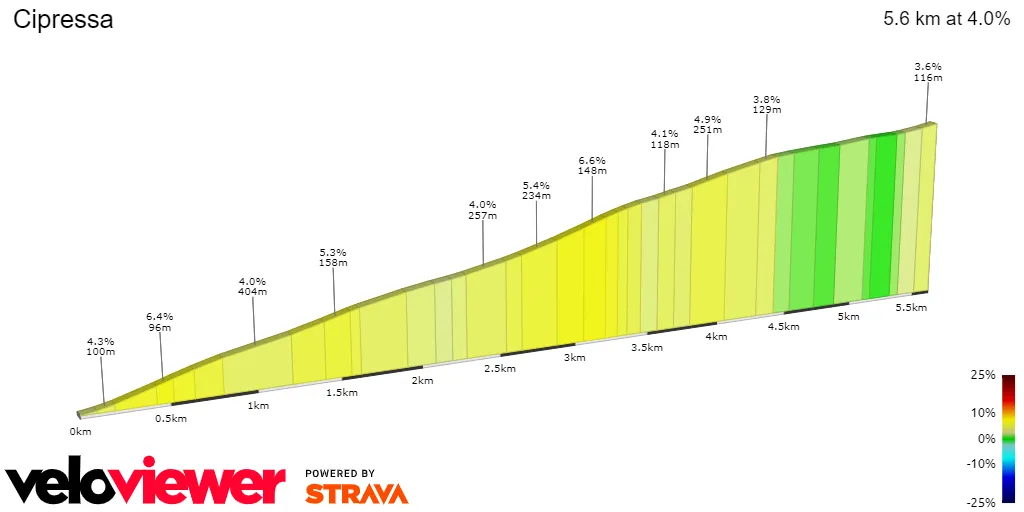
Cipressa: 5.6Km; 4%; 21.6Km to go
And the final climb is the Poggio di Sanremo, the hardest easy climb in the world! Like everything in this race, it is influenced by the distance, 292Km raced at the summit. It is mostly a climb in false flat roads, starting with a set of bends still very near the sea, but in the last 800 meters the steepest ramp in it comes, a short one but 8% of gradient, and it’s a place regularly chosen by riders to make a final attack.

Poggio di Sanremo: 3.6Km; 3.7%; 5.5Km to go
And just as important as the climb is the descent, it’s quite a technical one which allows some recovering after the climb, and it’s a big threat if anyone gets to the bottom solo, no surprise as in the base of it there are only 2200 meters to the line. This is where Matej Mohoric made his decisive attack in 2022 to victory.
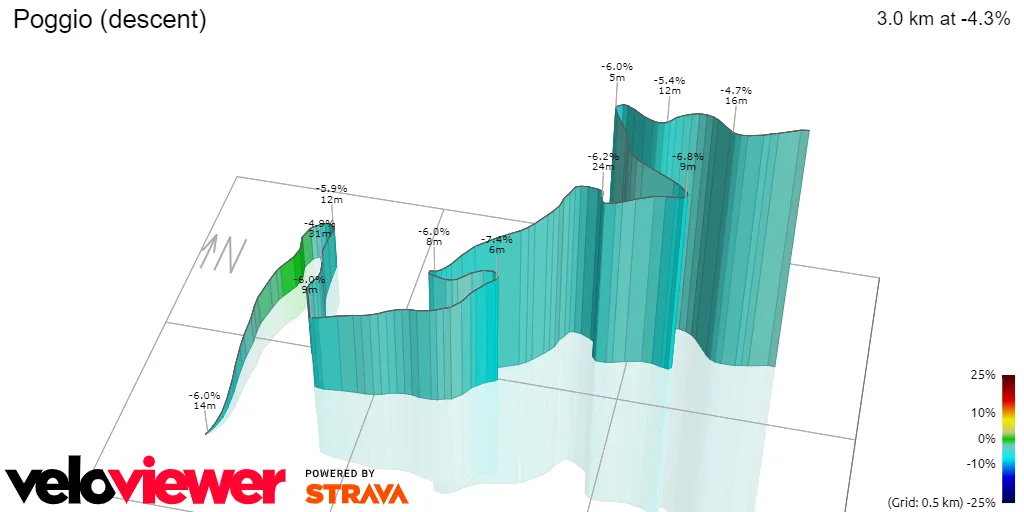
Descent of Poggio di Sanremo
The Via Roma will be the place where the winner will be crowned. The finish is familiar already, a flat straightforward road meaning leadouts and chasing are still very possible which is an advantage for the sprinters, but for that they need good support and a smart sense of positioning. And remember, a sprint after 7 hours of racing is different than after 4/5.
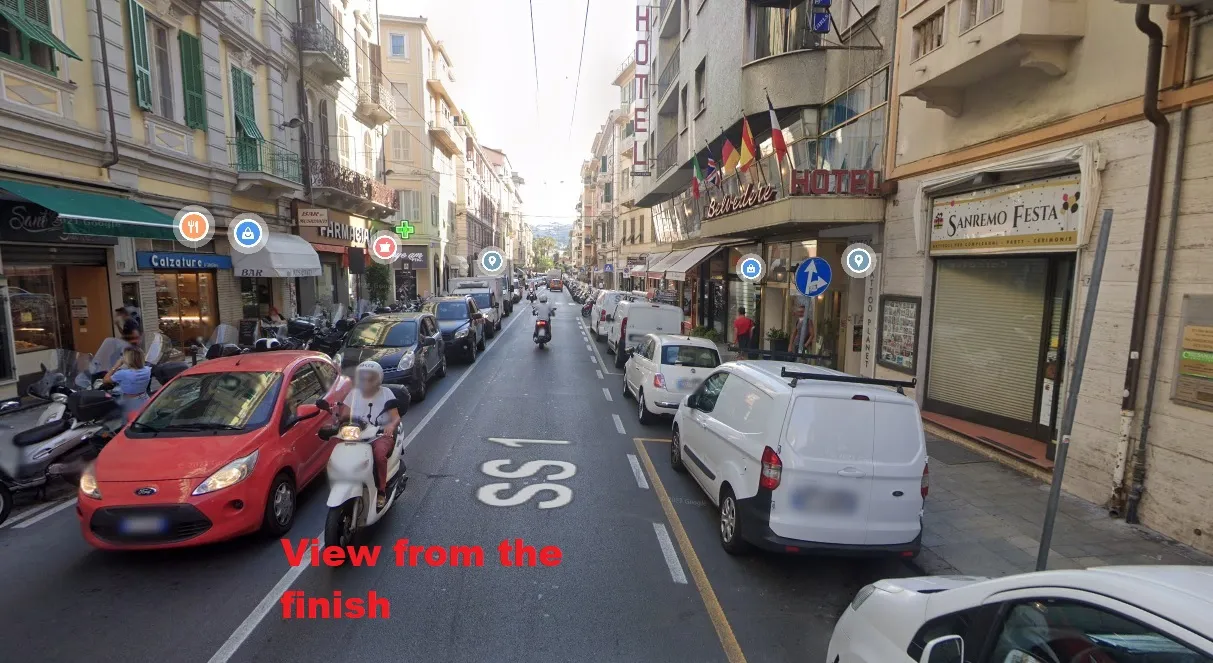
Milano-Sanremo Finale
The Weather

Map of the 2026 Milano-Sanremo
Now, the wind is not too strong. But if there is one race where everyone will be a weather man in the days ahead it's this one, because the wind the riders get from the bottom of Cipressa to the finish is crucial. That is because the race is actually almost flat and on these climbs it's not easy even for the best in the world to make the difference. And it won't be, because there is a slight headwind in the final kilometers of the race - it won't affect the climbs much since they are technical and with plenty corners, but mainly the flat section between the two. But above all, it won't directly support attacks.
The Favourites
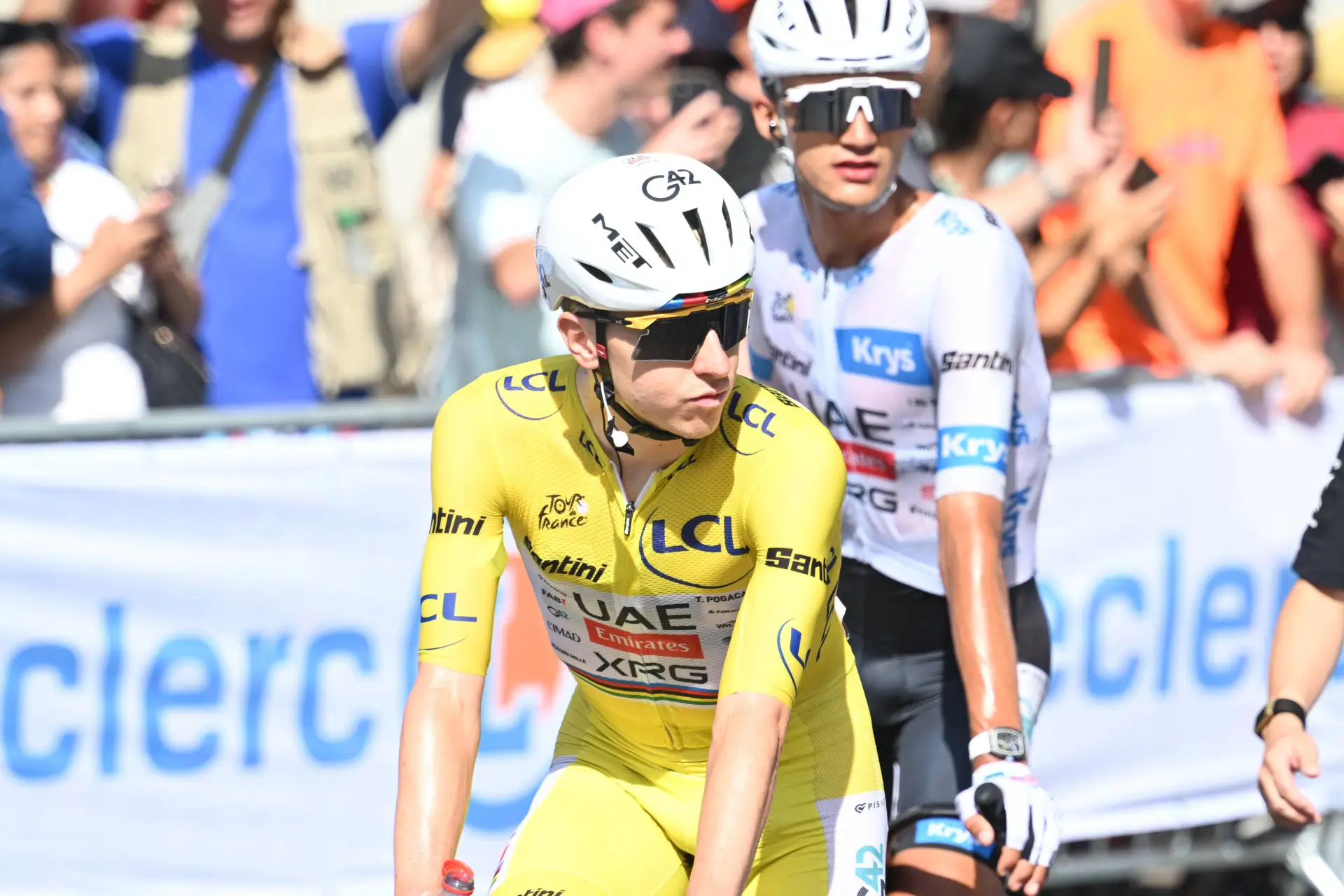
Tadej Pogacar - UAE do not have Tim Wellens and Jhonatan Narváez at the start, which is a hit. There is a tactic, but this is a very hard race to execute it in. The plan is to enter the Cipressa at full steam and pace as hard as possible for around 5 minutes before Pogacar attacks. Isaac del Toro was brought in as the main weapon, and he is one, but he needs to nail the positioning just as well and he did not do that last year. Jan Christen and Brandon McNulty could also do well, but the team simply has to position Pogacar well as the priority whilst the other men have to fight their own battles. Pogacar will attack the Cipressa, that is not a question, however the effectiveness depends on whether he has better legs than last year. UAE can push as much as they want but I don't think that ultimately makes a difference. With a climber-focused lineup, they should try to sprint up the final of the Tre Capi already, as Florian Vermeersch is the only rider expected to carry him to Cipressa very well. He will be the man to watch, we shall see what impact his attack will have.
Mathieu van der Poel - Alpecin have Jasper Philipsen to play for in a sprint, but it is in Mathieu van der Poel that their chances of winning lay. Hoenstly he is also the main favourite, his form at Tirreno-Adriatico was just off the charts, he is once again peaking perfectly and with no injury or illness to slow him down. He is a master at positioning, he thrives in the long races, the climbs suit him very well and UAE's offensive tactics should even benefit him as they get rid of many sprinters or other riders who could ordinarily handle the pace in the 'old Sanremo' tactics. He is just hard to beat isn't he, and I believe once again he is the only rider who can keep Pogacar in check. We might see a repetition of last year's battle.
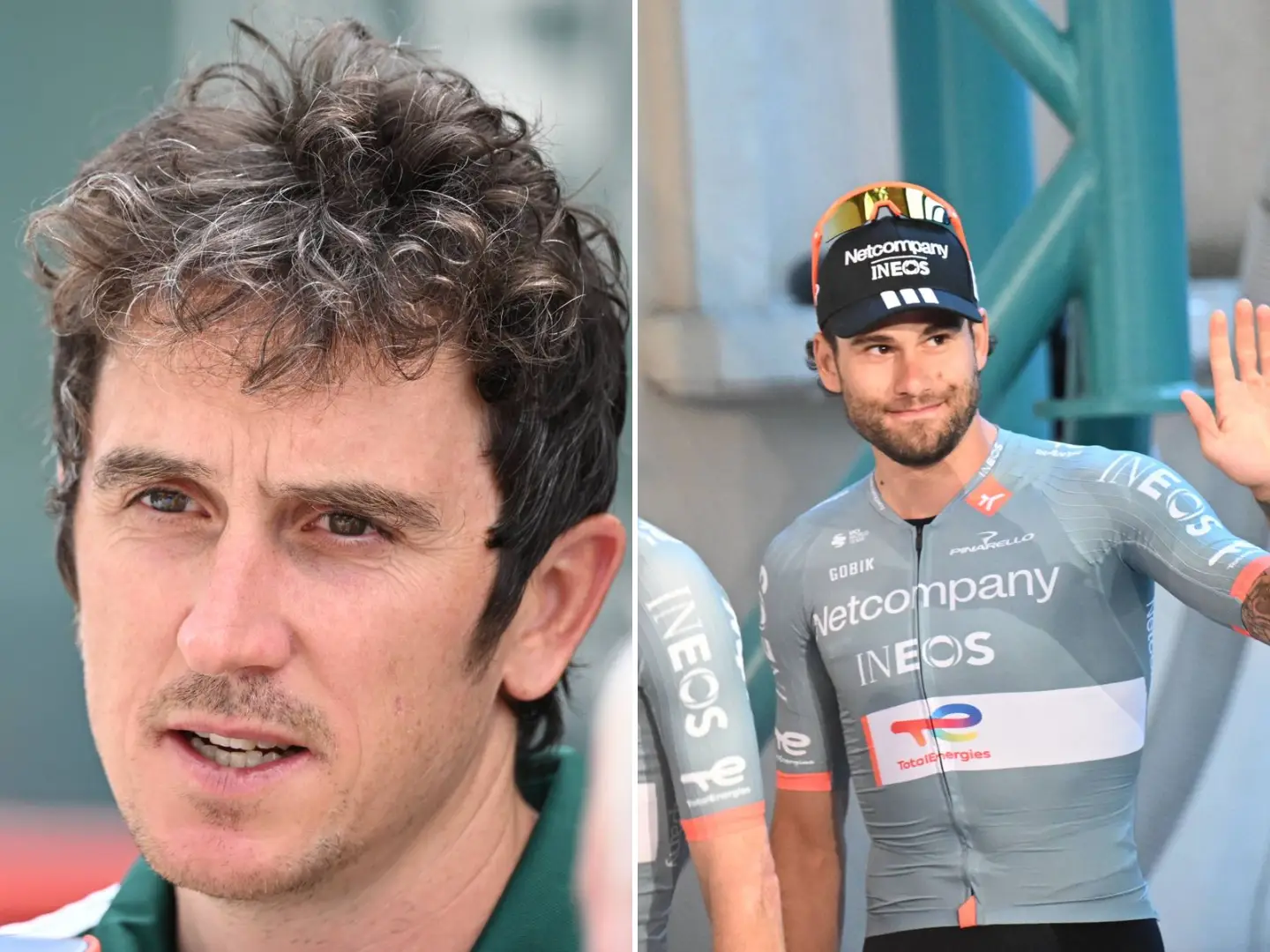
INEOS Grenadiers - Ben Turner is an underated figure for this race, as his sprint has evolved a lot but the Briton has not lost his climbing ability one bit. It is a finale that suits him very well and INEOS is a very experienced team, one that will however have Filippo Ganna as a priority. His form looks just as strong as 12 months ago, however perhaps better managed to last longer this time around. The Italian is such a powerhouse that these climbs end up suiting him well as they are not steep enough, and can do the constant efforts. He can't outclimb just anyone in this race, but a late attack into Sanremo could be deadly; whilst in a sprint he also packs his own chances realistically.
Wout Van Aert - I am playing along with the wrong idea that he is Visma's sole leader and option, but his name of course will be the headliner. Van Aert's situation is all about positioning - he can climb, he can sprint although not as well as years ago, but his positioning is often bad. In this race that means everything, so the run-in to Cipressa can be the death of him, but the team do have men who can this positioning work for him quite well so there is hope. In Tirreno his form was formidable, and he is joined by Christophe Laporte who can have similar ambitions for a Poggio scenario or even a sprint. Matteo Jorgenson on the other hand will be a Cipressa man, and potential worked in a chasing group if he finds himself with Van Aert/Laporte and with a front group within a shot of being caught.
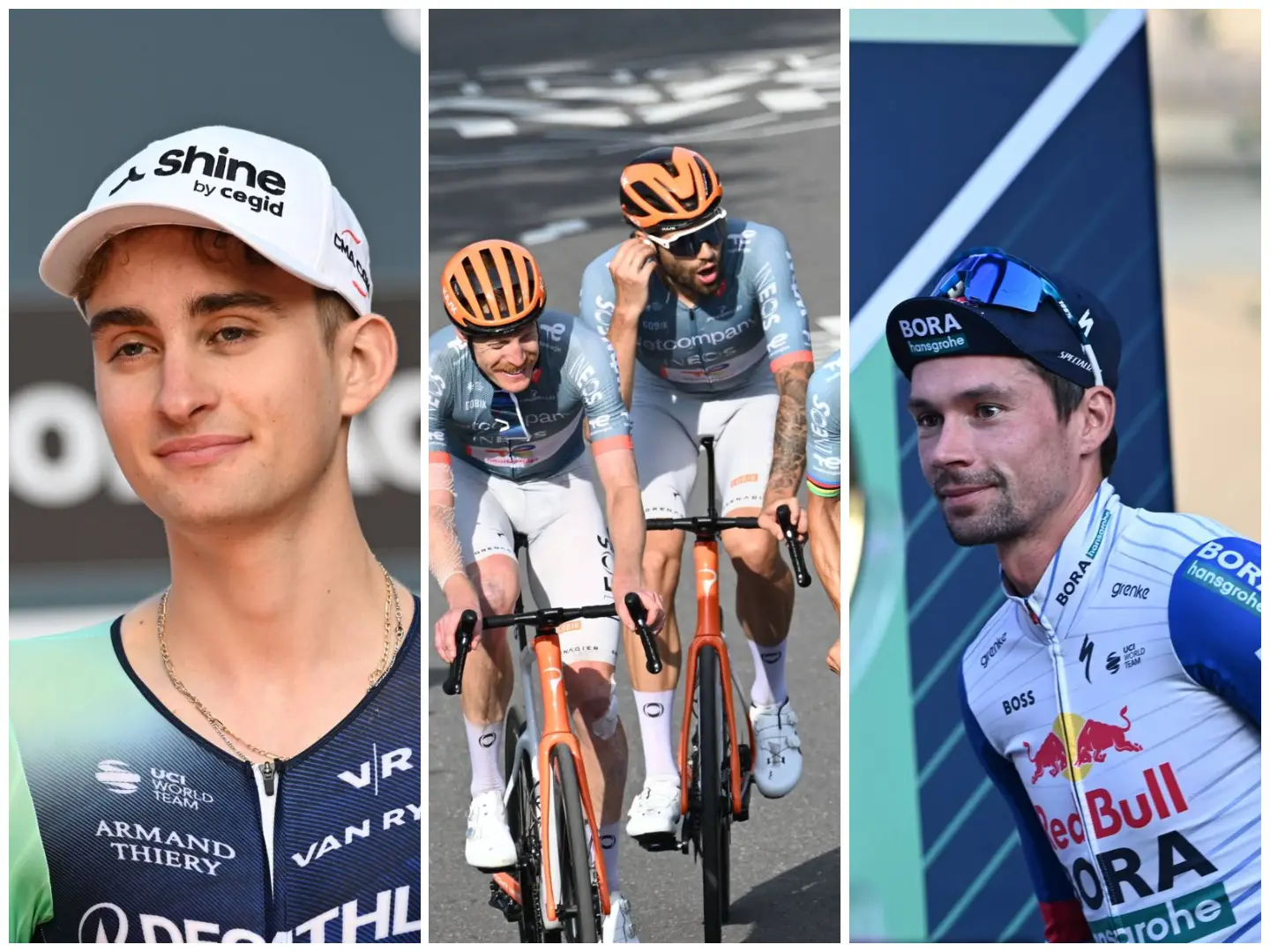
Outsiders - On paper Sanremo is quite an open race. The presence of Pogacar and van der Poel makes it less so, but if we are to imagine a fight for the podium then it can be very tactical. We have got excellent descenders in Tom Pidcock, Matej Mohoric and Alex Aranburu for example who can use that as a weapon towards a top result; pure explosive puncheurs such as Romain Grégoire and Mauro Schmid who have shown great form already this spring and are legitimate contenders; Climbers such as Tobias Johannessen, Primoz Roglic or Giulio Pellizzari also in the mix. Riders such as Jonas Abrahamsen, Mathias Vacek and Andrea Vendrame also have the right kind of profile to take a strong result here.
Sprint finish - What if it does come down to one? It's not impossible, without a crash on Cipressa as happened last year and with some headwind, the race may come down to the Poggio, and there the ascent is simply not hard enough to create big differences. Besides a few men mentioned above, who can sprint very well, there are others who will put their cards on a sprint.
Take someone like Tobias Lund Andresen, a man in terrific form and with excellent confidence; and with riders such as Paul Lapeira and Jordan Labrosse who can carry him over the hills as well. Paul Magnier and Biniam Girmay would be absolute threats in a sprint but are more unlikely to arrive; whilst there are other fast men (both sprinters and classics specialists) who can aim for their best result in that scenario.
Quick-Step alone not only have Magnier but also Laurenz Rex and Jasper Stuyven who are worthy of protection... Matteo Trentin, Magnus Cort Nielsen, Corbin Strong, Danny van Poppel, Laurence Pithie, Davide Ballerini, Marijn van den Berg and Lukas Kubis are men to watch as well.
Predictions Milano-Sanremo 2026:
*** Tadej Pogacar, Mathieu van der Poel
** Filippo Ganna, Tom Pidcock, Tobias Lund Andresen
* Jasper Philipsen, Isaac del Toro, Matteo Jorgenson, Christophe Laporte, Matthew Brennan, Wout Van Aert, Jonas Abrahamsen, Mauro Schmid, Romain Grégoire, Laureence Pithie, Jasper Stuyven, Paul Magnier, Ben Turner
** Filippo Ganna, Tom Pidcock, Tobias Lund Andresen
* Jasper Philipsen, Isaac del Toro, Matteo Jorgenson, Christophe Laporte, Matthew Brennan, Wout Van Aert, Jonas Abrahamsen, Mauro Schmid, Romain Grégoire, Laureence Pithie, Jasper Stuyven, Paul Magnier, Ben Turner
Pick: Mathieu van der Poel
How: Small group sprint.
Original: Rúben Silva
Rúben SilvaEditor-in-Chief
A founding contributor to CyclingUpToDate since its launch in January 2022, Ruben Silva has played a central role in shaping the site’s editorial direction and long-term growth. Before joining the project, he built his experience through independent blogging at Echelons Hub and by producing race previews for Ciclismo Internacional, developing a strong analytical voice rooted in daily engagement with professional cycling.
Beyond editorial work, he has been closely involved in the expansion and coordination of CyclingUpToDate’s wider network, helping establish and support sister platforms across multiple languages. This includes ongoing collaboration with CiclismoAlDia (Spanish), CiclismoAtual (Portuguese), WielrennenUpToDate (Dutch), and RadsportAktuell (German), contributing to a shared editorial vision and consistent international coverage.
He also helps oversee editorial governance across the network, setting standards for accuracy and consistency and coordinating updates or corrections when needed.
Originally from the Porto metropolitan area in Portugal, he holds a bachelor’s degree in Geography. His path into cycling journalism was shaped not through formal media training, but through independent reporting, community engagement, and sustained on-the-ground involvement in the sport.
Over the course of his career, he has conducted approximately 100 interviews across road cycling and cyclocross, ranging from one-to-one conversations and online formats to press conferences and on-site pre- and post-race coverage. His interviews include leading riders, team managers, and prominent figures within cycling media: Tadej Pogacar, Jonas Vingegaard, Mathieu van der Poel, Primoz Roglic, Wout van Aert, Joao Almeida and Tom Pidcock; managers like Patrick Lefevere and Joxean Matxin; and YouTube personality Bryan Kennedy (BKXC)...
Within 18 months of launch, he helped grow CyclingUpToDate’s English-language platform into one of the most-read cycling news websites, built entirely from the ground up. As both a professional journalist and lifelong cycling enthusiast, his focus remains on delivering accurate, timely, and well-contextualized coverage.
claps 14visitors 9
Just in
Popular news

Latest comments
- Quiz, who said "When I watched the Worlds and the Euros, it made me miss racing of course, but I’d say that the older I get, the easier it becomes to stay away from racing and find other things I enjoy." Clue, not Elie Isabit in the doghouse now for supposing he can second guess MVDP, who has the added complication of women having a say these days in his circumstances, something Fien might have explained to him if he’d bothered asking, hope he doesn’t get a talking to for that. And speaking of that, I noticed he celebrated 10 years together in 2023 and yet in 2017 he was definitely with someone else, could get messy tonight. Bye for nowJumpyjohn26-10-2026
- Wout has the lifetime contract. I think he gets first shot no matter what.mij26-10-2026
- I'm not a fan of any of those riders but c'mon these guys are just talking out of their bums. Bernal and froome's crashes were waaay worse. Pog and Jonas will be finebruins3026-10-2026
- Tadej had a bad crash. A concussion can be horrific. He also had a stable vertebra break so no threat to his spinal cord and a broken collar bone. This headline, like most on this site, is a joke. To even compare Tadej to the others is ridiculous. Froome: • Fractured right femur (thigh bone) • Fractured hip / pelvis • Fractured right elbow • Multiple fractured ribs • Collapsed lung Lost 2 liters of blood. Hospitalized for 3 weeks. Couldn't get back on a bike for 3 months. And that was limited. On crutches for longer than Tadej was off a bike. Bernal • Fractured vertebrae (spinal trauma) • Fractured right femur • Fractured right patella (kneecap) • Punctured lung & chest trauma • Multiple fractured ribs • Serious facial trauma and broken hand/finger Lost 2.3 liters of blood, hospitalized for 13 days, not on a bike for months. He had a 95% chance of being paralyzed. Jonas • Collapsed lung (Pneumothorax) • Pulmonary contusion (bruising and bleeding of the lung tissue) • Seven broken ribs • Fractured sternum (breastbone) • Shattered collarbone (clavicle) Vingegaard coughed up blood and had lung injuries, including a pneumothorax and pulmonary contusion. He required a chest drain for approximately eight days. This was life threatening. Sorry Bob Roll, and all others, Tadej won't be affected. his accident was minor compared to these. Not saying he should ride. Not saying a concussion isn't serious. but nothing like what these guys went through.mij26-10-2026
- I think we are heading towards a style of Tour de France with two days of celebrations - stage 20 the sprinters' day and stage 21 the Champs-Elysées day where GC riders can get involved
 Rafionain-Glas26-10-2026
 - ““Pogacar is something I have never seen before" - World Tour veteran puts Slovenian above Froome, Contador and Wiggins” - Uhh? I can feel a Popes in the woods and bears in silly hats moment coming on!Lozza26-10-2026
- Not sure what to do with these guys. Most of the articles here have random sentences and are chock full of "AI slop".Occam26-10-2026
- what does this mean? "whilst in 2014 he crashed ahead of the spring in Harrogate - a day for the sprinters. " love what you're trying to do, but this stuff is pretty unreadable sometimes.Occam26-10-2026
- It’s not as if he races every race! Also, the developing riders are unlikely to be in the team with him anyway.Lozza26-10-2026
- OK, stop all the BS below!!! Don't you guys have anything better to do than to get on Pogi's case (injury)? The only thing I read from your comments was: blah blah blah ... and BLAH !!! Y'all remember one thing: Next year... 2027 ... Pogi - Baby Hulk will "smash" everyone!!! Remco will have nonstop excuses... Jonas is going to once again say to Skjelmose : "I'm doing my best numbers ever but Pogačar just rides away. What else can I do???" ... Everyone else will fight for second place. Pogi doesn't give a sh** about what podcasters and different cycling sites are saying or "barfing up" senseless words of foolishness and ignorance about him. He will chew up everyone and spit him out. Ad acta!!!PogiSloFans26-10-2026
Loading
Write a comment