Patrick Lefevere doesn't agree with criticism of Rwanda Worlds: "Anyone who has been to Kigali can only be impressed"
Cycling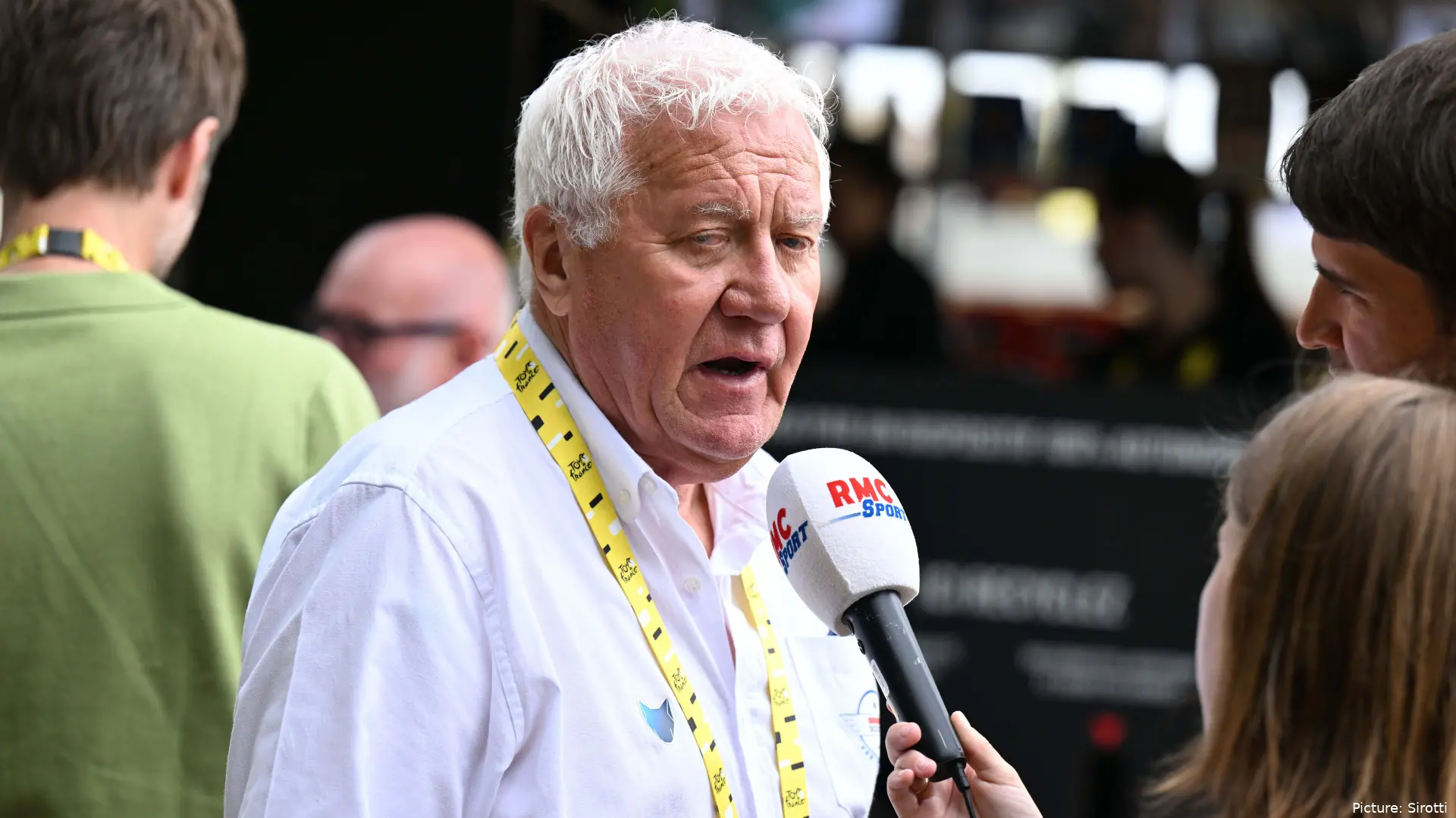
Patrick Lefevere has offered a robust defence of the 2025 UCI Road World Championships being staged in Rwanda, pushing back against critics who argue the African nation is an unsuitable host. Writing in his weekly Het Nieuwsblad column, the former Soudal - Quick-Step boss insisted the progress made in Kigali deserves recognition and that the controversy surrounding the event is misplaced.
“I know I’ll be stepping on some very sensitive toes, but I am one hundred per cent in favour of the World Championships in Rwanda,” Lefevere wrote. “There’s a lot that can be said about Paul Kagame, but anyone who has been to Kigali can only be impressed by how that city functions.”
The Belgian acknowledged the geopolitical tensions in the region, including Rwanda’s alleged military involvement in eastern Congo and EU sanctions imposed on the Rwandan army for supporting M23 rebels. Yet he was quick to highlight what he sees as hypocrisy in the criticism.
“The EU pays that very army millions to safeguard European corporate interests in Mozambique – TotalEnergies, to name one example. On top of that, the EU has struck a major resources deal with Rwanda. All of that goes unquestioned, but when there happens to be a bike race in the same country, suddenly it’s a scandal,” Lefevere argued.
Defending Rwanda’s progress
Lefevere, now aged 70 and retired from the day to day running of the Soudal - Quick-Step team, placed his remarks in a broader context of Rwanda’s recovery since the 1994 genocide. “Rebuilding a completely divided and devastated country into what it is today can only be achieved by an authoritarian leader,” he wrote. “With our one hundred and ten Belgian ministers of who-knows-what, it would never have happened.”
While his comments are certain to provoke debate amongst the cycling world, they underline the complexities surrounding the Kigali Worlds, which will mark the first time the championships have ever been held on African soil. For Lefevere, however, the event represents more than just a global race – it’s a symbol of how cycling can intersect with broader political and societal narratives through sport.

Kieran WoodDeputy Editor-in-Chief
Kieran Wood is a sports journalist based in Wales and has been active in journalism since 2022. He regularly contributes to DartsNews.com and CyclingUpToDate.com, where he covers professional cycling and darts. In cycling, his work includes liveblogs from major races, including the Tour de France, the Giro d’Italia, and La Vuelta a España, alongside race reports and analysis. He has also conducted interviews with professional riders.
His reporting spans the full racing calendar, from one-day classics to stage races, with a focus on accurate, real-time coverage and clear contextual analysis. For statistics, results, and historical context, he regularly uses resources such as ProCyclingStats. To support reporting on rider activity and training context where relevant, he also references Strava.
In his work, Kieran places strong emphasis on careful sourcing, editorial accuracy, and updating articles as new, verified information becomes available.
claps 3visitors 3
Just in

Popular news
Latest comments
- disrespectful thats a joke ...
 Davide20-10-2026
 - EF’s “island of misfit toys” squad is probably one of my favorites in the peloton. They are fun to watch, always trying stuff - they ride with heart and panache, and their kits are excellent.wrsty20-10-2026
- 'Children these days'... Wout, since the caveman learned to say "Ug", older generations have always said this about younger generations. Not every young rider is a cowboy. So what's to say that the fact that Poels was respectful meant that his peers were equally so?
 Rafionain-Glas19-10-2026
 - "...In a weakened field" Most definitely ! YAWN !frieders319-10-2026
- Noted. But I had to appease his fans.MajorPayne19-10-2026
- I wonder if he'll race Challenge MallorcaRafionain-Glas19-10-2026
- Head to head time-splits: Jay Vine vs Remco Evenepoel: 10.5 km - Vine lost 45 seconds to Evenepoel 34.2 km - Vine lost a further 1:10, and was caught in the vicinity of that checkpoint. Note: I remember Vine getting caught before the second checkpoint, and ProCyclingStats log supports that, however, the gap at the second checkpoint was less than 2 minutes. 45.4 km - Vine lost only 16 seconds Of course, Vine lost less time in the middle section than the early section, but at the final segment rate, he'd have lost 15 seconds in the opening section and and 34 seconds in the middle. It is possible that Vine paced himself very well but that seems unlikely. In comparison with Stefan Küng: Kung lost: 26 seconds at T1. A further 1:11 by T2. A further 40 seconds by the finish. Relative to Evenepoel, Küng did slow down by the end. Maxime Decomble: Lost 47 seconds at T1. A further 1:20 by T2. A further 26 seconds by the finish. Mikkel Bjerg: Lost 37 seconds at T1. A further 1:34 by T2. A further 46 seconds by the finish. It is not concrete evidence that Vine cheated though it certainly doesn't absolve him. However, watching the race, I am 100% sure that Vine did not pull over and follow a different line when Remco passed him. Remco pulled away quite quickly, but the gap did not balloon and Vine definitely got aero assistance.Rafionain-Glas19-10-2026
- That ship has sailed years agovappaxbipmv19-10-2026
- He doesn't have to. I'd be perfectly happy if he loses SB if he then wins everything elsevappaxbipmv19-10-2026
- Please don't put Remco in the same sentence as Tadej. It's disrespectful to Tadej. Please make a note of this.KissinKate19-10-2026
Loading
Write a comment