"It could become a problem" – Jonas Vingegaard admits concerns over Tour de France 2026 Grand Départ
Cycling
Jonas Vingegaard has admitted that next year’s Tour de France Grand Départ in Barcelona could be at risk if the conflict between Israel and Gaza continues, drawing on the disruptive scenes that marred his recent victory at the 2025 Vuelta a Espana.
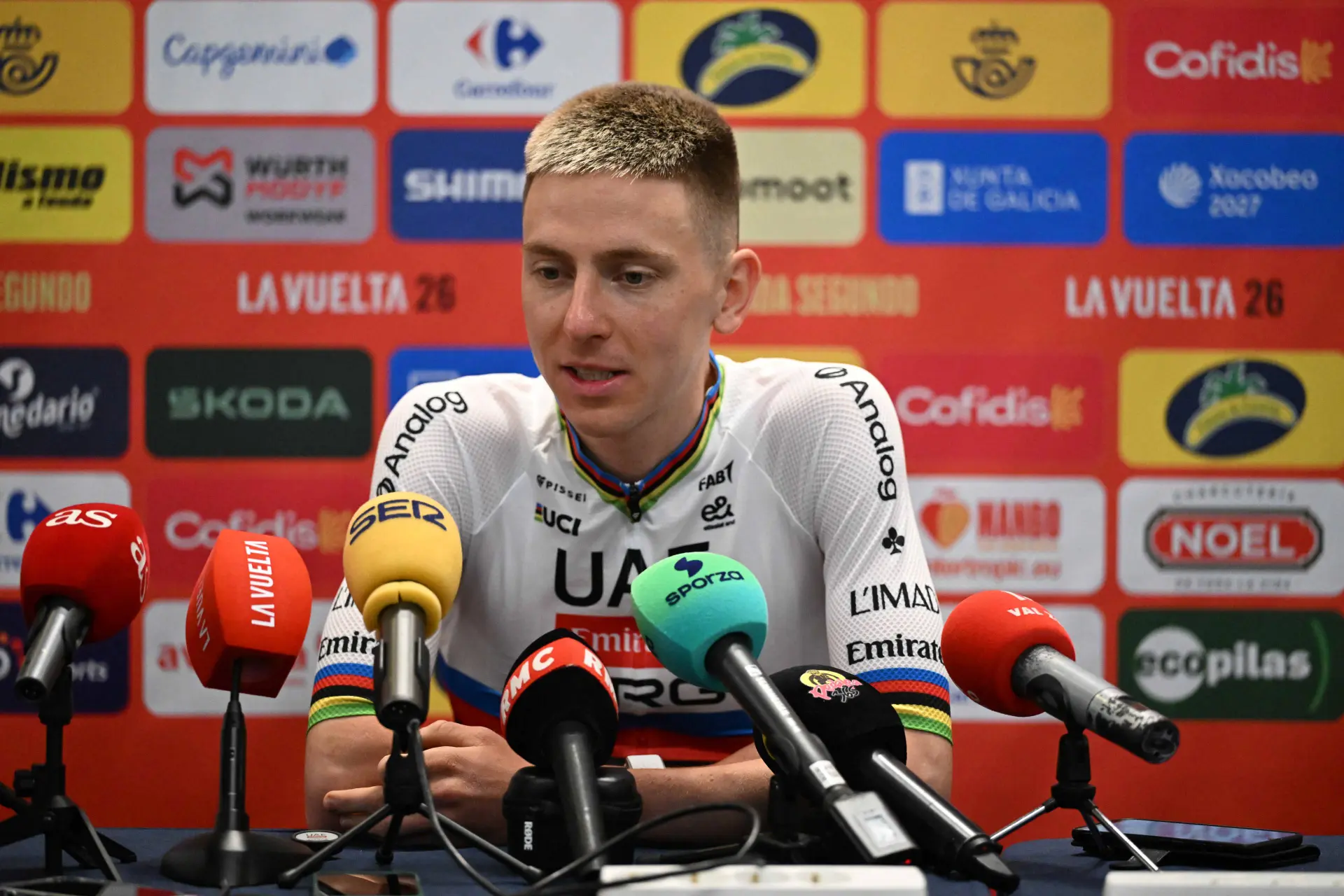
Speaking to Feltet at his post-race press conference having returning to Denmark, the Dane was asked by Feltet whether the Tour might face similar challenges. His response was measured but candid. “I think if the war between Israel and Gaza is still ongoing, then yes, it could become a problem. Time will tell, and it depends what choices the Tour makes after what we’ve seen here at the Vuelta,” Vingegaard said.
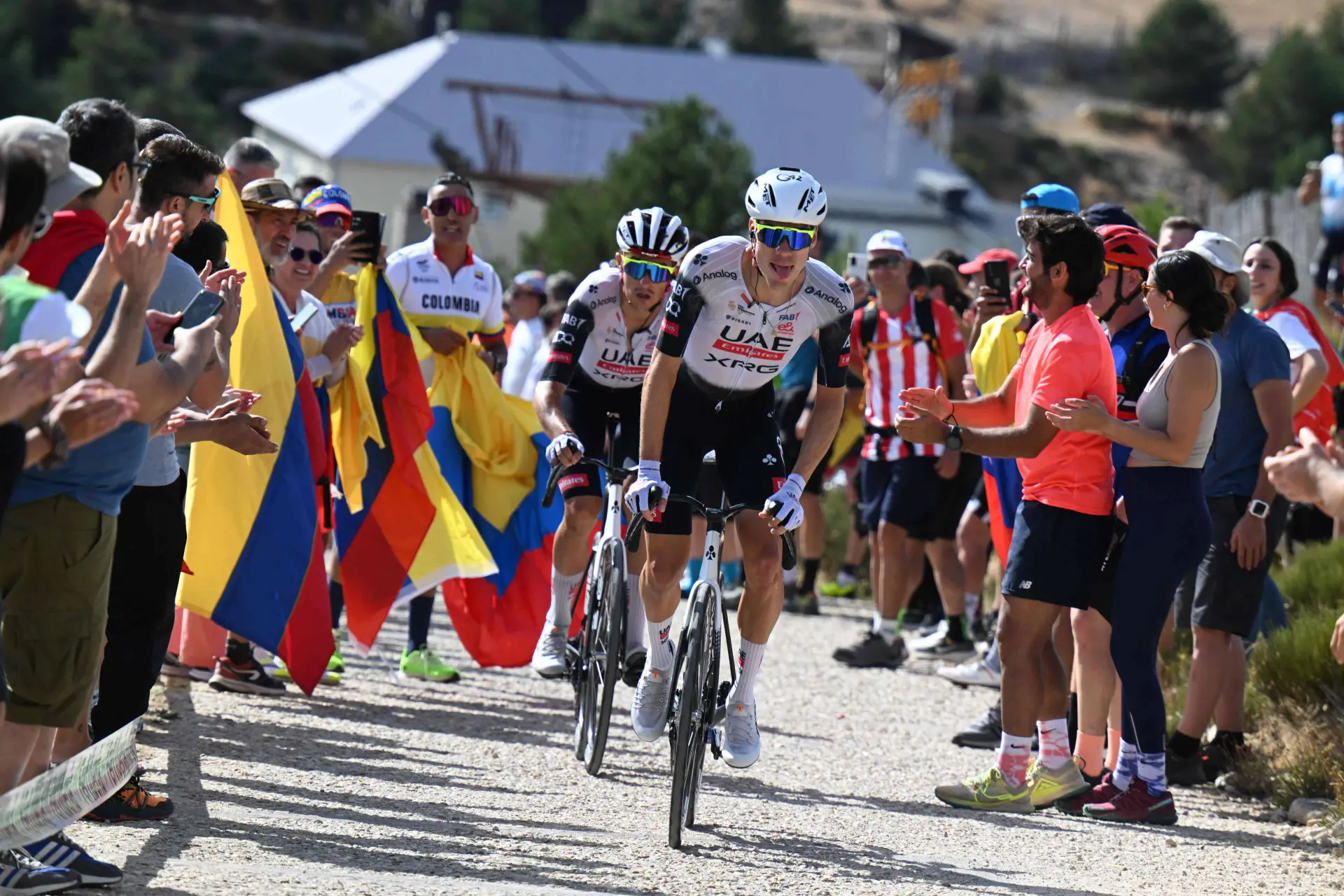
The Vuelta had been dominated by headlines of protest as much as racing in its final week, with activists bringing several stages to a halt and totally derailing the finale in Madrid. Riders, including Vingegaard himself, were caught in moments of genuine danger as the peloton was repeatedly disrupted.
Although Vingegaard handled the chaos with characteristic composure on his way to securing his first Vuelta title – ahead of João Almeida and Tom Pidcock on the final podium – the atmosphere left a mark. “It’s been particularly noticeable in Spain – they’ve protested here, not so much in Italy or France. So it seems to be more of a Spanish issue. But I think the decision should be left to the UCI and A.S.O.,” the Team Visma | Lease a Bike leader added, deflecting responsibility towards cycling’s governing bodies and the Tour’s organisers.
“I’ll ride the start wherever it is”
Despite acknowledging the risks, Vingegaard was firm that it would not affect his racing schedule. “I’ll ride the Tour start wherever it happens to be. Whether it’s in Barcelona or somewhere else – that’s just how it is,” he said.
When asked if he would welcome a return to Denmark – which hosted a hugely successful Grand Départ in 2022 – the two-time Tour champion laughed: “Yes, of course that would be great in Denmark, but I doubt it.”
Former Copenhagen Grand Départ director Alex Pedersen has floated the idea that Denmark could serve as a stand-in host if the Barcelona project collapses. While unlikely, it remains technically possible given the country’s proven capability.
For Vingegaard, however, the focus is firmly on sporting matters. After winning his third Grand Tour title in Madrid, he has little appetite for being drawn into politics. Yet his admission that Barcelona “could become a problem” underlines just how deeply this year’s protests have unsettled the sport – and how precarious the road to 2026 already looks.

Kieran WoodDeputy Editor-in-Chief
Kieran Wood is a sports journalist based in Wales and has been active in journalism since 2022. He regularly contributes to DartsNews.com and CyclingUpToDate.com, where he covers professional cycling and darts. In cycling, his work includes liveblogs from major races, including the Tour de France, the Giro d’Italia, and La Vuelta a España, alongside race reports and analysis. He has also conducted interviews with professional riders.
His reporting spans the full racing calendar, from one-day classics to stage races, with a focus on accurate, real-time coverage and clear contextual analysis. For statistics, results, and historical context, he regularly uses resources such as ProCyclingStats. To support reporting on rider activity and training context where relevant, he also references Strava.
In his work, Kieran places strong emphasis on careful sourcing, editorial accuracy, and updating articles as new, verified information becomes available.
claps 1visitors 1
Just in

Popular news
Latest comments
- disrespectful thats a joke ...
 Davide20-10-2026
 - EF’s “island of misfit toys” squad is probably one of my favorites in the peloton. They are fun to watch, always trying stuff - they ride with heart and panache, and their kits are excellent.wrsty20-10-2026
- 'Children these days'... Wout, since the caveman learned to say "Ug", older generations have always said this about younger generations. Not every young rider is a cowboy. So what's to say that the fact that Poels was respectful meant that his peers were equally so?
 Rafionain-Glas19-10-2026
 - "...In a weakened field" Most definitely ! YAWN !frieders319-10-2026
- Noted. But I had to appease his fans.MajorPayne19-10-2026
- I wonder if he'll race Challenge MallorcaRafionain-Glas19-10-2026
- Head to head time-splits: Jay Vine vs Remco Evenepoel: 10.5 km - Vine lost 45 seconds to Evenepoel 34.2 km - Vine lost a further 1:10, and was caught in the vicinity of that checkpoint. Note: I remember Vine getting caught before the second checkpoint, and ProCyclingStats log supports that, however, the gap at the second checkpoint was less than 2 minutes. 45.4 km - Vine lost only 16 seconds Of course, Vine lost less time in the middle section than the early section, but at the final segment rate, he'd have lost 15 seconds in the opening section and and 34 seconds in the middle. It is possible that Vine paced himself very well but that seems unlikely. In comparison with Stefan Küng: Kung lost: 26 seconds at T1. A further 1:11 by T2. A further 40 seconds by the finish. Relative to Evenepoel, Küng did slow down by the end. Maxime Decomble: Lost 47 seconds at T1. A further 1:20 by T2. A further 26 seconds by the finish. Mikkel Bjerg: Lost 37 seconds at T1. A further 1:34 by T2. A further 46 seconds by the finish. It is not concrete evidence that Vine cheated though it certainly doesn't absolve him. However, watching the race, I am 100% sure that Vine did not pull over and follow a different line when Remco passed him. Remco pulled away quite quickly, but the gap did not balloon and Vine definitely got aero assistance.Rafionain-Glas19-10-2026
- That ship has sailed years agovappaxbipmv19-10-2026
- He doesn't have to. I'd be perfectly happy if he loses SB if he then wins everything elsevappaxbipmv19-10-2026
- Please don't put Remco in the same sentence as Tadej. It's disrespectful to Tadej. Please make a note of this.KissinKate19-10-2026
Loading
Write a comment