"Organisers have a duty of care" – Patrick Lefevere slams lack of security amid rise in bike thefts in pro cycling
Cycling
The recent spate of high-profile bike thefts in professional cycling has once again cast a spotlight on a growing problem that teams can no longer afford to treat as isolated incidents.
In his latest column for Het Nieuwsblad, former Soudal - Quick-Step boss Patrick Lefevere called for a serious reassessment of responsibility when it comes to safeguarding team equipment – with race organisers squarely in the frame. “You can ask whether organisers don’t have a duty of care towards the teams,” Lefevere wrote. “Shouldn’t they be securing our parking areas?”
His comments follow the shocking theft of approximately €250,000 worth of Cervélo bikes from Team Visma | Lease a Bike during the Vuelta a Espana – a crime carried out with such speed and efficiency that it's clear these aren’t opportunistic one-offs, but well-coordinated operations. The Dutch squad wasn’t alone. French team TotalEnergies also suffered a similar loss earlier this season.
For Lefevere, who has seen his own team fall victim in the past, the situation has reached an unsustainable level.
Read also
Layers of Security, Yet Still Vulnerable
In detailing the defensive measures teams are already forced to take, Lefevere paints a picture that would seem absurd were it not so necessary. “We park the truck carrying the bikes tight against a wall so that the tailgate can’t be opened. Or we position another vehicle in front of it. And if the gate still opens during the night, an alarm is triggered in the mechanics’ room.”
Yet even with this level of caution, nothing is guaranteed. Lefevere recalls one particular incident during a race in Tuscany, when the team was still racing under the Quick-Step name. “The mechanics had opted to transport the bikes in a van rather than the team lorry. It’s understandable – you can drive at 120 km/h in a van, which saves a lot of time getting to Italy. But for thieves, it’s a gift.”
The van – and the valuable bikes inside – were stolen in the night. CCTV footage later revealed the operation in full: a gang using their own vehicle to cross a vineyard, cutting through the hotel fencing, and emptying the team’s van in a matter of minutes. “Unbelievable how quickly ours was cleared out and theirs filled up,” Lefevere said. “And if it starts taking too long, they simply dump the bikes in bushes or woods. They know they need to move fast.”

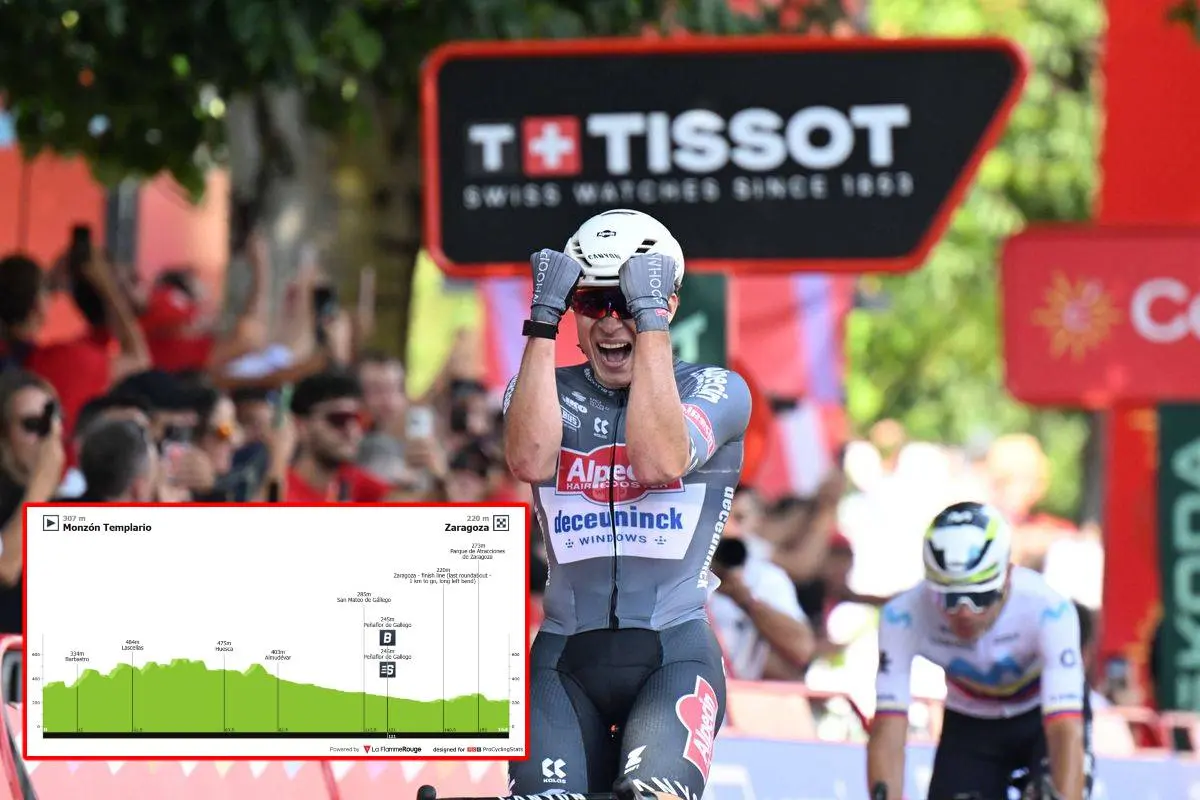
Visma were victims of bike theft at La Vuelta
Beyond the Teams: A Call for Organisational Responsibility
While teams have clearly been forced to adopt their own security protocols – from reinforced lorry positioning to on-call alarms – Lefevere argues that the burden shouldn’t fall solely on them. The core of his frustration lies in the absence of structural support from race organisers. “You start to wonder why organisers aren’t stepping up,” he said. “They invite us to their races, use our riders and equipment to sell their event, and yet we’re left to fend for ourselves when it comes to basic protection.”
It’s a point few would argue with. Teams already carry the cost of logistics, staffing, and equipment – often totalling millions per year. To then suffer substantial financial and material losses during a race due to lax venue security feels, to many, like an avoidable failure.
In a sport where margins are tight and equipment is bespoke, the implications of a theft go beyond mere inconvenience. Replacement frames, custom setups, and race readiness are all affected – sometimes with little notice before a stage.
“The Good Old Days” – A Humorous, But Telling Anecdote
Despite the serious tone of his piece, Lefevere does allow himself a moment of wry nostalgia. “During a race in Puglia, I noticed a lot of scooters circling our parking area – young lads clearly interested in what we had.”
Concerned, Lefevere raised the issue with the hotel owner, who offered a very Italian solution. “He said, for a small fee, he could sort it out. I paid, and not long after, two of those scooters reappeared – only now they were acting as our security, complete with weapons tucked into their tracksuit bottoms.”
“Those were the good old days,” Lefevere quipped.

Lefevere was the long-time face of the Quick-Step team
Time for a Collective Response
Jokes aside, the message is clear: professional cycling can no longer treat these incidents as bad luck or isolated misfortunes. The increasing sophistication of the thefts points to criminal networks targeting races with impunity, and unless organisers take a more proactive role in securing team areas – particularly at hotels and start zones – it’s likely the problem will continue to escalate.
Teams are doing what they can. But without structural support, it’s a game of cat and mouse they can’t win alone.
As Lefevere succinctly put it: “Organisers have a duty of care – it’s time they acted like it.”

Kieran WoodDeputy Editor-in-Chief
Kieran Wood is a sports journalist based in Wales and has been active in journalism since 2022. He regularly contributes to DartsNews.com and CyclingUpToDate.com, where he covers professional cycling and darts. In cycling, his work includes liveblogs from major races, including the Tour de France, the Giro d’Italia, and La Vuelta a España, alongside race reports and analysis. He has also conducted interviews with professional riders.
His reporting spans the full racing calendar, from one-day classics to stage races, with a focus on accurate, real-time coverage and clear contextual analysis. For statistics, results, and historical context, he regularly uses resources such as ProCyclingStats. To support reporting on rider activity and training context where relevant, he also references Strava.
In his work, Kieran places strong emphasis on careful sourcing, editorial accuracy, and updating articles as new, verified information becomes available.
claps 0visitors 0
Just in

Popular news
Latest comments
- Noted. But I had to appease his fans.MajorPayne19-10-2026
- I wonder if he'll race Challenge Mallorca
 Rafionain-Glas19-10-2026
 - Head to head time-splits: Jay Vine vs Remco Evenepoel: 10.5 km - Vine lost 45 seconds to Evenepoel 34.2 km - Vine lost a further 1:10, and was caught in the vicinity of that checkpoint. Note: I remember Vine getting caught before the second checkpoint, and ProCyclingStats log supports that, however, the gap at the second checkpoint was less than 2 minutes. 45.4 km - Vine lost only 16 seconds Of course, Vine lost less time in the middle section than the early section, but at the final segment rate, he'd have lost 15 seconds in the opening section and and 34 seconds in the middle. It is possible that Vine paced himself very well but that seems unlikely. In comparison with Stefan Küng: Kung lost: 26 seconds at T1. A further 1:11 by T2. A further 40 seconds by the finish. Relative to Evenepoel, Küng did slow down by the end. Maxime Decomble: Lost 47 seconds at T1. A further 1:20 by T2. A further 26 seconds by the finish. Mikkel Bjerg: Lost 37 seconds at T1. A further 1:34 by T2. A further 46 seconds by the finish. It is not concrete evidence that Vine cheated though it certainly doesn't absolve him. However, watching the race, I am 100% sure that Vine did not pull over and follow a different line when Remco passed him. Remco pulled away quite quickly, but the gap did not balloon and Vine definitely got aero assistance.Rafionain-Glas19-10-2026
- That ship has sailed years agovappaxbipmv19-10-2026
- He doesn't have to. I'd be perfectly happy if he loses SB if he then wins everything elsevappaxbipmv19-10-2026
- Please don't put Remco in the same sentence as Tadej. It's disrespectful to Tadej. Please make a note of this.KissinKate19-10-2026
- ....and you just described how americans are fleecing american fans as well. We don't even get the eurosport coverage you get. What you see on yurrup HBO is not available in this country. Trust me, being a cycling fan sucks everywhere.KissinKate19-10-2026
- While media outlets point to the loss of Richard Carapaz, Kasper Asgreen, and rising talents like Steinhauser as a sign of trouble, this is actually classic EF Pro Cycling tactical pivot at play. Operating on less than half the budget of state-backed super-teams, Jonathan Vaughters smartly maximized Carapaz’s return on investment by turning high salary and health setbacks into Tour stage wins, Yellow, and the Polka Dot jersey, before freeing up vital capital when his valuation peaked. Let us be completely honest here: Carapaz’s departure to NSN is strictly about securing one final massive payday before calling time on his career, rather than building a lasting sporting legacy. EF built a squad around him and gave him tactical freedom that few teams would offer, but given his ongoing health concerns and age, keeping him at that price point represented an unsustainable risk. It is very unlikely he will match the freedom or success he enjoyed at EF with his new team, making this move a pure business decision for a veteran rider cashing in on his remaining value. In contrast, while signing Tao Geoghegan Hart carries its own physical risk, it comes at a vastly different financial scale that protects EF's bottom line while offering immense upside. Replacing that climbing depth won't happen overnight, but bringing in Tao fits EF’s proven reclamation playbook perfectly by providing a low-pressure, culture-first environment for a proven Grand Tour winner to find his magic legs again. Backed by a secured core in Ben Healy, Neilson Powless, and Sean Quinn through 2029, EF isn't crumbling; they are simply resetting their wage structure, staying nimble, and betting on high-ceiling upside where richer teams only see risk.wambo19-10-2026
- This is classic EF Pro Cycling: where other WorldTour squads see risk and injury recovery as a liability, Jonathan Vaughters sees high-ceiling potential and an opportunity to build a custom runway for a rider's resurgence. While Richard Carapaz's high salary and health setbacks made a traditional Grand Tour victory unlikely against today's dominant talents, EF smartly maximized every ounce of his ability by pivoting toward high-visibility targets like a Tour de France stage win, the Yellow Jersey, and the King of the Mountains title. Now, with Carapaz moving on, Tao Geoghegan Hart’s ceiling when healthy is undeniable, and after a tough couple of years recovering from his Giro crash, EF's patient, culture-first approach might be the exact environment he needs to find his magic legs again. EF has consistently proved that they do not need the largest budget in the peloton to extract elite value and deliver memorable performances. By giving Tao the time and tactical freedom to rebuild without overwhelming pressure, this move could easily pay huge dividends and shock a lot of people in the coming seasons.wambo19-10-2026
- The article makes it sound like a great thing and something to be applauded. The reality is is gives the Americans another 6 years to fleece European cycling fans or force them to hunt around Europe with VPN’s for free feeds. Not something to be celebrated in my book. Before someone points out that coverage of this depth costs money, yes, I agree but not £30+ per month a fee I will wager will gradually increase now this deal has been cemented.Paul53119-10-2026
Loading
Write a comment