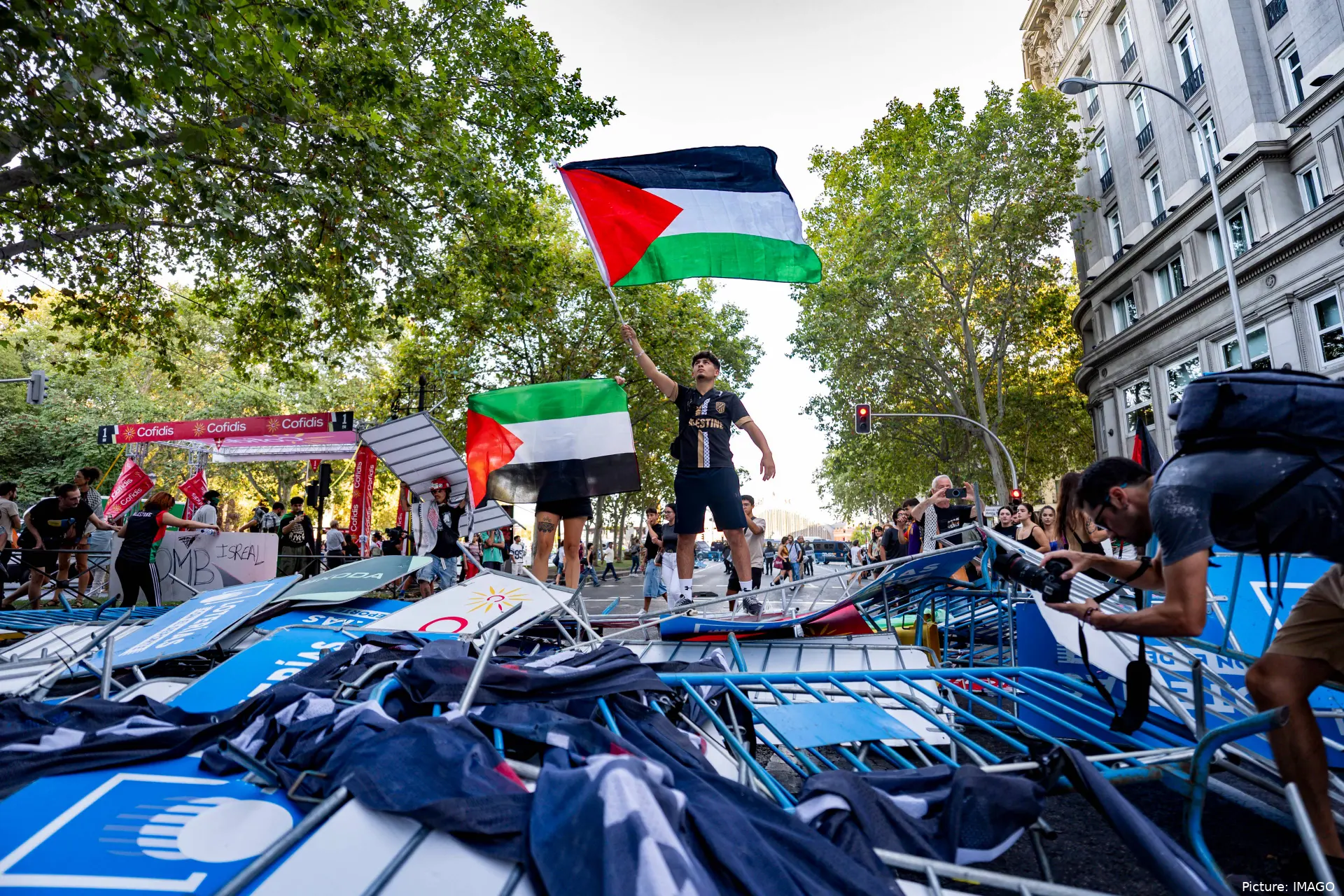
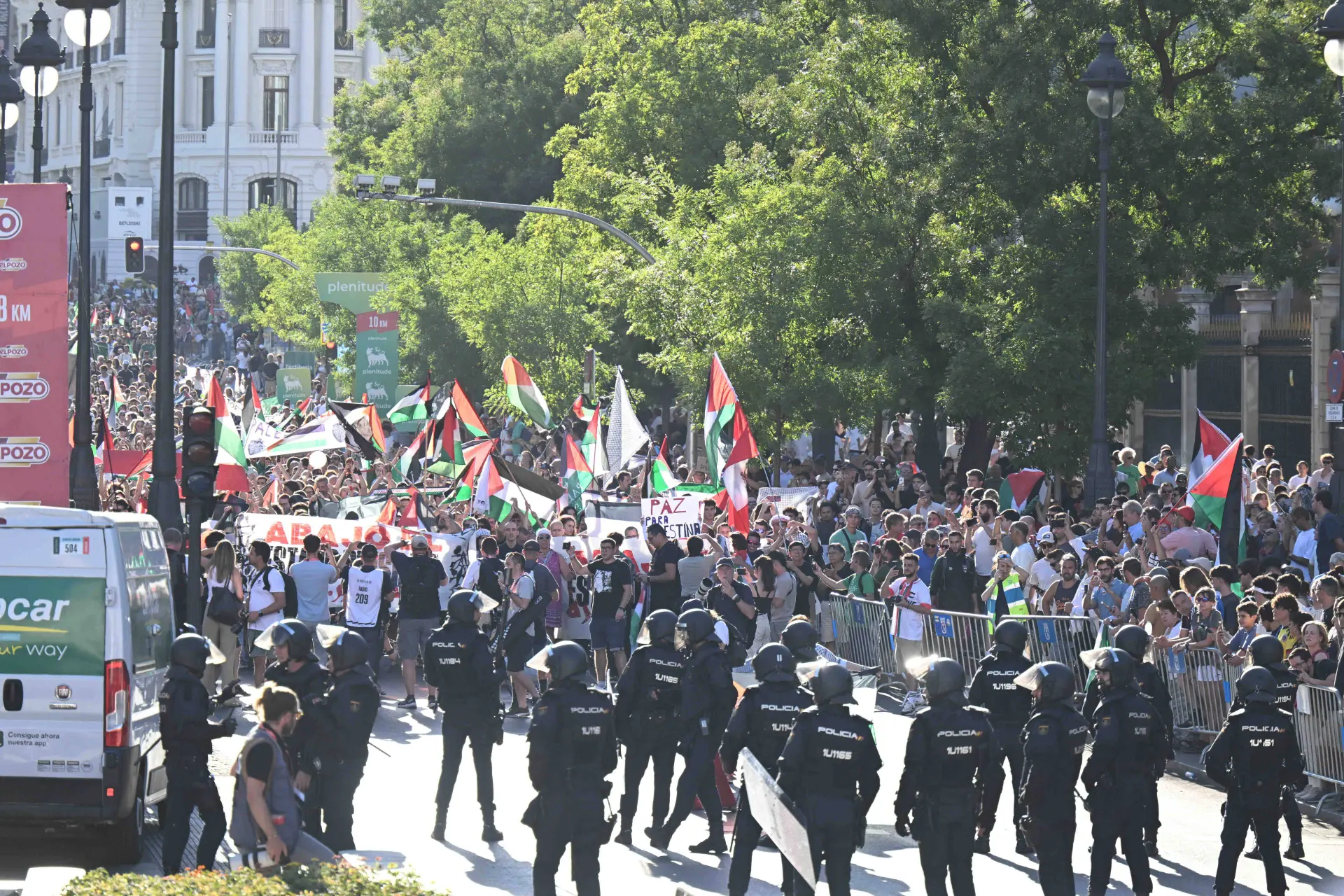
The Vuelta a España 2025 has drawn to a close, leaving behind what will likely be remembered as its darkest edition. Rarely has a grand tour ended with such a sense of defeat, both for the organization and for cycling as a whole. Instead of celebrating the sport, it exposed weakness, an event left stranded without proper management, support, or the ability to shield itself when it mattered most. The race collapsed under the weight of protests and internal disorganization, unable to defend its image or finish with dignity.
This is, at its core, a cycling analysis, not an attempt to equate a sporting failure with the suffering endured by the Palestinian people. Those tragedies exist on a far greater scale. Yet what the Vuelta has revealed is how little importance it holds for those in power. Demonstrations laid bare that almost no one, politicians, institutions, or even the UCI, truly cared about defending the race. Fans too, tired of the direction the event has taken, stood more resigned than outraged.
The decision not to invite the Israeli team requires clarification. The Vuelta excluded them for the same regulatory reasons used earlier this year at the Volta a Catalunya. But unlike in Catalonia, here the race collided head-on with protests, disrupting everything. Israel continues to participate in major global sports (football qualifiers, the Champions League, Euroleague basketball) without the same backlash. This context matters: the Vuelta was neither singled out uniquely nor protected when disruption came.
The governing body did little more than issue a cold statement from David Lappartient’s Swiss home, essentially rubber-stamping the participation of Israel’s team while leaving the Vuelta to fend for itself. The message was clear: “Find your own way to solve the problem.” For an event already limping, this bordered on contempt.
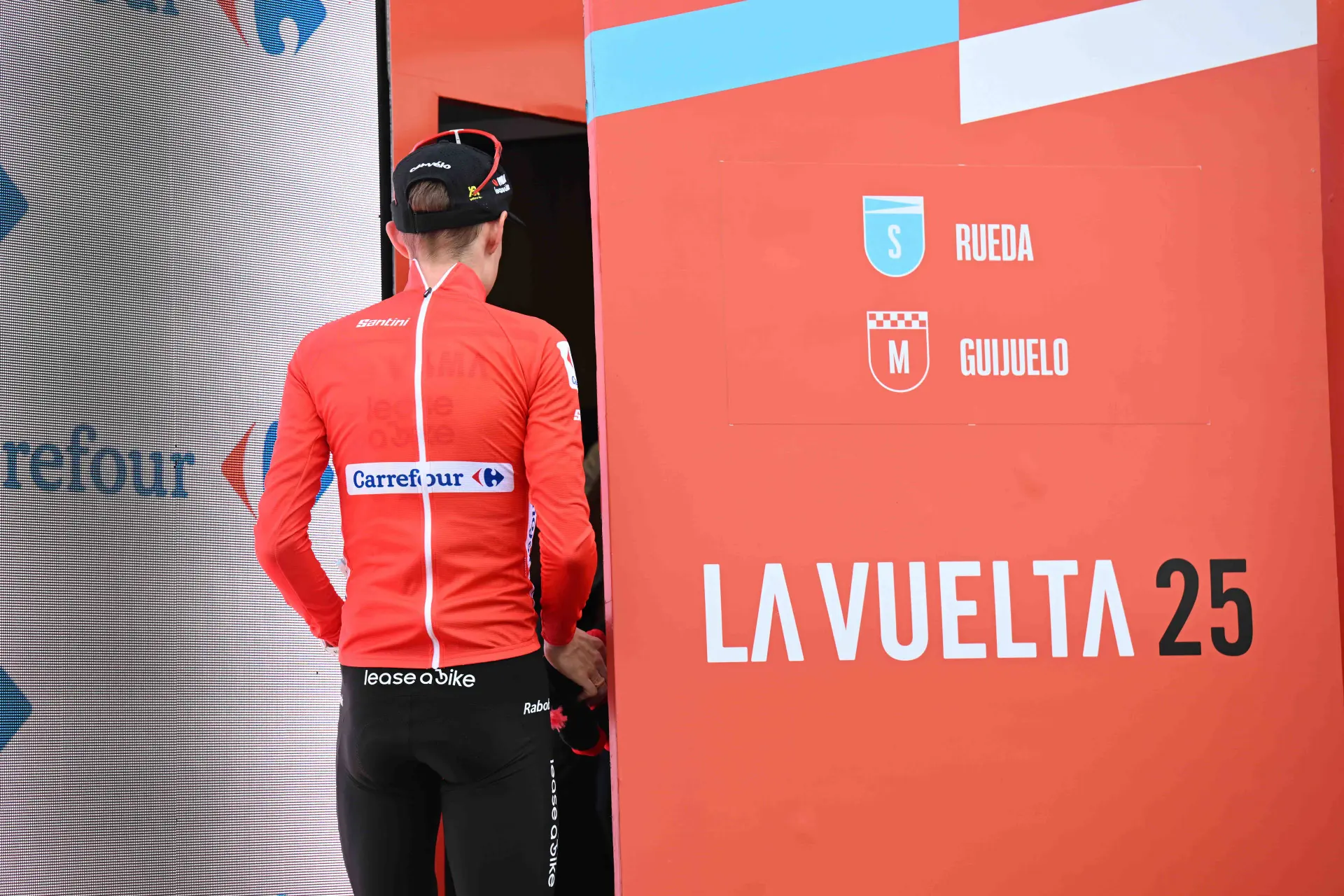
The calendar placement added insult. While the Tour de France protects its Champs Élysées finale like a national treasure, the UCI scheduled other major WorldTour races, Quebec and Montreal, directly against the Vuelta’s closing stages. Can anyone imagine Tadej Pogacar riding a non-Tour event the same day as Paris? Yet Vingegaard, winner of this Vuelta, lifted the red jersey without ceremony, overshadowed by Italian classics and North American one-day races. The message was unmissable: the Vuelta simply doesn’t matter.
If the sport’s institutions weakened the race, its national broadcaster humiliated it. RTVE’s coverage was shambolic. Stages were chopped mid-broadcast, interviews cut abruptly, cameras poorly placed to capture intermediate battles. Coverage bounced daily from Teledeporte to La 2 to La 1, leaving viewers guessing where to watch. Many stages couldn’t be followed in full, an unforgivable failure for one of cycling’s three grand tours. The technical quality lagged years behind the Giro or the Tour, a constant reminder of neglect.
The race faced hostility from all sides. Protesters seized their moment, the UCI stood aside, politicians exploited it, fans disengaged, and even Israel’s team attacked the organization, at one point demanding measures the Vuelta couldn’t deliver. The event lacked the strength or authority to respond.
What remains is an uncomfortable conclusion: the Vuelta has never looked so fragile, so incapable of defending itself. Everyone seemed against it, and it had no means to fight back. The final verdict is brutal but undeniable, the best thing is that it’s over.
Read also
.

Fin MajorCycling Journalist
Fin Major is a UK-based writer at CyclingUpToDate and has been part of the team since 2024. He is the site’s main writer for FAQs and evergreen explainers and has written around 2,000 pieces for the platform. Alongside this work, he focuses on in-depth analysis and covers the biggest races on the calendar, including the Tour de France, the Giro d’Italia, and La Vuelta a España, providing clear context around performance trends, tactics, and key storylines.
In his reporting, Fin uses reputable data sources such as ProCyclingStats for results, statistics, and historical context. He places strong emphasis on careful sourcing, editorial accuracy, and updating articles promptly when new, verified information becomes available. Outside of writing, Fin is an active cyclist, which supports his practical understanding of the sport and its demands.
claps 2visitors 2
Just in
Popular news
Latest comments
- Campenaerts looked like a rolling pumpkin with that all orange leaders skinsuit !frieders318-10-2026
- He can take his dumb a$$ politics somehwere else !frieders318-10-2026
- good to have her back. fingers crossed she‘ll be able to stay!Ketterechts17-10-2026
- A tenner and he wins the Tour next year, too 😂anonymouscyclist17-10-2026
- the answer is either stick to classics or GTs but not bothabstractengineer17-10-2026
- the exodus already stared with Ciccone. Already they were struggling with two sprinters, now there are three. Also Ganna will demand leadership. Gall is the most proven GC, Ayuso has the most potential. GC leadership for everybody will be impossible. Literally a UAE style mess without pogi.abstractengineer17-10-2026
- I raced as an amateur for 12 years, including six years on my country’s national road cycling team. I secured two national titles and competed in three World Championships plus more than 15 international stage races. At 23, we travelled to Italy for a training camp—or so I assumed. On a rest day, we watched a presentation about adopting a more “professional” training approach. It was crystal clear what “professional” meant. That moment first exposed me to this dilemma. After returning from Italy, I left cycling—at least at the competitive level I had known. Over the following two years, the whole team was caught doping. I hold that everyone is innocent until proven guilty. In my view, current stakeholders operate on a different scale, and the sums involved are vast. I am unsure whether any doping would ever be revealed. I try to stay positive and enjoy the show. My 2c.
 vannpelt17-10-2026
 - Fiver he wins 🤣
 leedorney17-10-2026
 - “…measures to reduce speeds.” Might as well shorten the race course to just 50km as well? ASO generates at minimum €300m a year and 30- 40% profit. Maybe stop being greedy and spend more of the profit to protect the riders instead.b3tlla17-10-2026
- he also had quite the life off the bike during his pro years. he used his celebrity status to full affect.mij17-10-2026
Loading
Write a comment