“It doesn’t take much before it all grinds to a halt” — Vuelta chaos highlights cycling’s fragile future says Danish ex-pro
Cycling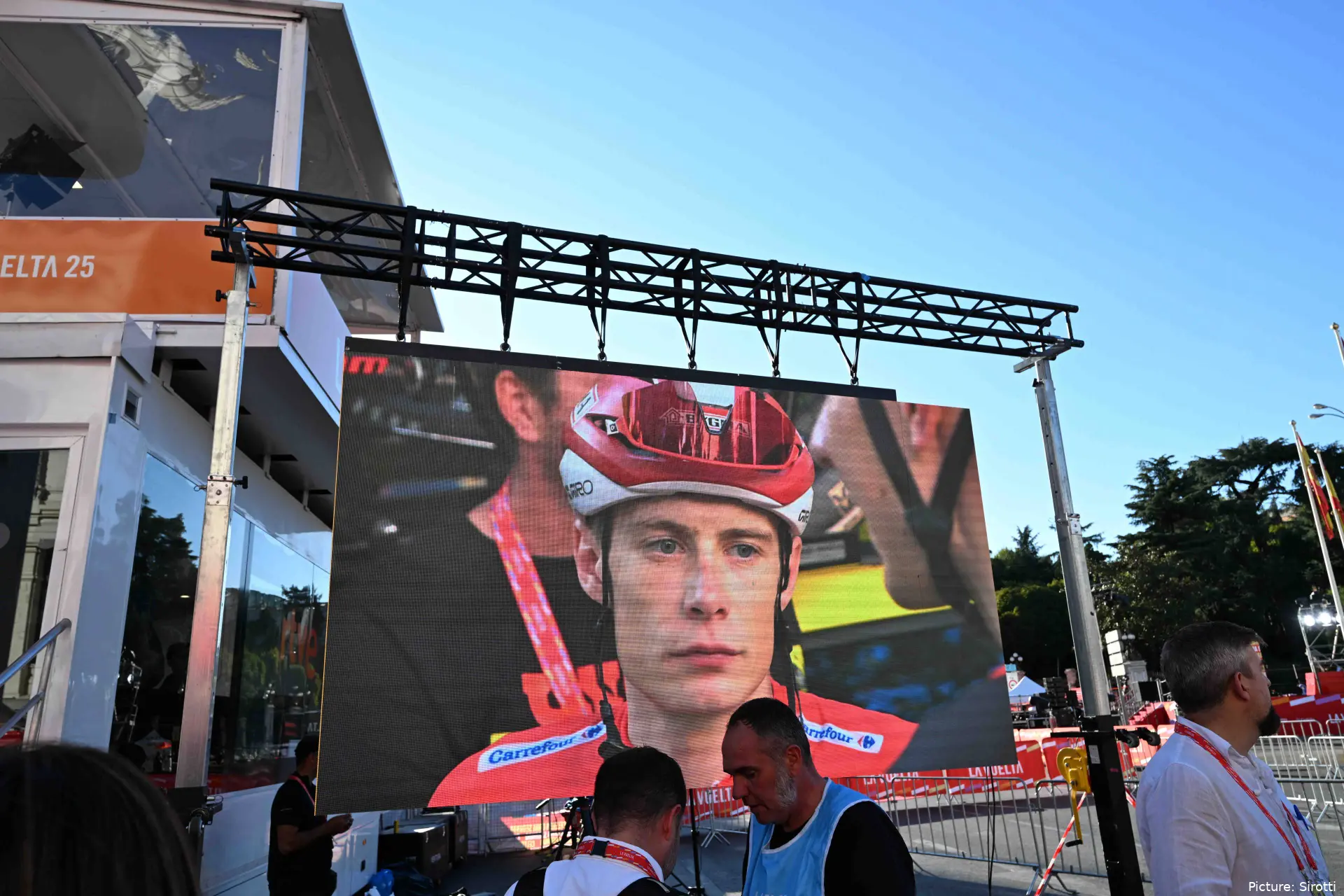
The 2025 Vuelta a Espana was supposed to end in celebration — a sun-drenched procession into Madrid, champagne toasts atop team cars, and the coronation of Jonas Vingegaard after three brutal weeks of racing. Instead, it concluded in silence, tension, and deep concern, as repeated protest actions forced the final stage to be abandoned — and with it, raised urgent questions about cycling’s vulnerability in the modern era.
For Eurosport commentators and former professionals Jesper Worre and Matti Breschel, the events were more than just a logistical nightmare. They were a stark wake-up call.
“It doesn’t take much before it all grinds to a halt,” Breschel observed in post-race analysis for Eurosport, grimly as images showed riders dismounted, barriers toppled, and race officials scrambling. “Cycling has survived world wars, a global pandemic… but this is a new kind of threat. A quiet one. And that’s what makes it dangerous.”
A Sport Exposed
Unlike stadium-based sports, cycling is uniquely exposed. Races take place across thousands of kilometres of open roads, weaving through towns, mountains, and countryside. That openness is part of its charm — but also its greatest vulnerability.
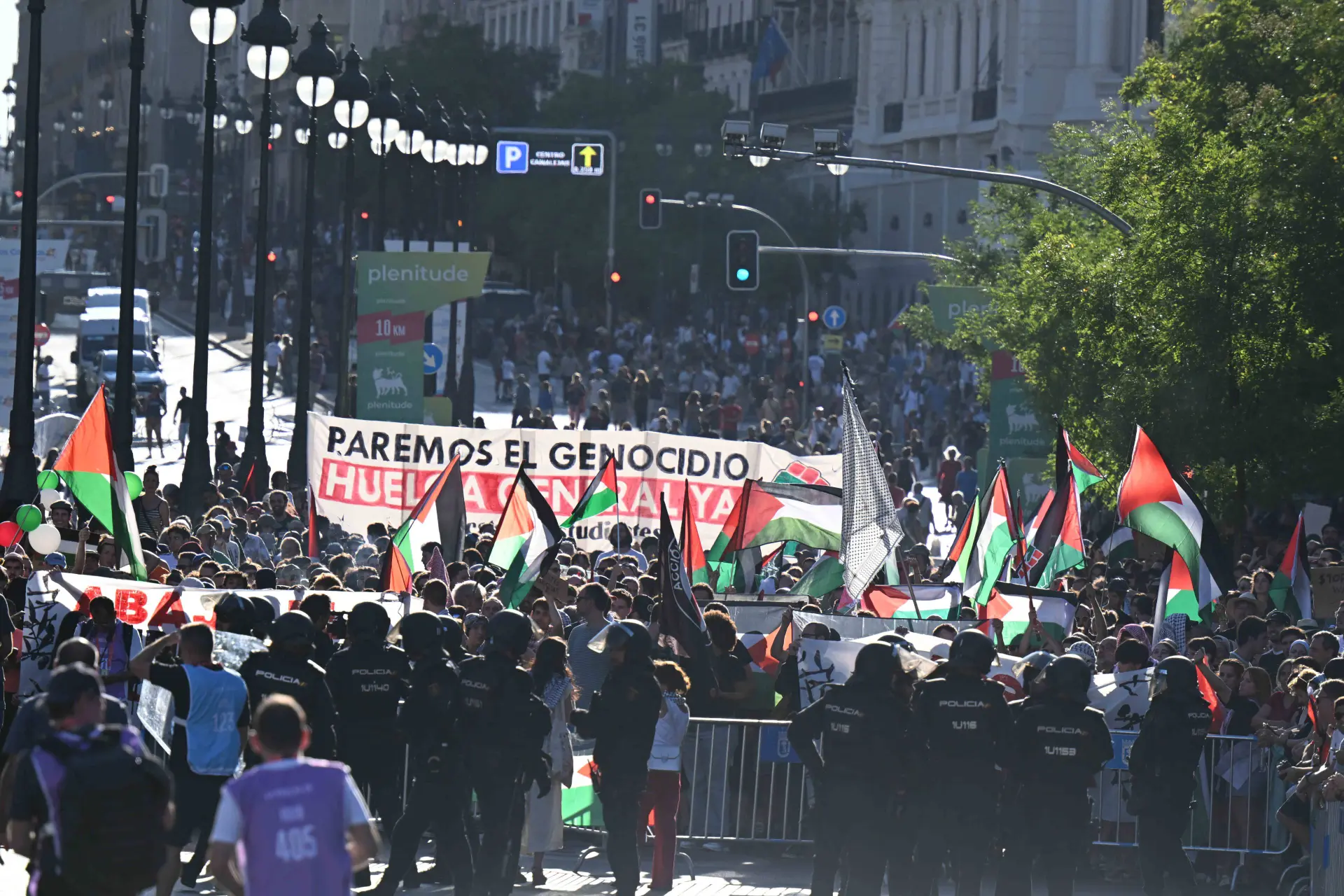
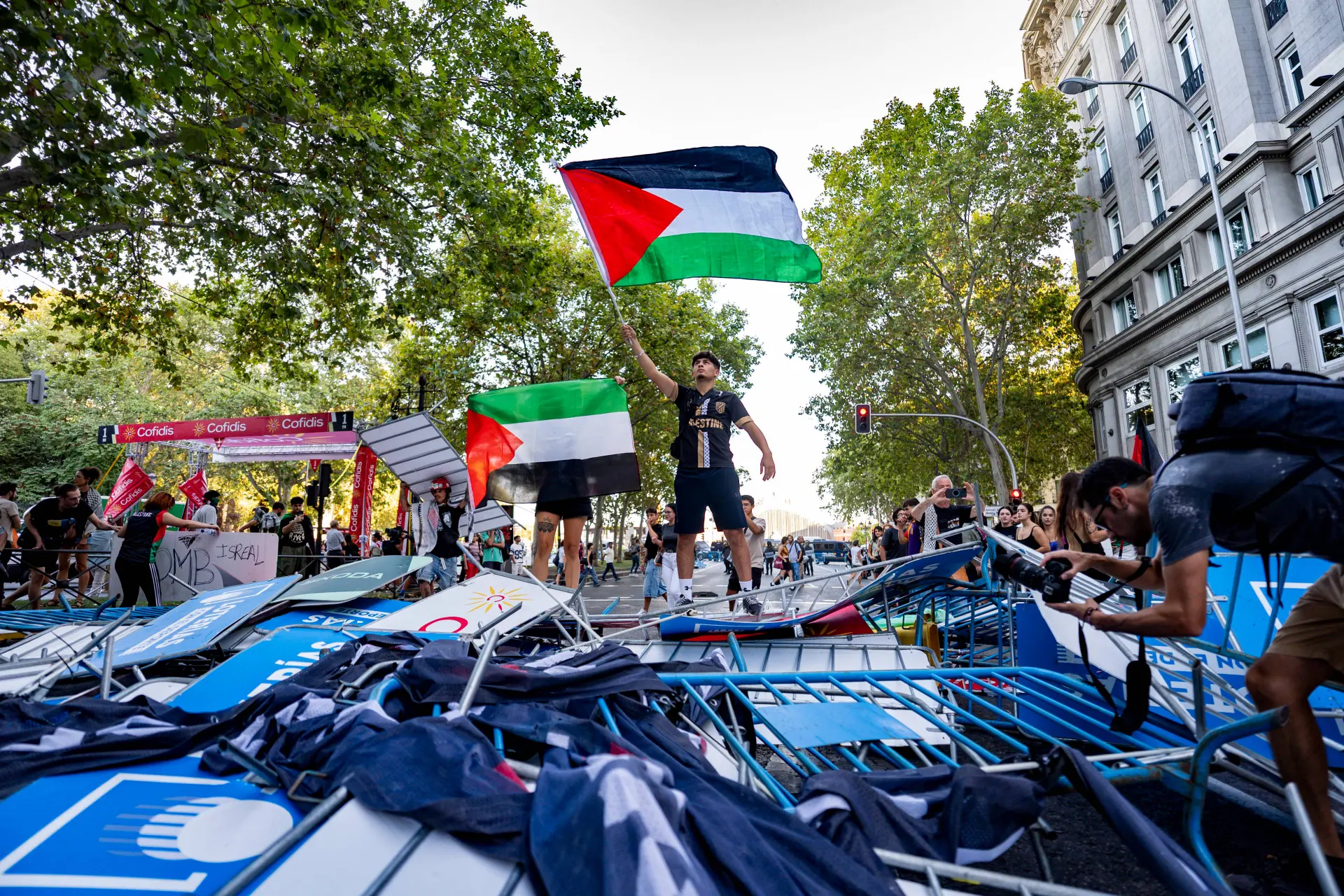
The 2025 Vuelta saw protest action on multiple stages, beginning in the early days and culminating in a full stop to the final stage. Demonstrators disrupted the route, knocked over safety barriers, and, in one alarming instance, attempted to enter the peloton while riders approached at race speed. “We’ve actually seen people trying to run into the riders,” Worre said during live coverage. “At 60 km/h, that’s not just reckless — it’s potentially catastrophic.”
He continued: “When the barriers come down, there’s no buffer. You can’t hold a professional cycling race like that. Yesterday the road was blocked, and fortunately the leaders got through unscathed. But this isn’t sustainable.”

Chaotic scenes in Madrid led to stage 21 being cancelled
A Tragic End to a Grand Tour
The final day of a Grand Tour is traditionally ceremonial — a parade for the GC winner, a final sprint showdown, and a moment for fans to honour the peloton’s collective effort. But as riders came to a halt on the outskirts of Madrid, their expressions said it all: frustration, confusion, and a hollow sense of anti-climax. “It felt empty. Tragic, even,” said Worre. “If we feel that way, just imagine what the riders must be going through.”
Organisers were left with no choice. With safety no longer guaranteed, the race was neutralised, podium ceremonies were scrapped, and the curtain fell not with celebration, but with caution.
The Organisers' Dilemma
For race director Javier Guillén and his team, the decision to push forward until the last possible moment was not made lightly. As Breschel pointed out, the logistics of rerouting a Grand Tour stage are immense — especially with economic and broadcast commitments already locked in. “You can race anywhere,” Breschel said. “But only if it’s safe. They could have found an alternative loop, but no one could’ve predicted this level of disruption.”
Still, both he and Worre defended Guillén’s handling of the situation. “They did what they could. They tried to keep the race going. But eventually, the safety risk outweighed the spectacle.”
The Broader Implications for the Sport
More than the outcome of a single race, this year’s Vuelta has sparked a broader, more existential question: how can cycling protect itself in an increasingly unpredictable world?
With other sports able to control their environments, cycling stands nearly alone in its exposure. Whether it’s climate protests, political activism, or social movements, a single individual — or a small group — can bring a 200-rider peloton to a halt. And as Worre noted, this isn’t a one-off. “We’re not just talking about one bad day. This happened several times. The Vuelta barely made it to Madrid. That’s not normal.”
The fragility of the sport’s ecosystem — from organisers and teams to riders and fans — is more apparent than ever. The question now is whether cycling’s governing bodies can adapt.
In Spite of It All: Reasons to Celebrate
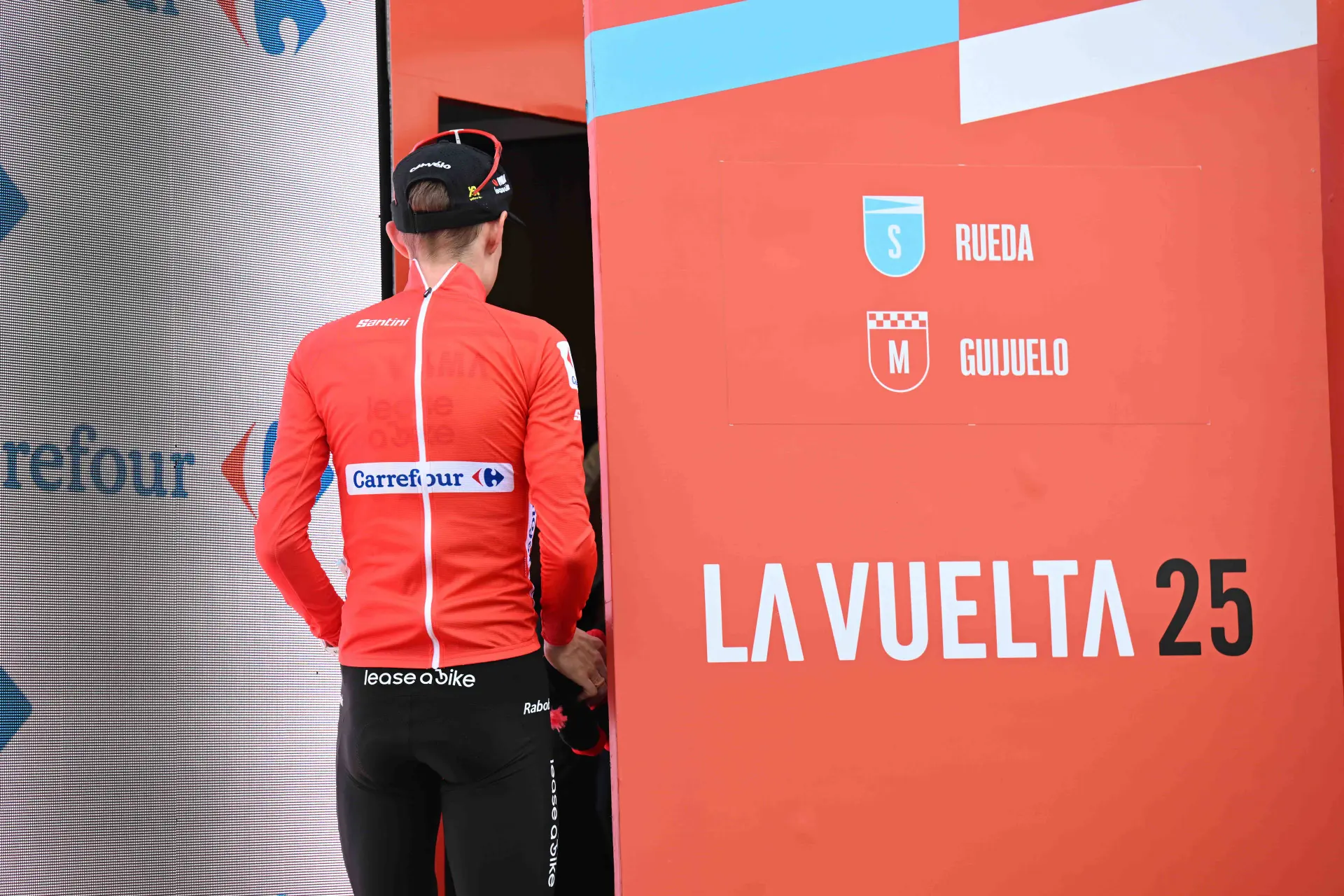
Despite the chaos, the race still delivered on many fronts. Jonas Vingegaard claimed a commanding victory, further cementing his place in Grand Tour history. Mads Pedersen secured the points jersey with his trademark grit and consistency. Whilst Matthew Riccitello took the White Jersey for Best Young Rider and Jay Vine the polka-dots of King of the Mountains. “Let’s not forget what was achieved,” Worre reminded viewers. “Vingegaard still wins. Pedersen still takes the green. That matters.”
But the bigger takeaway, as Breschel and Worre both emphasised, is that professional cycling cannot afford to ignore its structural weaknesses. “It only takes one breach,” said Breschel. “And the whole thing collapses. That should concern everyone — not just the organisers, but the entire cycling community.”
Kieran WoodDeputy Editor-in-Chief
Kieran Wood is a sports journalist based in Wales and has been active in journalism since 2022. He regularly contributes to DartsNews.com and CyclingUpToDate.com, where he covers professional cycling and darts. In cycling, his work includes liveblogs from major races, including the Tour de France, the Giro d’Italia, and La Vuelta a España, alongside race reports and analysis. He has also conducted interviews with professional riders.
His reporting spans the full racing calendar, from one-day classics to stage races, with a focus on accurate, real-time coverage and clear contextual analysis. For statistics, results, and historical context, he regularly uses resources such as ProCyclingStats. To support reporting on rider activity and training context where relevant, he also references Strava.
In his work, Kieran places strong emphasis on careful sourcing, editorial accuracy, and updating articles as new, verified information becomes available.
claps 3visitors 3
Just in
Popular news
Latest comments
- You can add weight to a bike and limit gears or make it single speed if you like. I doubt that would reduce crashes. It would just add another dymanique. All good and well, but It wont stop cars getting on to the course.Cyclingsbestfan18-10-2026
- Seixas is probably second best in the World on short climbs. But that hasn't translated as well to long climbs
 Rafionain-Glas18-10-2026
 - Idiotic fellaRafionain-Glas18-10-2026
- Nothing. Against Pogi nothingabstractengineer18-10-2026
- He didn't even try to sprint all outvappaxbipmv18-10-2026
- Campenaerts looked like a rolling pumpkin with that all orange leaders skinsuit !frieders318-10-2026
- He can take his dumb a$$ politics somehwere else !frieders318-10-2026
- good to have her back. fingers crossed she‘ll be able to stay!Ketterechts17-10-2026
- A tenner and he wins the Tour next year, too 😂anonymouscyclist17-10-2026
- the answer is either stick to classics or GTs but not bothabstractengineer17-10-2026
Loading
1 Comments