Investigation into Muriel Furrer’s fatal crash closed with no criminal wrongdoing found but cycling’s safety questions remain
Cycling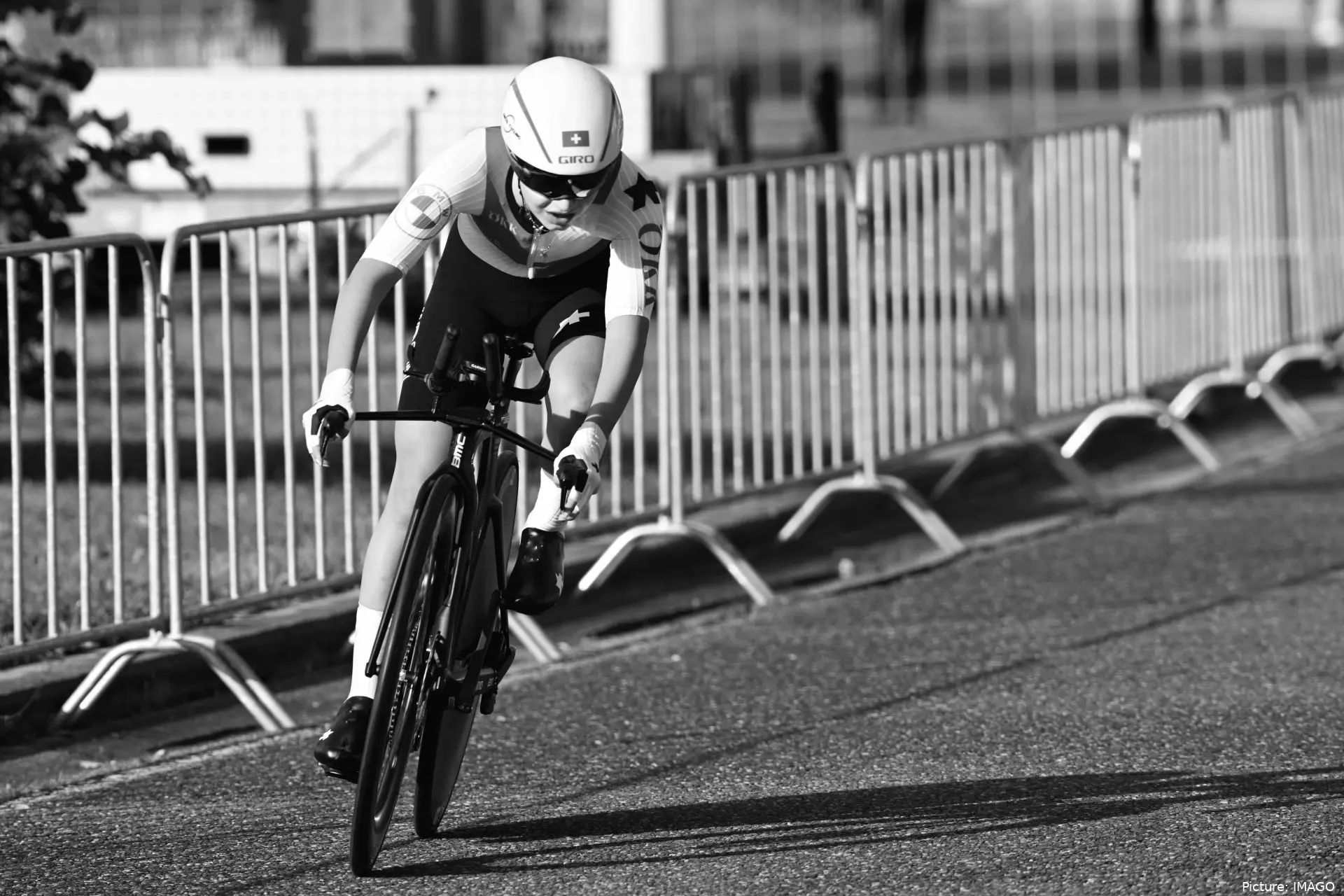
The investigation into the fatal crash of Muriel Furrer at the 2024 Road World Championships in Zurich has been closed, with authorities confirming that no criminal wrongdoing was found in relation to course safety or the emergency response.
Furrer, aged 18, died after sustaining severe head injuries in a crash during the junior women’s road race. The incident prompted widespread concern across the sport, not only because of the outcome, but also due to the circumstances in which she was found.
According to the findings, 1 hour and 25 minutes passed between the moment of the crash and the arrival of emergency assistance. Furrer had come to rest off the road among trees, out of sight, before she was located and treated. She died in hospital the following day.
While the investigation has now concluded that no “criminally relevant” errors were committed, the timeline has remained central to the wider debate that followed.
A tragedy that reshaped the conversation
In the immediate aftermath of Zurich, cycling was forced to confront a question that had long existed but rarely been tested so starkly: how quickly can a rider be found after leaving the road?
The answer, in this case, exposed a gap. In the months that followed, governing bodies, teams and organisers accelerated discussions around rider tracking systems designed to detect when a rider stops moving or leaves the race route. GPS-based solutions, capable of triggering alerts in real time, were positioned as a potential safeguard against similar scenarios.
That process has not been straightforward. Disagreements over implementation, data control and governance have slowed progress, even as trials have taken place and systems have been used in selected events. The debate has shifted from whether such technology is possible, to how it should be applied across the sport.

Furrer tragically passed away at the 2024 World Championships
Progress made, questions still open
Recent developments suggest movement towards a more structured solution, with the UCI outlining a pathway towards broader adoption of GPS tracking as a safety tool. Yet the closure of the Furrer investigation does not resolve the underlying issue.
The conclusion that no criminal fault was found provides legal clarity, but it does not alter the fact that more than an hour passed before Furrer was located after her crash. That reality continues to shape how the sport views rider safety in scenarios where visibility is limited. And more recent incidents have shown that the concern is not confined to Zurich.
Crashes on descents, where riders can leave the road beyond the sight of the race convoy, remain an inherent risk. The challenge is not only preventing such incidents, but ensuring that when they do occur, the response is immediate.
A turning point, not an endpoint
A year and a half on, the investigation’s conclusion marks the end of one process, but not the end of the conversation. Cycling has taken steps towards addressing the issue, but it has not yet fully resolved it. The push towards GPS-based rider tracking reflects a recognition that existing systems may not be sufficient in every scenario.
Furrer’s death forced the sport to examine its blind spots. The findings in Zurich may close the legal chapter, but the broader safety debate it sparked remains very much open.

Kieran WoodDeputy Editor-in-Chief
Kieran Wood is a sports journalist based in Wales and has been active in journalism since 2022. He regularly contributes to DartsNews.com and CyclingUpToDate.com, where he covers professional cycling and darts. In cycling, his work includes liveblogs from major races, including the Tour de France, the Giro d’Italia, and La Vuelta a España, alongside race reports and analysis. He has also conducted interviews with professional riders.
His reporting spans the full racing calendar, from one-day classics to stage races, with a focus on accurate, real-time coverage and clear contextual analysis. For statistics, results, and historical context, he regularly uses resources such as ProCyclingStats. To support reporting on rider activity and training context where relevant, he also references Strava.
In his work, Kieran places strong emphasis on careful sourcing, editorial accuracy, and updating articles as new, verified information becomes available.
claps 2visitors 2
Just in
Popular news
Latest comments
- Being the best rider left in the race is pretty much the only way to win in any edition, surely? Seems reductive to say "they only won because the entire peloton wasn't as absolutely stacked as it could've been" - you can only beat who is in front of you.wrsty08-10-2026
- I’m sorry but generally the coverage on your site is first class but this incident highlights something I just don’t get with cycling journalism. This accident should never have been allowed to happen, it comes uncomfortably close to the Finlay Tarling tragedy and two other incidents took place within days of this. I checked all of the cycling websites and you all put out basically the same story. Pidcock gave journalists the perfect opening to blow this sky high, what has the UCI got to say? What is Adam Hansen doing? What do the organisers say? Nothing, you all trot out the same easy quotes taken from Pidcocks interview after the race but do nothing to follow it up. I see it time and time again, journalists taking the easy way out but being outraged when it happens again as it surely will. Riders can’t do this but journalists should be independent and should be able to raise these uncomfortable questions but cyclinguptodate and every other on line publication prefer to take the easy way out. That’s the real tragedy here.Paul53108-10-2026
- Happy to help :-)Mistermaumau08-10-2026
- Well, ok but, it’s also a structural, team, budgeting, direction and all sorts of other issueMistermaumau08-10-2026
- I wouldn’t call it an analogy but maybe his criticism is a little unfair. On the other hand, the fact Cicco made a public affair out of it despite having received all the explanations and proof makes me feel he now deserves being criticised for not accepting there is nothing to discuss.Mistermaumau08-10-2026
- Much as I like him (one of my favourites), I do want to attract a little attention to the coincidence of his recent performances in the current context. Not the first time a rider improves noticeably when there’s a job interview to prepare. In the same lighthearted humour of his, i hope the UCI will let him wear it at home as the rules quite strictly state you can only wear it during participation in the discipline you won in, and we all know how capable they are of interpreting rule interpretation ;-) Also, if it’s going to be retirement (please not), I wouldn’t call that an agreement as somebody will probably feel they didn’t get what they wanted.Mistermaumau08-10-2026
- Agreed. There used to be a team willing to pay though. I take all these figures (that vary enormously according to who is publishing) with handfuls of salt. We don’t know how salaries are treated (especially between a UK employer and Andorran resident), we don’t know how numbers are derived and from where, if deductions have been taken into consideration, etc. but if he returns to Colombia, he’s going to need quite a bit in protection money.Mistermaumau08-10-2026
- And another one gone, another one gone, another one bites the dust. Ah gonna get you too…Mistermaumau08-10-2026
- Top marks RidesHills. A great post that sums up exactly Egan Bernals situation.Cyclingsbestfan08-10-2026
- Thanks for pointing out that typo. Now ammended.Prorodsandstuff08-10-2026
Loading
1 Comments