Cycling edges towards mandatory GPS tracking after renewed safety concerns as UCI warns of “fundamental danger”
Cycling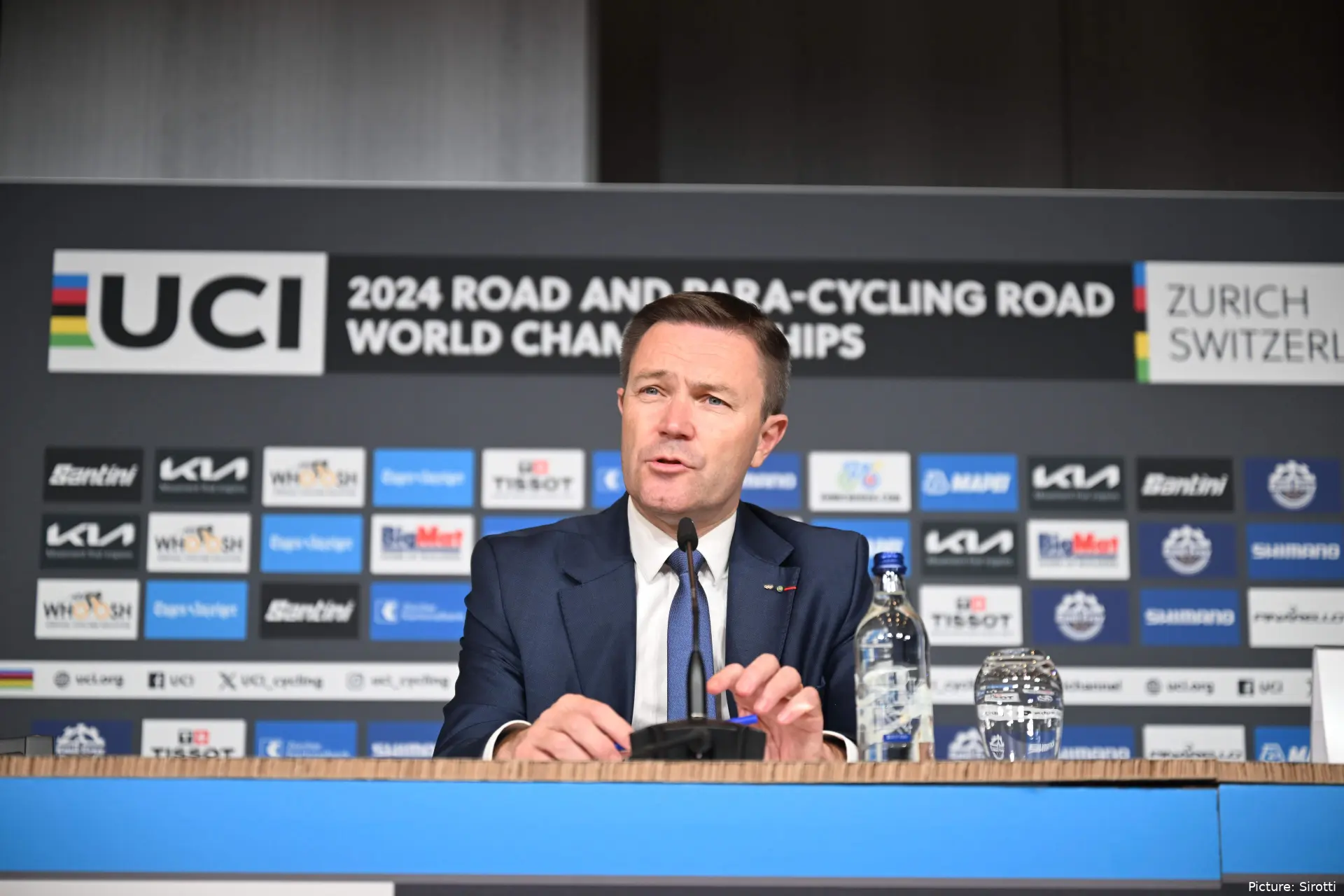
Cycling’s push towards mandatory GPS rider tracking has taken a significant step forward, but the momentum behind it has not emerged in isolation. It has been shaped by a series of incidents that have exposed a persistent vulnerability in the sport. When a rider leaves the road, detection is not always immediate.
That reality came into sharp focus at the 2024 Road World Championships in Zurich, where Muriel Furrer crashed during the junior women’s road race and was later found unconscious off the course. She died the following day. While investigations did not definitively establish that any delay in locating her caused her death, the circumstances raised urgent questions about how quickly riders can be found after going out of sight.
More recently, the issue resurfaced at the Tour de la Provence. Lidl-Trek rider Soren Kragh Andersen crashed during the opening stage after attacking on a descent, but the peloton initially assumed he had bridged clear. Speaking on the Forhjulslir podcast, teammate Mattias Norsgaard described how it took significant time before the team understood what had happened, saying there was “an hour and a half before we found out Soren Kragh Andersen had crashed.”
Two incidents, different outcomes, but the same underlying concern.
Read also
UCI outlines path towards mandatory tracking
Against that backdrop, the UCI has now moved the conversation forward.
According to reporting by Domestique, UCI President David Lappartient has written to teams, organisers and rider representatives to begin the next phase of implementing GPS-based rider tracking, with the expectation that such systems will ultimately become mandatory across professional racing.
The governing body has asked stakeholders to submit proposals covering both technical and operational aspects, with a deadline set for the end of April. While the process is framed as collaborative, the direction is clear. If a widely accepted solution is not reached, the UCI is prepared to define the system itself and enforce its adoption.
Crucially, the federation has described the risk of riders going off course unnoticed as a “fundamental danger” within the current race environment.
That language reflects a shift in how the issue is being viewed. What was once debated as a potential enhancement is now being framed as a core safety requirement.

UCI boss David Lappartient
From unresolved debate to growing pressure
The path to this point has not been straightforward. Attempts to introduce tracking systems have previously stalled amid disagreements over implementation, data governance and control. That tension came into public view at the Tour de Romandie Féminin, where several teams were disqualified following a dispute over the use of tracking devices during a race.
At the same time, elements of the technology are already in use, providing real-time location data and alerts in selected events. The question is no longer whether such systems can function, but how they can be applied consistently across the sport.
Recent incidents have added urgency to that discussion.
When a rider disappears from view on a descent or leaves the road beyond the sight of the convoy, the time taken to identify the situation and respond becomes critical. It is this gap that GPS tracking is intended to address.
Recent incident timeline
| Year | Event/Incident | Outcome/Action |
| 2024 | Muriel Furrer (Zurich Worlds) | Tragic death. Initial calls for better tracking. |
| 2025 | Romandie Féminin Conflict | Teams disqualified over tracker usage disputes. |
| 2026 | Soren Kragh Andersen (Provence) | Rider missing for 90 mins. UCI issues "Fundamental Danger" warning. |
| 2026 | April Deadline | Deadline for technical tracking proposals. |
Implementation Challenges: Data Privacy and Device Standards
Despite the stronger stance from the UCI, full implementation remains some distance away.
The current phase is focused on consultation, with multiple systems and approaches under consideration. An open framework, allowing different providers to operate within defined standards, is one possible direction, but questions remain over how such a system would be managed and enforced across all levels of racing.
What is clear is that the debate has moved on. Furrer’s death in Zurich forced cycling to confront a difficult question. Provence showed that the underlying issue has not disappeared. Now, the sport is edging towards a solution.
Whether that solution can be agreed collaboratively, or ultimately imposed, will define the next phase of cycling’s ongoing safety evolution.

Kieran WoodDeputy Editor-in-Chief
Kieran Wood is a sports journalist based in Wales and has been active in journalism since 2022. He regularly contributes to DartsNews.com and CyclingUpToDate.com, where he covers professional cycling and darts. In cycling, his work includes liveblogs from major races, including the Tour de France, the Giro d’Italia, and La Vuelta a España, alongside race reports and analysis. He has also conducted interviews with professional riders.
His reporting spans the full racing calendar, from one-day classics to stage races, with a focus on accurate, real-time coverage and clear contextual analysis. For statistics, results, and historical context, he regularly uses resources such as ProCyclingStats. To support reporting on rider activity and training context where relevant, he also references Strava.
In his work, Kieran places strong emphasis on careful sourcing, editorial accuracy, and updating articles as new, verified information becomes available.
claps 0visitors 0
Just in
Popular news

Latest comments
- Bernal won the Tour because his attack stuck after Thomas’s was reeled in, and then they ended the stage due to the landslide - a deserved win, but contingent on many things. He won the Giro with quality and skill. And then, like so often happens for the cruelest of reasons, his injuries left him an incomplete version of his former self. He’s had a great career, what a great GC rider (8 of his 23 wins are GC, including 2 grand tours and 2 of the 7 major GC races), but already was struggling after COVID. I wish him the best, and if he retires, he should retire with pride for a career well done!RidesHills07-10-2026
- Roglič? In an interview he’ll continue to be hilariously dry about his goals, emphasize that he’s still having fun, and keep churning along until he doesn’t want to do this anymore. “Ah, you know, 100 wins would be nice, but eh - it’s just a number. I have fun, you know?” I can almost hear him saying those words. He’s not heading for low rank races to get the wins, he continues to race the major races (and I suspect would have won the Vuelta again were it not for that awful accident and that disgusting purple leg right before racing began).RidesHills07-10-2026
- BTW the list of classics you gave from PCS is participation, not winning
 Rafionain-Glas07-10-2026
 - Yes, though we saw that last week already.Jumpyjohn07-10-2026
- Or that riders get out in time.Jumpyjohn07-10-2026
- Hope he doesn’t stick with it just for that, would hate to see him exhibiting any has been footballer behaviour.Jumpyjohn07-10-2026
- Yep, that’s about it, couldn’t imagine someone wouldn’t get that.Jumpyjohn07-10-2026
- Time for your meds I thinkJumpyjohn07-10-2026
- No surprise here. Nice the oldies are having success, not the first discipline where you expect age to be an advantageJumpyjohn07-10-2026
- Any idea why Remco wasn’t there, Lombardia?Jumpyjohn07-10-2026
Loading
Write a comment