“Invest in technology to find an airbag for the helmet” – Lidl-Trek boss proposes radical shift in rider protection amid escalating crash concerns
Cycling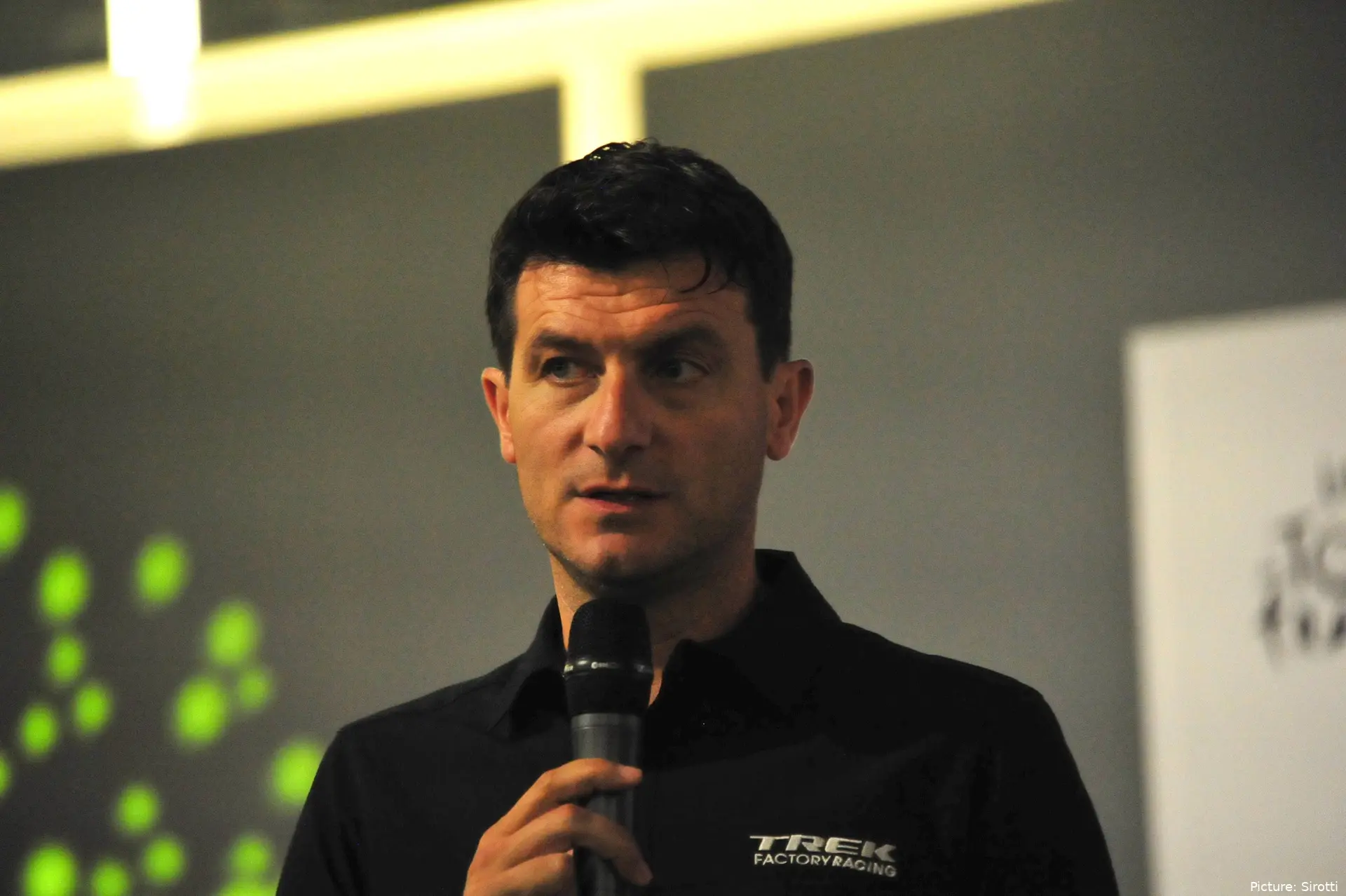
Lidl-Trek general manager Luca Guercilena has urged cycling’s authorities to rethink safety from the ground up, arguing that the sport is stuck in a cycle of opinion-based fixes rather than evidence-driven solutions.
Speaking in conversation with Bici.Pro, he outlined a striking proposal: invest heavily in airbag technology integrated into helmets or jerseys to protect riders from the most serious injuries.
“Invest in technology to find an airbag in the helmet or the jersey that, if you crash, saves your head and spine,” Guercilena said. “I would invest mountains of money in universal airbag systems that protect riders in a fall and prevent the injury. Because crashes will always be part of our sport.”
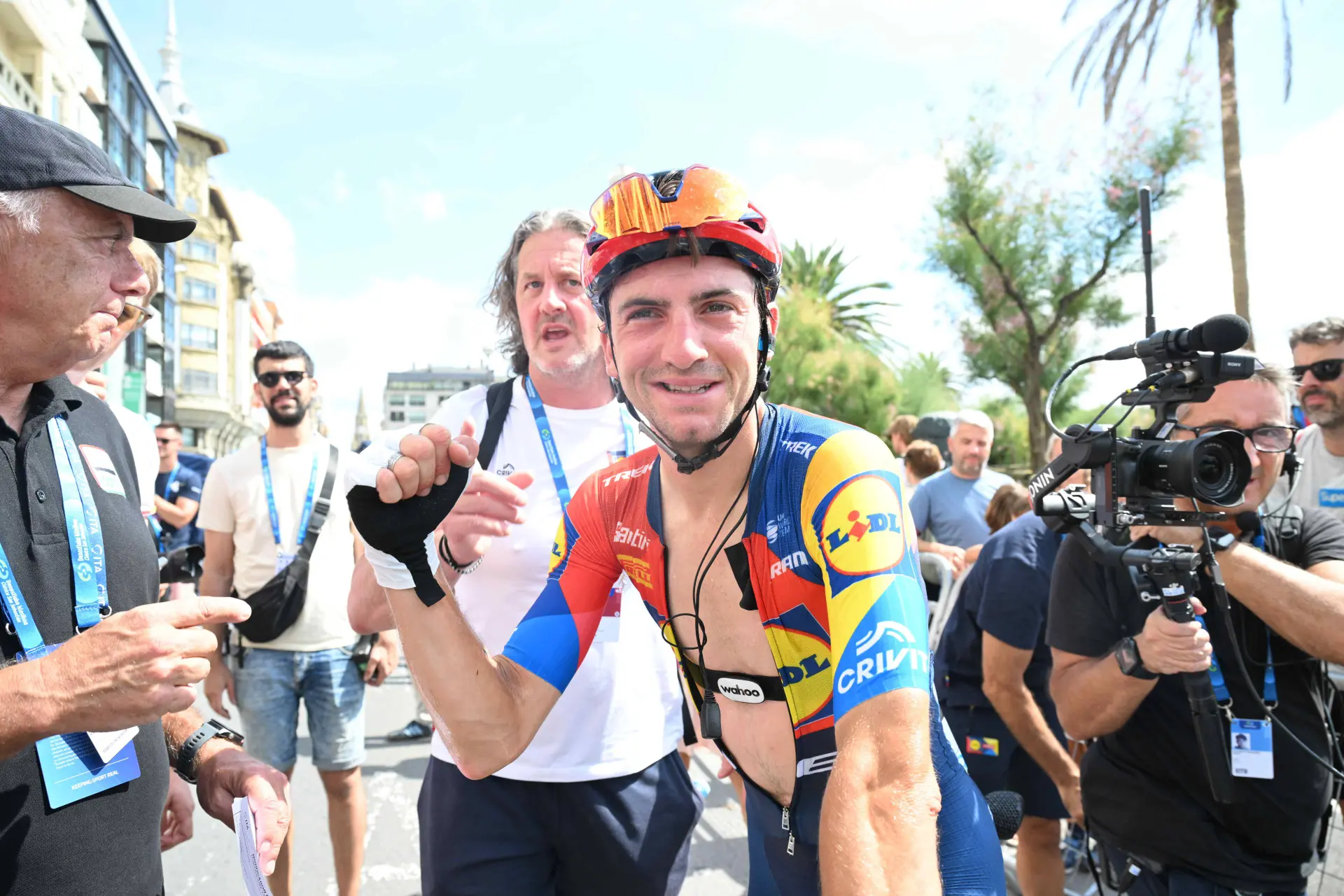
It is a bold idea, but one that taps directly into the central dilemma facing the modern peloton: speeds keep climbing, riders are younger, the bunch is more compact, and mass pile-ups appear increasingly common — even if the raw number of fractures has not risen.
Why Guercilena believes cycling is fixing the wrong problem
Guercilena argues that the debate over how to slow the peloton has been misguided, with governing bodies often resorting to cosmetic measures or hurried proposals that lack scientific grounding. The Italian insists that if cycling truly wants to address risk, it needs to start with data and work methodically outward.
“We base everything on opinions and we keep going nowhere,” he warned. “An analysis only has value if it’s scientific. If I apply criteria that make sense, then in front of hard numbers no one can contest. The problem is we don’t have longitudinal statistics.”
To illustrate the point, Guercilena revealed that Lidl-Trek have already begun gathering their own multi-year data with medical staff — and found that while riders are not fracturing bones more often, far more of them are caught in the same crash due to modern race dynamics.
“It’s not true that there are more crashes,” he said. “What has changed is the number of riders involved in the same fall. They are all fresher, all better trained and the bunch is extremely compact, so if someone goes down, everyone goes down together.”

Lidl-Trek have emerged as one of the strongest teams in the peloton over recent seasons
A cultural shift as much as a technical one
Beyond equipment, Guercilena believes an under-discussed factor is rider maturity. With the average age of WorldTour squads dropping sharply, the sport is seeing 18- and 19-year-olds jump straight from junior distances to Milano-Sanremo, often without the gradual development that older generations relied upon.
“The boldness of an 18-year-old clashes with the maturity of older riders,” he said. “We promote guys who go from 90-kilometre junior races to 290 kilometres at San Remo. Physiologically, their clarity after that distance is very different.”
It is why Lidl-Trek have already adjusted their internal messaging. “We tell them: risk must be controlled. If the choice is losing you for three months or finishing second, then finish second,” he explained. “If you need to risk for a sprint that wins the race, go ahead. But if you are going to crash 70 kilometres from the line and miss a month, absolutely not.”
Why limiting equipment won’t work
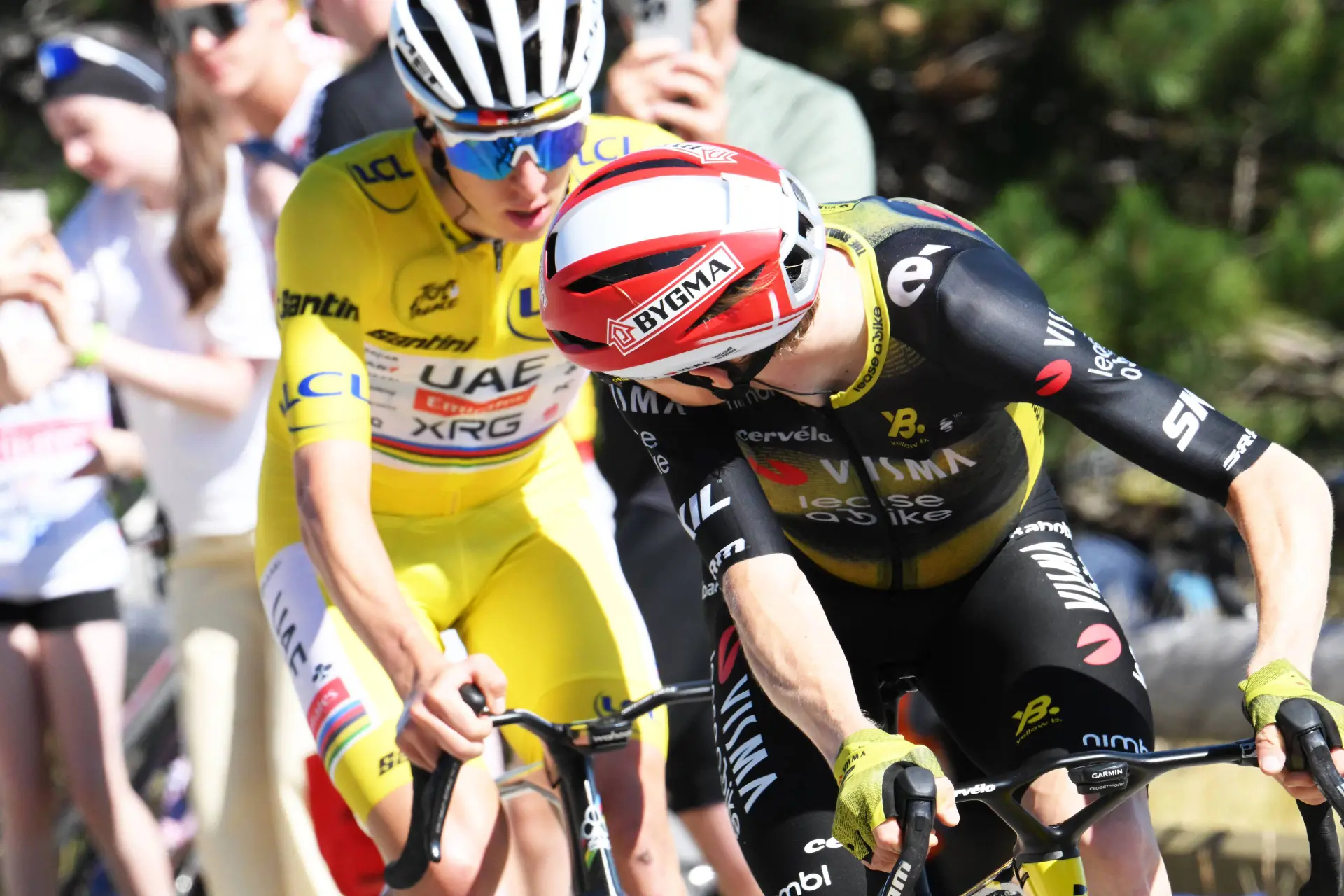
While some within the UCI argue for gear restrictions or bike-design limitations, Guercilena sees these as temporary patches rather than meaningful improvements.
“Speed gains are inherent to performance technology,” he said. “If you limit one material, research will simply develop another that is just as fast. If you impose 35mm rims, engineering will make those as aerodynamic and with inertia comparable to 90mm ones. These limitations will never be long-term solutions.”
Instead, he insists the priority should be twofold:
1) protecting riders in the event of a crash, and
2) improving dangerous road infrastructure where possible.
“The starting point must be to identify what really keeps riders safe, and then work downwards,” he said. “The rider comes first, then the road.”
A missing foundation: cycling still lacks real crash data
One of Guercilena’s strongest criticisms of the current safety conversation is the absence of any reliable, long-term statistical framework. Without that, he argues, the sport is trying to fix a problem it hasn’t properly measured.
“Do we have an analytical study showing a dramatic rise in crashes since the 1970s?” he asked. “Are we talking about the damage from individual crashes, or the total number of riders involved and the severity of injuries? There are no longitudinal statistics.”
Guercilena believes this is precisely why discussions become circular: governing bodies debate opinions rather than evidence, and teams respond to perception rather than fact. Even basic questions — such as whether crashes occur more frequently in the opening hours of a race or in the final kilometres — remain unanswered.
“We can’t say whether we fall more in the first 100 kilometres or the last 20,” he said. “I suppose in the first part it’s distraction, and in the last it’s sprint risk — but that is still just an opinion. And with opinions, you never find solutions.”
For Guercilena, establishing a formal working group involving teams, riders, agents and independent experts is the only way to create the evidence base that the sport desperately needs.
Roads, race design and the structural problems no one wants to pay for
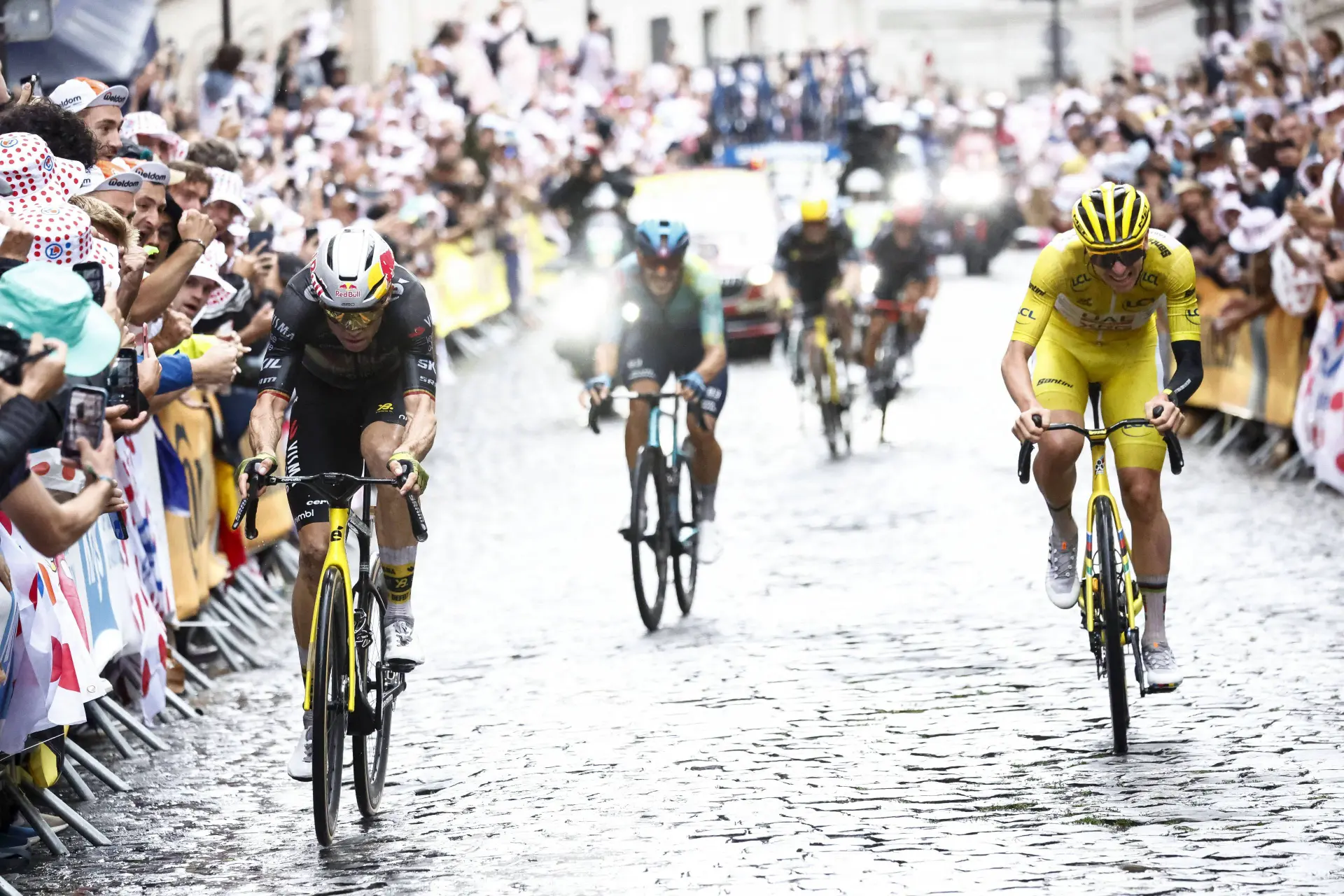
Beyond equipment and rider culture, Guercilena is adamant that cycling must address the environment it races in — something far more difficult and expensive than tinkering with bike rules. “Attention to roadside protections would help enormously,” he said. “If there were an effective system to make certain points safer, even though it would be costly, it would make a huge difference.”
He argues that while improving barriers or redesigning dangerous urban sections requires meaningful financial commitment, this kind of structural intervention could prevent the worst consequences of crashes. Yet it is often ignored because it is the hardest area for organisers and governing bodies to change.
Guercilena draws a comparison with Formula One, where the sport first addressed driver protection, then systematically improved track infrastructure before ever considering performance limitations. “The starting point must be identifying what really keeps riders safe, and then working downwards from there,” he insisted. “The rider comes first, then the road.”
The bottom line
Guercilena’s stance is clear: cycling cannot ban, restrict or regulate its way out of rising speeds. Nor can it rely on instinct or anecdote. The sport needs data-driven analysis, better roadside protection, and a technological leap in rider-focused safety.
His airbag concept may sound futuristic — but so once did F1 fireproof suits, head-and-neck systems and carbon-fibre monocoques. And in Guercilena’s view, ignoring such possibilities is the real ideological risk.

Kieran WoodDeputy Editor-in-Chief
Kieran Wood is a sports journalist based in Wales and has been active in journalism since 2022. He regularly contributes to DartsNews.com and CyclingUpToDate.com, where he covers professional cycling and darts. In cycling, his work includes liveblogs from major races, including the Tour de France, the Giro d’Italia, and La Vuelta a España, alongside race reports and analysis. He has also conducted interviews with professional riders.
His reporting spans the full racing calendar, from one-day classics to stage races, with a focus on accurate, real-time coverage and clear contextual analysis. For statistics, results, and historical context, he regularly uses resources such as ProCyclingStats. To support reporting on rider activity and training context where relevant, he also references Strava.
In his work, Kieran places strong emphasis on careful sourcing, editorial accuracy, and updating articles as new, verified information becomes available.
claps 0visitors 0
Just in

Popular news
Latest comments
- TT But he won by a minute so he could have cut down on some of it
 Rafionain-Glas13-10-2026
 - weight is measurable. power is measurable. So why didn't he prepare that way from the TDF if he wanted to beat Pogi and after Pogi wasn't going to be there, to win.abstractengineer13-10-2026
- I hope Thibau and Tibor don't do the sameRafionain-Glas13-10-2026
- Seixas is exactly what I would like Pogi to be mentally and in his statements. Both come across as shy and who don't talk much but with Seixas, you can see that he enjoys success, that it boosts his ego, unlike Pogačar who seems to feel increasingly uncomfortable the more he wins. He's won so many times, people are saying he's boring. The french media hate him for winning so much, the french cycling fans are booing him... etc. etc. But remember one thing, Seixas will never physically reach Pogi's level. He's excellent, but he isn't at that level nor will ever be. His talking to the media, his relationship with people is already at a high level.PogiSloFans13-10-2026
- Paul Seixas is now the second-best rider in the world.megasmacky13-10-2026
- When will they start dropping Pogi? Oh yeah, when Pogi reaches 40+ years, that's when young cyclists will start dropping him. But until then... eat your hearts out and cry. Pogi will remain the G.O.A.T. for years to come. Capish?PogiSloFans13-10-2026
- I figure he would have found out how to outsprint Paul and take the win, maybe. He's 28 now but I would say he's right at the peak of his powers. It was great race though, Paul showed me something different about himself.awp13-10-2026
- Slowly, very slowly... 5-7 yrs. ;)MajorPayne13-10-2026
- Up to this point: "It is just not yet at the level of Vingegaard and Pogacar." First Jonas, and then level of Tadej. Period!MajorPayne13-10-2026
- The sport has long had a divide between the more diesel-like riders and the more explosive riders. Where does Pogačar fit? His explosive attacks are followed by a high speed diesel climb and he's rarely been caught in the past 5 years (people can name the moments, it's so rare). Seixas is young and we have no idea where his body will end up on this spectrum (just like we didn't with Pogačar when he was 20 and being a diesel up the Vuelta mountains of 2019). Speculation is fun, being a fan while it unfolds is going to be more fun.RidesHills13-10-2026
Loading
Write a comment