“All in all… it’s a bit of a crap show” – Thomas De Gendt lifts the lid on chaos behind Lotto–Intermarche merger and warns riders are “in hell”
Cycling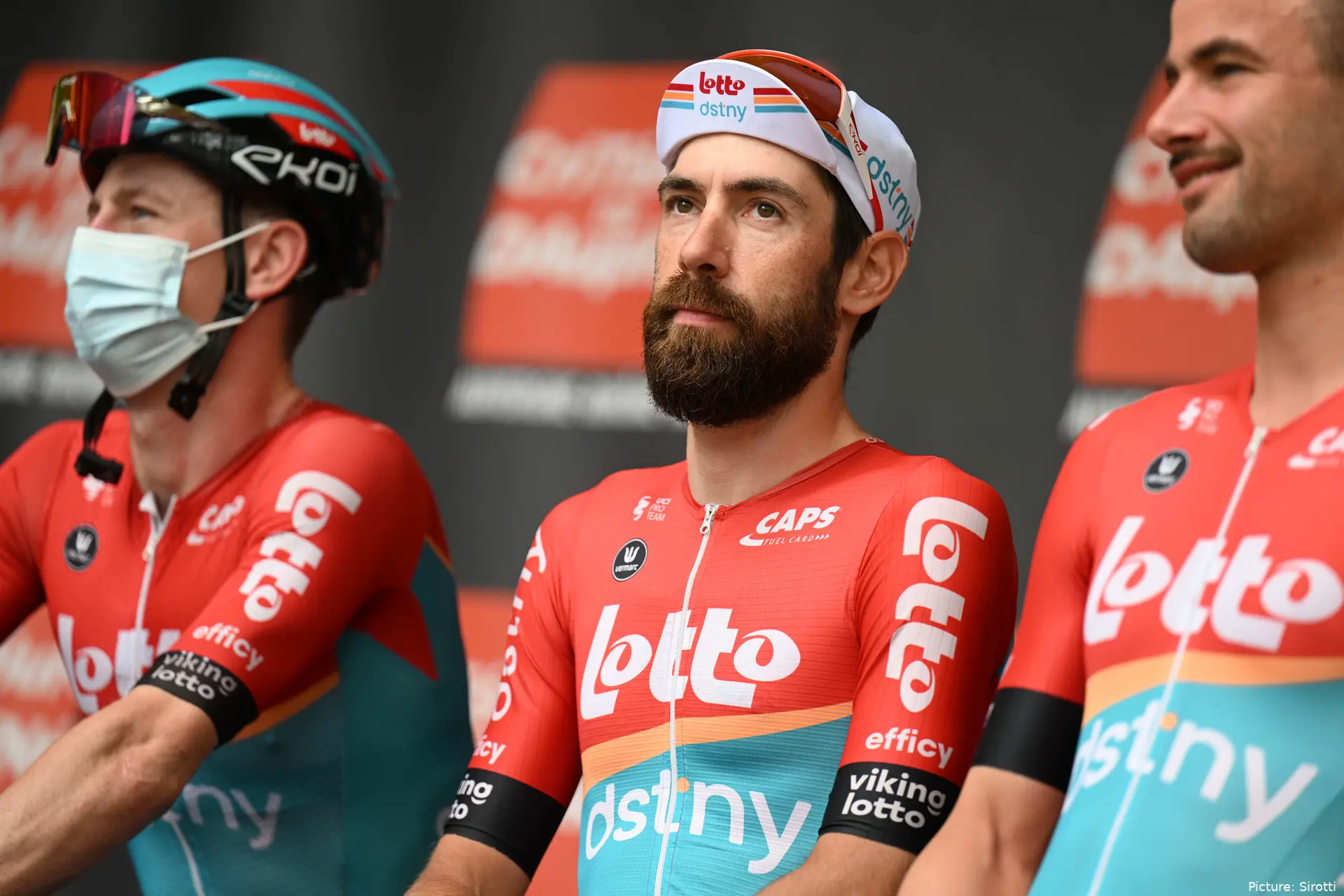
Thomas De Gendt has offered one of the most frank assessments yet of the turbulent Lotto–Intermarche merger, admitting that riders caught in the middle of the process are living through a “hellish” period of uncertainty and have been left without the information they need to plan their futures.
The 39-year-old veteran, who retired last winter after over a decade at Lotto, used his latest Cycling News column to call out the communication failures, financial tensions and knock-on consequences that have frozen the entire transfer market since the summer.
“All in all, when you look at all of this, it’s a bit of a shit show.”
It is an unusually hard-hitting assessment from a rider known for his dry humour rather than explosive commentary, yet the Belgian makes clear that the situation behind the scenes is far more chaotic than fans realise.
Riders “don’t know if they are in or out” – and many are living in fear
For De Gendt, the starting point of any merger is brutally simple: “Whenever there’s news of a team merger in the peloton, I think the general reaction to it amongst those riders affected is simply: ‘Oh shit, maybe I won’t have a job.’”
He stresses that while star riders like Arnaud De Lie and Biniam Girmay are safe, the rest of the roster is facing months of anxiety.
“What I’ve heard from the Lotto–Intermarche situation is that the riders really don’t know anything about the team, and a significant number of riders still don’t know if they are in or out, even in November,” explains De Gendt. “The less well-known riders and the young riders will surely have to worry a lot about their jobs and their future… for those riders, it’s a bit like being in hell.”
De Gendt argues that the uncertainty does not only affect the two merging squads — it paralyses the entire market, because no team wants to sign riders who might suddenly become available once the dust settles. “In a general sense, the effect of a merger like this is that it really blocks the whole transfer market.”
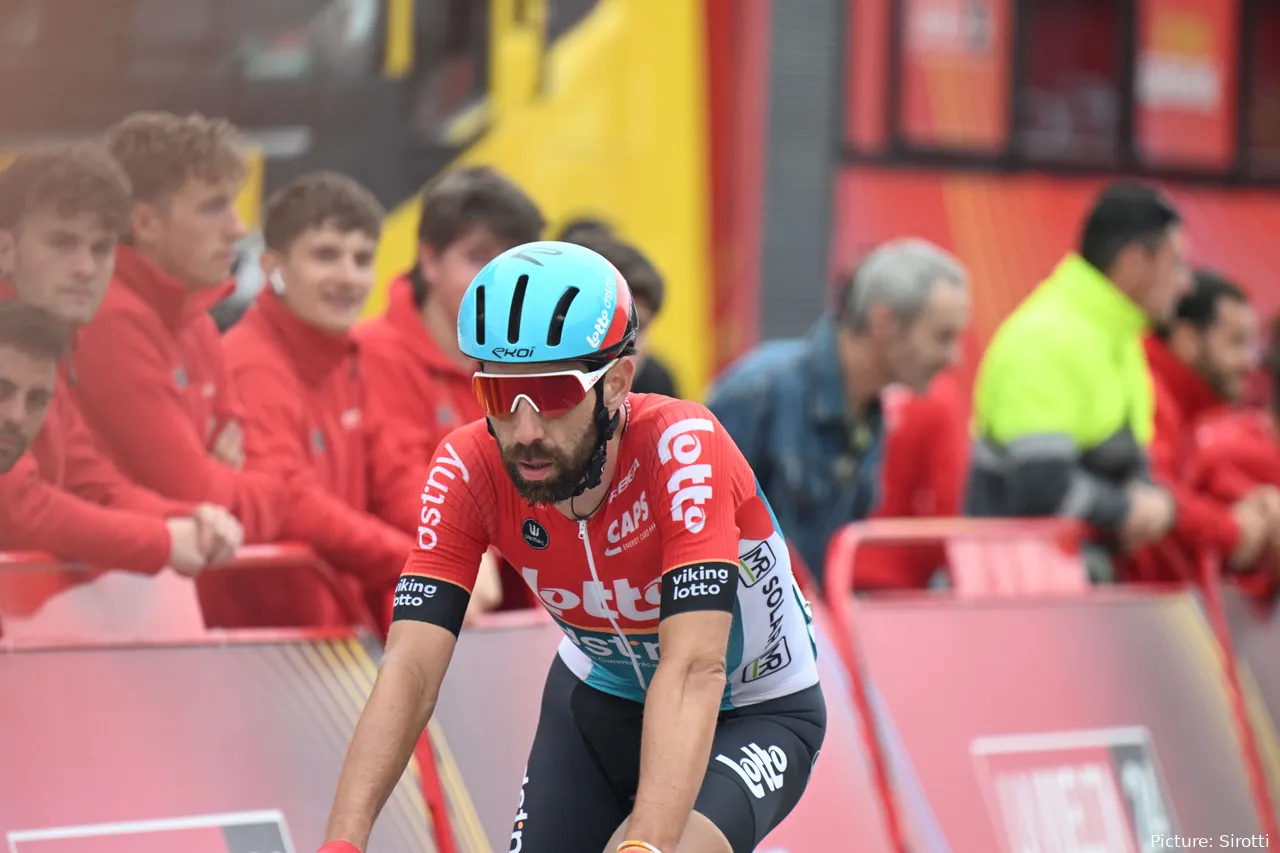
De Gendt was a long-time servant of the Lotto team during his career
The sponsorship chain reaction: “Cube doesn’t have a team to sponsor”
One of his sharpest insights concerns kit and bike sponsors. With the merged team reportedly switching to Orbea in 2026, the outgoing supplier Cube is suddenly left without a WorldTour home.
“I’ve heard Orbea is the new bike brand for the merged team in 2026, so that means Cube doesn’t have a team to sponsor, and I can imagine that the brand would still prefer to stay in the WorldTour.”
He warns that the same applies to clothing, equipment and secondary sponsors — a ripple effect that further destabilises the market.
A grim parallel: when 90 riders chased 20 jobs
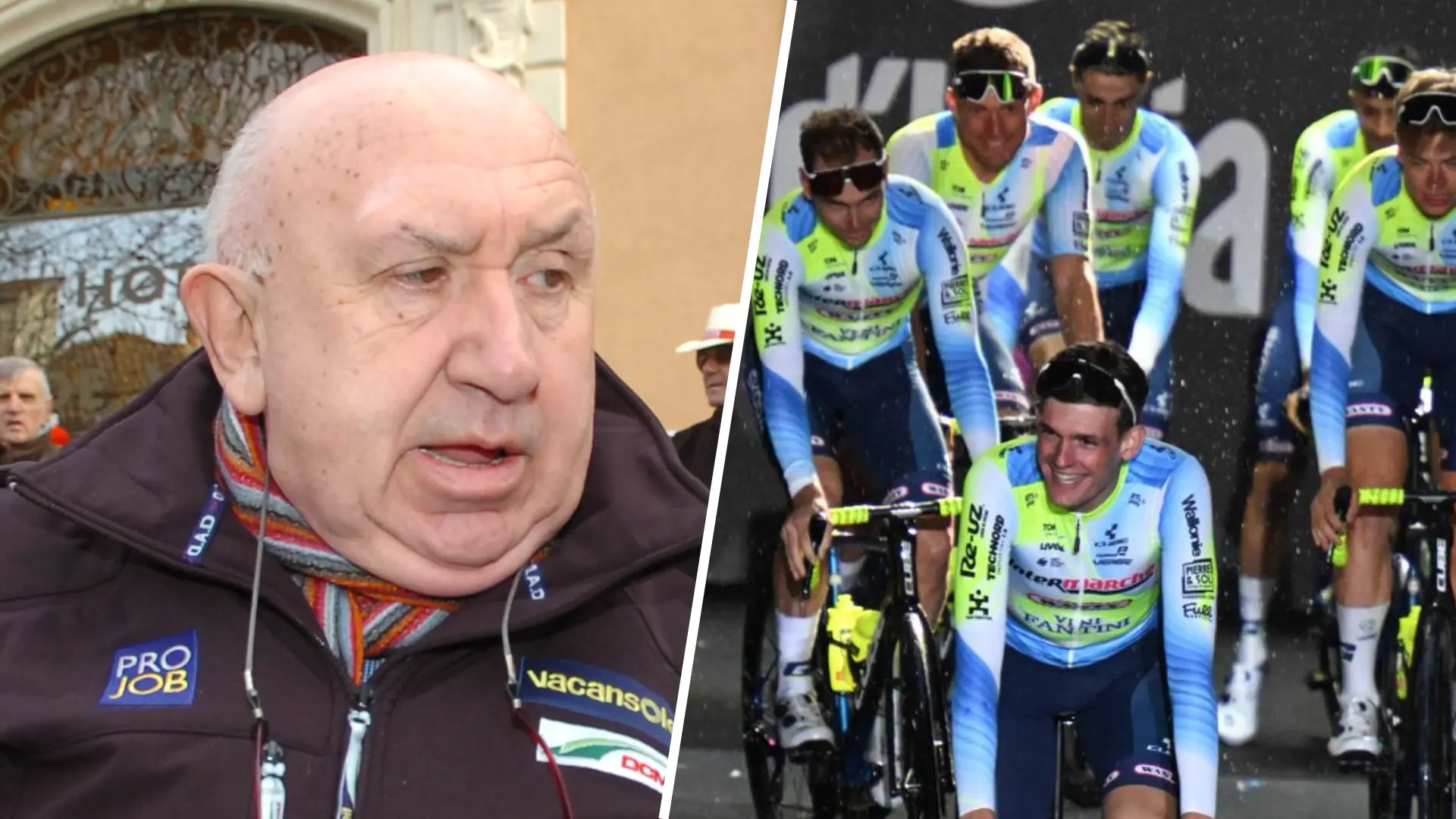
De Gendt’s bluntness stems from personal experience. In 2013, Vacansoleil collapsed and multiple teams folded, creating one of the most brutal winters modern cycling has ever seen.
“Suddenly, there were 90 riders on the market for around 20 spots left on teams,” the Belgian recalls. “I would have accepted any offer going on the table… I had to settle for an 80% pay cut.”
He emphasises that the current merger risks creating exactly the same scenario for a new generation. “Just as the situation is now – you can’t really demand a certain salary… you don’t have any leverage for negotiating at all.”
“They still don’t know the full story” – and communication has broken down
One of his deepest criticisms is aimed at Lotto’s evolving internal structure. He contrasts the older, family-style environment under Marc Sergeant and Herman Frison with what riders face now.
“When I was there, everything was family-like and everybody was friendly… but now it seems to me like things aren’t as open, and maybe certain things are kept secret,” De Gendt claims. “If there is secrecy about the future of the team… and the riders still don’t know the full story in November, that for me is a big problem.”
He also highlights the cumbersome management system that, in his view, repeatedly cost Lotto valuable signings. “If the wage was higher than €350,000, it had to go to a board meeting… they lost a lot of good riders in that process because it all took too long.”
By contrast, he says Patrick Lefevere’s direct authority at QuickStep allowed for fast, decisive moves.
Budget doubts and a €2.5 million debt: the numbers don’t add up
The financial element of De Gendt’s column is arguably its most explosive. According to what he has heard internally, the promised super-budget for the merged team simply does not exist.
“Intermarche reportedly has a €2.5 million debt,” he reports. “Lotto thought that Intermarche would bring in €15 million for 2026… however, I’ve heard it’s actually far less.”
Add in the sponsors who have not moved across, plus the contracts that must be paid out: “The new team would have had to pay off the contracts of the riders who are not going to stay with the team… that’s around 11 riders’ contracts they had to pay off.”
His overall conclusion is stark: “I don’t think it’s such a positive thing to have two teams in difficulty merge, because the result seems to be that we have one merged team still in difficulty, and the other disappearing.”
He has laid out the human cost, the market paralysis, the sponsorship chaos, the structural weaknesses and the financial instability with a clarity few insiders ever express publicly. And his final verdict may be the line that follows this story for months to come: “All in all… it’s a bit of a shit show.”

Kieran WoodDeputy Editor-in-Chief
Kieran Wood is a sports journalist based in Wales and has been active in journalism since 2022. He regularly contributes to DartsNews.com and CyclingUpToDate.com, where he covers professional cycling and darts. In cycling, his work includes liveblogs from major races, including the Tour de France, the Giro d’Italia, and La Vuelta a España, alongside race reports and analysis. He has also conducted interviews with professional riders.
His reporting spans the full racing calendar, from one-day classics to stage races, with a focus on accurate, real-time coverage and clear contextual analysis. For statistics, results, and historical context, he regularly uses resources such as ProCyclingStats. To support reporting on rider activity and training context where relevant, he also references Strava.
In his work, Kieran places strong emphasis on careful sourcing, editorial accuracy, and updating articles as new, verified information becomes available.
claps 1visitors 1
Just in

Popular news
Latest comments
- TT But he won by a minute so he could have cut down on some of it
 Rafionain-Glas13-10-2026
 - weight is measurable. power is measurable. So why didn't he prepare that way from the TDF if he wanted to beat Pogi and after Pogi wasn't going to be there, to win.abstractengineer13-10-2026
- I hope Thibau and Tibor don't do the sameRafionain-Glas13-10-2026
- Seixas is exactly what I would like Pogi to be mentally and in his statements. Both come across as shy and who don't talk much but with Seixas, you can see that he enjoys success, that it boosts his ego, unlike Pogačar who seems to feel increasingly uncomfortable the more he wins. He's won so many times, people are saying he's boring. The french media hate him for winning so much, the french cycling fans are booing him... etc. etc. But remember one thing, Seixas will never physically reach Pogi's level. He's excellent, but he isn't at that level nor will ever be. His talking to the media, his relationship with people is already at a high level.PogiSloFans13-10-2026
- Paul Seixas is now the second-best rider in the world.megasmacky13-10-2026
- When will they start dropping Pogi? Oh yeah, when Pogi reaches 40+ years, that's when young cyclists will start dropping him. But until then... eat your hearts out and cry. Pogi will remain the G.O.A.T. for years to come. Capish?PogiSloFans13-10-2026
- I figure he would have found out how to outsprint Paul and take the win, maybe. He's 28 now but I would say he's right at the peak of his powers. It was great race though, Paul showed me something different about himself.awp13-10-2026
- Slowly, very slowly... 5-7 yrs. ;)MajorPayne13-10-2026
- Up to this point: "It is just not yet at the level of Vingegaard and Pogacar." First Jonas, and then level of Tadej. Period!MajorPayne13-10-2026
- The sport has long had a divide between the more diesel-like riders and the more explosive riders. Where does Pogačar fit? His explosive attacks are followed by a high speed diesel climb and he's rarely been caught in the past 5 years (people can name the moments, it's so rare). Seixas is young and we have no idea where his body will end up on this spectrum (just like we didn't with Pogačar when he was 20 and being a diesel up the Vuelta mountains of 2019). Speculation is fun, being a fan while it unfolds is going to be more fun.RidesHills13-10-2026
Loading
Write a comment