“Introducing ticket sales is absolutely not being considered” - ASO firmly shuts down talk of charged roadside viewing at 2026 Tour de France
CyclingMonday, 17 November 2025 at 12:30
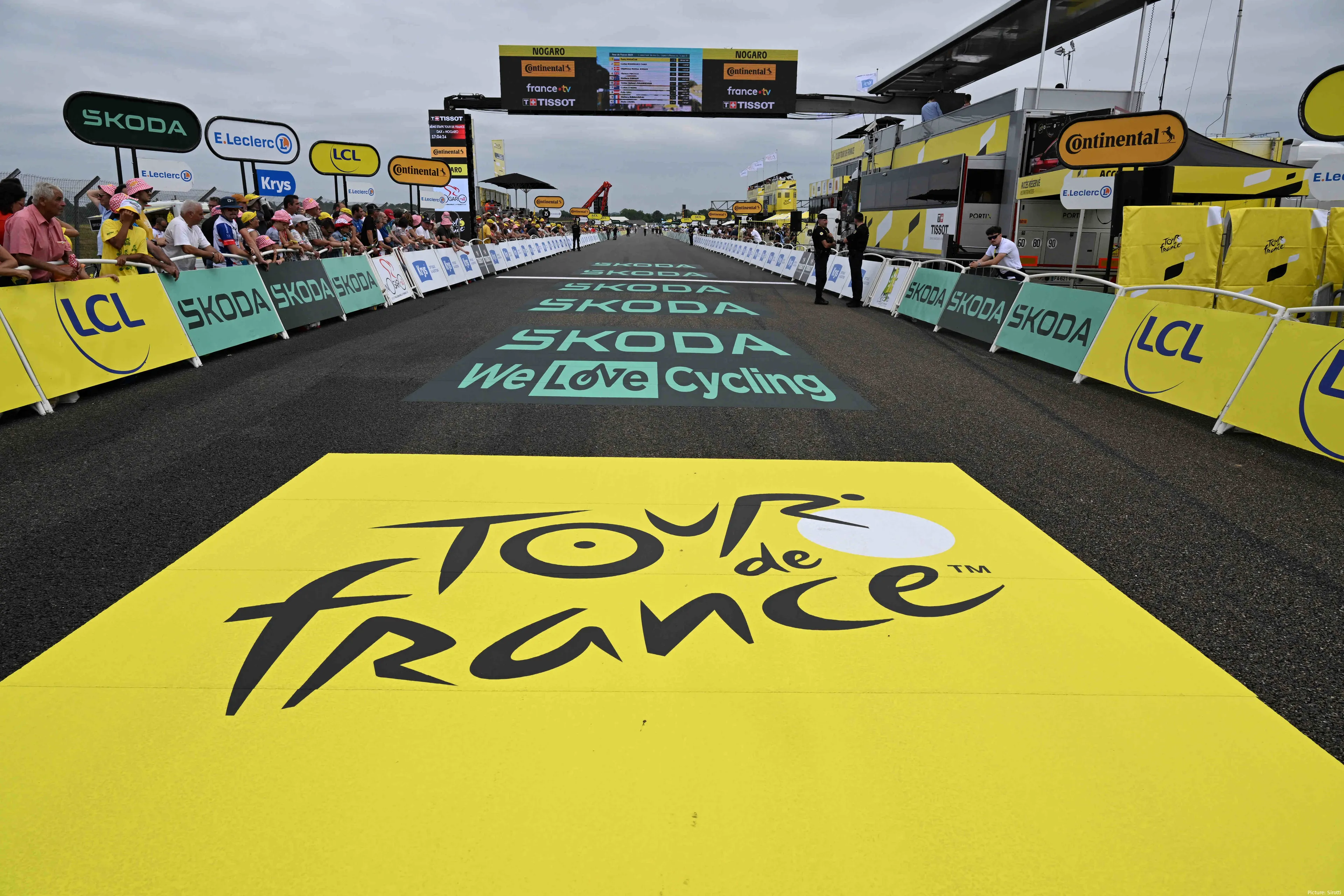
The debate surrounding professional cycling’s financial future has intensified, with Tour de France organiser ASO now publicly ruling out paid roadside access, despite influential voices elsewhere warning that the WorldTour’s current economic model is becoming harder to sustain.
Previous concerns were raised, among others, by Team Jayco AlUla's Valerio Piva and former Decathlon AG2R LA Mondiale Team boss Vincent Lavenu, who described a system in which the gap between the strongest and most vulnerable structures is growing year on year, fuelled by the reality that “cycling does not benefit from TV rights, nor from ticketing.” With “four to five big teams” winning the majority of races while others “settle for the crumbs,” both men made clear that the sport must confront the question of how new revenue can be generated if it wishes to protect riders, staff and long-term stability.
It was in that wider context that former professional and ex-B&B Hotels manager Jerome Pineau suggested that controlled, ticketed zones on climbs such as Alpe d’Huez could form part of a future solution, arguing that “it becomes possible to charge an entry fee” if the area is separated and managed.
His proposal, however, was immediately met with resistance from figures who believe commercial reform should not come at the cost of cycling’s defining identity.
ASO closes the door: “Cycling is by definition free”
ASO has now responded directly, issuing the most definitive public position to date. Speaking to La Derniere Heure, deputy cycling director Pierre-Yves Thouault stressed that the sport’s open-access culture is not something the organisation is willing to sacrifice.
“Cycling is by definition free. Introducing ticket sales is absolutely not being considered.”
That stance aligns more closely with Lavenu, who warned that “removing free access does not seem a good idea,” even as he acknowledged the need for a broad structural conversation. It also echoes comments of UCI president David Lappartient, who cautioned that the backlash would be immediate and severe, noting that “if you try to make people pay to watch the Tour, you will face enormous resistance.”

UCI boss Lappartient is also against paid access to roadside viewing of the Tour de France
Financial pressure vs cultural protection
This latest response underlines a key divide in the conversation: team leaders are focused on sustainability, while organisers are focused on safeguarding accessibility. Neither position is unreasonable, yet they currently pull in opposite directions. The tension is clear — cycling needs new, reliable and fair revenue, but the roadside experience remains one of its few untouchable traditions.
For now, ASO’s message is unequivocal, but the concerns raised by Piva and Lavenu have not gone away. The question is no longer whether cycling values its free-to-watch identity — that appears settled — but how the sport finds a modern economic model that does not threaten it.
claps 0visitors 0
Just in
Popular news
Latest comments
- somewhere Andy Hampsten is shaking his head with this article titlemij14-03-2026
- Come on... they should have gravel bikes with 45C studded tires in the truck along with their TT bikes 😁mrvco14-03-2026
- it will be such a great MSRmij14-03-2026
- Two cases: 1-Money 2-Arrogance (Ayuso case): thinking you're so incredibly good that it will be easy to overthrow the current super leader. Ayuso belongs to an upper-class, rich Spanish family. He doesn't need money, he wanted all the glory, being the captain of the team of Divas.
 maria2024202414-03-2026
 - I can’t see how any rider who really believes in themselves as an out-and-out leader would want to sit on the bench at that super team instead of actually racing against it.antipodeanpedalfan14-03-2026
- OK Rafionain-Glas, I see you also have a sense of humor saying that Pogacar appears to have a certain level of fear towards Ayuso... ha ha ha ha ha ha... a good one... or Pogi panicking about MVDP...ha ha ha ha ha ... OMG are you the joker. You crack me up 🤣🤣🤣🤣Mou-Cro-HR14-03-2026
- It's true. If he goes to UAE, infighting will happen sooner or later. Pogi will be the boss. If he's not happy, too bad, he's trapped in a golden cage.
 KerisVroom14-03-2026
 - It's probably because he's got a dream of winning a Grand Tour which he'll never let go of. A bit like Alejandro Valverde's obsession with GC. If Jorgenson focuses on the classics alone (with Wout on the decline) then Visma have two strong cards in himself and Brennan.
 Rafionain-Glas14-03-2026
 - Yes, that was obvious. It's just like Jonas Vingegaard's attack on Stage 1 of the Dauphinè. Of course it was painful (everything in pro cycling is painful) but he chose to say it in order to lower expectations (?). Remember when Wout saying "It took you a long time to realise that" when an interviewer remarked that pro cyclists don't actually say what they think. Those are not jokes (if they are seen as jokes they'd be seen as being extremely offensive). Pogačar does, however, appear to have a certain level of fear towards Ayuso (many signs during his time in UAE, and unlike with Evenepoel's transfer, he didn't say anything) and Seixas (logical). On another note Pogačar has PTSD for situations when he has to sprint against van der Poel... he always looks so panickedRafionain-Glas14-03-2026
- Chris Froome is still on the market. He hasn't officially hung up his bike. You can thank me later, INEOS.KerisVroom14-03-2026
Loading
Write a comment