Controversial call to "privatise" 2026 Tour de France on Alpe d’Huez: “Let’s charge admission, have VIPs, and create something to make money!”
Cycling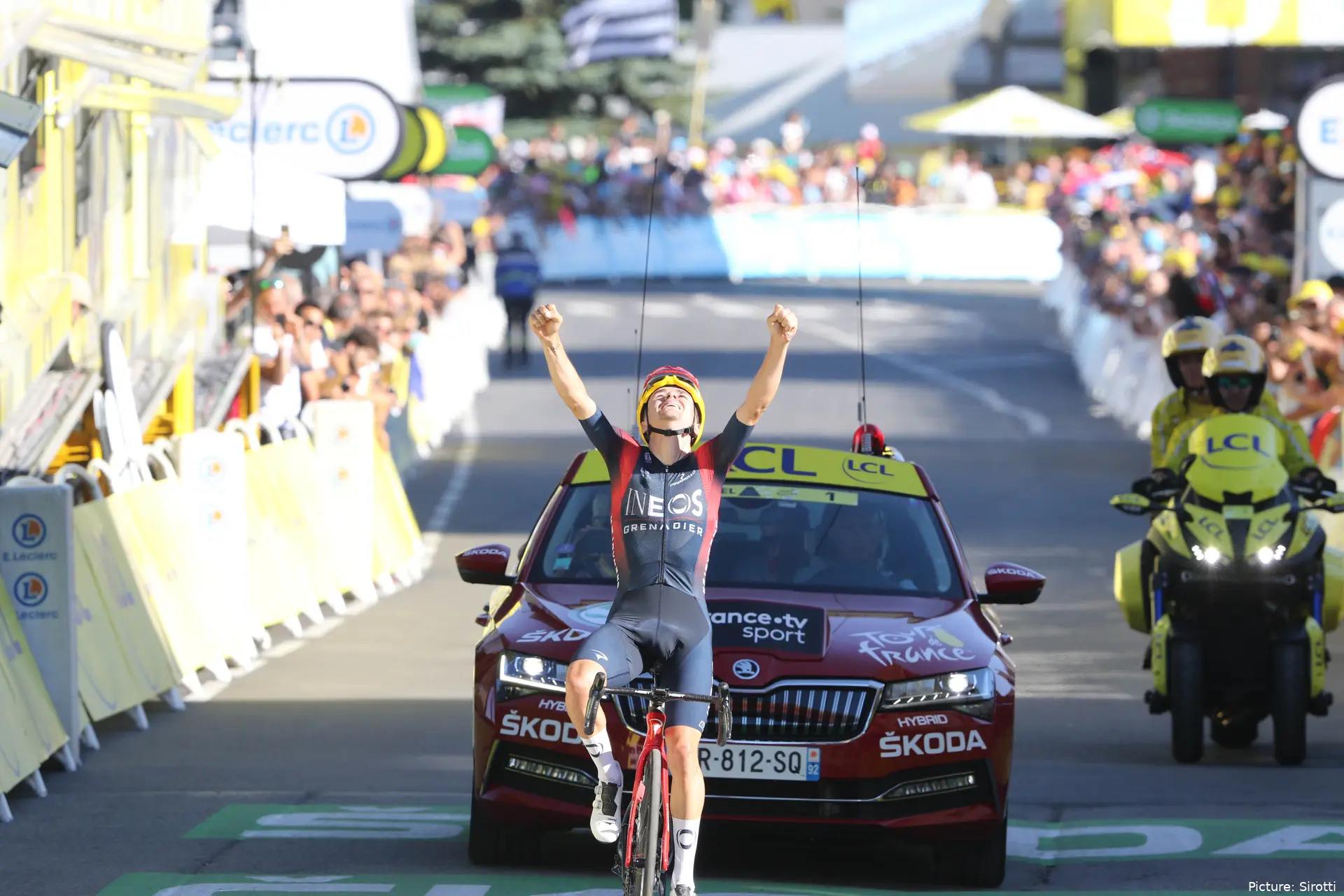
Even before the peloton heads back to the slopes of Alpe d’Huez twice during the 2026 Tour de France, the iconic climb is already at the centre of a fierce debate about cycling’s future. Former B&B Hotels manager Jerôme Pineau has reignited the long-running question of how the sport should fund itself — and he has gone straight for the sport’s most sacred cow: free roadside access.
Speaking on RMC Sport’s Grand Plateau podcast, Pineau floated the idea of charging spectators on the upper slopes of the Alpe, arguing that the sport must evolve financially if teams are to survive the growing economic divide.
“I’m going to shock some people, but they’ve created a stage that will go up Alpe d’Huez twice. So let’s privatise the last five kilometres of Alpe d’Huez," he proposes somewhat controversially. "Let’s charge admission, let’s have VIPs, let’s create something to make money!”
Pineau framed the proposal not as a luxury initiative, but as a lifeline for privately backed squads competing against state-funded giants. “Historically, cycling is a popular sport, a free sport. But a free sport where there are no more riders on the road because there are only two teams, Bahrain and UAE, is less fun, isn’t it?”

“We’re the last major sport that’s free” — Madiot pushes back
Groupama - FDJ boss Marc Madiot firmly rejected the idea, insisting that the sport’s open-door character is intrinsic to its identity. “I’m in favour of free access; we’re the last major sport that’s free. It’s one of our strengths. And we have to be realistic; we won’t solve our problems by offering more hospitality.”
Madiot also raised a structural concern often overlooked in surface-level funding debates — the financial imbalance created by differing employment and tax systems across Europe. French teams, he stressed, operate under far heavier employment obligations than some rivals. “Why not consider having all teams legally based in Switzerland to ensure a uniform social cost?”
His broader warning painted a picture of a sport drifting away from its roots. “Apart from the emirs and state sponsors, it’s difficult to exist in the peloton these days. The problem with cycling is that it used to be a popular sport, for workers and farmers, and now it’s becoming a sport for the rich.”

Groupama - FDJ boss Marc Madiot is one of the most experienced figures in Pro Cycling
A winter debate with real-world stakes
Every off-season brings talk of structural reform, but Pineau and Madiot's exchange speaks to a deepening divide. With state-funded superteams reshaping the WorldTour and private sponsors increasingly thin on the ground, the sport’s fundamental question remains unresolved:
Can cycling protect its heritage of free access while creating a sustainable financial model for the future?
For now, one thing is certain — the conversation isn’t going away, and Alpe d’Huez has suddenly become a testing ground not only for legs, but for tradition, economics, and the very soul of the sport.

Kieran WoodDeputy Editor-in-Chief
Kieran Wood is a sports journalist based in Wales and has been active in journalism since 2022. He regularly contributes to DartsNews.com and CyclingUpToDate.com, where he covers professional cycling and darts. In cycling, his work includes liveblogs from major races, including the Tour de France, the Giro d’Italia, and La Vuelta a España, alongside race reports and analysis. He has also conducted interviews with professional riders.
His reporting spans the full racing calendar, from one-day classics to stage races, with a focus on accurate, real-time coverage and clear contextual analysis. For statistics, results, and historical context, he regularly uses resources such as ProCyclingStats. To support reporting on rider activity and training context where relevant, he also references Strava.
In his work, Kieran places strong emphasis on careful sourcing, editorial accuracy, and updating articles as new, verified information becomes available.
claps 24visitors 3
Just in

Popular news
Latest comments
- Seixas is exactly what I would like Pogi to be mentally and in his statements. Both come across as shy and who don't talk much but with Seixas, you can see that he enjoys success, that it boosts his ego, unlike Pogačar who seems to feel increasingly uncomfortable the more he wins. He's won so many times, people are saying he's boring. The french media hate him for winning so much, the french cycling fans are booing him... etc. etc. But remember one thing, Seixas will never physically reach Pogi's level. He's excellent, but he isn't at that level nor will ever be. His talking to the media, his relationship with people is already at a high level.PogiSloFans13-10-2026
- Paul Seixas is now the second-best rider in the world.megasmacky13-10-2026
- When will they start dropping Pogi? Oh yeah, when Pogi reaches 40+ years, that's when young cyclists will start dropping him. But until then... eat your hearts out and cry. Pogi will remain the G.O.A.T. for years to come. Capish?PogiSloFans13-10-2026
- I figure he would have found out how to outsprint Paul and take the win, maybe. He's 28 now but I would say he's right at the peak of his powers. It was great race though, Paul showed me something different about himself.awp13-10-2026
- Slowly, very slowly... 5-7 yrs. ;)MajorPayne13-10-2026
- Up to this point: "It is just not yet at the level of Vingegaard and Pogacar." First Jonas, and then level of Tadej. Period!MajorPayne13-10-2026
- The sport has long had a divide between the more diesel-like riders and the more explosive riders. Where does Pogačar fit? His explosive attacks are followed by a high speed diesel climb and he's rarely been caught in the past 5 years (people can name the moments, it's so rare). Seixas is young and we have no idea where his body will end up on this spectrum (just like we didn't with Pogačar when he was 20 and being a diesel up the Vuelta mountains of 2019). Speculation is fun, being a fan while it unfolds is going to be more fun.RidesHills13-10-2026
- yeah it'll be an epoch shift when Pog can't drop people, and/or when they start dropping him.wrsty13-10-2026
- Yes, he won't ride away yet, but he will and that day will be notable
 leedorney13-10-2026
 - Expect the young French rider to slowly asphyxiate the Slovenian into retirement.
 Front24213-10-2026
Loading
1 Comments