“Cycling is the only sport not benefiting from TV rights” – World Tour bosses warn model is becoming ‘impossible’ to sustain amid proposals to charge for roadside viewing
Cycling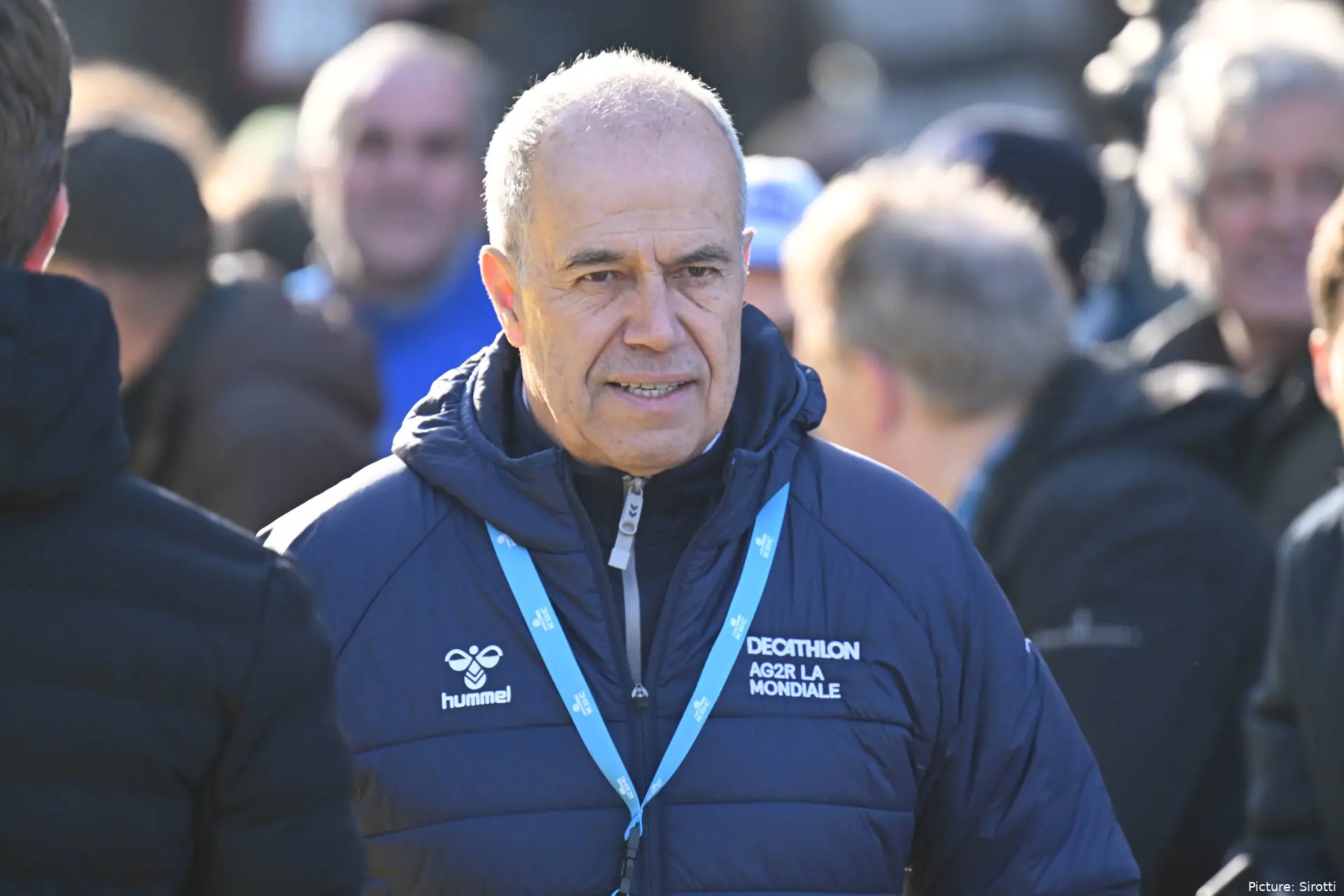
Cycling’s World Tour might look healthier than ever from the roadside, but two of its most experienced team bosses are warning that the financial foundations beneath the sport are starting to crack.
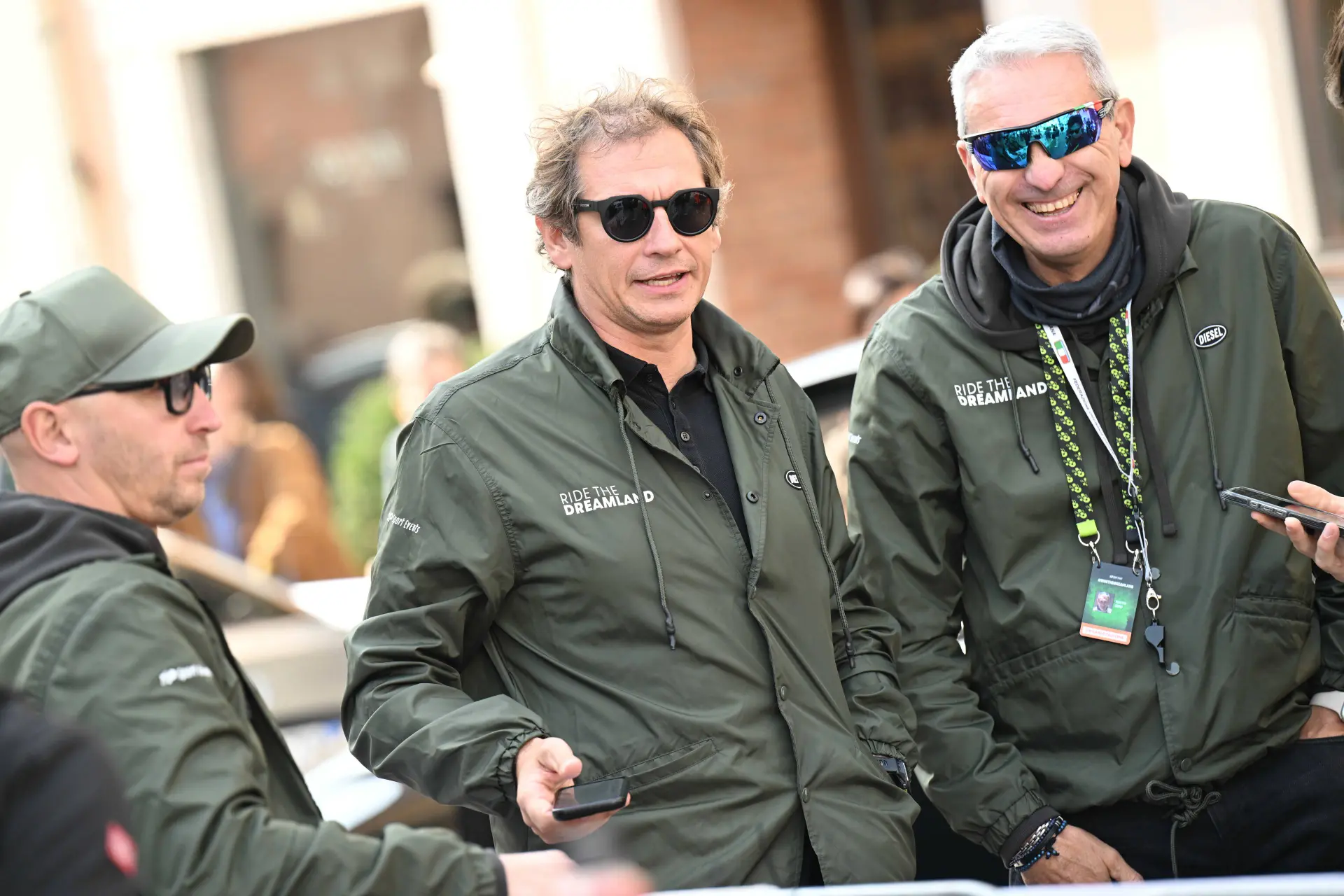
In conversation with La Derniere Heure, Team Jayco AlUla’s Valerio Piva and former team manager of the Decathlon AG2R La Mondiale Team, Vincent Lavenu argue that the current model leaves too many teams exposed, too dependent on fragile sponsorship, and too far behind a handful of super-funded giants.
For them, the key line is brutally simple: “Cycling is the only sport whose actors do not benefit from the spin-offs of TV rights, even though it is more popular than ever.” It is, they conclude together, “a paradoxical situation.”
They see that paradox playing out in real time: booming global audiences and iconic races on the one hand, teams folding or being forced into mergers on the other.
“This gap increases year after year”
From Piva’s perspective, the widening divide is no longer something that can be dismissed as perception or sour grapes. He believes it is baked into how the World Tour now functions. “This gap increases year after year.”
The peloton, he argues, is increasingly split between a small group of superpowers and everyone else. The results sheet reflects that imbalance far more often than it disrupts it. “There is a reality we cannot escape: four or five big teams win most of the races. The others must make do with the crumbs, which does not encourage financial partners to continue the adventure with them.”
For the rest, survival often comes down not to performance, but to the mood and priorities of a single backer. “But when that person decides to turn off the tap, it is over.”
Lavenu sees the same picture from another angle. He points to a sport where a few structures are plugged into state money or multinational backing, while the rest live permanently on the edge. “Today, there are a few teams backed by states or multinationals who have unlimited budgets, and the others who are fighting to retain the support of sponsors, who are sometimes increasingly reluctant to loosen the purse strings.”
That would be worrying enough in isolation. What pushes it towards crisis, in their eyes, is that teams do not share in the value of the product they help create. “Cycling does not benefit from TV rights, nor from ticketing.”
The UCI does channel some money back into the base of the pyramid, but Lavenu is clear about its limits. “It provides a small development allowance to amateur clubs.”
It is helpful, but hardly the sort of robust income stream that can protect World Tour squads from the next sponsor withdrawal or failed merger.
Free roadside access, ticketing ideas and a salary cap dilemma
With more projects disappearing and dozens of riders left scrambling for contracts, debate has inevitably turned to reform. One of the more eye-catching proposals has been to charge fans for access to certain points on a race route and redistribute that money to the teams. Piva and Lavenu treat the idea seriously, but neither sees it as a silver bullet.
Piva can see the logic on paper, provided the funds actually reach the people putting on the show. “In an ideal world, the money would be distributed according to team budgets. But the strongest would be entitled to ask for a larger share of the cake because they provide the spectacle at the front of the race.”
In other words, even any new pot of money risks reproducing the same hierarchy unless it is designed with iron-clad safeguards.
Lavenu, meanwhile, immediately runs into practical and cultural questions. How do you ticket something that has always been open, fluid and rooted in public space? “How do you control the spectators? And what about those who have been there since the morning?”
He is adamant that one of cycling’s greatest strengths cannot simply be sacrificed. “Removing this free access does not seem a good idea to me.”
For Lavenu, roadside accessibility is part of the sport’s identity and part of the reason its heroes are so relatable. Closing that off risks damaging the very thing teams and organisers are trying to monetise.
That leads him instead towards the cost side of the equation. If incomes are hard to grow fairly, perhaps outgoings could be controlled. Yet even here, he sees serious complications. “We could consider a salary cap, set a limit on salaries,” suggests Lavenu. “But how do you impose that on a state-funded sponsor like UAE?”
Without some form of central authority and shared buy-in, a cap risks being toothless for the biggest players and binding only for those with less leverage.
Read also

A World Tour built on popularity, not protection
Both men come back to the same core contradiction: cycling has never been more visible, but the people who race and run the teams are still operating without the protections enjoyed in other global sports.
The current model asks sponsors to shoulder almost all of the risk and then hopes they remain loyal. It asks mid-tier teams to fight for relevance in a calendar where, as Piva puts it, “four or five big teams win most of the races.” It asks riders and staff to build careers inside projects that can vanish whenever a benefactor decides to “turn off the tap”.
And all the while, as Piva and Lavenu jointly underline, “cycling is the only sport whose actors do not benefit from the spin-offs of TV rights, even though it is more popular than ever.”
For them, the conclusion is unavoidable: if the World Tour does not find a way to share the value it generates more fairly and predictably, the sport will keep living this paradox — and more teams will pay the price for a system that never truly guaranteed their survival in the first place.
Kieran WoodDeputy Editor-in-Chief
Kieran Wood is a sports journalist based in Wales and has been active in journalism since 2022. He regularly contributes to DartsNews.com and CyclingUpToDate.com, where he covers professional cycling and darts. In cycling, his work includes liveblogs from major races, including the Tour de France, the Giro d’Italia, and La Vuelta a España, alongside race reports and analysis. He has also conducted interviews with professional riders.
His reporting spans the full racing calendar, from one-day classics to stage races, with a focus on accurate, real-time coverage and clear contextual analysis. For statistics, results, and historical context, he regularly uses resources such as ProCyclingStats. To support reporting on rider activity and training context where relevant, he also references Strava.
In his work, Kieran places strong emphasis on careful sourcing, editorial accuracy, and updating articles as new, verified information becomes available.
claps 16visitors 5
Just in


Popular news
Latest comments
- Am I now? Prove it.awp20-11-2026
- So you are one of those people?awp20-11-2026
- So you think war and political ideology has everything to do with religion? That is dark man and not very intelligent.awp20-11-2026
- @awp is a far right-wing evangelical maga believer. He's one of those that keep saying..."In the Bible it says..... blah blah blah..."PogiSloFans20-11-2026
- POGI=BABY HULK=SMASH !!! ... The madder Hulk gets, the stronger Hulk gets. The same goes for Pogi. The physical pain, emotional distress, and rage act as catalysts that flood Pogi's and Hulk's body with adrenaline and gamma energy, pushing their strength, durability to virtually limitless levels. Why do you all think Pogi has a sticker of Baby Hulk on his handle bar? Pogi and Baby Hulk are one.PogiSloFans20-11-2026
- "I don't know if his team could support him" Pidcock and Ciccone for a double attack after a Hermans-Schmid leadout. De Gendt and Hayter for earlier on and Ballerini for a sprint
 Rafionain-Glas20-11-2026
- Learn what? He can only say sterile inoffensive things like how Ed Sheeran doesRafionain-Glas20-11-2026
- @awp: "85% of the globe believes in a higher power." Really? Now let's take a look at who those "believers" are: 1) The Russian/Ukraine war. 2) The American/ Iran war. 3) The Israel/Palestinian war. 4) Sudan – Civil war 5) Democratic Republic of the Congo – Eastern Congo war 6) Somalia – Insurgency 7) Nigeria – Insurgency and armed violence 8) Myanmar – Civil war 9) Yemen – Civil war 10) etc... etc... etc.... I can keep going on... We're looking at roughly 48 armed conflicts over the 85% religious world. The frightening thing is that many of these conflicts receive very little international media attention, despite the enormous suffering of ordinary people. But "God" loves us... "God" takes care of us... "God" is righteous in all his ways. "God's" actions, judgments, and plans are always morally upright, fair, and just. @awp, stick your higher power up there... where the sun never shines and stop insulting my intelligence. Capish?PogiSloFans20-11-2026
- If this site is only about the love of cycling, then why did they write an article about some cyclists going to sit down with the Holy Father? Make it make sense..🤣awp20-11-2026
- 85% of the globe believes in a higher power. I think it's okay to go sit down with the Holy Father and discuss a few things. As I said, you can believe what you want, that is your right, but don't throw shade at those who don't agree with you.awp20-11-2026
Loading
7 Comments