“If someone wins a stage at the Tour de France 10 years from now… that’s legacy” – Iconic British cycling voice hails Pune Grand Tour as start of something special
Cycling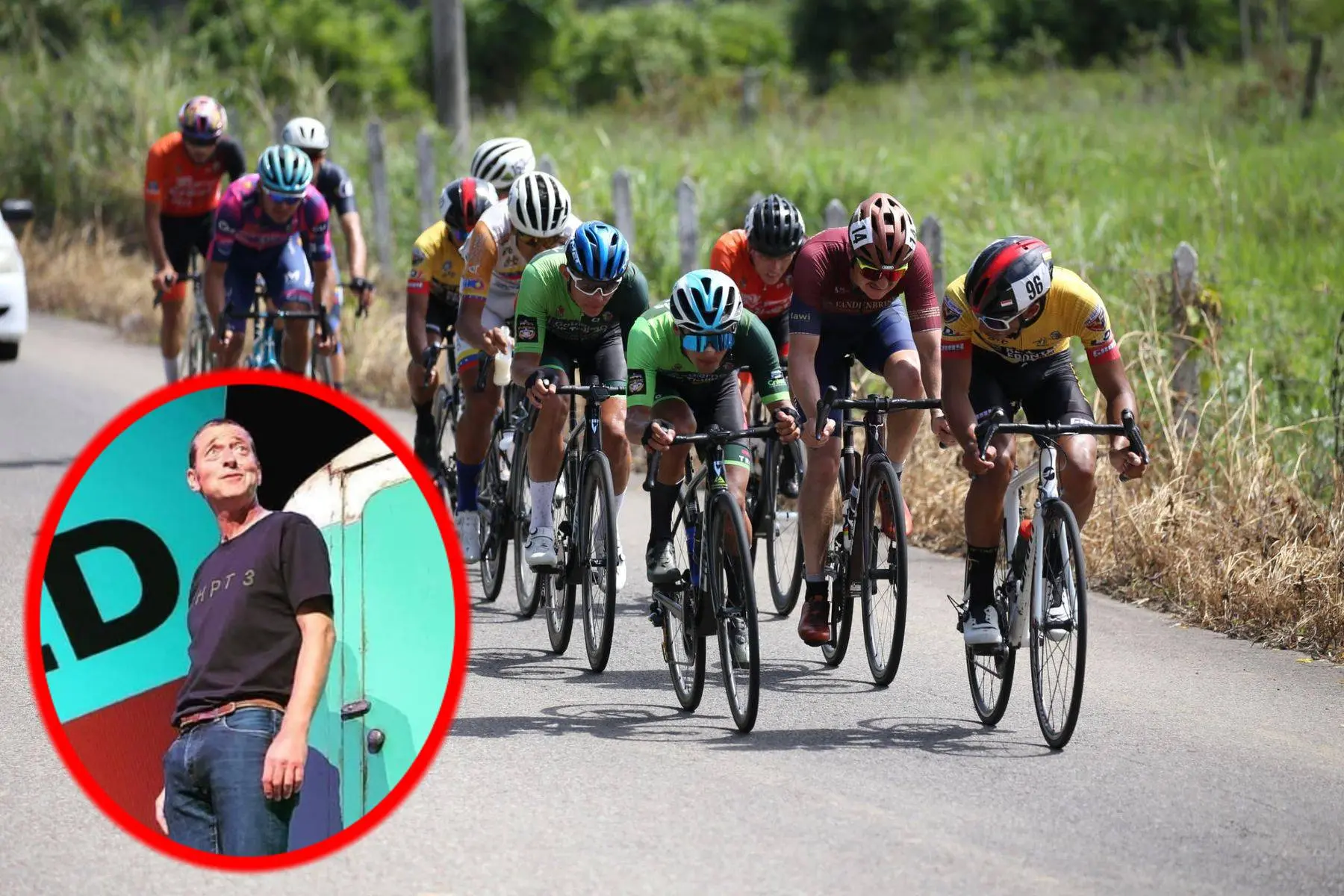
When seasoned Tour de France commentators talk about “legacy”, they are rarely referring to a UCI 2.2 race. Yet that was the lens through which Ned Boulting viewed the inaugural Pune Grand Tour, as European observers digested what they had witnessed on Indian roads during the five-day stage race.
“If someone wins a stage at the Tour de France 10 years from now and says they were first inspired when cyclists passed their house in Pune, that’s legacy,” Boulting said during television coverage of the race. It was a long-term view, but one rooted less in immediate results than in what the event represented as a starting point.
European benchmarks, unexpected comparisons
At sporting level, the Pune Grand Tour sat firmly in familiar territory. As a UCI 2.2 event, it occupies the fourth tier of professional road racing, a category staged weekly across Europe with little fanfare. What surprised visiting commentators was not the racing itself, but how Pune compared when measured against that same global baseline.
Boulting, who has covered the Tour de France for more than two decades with ITV Sport, repeatedly returned to the scale and behaviour of the crowds lining the route. Villages, town centres and roadside sections drew sustained numbers, with spectators cheering from pavements and doorways rather than pressing into the road.
“Every time the riders went through a village, people came out of their shops, homes, and offices to watch,” he observed on air. “They stayed back, they cheered, they took photos. That doesn’t automatically happen in Europe, and it’s something you can’t take for granted.”
The contrast was not framed as criticism of European races, but as context. Even at the Tour de France, crowd control has become a recurring issue, while many Asian 2.2 events struggle to attract more than a handful of onlookers.
Read also

Organisation at 2.2 level
Former Tour de France commentator Graham Jones, also working on the international broadcast, highlighted similar points when assessing the race’s organisation. With full road closures across large sections of the route, Pune operated on a scale that is unusual for an event of its classification.
“I’ve covered races all over Asia, and this is possibly the best funded and best organised 2.2 race I’ve seen when starting from scratch,” Jones said during coverage ahead of Stage 4. His emphasis was on execution rather than ambition, noting that full closures and extensive marshalling are rarely deployed at that level anywhere in the world.
The 2026 edition comprised a short opening prologue followed by four road stages, covering more than 430 kilometres across Pune district. The route mixed urban centres with rolling rural roads and exposed sections in the Western Ghats, offering varied terrain without attempting to manufacture spectacle.
Why this mattered beyond the results
For European observers, the significance of the Pune Grand Tour lay less in who won stages and more in what the event demonstrated could be achieved outside cycling’s traditional heartlands.
Italian professional Jacopo Guarnieri, a Tour de France regular for much of the past decade, contacted broadcasters during the race to express interest after watching the coverage from Europe. His reaction was seen as an early indicator of how quickly perception can shift when an event delivers a credible television product.
Boulting returned repeatedly to that point when asked what Pune’s organisers had got right. “Cycling is free to watch,” he said. “If you put it on properly, people will come. The pictures matter, the organisation matters, and then the sport has a chance to grow.”
A beginning, not a conclusion
None of the commentators framed Pune as a finished product or as proof that Indian cycling has arrived on the world stage. The tone was more cautious than that, viewing the race as an opening chapter rather than a breakthrough moment.
There were suggestions that the event could grow, potentially adding distance or an additional stage in future editions, but always with the understanding that sustainability matters more than scale.
For now, the Pune Grand Tour has done something simpler. It has placed itself firmly on the radar of those used to judging races against global standards, not local expectations. Whether that ultimately leads to professional Indian riders emerging on Europe’s biggest stages remains an open question.
As Boulting put it, legacy is only visible years later. Pune’s first step, however, has at least ensured there is now something for the sport to build on.
Kieran WoodDeputy Editor-in-Chief
Kieran Wood is a sports journalist based in Wales and has been active in journalism since 2022. He regularly contributes to DartsNews.com and CyclingUpToDate.com, where he covers professional cycling and darts. In cycling, his work includes liveblogs from major races, including the Tour de France, the Giro d’Italia, and La Vuelta a España, alongside race reports and analysis. He has also conducted interviews with professional riders.
His reporting spans the full racing calendar, from one-day classics to stage races, with a focus on accurate, real-time coverage and clear contextual analysis. For statistics, results, and historical context, he regularly uses resources such as ProCyclingStats. To support reporting on rider activity and training context where relevant, he also references Strava.
In his work, Kieran places strong emphasis on careful sourcing, editorial accuracy, and updating articles as new, verified information becomes available.
claps 4visitors 4
Just in

Popular news
Latest comments
- He didn't even try to sprint all outvappaxbipmv18-10-2026
- Campenaerts looked like a rolling pumpkin with that all orange leaders skinsuit !frieders318-10-2026
- He can take his dumb a$$ politics somehwere else !frieders318-10-2026
- good to have her back. fingers crossed she‘ll be able to stay!Ketterechts17-10-2026
- A tenner and he wins the Tour next year, too 😂anonymouscyclist17-10-2026
- the answer is either stick to classics or GTs but not bothabstractengineer17-10-2026
- the exodus already stared with Ciccone. Already they were struggling with two sprinters, now there are three. Also Ganna will demand leadership. Gall is the most proven GC, Ayuso has the most potential. GC leadership for everybody will be impossible. Literally a UAE style mess without pogi.abstractengineer17-10-2026
- I raced as an amateur for 12 years, including six years on my country’s national road cycling team. I secured two national titles and competed in three World Championships plus more than 15 international stage races. At 23, we travelled to Italy for a training camp—or so I assumed. On a rest day, we watched a presentation about adopting a more “professional” training approach. It was crystal clear what “professional” meant. That moment first exposed me to this dilemma. After returning from Italy, I left cycling—at least at the competitive level I had known. Over the following two years, the whole team was caught doping. I hold that everyone is innocent until proven guilty. In my view, current stakeholders operate on a different scale, and the sums involved are vast. I am unsure whether any doping would ever be revealed. I try to stay positive and enjoy the show. My 2c.
 vannpelt17-10-2026
 - Fiver he wins 🤣
 leedorney17-10-2026
 - “…measures to reduce speeds.” Might as well shorten the race course to just 50km as well? ASO generates at minimum €300m a year and 30- 40% profit. Maybe stop being greedy and spend more of the profit to protect the riders instead.b3tlla17-10-2026
Loading

The first-ever photo of all jersey winners 🧡🔴⚪️💛💚💙🤍 #BajajPuneGrandTour

1 Comments