“If a country politicises sport we must look elsewhere” – Danish sporting leaders raise doubts over Spain’s suitability to host future cycling events
Cycling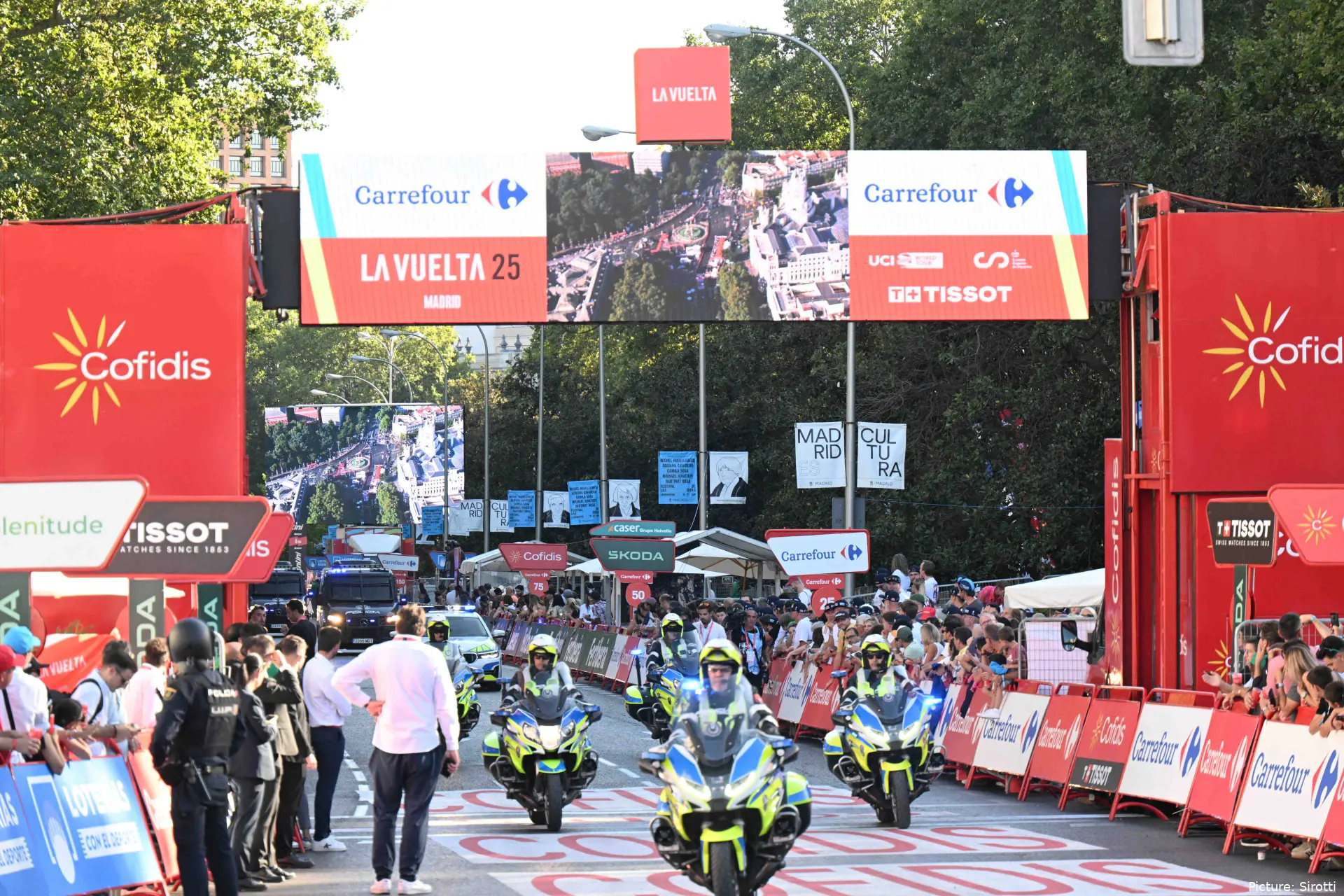
Danish sporting officials have joined the growing chorus of voices questioning Spain’s ability to host major international cycling events after Prime Minister Pedro Sánchez praised the pro-Palestinian protesters who disrupted this year’s Vuelta a España.
Hans Natorp, president of the Danish Sports Confederation (DIF), backed the UCI’s strong criticism of both the demonstrators and the Spanish government’s response, warning that the country could face consequences in terms of future hosting rights.
“I am fully aligned with the UCI that this must have consequences for whether Spain can stage major sporting occasions,” Natorp told TV 2 Sport. “If a country politicises sport – as we must assume is the case here – then sport requires a counter-move. That counter-policy is to say: we must look elsewhere.”
Løkke voices concern for cycling’s reputation
The issue has also drawn the attention of Denmark’s foreign minister, Lars Løkke Rasmussen, who stressed that the repeated protests at the Vuelta highlighted the risks faced by cycling as an open-road sport.
“Sport and politics must not be mixed, and that principle must be defended,” Rasmussen said. “I am of course also worried for cycling, which I care deeply about. The Tour is due to start in Barcelona next year – under what circumstances will that take place?”
Rasmussen noted that one of the sport’s greatest charms – the ability for fans to get close to the riders – also leaves it uniquely vulnerable to disruption, as shown by the unprecedented cancellation of the final stage in Madrid.

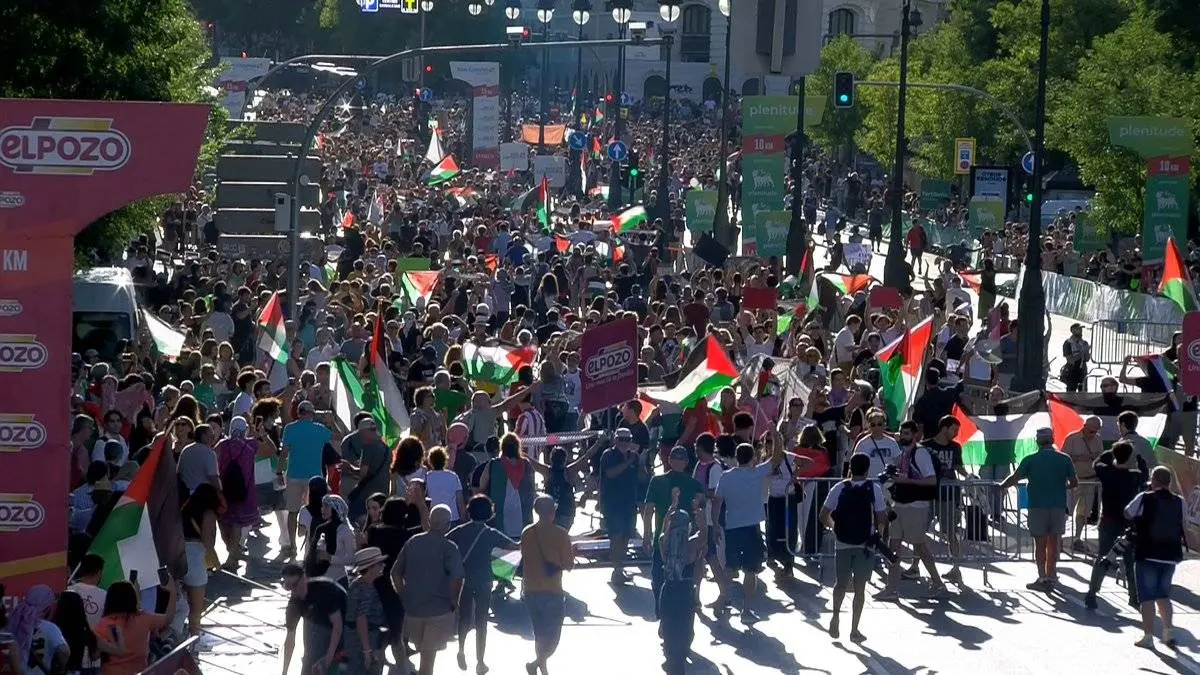
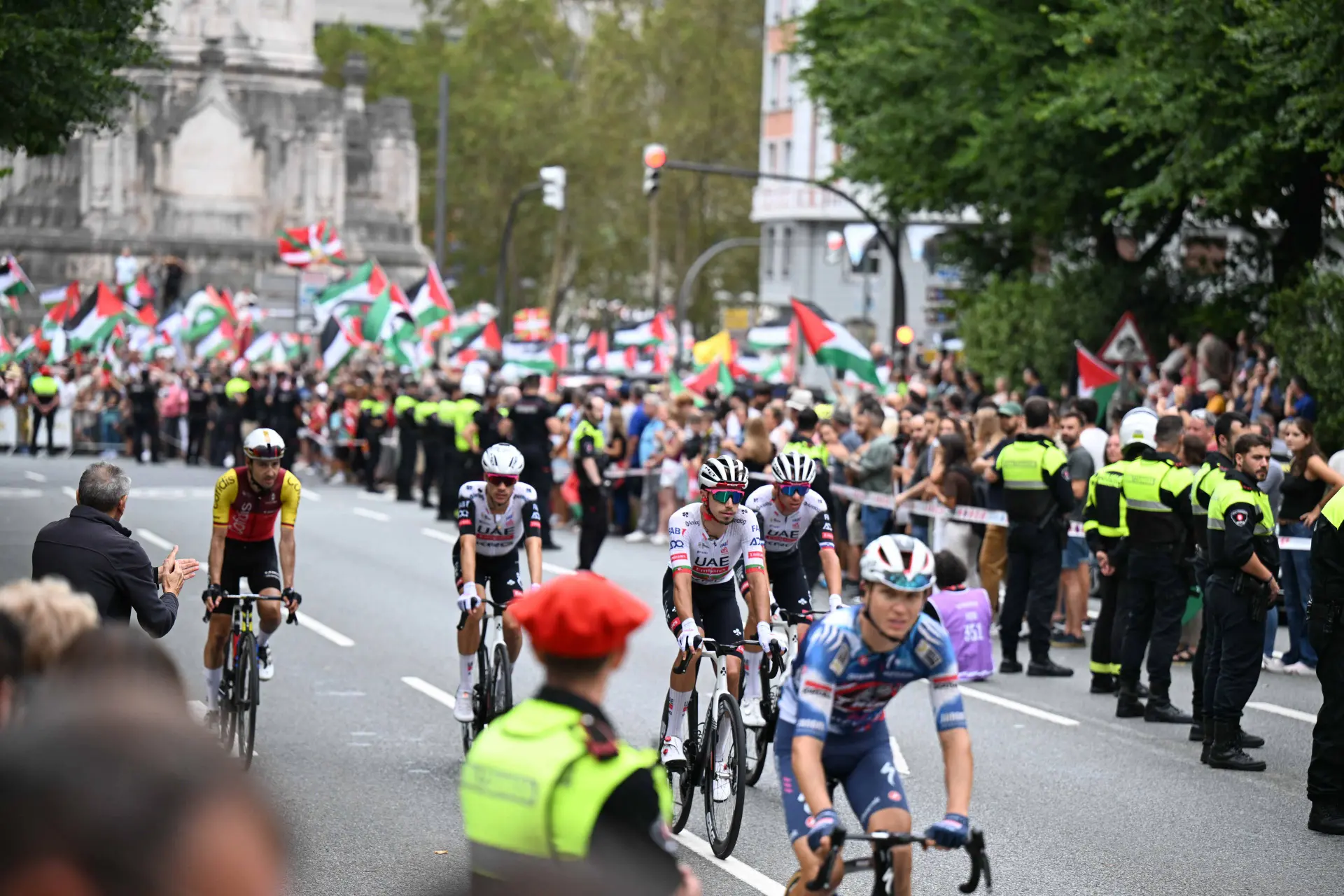
La Vuelta 2025 was continually disrupted by protests
Spain’s standing questioned ahead of 2026
The Vuelta protests, which ranged from on-road sit-downs to physical altercations with police, culminated in the last stage being called off entirely. The UCI condemned what it called “militant actions” after reports of riders being doused with urine and placed in danger, while also expressing dismay at Sánchez’s public praise for demonstrators.
Spain is set to welcome the Tour de France Grand Départ in Barcelona next July, while the 2026 Vuelta route is due to be revealed later this year. But with pressure building from international sporting bodies and political leaders alike, scrutiny over the country’s preparedness to guarantee safe, apolitical competition is likely to intensify in the months ahead.
We all feared that it will happen and it happened, the Vuelta had to be stopped because of these "protests". #LaVuelta25 pic.twitter.com/G2UhNsLLlf
— Lukáš Ronald Lukács (@lucasaganronald) September 14, 2025

Kieran WoodDeputy Editor-in-Chief
Kieran Wood is a sports journalist based in Wales and has been active in journalism since 2022. He regularly contributes to DartsNews.com and CyclingUpToDate.com, where he covers professional cycling and darts. In cycling, his work includes liveblogs from major races, including the Tour de France, the Giro d’Italia, and La Vuelta a España, alongside race reports and analysis. He has also conducted interviews with professional riders.
His reporting spans the full racing calendar, from one-day classics to stage races, with a focus on accurate, real-time coverage and clear contextual analysis. For statistics, results, and historical context, he regularly uses resources such as ProCyclingStats. To support reporting on rider activity and training context where relevant, he also references Strava.
In his work, Kieran places strong emphasis on careful sourcing, editorial accuracy, and updating articles as new, verified information becomes available.
claps 3visitors 3
Just in
Popular news
Latest comments
- Much as I like him (one of my favourites), I do want to attract a little attention to the coincidence of his recent performances in the current context. Not the first time a rider improves noticeably when there’s a job interview to prepare. In the same lighthearted humour of his, i hope the UCI will let him wear it at home as the rules quite strictly state you can only wear it during participation in the discipline you won in, and we all know how capable they are of interpreting rule interpretation ;-) Also, if it’s going to be retirement (please not), I wouldn’t call that an agreement as somebody will probably feel they didn’t get what they wanted.Mistermaumau08-10-2026
- Agreed. There used to be a team willing to pay though. I take all these figures (that vary enormously according to who is publishing) with handfuls of salt. We don’t know how salaries are treated (especially between a UK employer and Andorran resident), we don’t know how numbers are derived and from where, if deductions have been taken into consideration, etc. but if he returns to Colombia, he’s going to need quite a bit in protection money.Mistermaumau08-10-2026
- And another one gone, another one gone, another one bites the dust. Ah gonna get you too…Mistermaumau08-10-2026
- Top marks RidesHills. A great post that sums up exactly Egan Bernals situation.Cyclingsbestfan08-10-2026
- Thanks for pointing out that typo. Now ammended.Prorodsandstuff08-10-2026
- Great signing by Uno-X. Hope he develops and can get som great results.
 Vikingrider08-10-2026
 - It always worries me when people so knowledgeable about a subject base lengthy detailed explanations or analysis on a single erroneous fact or figure so blatantly wrong thereby invalidating just about everything they made the effort to say. I always wanted to meet some top theoretical physicist to make sure they hadn’t overlooked something obvious as their figures for the mass of the universe don’t work out. This is like basing the US budget on a debt of 4 trillion instead of 40, something I know one person would be very capable of attempting.Jumpyjohn08-10-2026
- His analogy is bad, there are a lot of things we use, we dont know how it works not do we have the brain capacity to know everything we use. as a cyclist he is supposed to know to how to race, not every detail about every tech on his bike or around him.abstractengineer08-10-2026
- Db cant do anything, its a physical issue not a mental or training issueabstractengineer08-10-2026
- If they’d run a poll, I’d vote this best CUTD post of 2026.Jumpyjohn08-10-2026
Loading