ANALYSIS | Why Wout van Aert finally conquered Paris-Roubaix - the 3 moments that changed everything in 2026
Cycling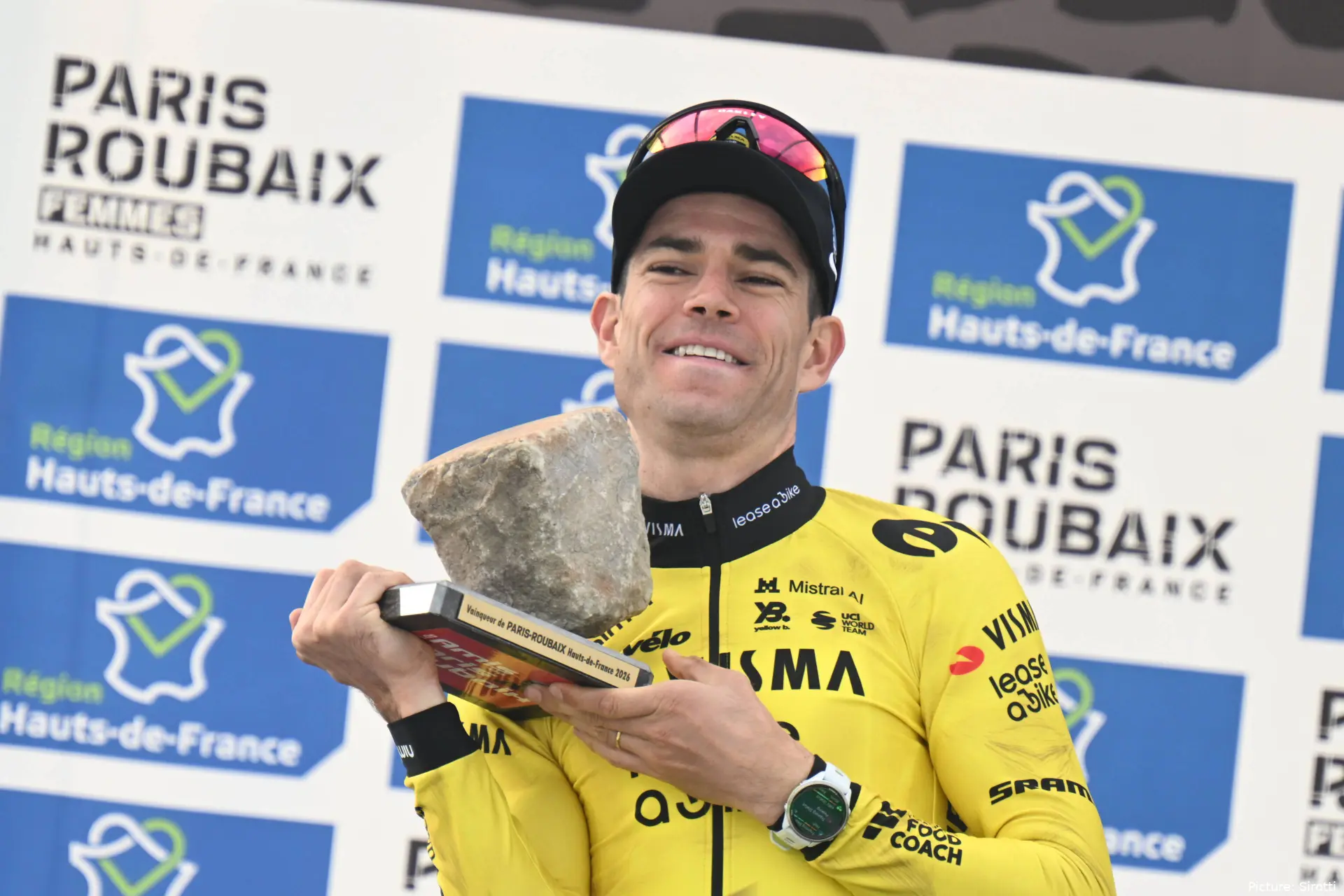
Wout van Aert has never been just another rider. But for all his success, there has always been a lingering narrative around what he had not yet done.
Cycling has seen its share of so-called “eternal seconds”, with Raymond Poulidor the most famous example. Van Aert never truly belonged in that category, but the comparison lingered. He has won across the calendar, delivered on the biggest stages and played a decisive role in team success, including multiple Grand Tour victories alongside Jonas Vingegaard.
Yet in the Monuments, the races that define legacies, something was missing. One Milano-Sanremo stood against the growing tally of his great rival Mathieu van der Poel, who had continued to collect wins on cycling’s biggest one-day stages.
For years, Van Aert had been the rider who could do everything. Win stages, dominate crosswinds, support leaders, animate races. But in the biggest one-day races, the defining moment often slipped away. At Paris-Roubaix 2026, that changed. And it did not happen by chance.
1. The form was there, even without the wins
On paper, Van Aert arrived at the spring’s biggest races without a victory. In reality, his performances told a very different story. From Strade Bianche through to the Tour of Flanders, he was consistently present where it mattered most. A third place at Milano-Sanremo, against riders like Tadej Pogacar and Van der Poel, underlined that he was operating at the highest level.
Even earlier in the season, there were signs that his condition was building. His Tirreno-Adriatico campaign showed he was still finding rhythm, but by the time the Classics began in earnest, the trajectory was clear.
At Dwars door Vlaanderen, he again showed the legs to win, only to be caught late on. In the Tour of Flanders, he could not follow the very best on the steepest climbs, with Pogacar, Van der Poel and Remco Evenepoel proving stronger on the bergs, but he still finished fourth.
There were no wins, but there was consistency, presence, and strength. By the time Roubaix arrived, the question was no longer whether he had the legs, but whether everything would finally align.
2. The move that broke the race
Much of the post-race focus centred on the sprint in Roubaix, but the decisive moment came earlier, in a phase of the race that has perhaps received less attention. At a key point, as Van der Poel began to close rapidly with a dangerous chasing group, the race was on the verge of being reset. The gap was shrinking, the dynamic shifting. Rather than wait, Van Aert made the race.
On sector 18, with the situation becoming increasingly dangerous behind, he launched the move that split everything apart. He went clear alongside Pogacar and Mads Pedersen, immediately committing to a new race situation.
That acceleration did more than just create a gap. It removed uncertainty. It forced the strongest riders to the front and, crucially, shut the door on the chasers behind.
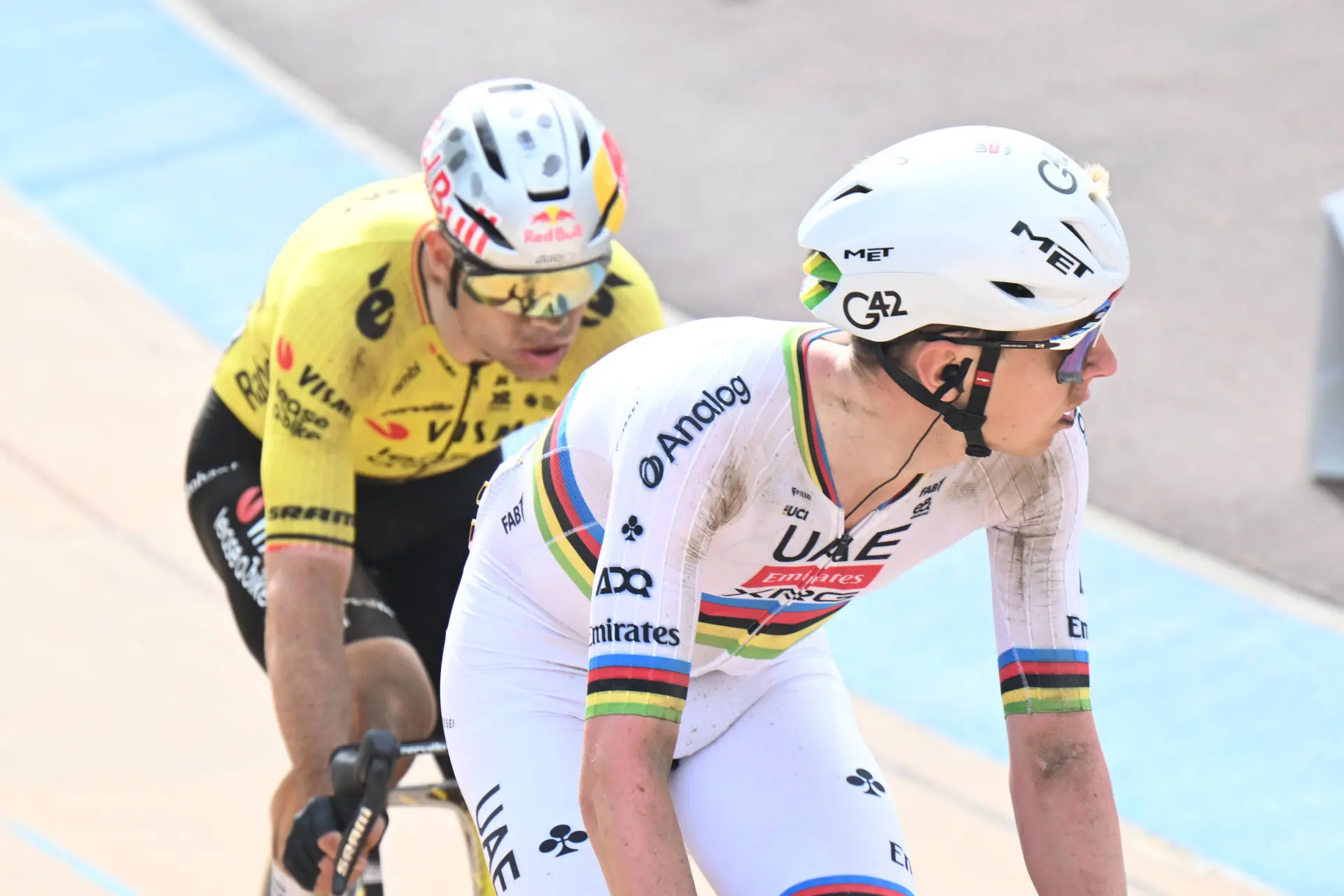
From there, the race became more controlled, but no less intense. Van Aert rode with discipline, choosing his moments carefully and refusing to waste energy unnecessarily against a rider he knew would try to break him on the cobbles. Every move from Pogacar was tracked. Every acceleration answered. By the time they reached the velodrome, the race had already been shaped.
3. When Roubaix turns, everything changes
Paris-Roubaix is never decided by strength alone. It is a race where timing, positioning and fortune play a decisive role. This time, it was Van der Poel who suffered most. A double puncture in the Trouée d’Arenberg cost him more than two minutes, effectively removing him from contention at the worst possible moment.
Given his recent dominance, it is difficult to imagine a scenario where he would not have been a decisive factor in the finale. His absence reshaped the race. Pogacar, too, had his difficulties. A puncture before Arenberg forced him into a long solo effort to return to the front, an effort that cost valuable energy later in the race.
Even Van Aert was not immune. He suffered punctures of his own and was forced to chase back, though his situation was more manageable and he never lost full control of his position. That is the nature of Roubaix. No one escapes untouched. The difference lies in how those moments are absorbed.
A victory that changes the narrative
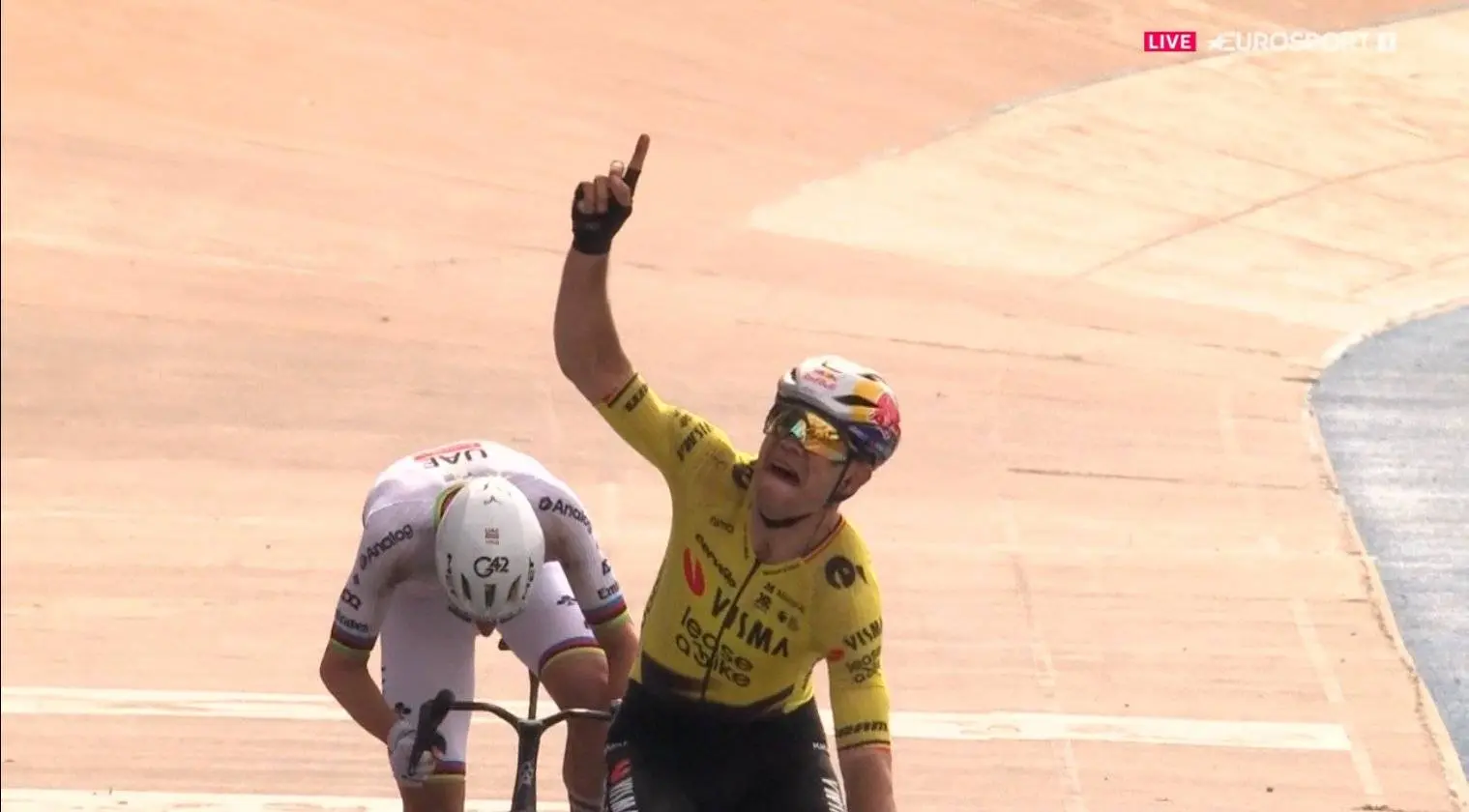
When the moment finally came in the Roubaix velodrome, Van Aert executed perfectly. Positioned behind Pogacar, he waited, measured, and launched his sprint at exactly the right time. It was not a desperate move, but a calculated one, built on confidence and clarity.
It was the finish of a rider who knew exactly what was required, shaped by years of experience and a spring campaign that had quietly built towards this moment. More than anything, it was a victory that changed the conversation around him.
For years, Van Aert had been defined by versatility, consistency and near-misses at the very highest level. Now, he has the result that matches the rider he has always been. Paris-Roubaix does not hand out victories. You take them.
Juan LarraCycling Journalist
Juan Larra is a writer for Cyclinguptodate and editor-in-chief of Ciclismoaldia, where he has played a central role since its inception. Under his leadership, the website has become a trusted source for professional cycling coverage, offering in-depth analysis, news, and feature stories.
A sports journalist with over 20 years of experience, Juan earned his degree in Journalism from the University of Seville in 2007. He began his career covering a wide range of sports—including football, basketball, Formula 1, MotoGP, tennis, and cycling—for platforms such as the official La Liga app, Vodafone and Movistar websites, NBA Blogdebasket, and Cadena Cope, honing his skills in writing and editorial management.
In addition to his work at Ciclismoaldia, Juan contributes to Cyclinguptodate and serves as editor-in-chief for the tennis-focused site Tenisaldia. Throughout his career, he has conducted exclusive interviews with cyclists and sports figures, provided detailed analysis of competitions ranging from local Spanish races to major international events, and acted as a special correspondent at prestigious races including Paris-Roubaix, the Tour de France, and the Vuelta a España.
Juan’s combination of experience, expertise, and direct access to athletes has established him—and the platforms he leads—as authoritative voices in professional cycling.
claps 16visitors 12
Just in

Popular news
Latest comments
- I think Jonas would have lost the TDF by 4+ minutes (at the least) and might not have even been in the top 3. Too much talent in the younger riders to say anyone not named Pogačar would have been top 3md197503-11-2026
- this is just stupid. you already have 23%, gravel is over the topabstractengineer03-11-2026
- There was once a time when Lance was supremely popular and he used his artificial "It's Not About the Bike: My Journey Back to Life" persona to lead his mob in going after Greg. There was no one Lance did not abuse in protecting his phony hero image. Lance promoted himself as a divine megastar and he let down millions of cancer victims and gullible devotees who clung far too long to the charade. Lance is the epitome of a corrupt person and because of his power, many around him, including business enterprises, succumbed to the evil. All who got in Armstrong's way were mercilessly attacked by him and his minions. This remarkably continues today with a new generation. LeMond was a number one enemy and paid a huge price. Who do you think slandered who?Yepperoni03-11-2026
- You despise him because he calls out the truth....OK clown !frieders303-11-2026
- JV is really slighting himself with not doing the 1 dayers.. 🤷
 leedorney02-11-2026
- Watch the interview on youtube. I don't speak French. I do speak English and Spanish and you can hear it in his voice. Years ago LeMond had real personal problems I imagine in no small part because of Armstrong. then Armstrong goes round "full blast" re: LeMond having drinking and drug problems. The same way Andreu was expelled from mainstream cycling so was LeMond. On the positive side the clips of the ride and chatting with old teammates and was good. To seemed like a fun day and experience and good reason brush up his French.atom02-11-2026
- and another no-news article around the ‚2 tokyo jogging rounds‘ headline, this time spiced with some days old ‚news‘ that the LA and japan vacation trips come during or after the tdf route release. i am getting more and more annoyed by this time-stealing no-news crap. but who am i to complain? nobody forces me to come back for more ‚news‘ day after day …Ketterechts02-11-2026
- It would likely be a very steep section of 4.1 km, not changing the average gradient considerably, with the climb remaining 10.1 km at 11.8%. It would reach 20% on the gravel. It would start 1.6 km in, and finish with 4.2 km left to climb (before the short final descent)
 Rafionain-Glas02-11-2026
- Welcome to the off-season.
 santiagobenites02-11-2026
- guillaume martin in this list is quite a surprise as a gc rider.Ketterechts02-11-2026
Loading
1 Comments